Round Coffee Table Size Calculator
Enter Your Dimensions
Visual Proportion Check
Analysis Result
Enter your dimensions and click "Visualize Fit" to see recommendations. Based on the 2/3 rule, a table should ideally be two-thirds the length of your sofa.
- Target Diameter: -
- Ideal Clearance: 14-18 inches
- Table Height: Match sofa seat height (±1 inch)
There is nothing worse than buying a beautiful piece of furniture only to realize it looks like a tiny island in the middle of a vast ocean. Or worse, it dominates your living room so completely that you can barely walk around it. This is the classic dilemma of sizing a round coffee table relative to your circular low table placed in front of seating. Getting the proportions right isn't just about aesthetics; it is about function. If the gap is too wide, you cannot reach your drink. If it is too narrow, you trip over it every time you get up.
The good news is that there are reliable rules of thumb that interior designers use to ensure balance. You do not need a tape measure and a degree in architecture to figure this out. By understanding the relationship between diameter, height, and distance, you can create a living space that feels cohesive and comfortable.
The Golden Rule: The Two-Thirds Ratio
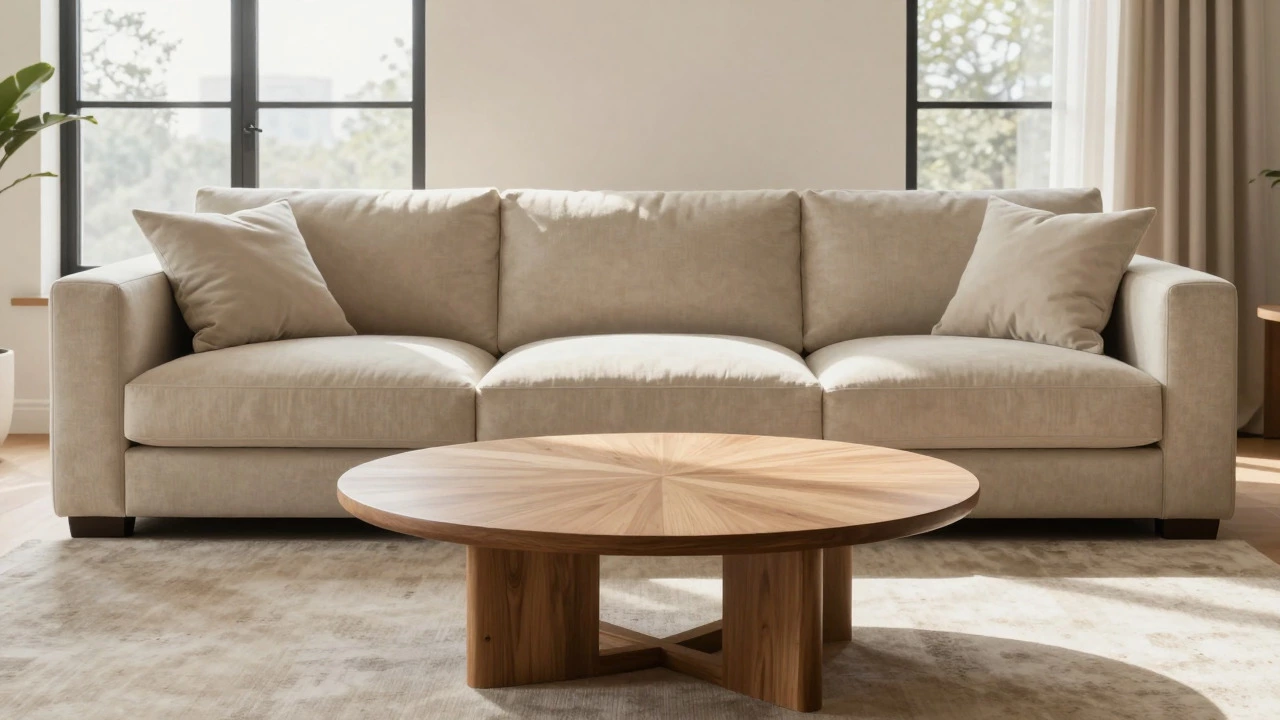
When selecting any coffee table, rectangular or round, the most critical metric is length relative to the sofa. For a standard three-seater sofa, which typically measures between 80 and 90 inches long, your coffee table should ideally be about two-thirds of that length. However, because a round table is defined by its diameter rather than length, we apply this rule slightly differently.
If you have a large sectional or a long sofa (over 84 inches), a round table with a diameter of at least 36 to 40 inches is usually necessary to maintain visual weight. A smaller table, say 24 inches, will look lost and insignificant against a massive L-shaped sofa. Conversely, if you have a compact loveseat (around 50 to 60 inches), a 40-inch table might feel overwhelming. In that case, aim for a diameter closer to 30 to 32 inches.
This ratio ensures that the table acts as an anchor for the seating area without stealing the show. It creates a balanced silhouette where both pieces of furniture complement each other. Think of the sofa as the stage and the coffee table as the main actor; they need to share the spotlight equally.
Height Matters Just as Much as Width
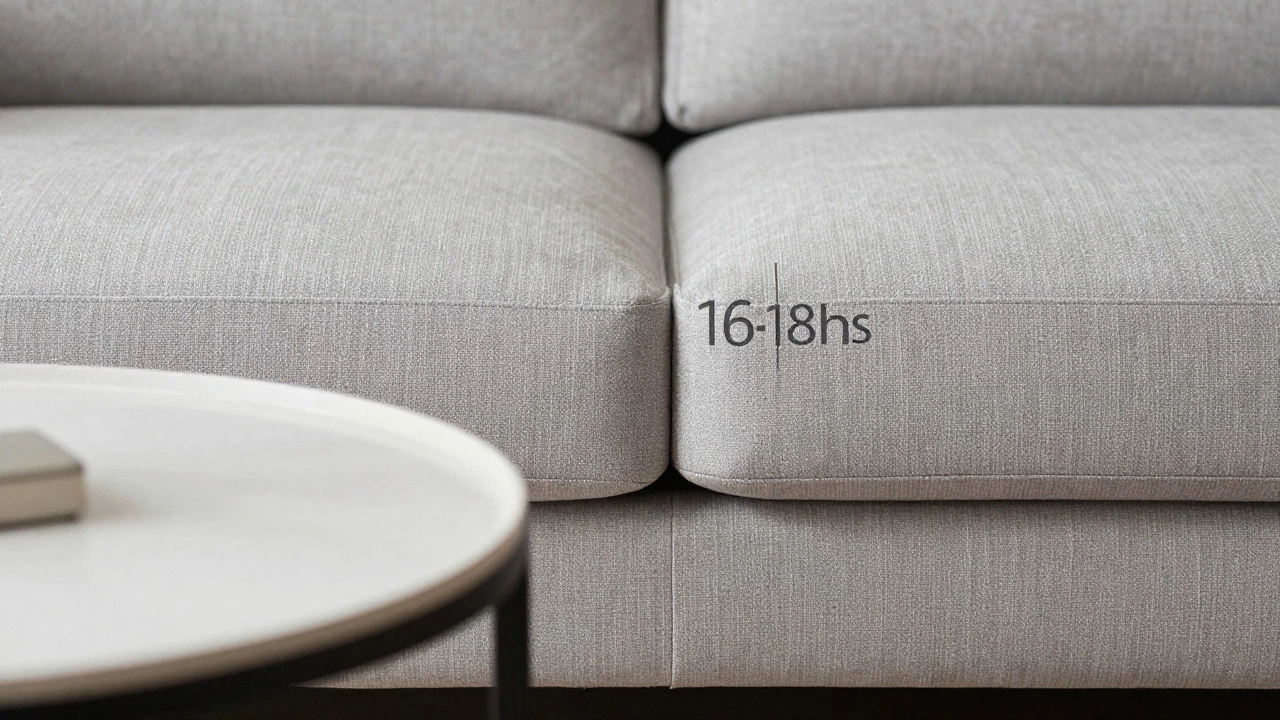
We often obsess over the footprint of the table, but vertical proportion is equally important. The height of your coffee table low table used for placing drinks and decor should align closely with the seat height of your sofa. Most modern sofas have a seat height ranging from 16 to 18 inches. Therefore, your coffee table should fall within that same range, or be no more than one to two inches lower.
If your coffee table is significantly higher than your sofa cushions, it becomes difficult to rest your arms comfortably while sitting. It also forces you to lean forward awkwardly to grab something. On the flip side, if the table is much lower than the seat, it can feel unstable and visually disconnected from the seating. A mismatch here disrupts the ergonomic flow of the room.
Measure the height of your sofa seat from the floor to the top of the cushion. Then, find a round table that matches this measurement. If your sofa has deep, plush cushions that sink down when you sit, add an inch or two to your target table height to account for compression.
Maintaining Proper Walking Space
Aesthetics aside, your living room needs to function as a livable space. One of the biggest mistakes people make is crowding the furniture together. To prevent tripping hazards and ensure easy movement, you need adequate clearance between the edge of the coffee table and the front of the sofa.
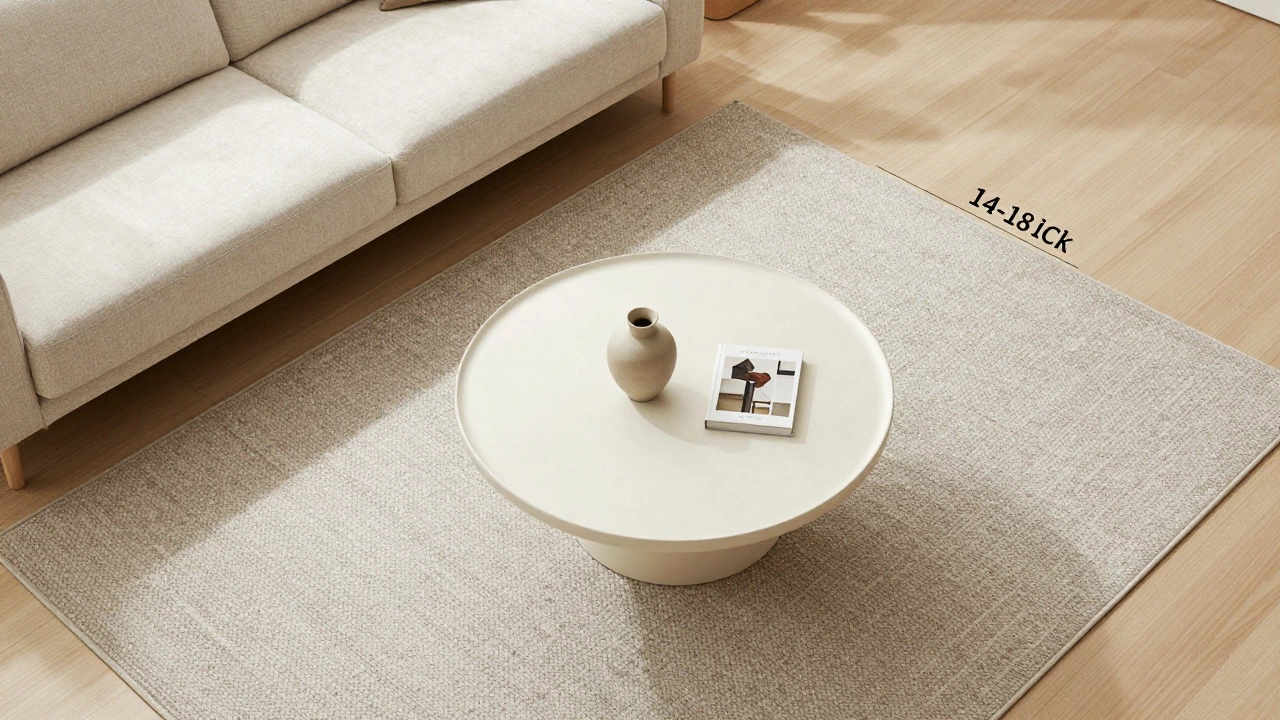
The ideal distance is between 14 and 18 inches. This gap allows you to easily slide into your seat without hitting your knees on the table. It also provides enough room to place a tray or a book without it falling off the edge. If your space is tight, do not go below 12 inches, or the area will feel cramped and claustrophobic. If you have plenty of room, you can stretch this to 20 inches, but anything beyond that makes the table less accessible.
For round tables specifically, this clearance applies all around the perimeter. Because there are no corners, the circular shape actually helps in high-traffic areas. You can walk around it more smoothly than with a square table that has sharp edges protruding into the walking path. This makes round tables excellent choices for homes with children or pets who move quickly through the living room.
Scaling for Small Spaces
Living in an apartment or a condo with limited square footage requires a different approach. In smaller rooms, every inch counts, and bulky furniture can make the space feel even tighter. Here, the goal is to maximize openness while maintaining functionality.
In a small living area, opt for a round coffee table with a diameter between 24 and 30 inches. This size is substantial enough to hold a few essentials-a remote control, a coaster, maybe a small plant-but small enough to keep the floor visible. Visible floor space tricks the eye into perceiving the room as larger than it is.
Consider tables with hairpin legs or clear acrylic bases. These designs reduce visual bulk because they allow light to pass through and let you see the floor underneath. A solid wood block base, while sturdy, can anchor the room too heavily in a small space. Additionally, nesting tables can be a clever alternative. You can pull out a smaller side table when needed and tuck it away when not in use, offering flexibility without permanent clutter.
Material and Visual Weight
The physical dimensions are not the only factors determining how big a table "feels." Material plays a huge role in perceived size. A heavy, dark-stained oak table will command more attention and feel larger than a slender, light-colored metal or glass table of the exact same dimensions.
If you choose a material that is visually heavy, such as marble or thick stone, you might want to scale down the diameter slightly to avoid overwhelming the room. Stone tables are dense and solid; a 40-inch marble table feels much bigger than a 40-inch wire-frame table. Conversely, if you prefer a lightweight aesthetic, you can afford to go slightly larger with materials like rattan, light wood, or tempered glass.
Reflective surfaces, such as mirrored tops or glossy finishes, also affect perception. They bounce light around the room, creating an illusion of depth and airiness. Matte finishes absorb light, making objects appear more grounded and substantial. Choose your finish based on whether you want the table to blend into the background or stand out as a focal point.
| Sofa Type | Typical Length | Recommended Table Diameter | Ideal Clearance |
|---|---|---|---|
| Loveseat | 50" - 60" | 24" - 30" | 14" - 16" |
| Standard 3-Seater | 72" - 84" | 32" - 36" | 14" - 18" |
| Large Sectional | 85"+ / L-Shaped | 36" - 42" | 16" - 18" |
| Small Apartment Setup | Compact | 20" - 24" | 12" - 14" |
Shaping the Room Flow
Round tables introduce softness to a room dominated by straight lines. Sofas, walls, and windows are typically rectangular. Introducing a circular element breaks up these rigid angles and creates a more organic, inviting atmosphere. This shape encourages conversation because there are no corners to block sightlines or create barriers between people sitting on opposite sides.
However, the placement must be intentional. Center the table directly in front of the sofa, ensuring equal distance on both sides if possible. If your sofa is asymmetrically placed, adjust the table position to maintain the 14-to-18-inch clearance from the seating area. Use a rug to define the zone. All four legs of the sofa and the entire base of the coffee table should ideally rest on the rug. This ties the pieces together visually and prevents the table from looking like it is floating in empty space.
Practical Considerations for Daily Use
Beyond measurements, think about how you actually use your living room. Do you entertain guests frequently? Do you work from home? Are you a parent with young children? These lifestyle factors influence the ideal size and features of your table.
If you host parties, a larger diameter (36 inches or more) provides ample surface area for serving platters, wine bottles, and appetizers. Look for tables with storage compartments or shelves underneath to hide clutter. If you have toddlers, ensure the table has rounded edges-though round tables naturally have this advantage-and a stable base that won't tip if pulled on. Avoid overly delicate materials that scratch easily if kids run around with toys.
For those who prioritize minimalism, a smaller table with clean lines works best. You can supplement it with ottomans or side tables that double as extra seating or footrests. This modular approach offers flexibility without committing to a single large piece of furniture that dictates the room's layout.
What is the ideal diameter for a round coffee table under a standard sofa?
For a standard three-seater sofa that is 72 to 84 inches long, a round coffee table with a diameter of 32 to 36 inches is generally ideal. This size maintains the recommended two-thirds proportional rule while providing enough surface area for daily use without overwhelming the seating arrangement.
How much space should I leave between the coffee table and the sofa?
You should maintain a clearance of 14 to 18 inches between the edge of the coffee table and the front of the sofa. This distance allows for comfortable legroom and easy access to items on the table. In very small spaces, do not go below 12 inches to avoid a cramped feeling.
Can a round coffee table be too big for a sectional?
Yes, if the table is disproportionately large compared to the seating, it can dominate the room and restrict movement. For large sectionals, stick to diameters no larger than 42 inches unless the room is exceptionally spacious. Ensure you still have at least 18 inches of walking space around the perimeter of the table.
Does the height of the coffee table matter?
Absolutely. The coffee table should be roughly the same height as the sofa seat, typically between 16 and 18 inches. If the table is significantly higher, it is uncomfortable to use; if it is much lower, it looks visually disconnected and may be hard to reach.
Are round coffee tables better for small apartments?
Round tables are often excellent for small apartments because they lack sharp corners, making them safer and easier to navigate around. Their curved shape also softens the visual impact of rectangular rooms. Opt for a diameter of 24 to 30 inches to keep the space feeling open and airy.