Will Your Couch Fit? Storage Unit Checker
Analysis Result
Estimated Space Usage
- Floor Area Used: 0 sq ft
- Remaining Floor Space: 0 sq ft
Select your sofa details and click "Check Fit" to see if it works in a 10x10 unit.
- Measure Twice: Ensure length is under 8ft for easy flat placement.
- Elevate: Use pallets to keep fabric off concrete floors.
- Clean First: Vacuum crumbs to prevent pest attraction.
- Remove Legs: Saves height when standing sofas upright.
Picture this: you’re standing in your living room, staring at that bulky three-seater sofa you just bought (or inherited), and wondering where it’s going to go while you renovate or move. The salesperson said the 10x10 storage unit is the "standard" size for apartment moves. But does your couch actually fit? Or will you end up paying extra for a bigger unit because you didn’t measure properly?
The short answer is yes, but with major caveats. A standard 10x10 unit offers 100 square feet of floor space, which sounds like plenty until you realize your average sofa eats up about 20 to 30 square feet all by itself. Whether you can squeeze it in depends entirely on the type of couch, how you pack the rest of the room, and whether you plan to stand it upright or lay it flat.
Understanding the 10x10 Footprint
A 10x10 storage unit is roughly the size of a small bedroom or a large walk-in closet. It typically has an 8-foot ceiling, giving you vertical space to stack boxes. Think of it as holding the contents of a one-bedroom apartment. If you have a lot of other furniture-like a dining table, a mattress, and dressers-that sofa might be the straw that breaks the camel's back.
Here’s the reality check: most people underestimate how much "dead space" exists around irregularly shaped furniture. You can’t just shove a couch into a corner and expect the rest of the room to magically disappear. You need clear pathways to get things out later, or you’ll be digging through stacks of boxes to find your winter coats.
Sofa Sizes vs. Unit Capacity
Not all couches are created equal. A sleek two-seater loveseat slides right in. A massive sectional? That’s a different beast. To help you decide, here’s a breakdown of common sofa types and their typical footprint when placed against a wall.
| Sofa Type | Average Dimensions (W x D x H) | Floor Space Used | Fit Difficulty |
|---|---|---|---|
| Loveseat / Two-Seater | 5' - 6' W x 3' D | ~15-18 sq ft | Easy |
| Standard Three-Seater | 7' - 8' W x 3.5' D | ~24-28 sq ft | Moderate |
| Reclining Sofa | 8' - 9' W x 4' D | ~32-36 sq ft | Hard (needs clearance) |
| Sectional (L-Shape) | Varies widely | 40+ sq ft | Very Hard (may not fit) |
Notice the reclining sofa? It needs extra room behind it for the mechanism to work if you ever want to use it without unpacking everything. For pure storage, you can push it flush against the wall, but only if the back doesn’t stick out too far.
How to Position Your Couch for Maximum Efficiency
You have three main options for placing a couch in a storage unit: laying it flat, standing it on its end, or stacking it. Each has pros and cons depending on what else you’re storing.
- Laying Flat: This is the safest bet for fabric integrity. Lay the couch on its back or side along the longest wall. This uses about 8 feet of length and 3-4 feet of depth. You can slide smaller items like lamps or side tables underneath the armrests if they’re hollow.
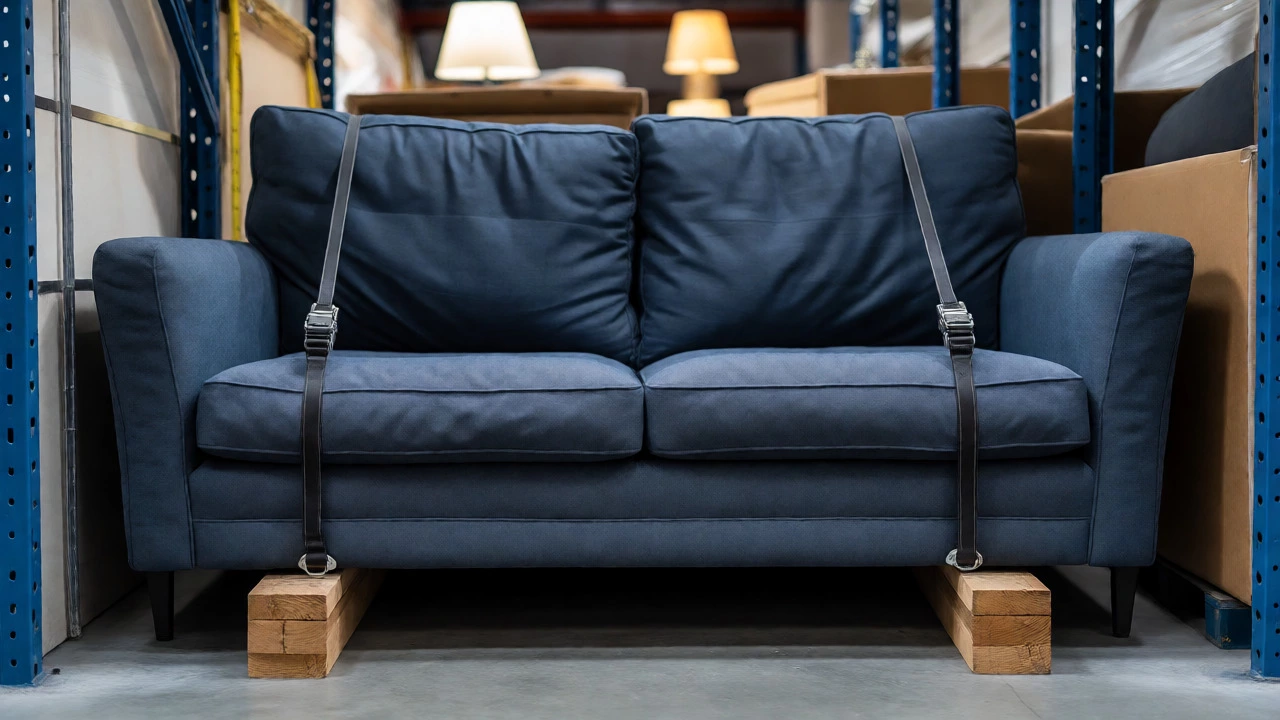
- Standing Upright: Yes, you can stand a sofa on its end! This saves massive amounts of floor space. A standard 8-foot-long sofa stood vertically takes up only about 3.5 feet of width and 3.5 feet of depth. However, you must ensure it doesn’t tip over. Use straps or place heavy boxes against the base to keep it stable.
- Stacking: If you have a sturdy coffee table or ottoman, you can stack them on top of the seat cushions. Just don’t put anything heavier than 50 pounds on top of soft cushions for long periods, or you’ll flatten the foam permanently.
Pro Tip: If you choose to stand the sofa upright, remove the legs first. They often snap off easily and save an inch or two of height, which matters if your unit has lower ceilings or if you want to stack boxes on top.
The "Everything Else" Problem
Let’s say your couch fits perfectly. Great. Now add the rest of your stuff. A 10x10 unit fills up faster than you think. Here’s a rough guide to what else fits alongside a standard three-seater sofa laid flat:
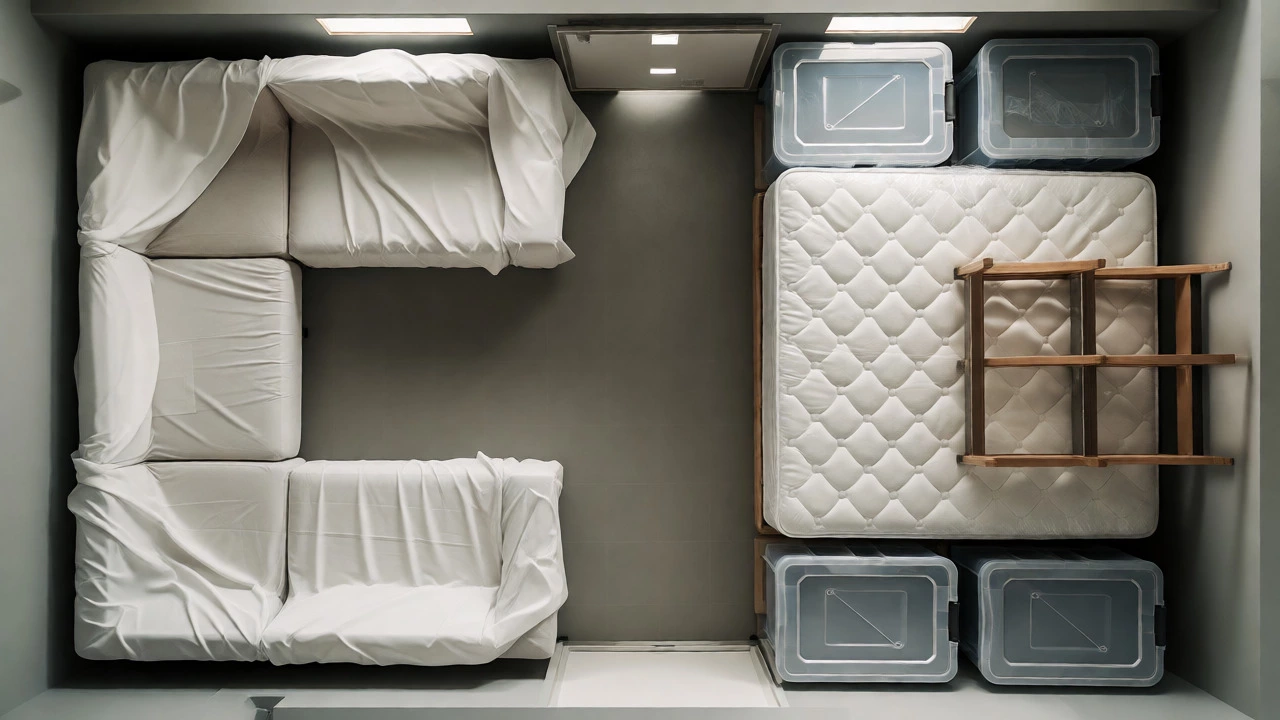
- Bedroom Set: A queen mattress (disassembled frame) and two nightstands will likely fill the remaining space. No dresser.
- Dining Set: A small table and four chairs might fit if you disassemble the table legs and stack the chairs inside the table frame.
- Boxes: You can fit approximately 10-15 medium-sized moving boxes if you stack them neatly to the ceiling.
If you’re trying to store a couch plus a full one-bedroom apartment’s worth of goods, you’re probably better off renting a 10x15 unit. The extra 50 square feet isn’t just luxury; it’s breathing room. Trying to cram too much into 100 square feet often leads to crushed furniture and damaged electronics.
Protecting Your Furniture During Storage
Vancouver gets damp. Even if you live somewhere drier, storage units aren’t always climate-controlled unless you pay extra. Dust, pests, and moisture are your enemies. Before you drag that couch in, do this:
- Clean it thoroughly: Vacuum crumbs and stains. Food particles attract mice, and mice love chewing through upholstery.
- Wrap it up: Use plastic wrap or specialized furniture covers. Avoid trapping moisture directly against leather, as it can cause mold. For fabric sofas, breathable canvas covers are better than plastic if the unit isn’t climate-controlled.
- Elevate it: Don’t let the couch sit directly on the concrete floor. Concrete draws moisture. Place wooden pallets or old rugs underneath the legs or base to create a barrier.
- Remove cushions: Store throw pillows and loose cushions in sealed bins separately. This prevents them from getting squashed or collecting dust in crevices.
When a 10x10 Unit Isn’t Enough
There are specific scenarios where forcing a couch into a 10x10 unit is a bad idea. Recognize these red flags before signing a lease:
- You have a Sectional: Unless it’s a compact modular piece, most sectionals require a 10x15 or even 10x20 unit. Disassembling it helps, but the pieces still take up significant floor area.
- You need easy access: If you plan to visit the unit monthly to grab items, you need aisles. A couch taking up half the room leaves no room to walk.
- You’re storing appliances: A fridge or washer/dryer combo takes up huge chunks of space. Add those to a couch, and you’re instantly out of room.
Final Checklist Before You Rent
Don’t guess. Measure twice, rent once. Grab a tape measure and check these numbers:
- Sofa Length: Is it under 8 feet? If yes, you’re good for a 10x10.
- Sofa Depth: Is it under 4 feet? Recliners often exceed this.
- Total Volume: Estimate the total cubic footage of all your items. There are online calculators provided by major storage companies that give surprisingly accurate estimates.
- Unit Access: Drive-up access makes loading a heavy couch infinitely easier than navigating narrow hallways and elevators.
Storing a couch in a 10x10 unit is totally doable, but it requires strategy. Treat the space like a puzzle, not a dumping ground. Plan your layout before you load the truck, protect the fabric from the elements, and don’t be afraid to upgrade to a larger unit if your inventory list looks crowded. Your future self will thank you when you can actually find your keys without moving the entire living room.
Can I store a sectional sofa in a 10x10 unit?
It is very difficult. Most sectionals are too large. You would need to disassemble it completely and stack the pieces, leaving almost no room for anything else. A 10x15 or 10x20 unit is usually recommended for sectionals.
Should I lay my couch flat or stand it up?
Standing it on its end saves the most floor space. Laying it flat is safer for the structure and allows you to stack light items on top. Choose based on what else you are storing and the ceiling height of the unit.
Do I need climate control for storing a couch?
If you live in a humid area or store valuable antique furniture, yes. Climate control prevents mold, mildew, and warping of wooden frames. For standard modern sofas in dry climates, non-climate controlled units are usually fine if wrapped properly.
How many boxes fit in a 10x10 unit with a couch?
If you lay the couch flat along one wall, you can typically fit 10-15 medium boxes stacked to the ceiling in the remaining space. If you stand the couch up, you might fit 20-25 boxes.
What is the best way to protect a couch in storage?
Clean it thoroughly, wrap it in breathable fabric covers or plastic sheeting (with ventilation holes), and elevate it off the concrete floor using pallets or boards to prevent moisture damage.