Sofa Budget Estimator
Find out what you should realistically spend on a new sofa by analyzing your specific needs. This tool helps you avoid overpaying for short-term pieces or underinvesting in long-term comfort.
Estimated Price Range:
Why This Recommendation?
- ✓ Your usage pattern suggests durability is key.
- ✓ A mid-range frame offers the best balance of cost and longevity.
- ✓ Buying now saves money compared to replacing cheap sofas frequently.
You walk into a furniture store, or maybe you're scrolling through an online catalog at 2 AM. You see a couch for $400 and another one right next to it for $4,000. Both look like they have four legs and some cushions. So, what gives? Is the expensive one made of gold threads, or are the cheap ones held together by hope and duct tape?
Here is the hard truth: there is no single "normal" number. But there is a normal range, and more importantly, there is a normal logic behind why prices swing so wildly. If you don't understand that logic, you will either overpay for something mediocre or underpay for something that falls apart in eighteen months.
The Short Answer: What Should You Actually Pay?
| Budget Tier | Price Range | What You Get | Lifespan Expectation |
|---|---|---|---|
| Entry-Level | $300 - $800 | Flat-pack assembly, particleboard frame, polyester fabric, foam that flattens quickly. | 1-3 years |
| Mid-Range | $800 - $2,500 | Hardwood or plywood frame, better foam density, decent fabrics (linen blends, microfiber), solid joinery. | 5-7 years |
| High-End | $2,500 - $6,000+ | Kiln-dried hardwood, down or high-resiliency foam, performance fabrics or genuine leather, hand-tied springs. | 10+ years |
| Luxury/Designer | $6,000 - $15,000+ | Custom sizing, premium Italian leathers, bespoke detailing, brand prestige, white-glove delivery. | 15-20+ years |
For most people, the sweet spot-the place where value meets durability-is the mid-range tier. Spending between $1,000 and $2,000 gets you a sofa that won't embarrass you in front of guests and won't collapse when your kids jump on it. It’s the "buy once, cry once" category without breaking the bank.
Why Do Prices Vary So Much?
It’s not just markup. The difference between a $500 sofa and a $2,500 sofa is usually hidden inside the layers you can’t see. When you pay more, you aren't just paying for the cover; you’re paying for the skeleton and the muscles of the piece.
The Frame: Particleboard vs. Hardwood
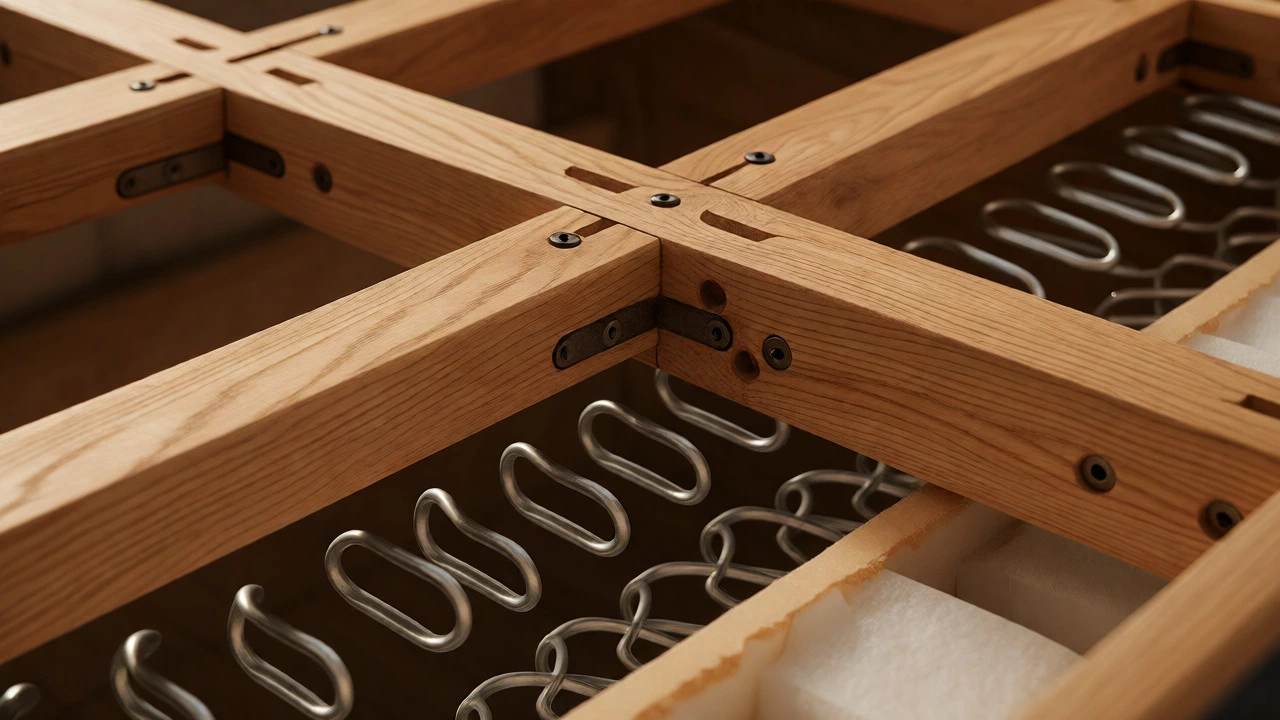
This is the biggest cost driver. Cheap sofas use engineered wood like particleboard or MDF. These materials are heavy but brittle. They crack if you move the sofa incorrectly, and they warp if you spill water on them. High-end sofas use kiln-dried hardwoods like oak, maple, or ash. "Kiln-dried" means the moisture has been removed so the wood doesn't twist or shrink over time. A hardwood frame with mortise-and-tenon joinery (where pieces fit together like puzzle parts) can last decades. A stapled-together particleboard frame is a ticking clock.
The Suspension: Webbing vs. Springs
Sit on a cheap sofa. Feel that sagging feeling after a few minutes? That’s elastic webbing doing its best. It’s rubber bands stretched across the frame. It works initially, but rubber degrades. Heat, humidity, and weight stretch it out until the seat bottoms out.
Mid-to-high-end sofas use sinuous springs (S-shaped metal wires) or eight-way hand-tied springs. Sinuous springs are standard in good quality furniture-they provide consistent support and bounce back. Hand-tied springs are artisanal work where each spring is tied individually to the frame. This allows for incredible comfort customization but costs significantly more in labor.
The Cushions: Foam Density Matters
Foam isn't just foam. Manufacturers measure quality by density (weight per cubic foot). Low-density foam (under 1.8 lbs/ft³) feels soft in the store but turns into a pancake within two years. Medium-density foam (1.8-2.5 lbs/ft³) offers a balance of comfort and resilience. High-resiliency foam (over 2.5 lbs/ft³) bounces back vigorously and lasts much longer.
Then there’s the wrapping. Many mid-range sofas wrap their foam cores in a thin layer of Dacron or polyester fiber. This makes the sofa feel plush and luxurious to the touch, hiding the firmness of the core. Down-filled cushions are the gold standard for luxury-they mold to your body-but they require constant fluffing and can be messy if feathers poke through the fabric.
How to Determine Your Personal Budget
So, how do you decide which tier you belong in? Don't just guess. Look at your lifestyle.
- The Transient Phase: Are you renting a small apartment for less than two years? Or moving cities frequently? Stick to the entry-level range ($300-$800). You want something light enough to move and cheap enough to replace without guilt. IKEA, Wayfair, or Target are your friends here.
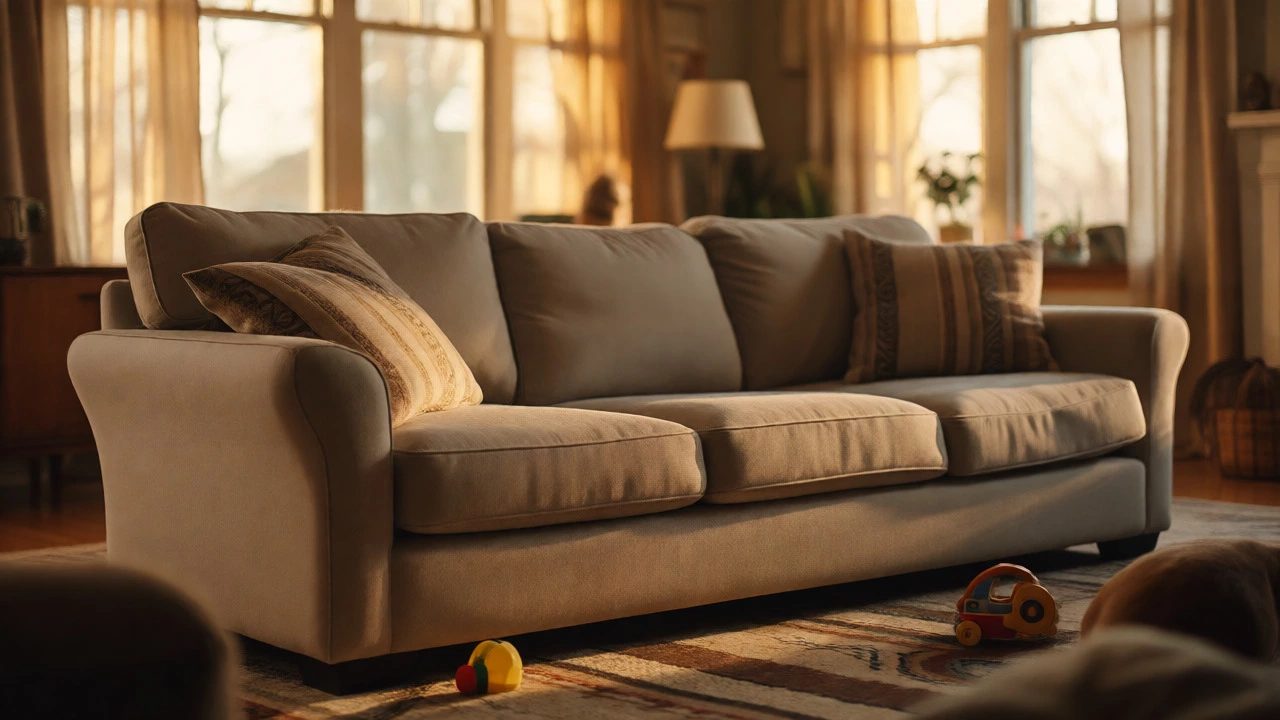
- The Family Hub: Do you have young children, pets, or frequent guests? This sofa takes a beating. Aim for the mid-range ($1,000-$2,500). You need stain-resistant performance fabrics (like Crypton or Sunbrella) and sturdy frames. You cannot afford a sofa that breaks in year three.
- The Forever Home: Do you own your home and plan to stay put for a decade? Invest in the high-end ($2,500+). You are paying for longevity and reupholsterability. A high-quality frame can be re-covered multiple times, meaning you never have to buy a new sofa again-just new fabric.
Hidden Costs That Blow Your Budget
The sticker price is rarely the final price. Before you swipe your card, factor these in:
- Delivery Fees: Free shipping often means curbside drop-off. If you live in a third-floor walk-up, "white glove" delivery (they carry it in, assemble it, and take away the trash) can cost $100-$300 extra.
- Taxes: Depending on where you live, sales tax can add 5-10% to the bill.
- Protection Plans: Salespeople love pushing these. For a $1,500 sofa, a $200 protection plan might be worth it if you have clumsy teenagers. For a $500 sofa, skip it-you could buy a whole new one for the cost of the plan plus a replacement.
- Matching Pieces: Does the deal require you to buy a loveseat or recliner to get the discount? Calculate the total package cost, not just the sofa unit.
Where to Shop for Value
Not all retailers offer the same value proposition. Here is a quick breakdown of where to look based on your budget:
| Retailer Type | Examples | Best For | Caveat |
|---|---|---|---|
| Big Box / Online Giants | IKEA, Amazon, Wayfair | Budget buyers, short-term needs, modern aesthetics. | Inconsistent quality control; assembly required. |
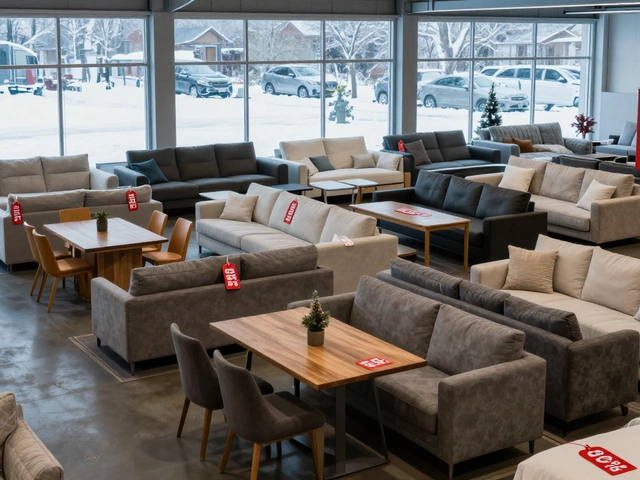
| Specialty Furniture Chains | Pottery Barn, Crate & Barrel, Raymour & Flanigan | Mid-range shoppers wanting style + durability. | Frequent sales make list prices misleading; wait for holidays. |
| Direct-to-Consumer Brands | Article, Burrow, Floyd | Modern design, transparent pricing, easy returns. | Limited physical showrooms; shipping delays can happen. |
| Local Artisans / Boutiques | Local upholstery shops | Custom sizing, unique fabrics, supporting local economy. | Long lead times (weeks/months); higher upfront cost. |
Pro Tips for Saving Money Without Sacrificing Quality
You don't have to spend $5,000 to get a great sofa. Here is how smart shoppers cut costs:
- Buy Display Models: Ask the manager about floor models. They are often discounted 20-40%. Just inspect them closely for stains or structural damage first.
- Wait for Holidays: Memorial Day, Labor Day, Black Friday, and Presidents' Day are huge sale events. Discounts of 20-30% are common during these windows.
- Choose Neutral Fabrics: Trendy colors go out of style fast, lowering resale value and making you want to upgrade sooner. Neutral tones (grey, beige, navy) age gracefully and match any decor change.
- Consider Leather Carefully: Genuine leather ages beautifully but requires maintenance. Faux leather (bonded leather) is cheap but peels quickly. Top-grain leather is durable but pricey. If you hate maintenance, stick to high-quality synthetic performance fabrics instead.
Final Verdict: What is "Normal"?
If you are replacing a worn-out couch in a family home, spending $1,200 to $1,800 is perfectly normal and sensible. This buys you a piece that will serve you well for half a decade. If you are furnishing a starter apartment, $500 is fine. If you are designing a forever home, $3,000 is a reasonable investment.
Don't let the salesperson pressure you into thinking you need the $6,000 model because it has "memory foam lumbar support." Focus on the frame, the suspension, and the fabric durability. Those are the things that determine whether your sofa is a five-year friend or a ten-year partner.
Is it worth buying an expensive sofa?
Yes, if you plan to keep it for more than five years. Expensive sofas typically use kiln-dried hardwood frames and high-density foam, which resist sagging and breaking. Over a 10-year period, a $3,000 sofa often costs less per year than two $1,000 sofas that wear out early.
How long should a couch last?
Budget sofas last 1-3 years. Mid-range sofas last 5-7 years. High-quality sofas with hardwood frames and sinuous springs can last 10-15 years or more, especially if reupholstered occasionally.
Should I buy a sectional or a standard sofa?
Sectionals offer more seating space and are great for families or entertaining, but they are harder to move and often cost more due to size. Standard sofas are more flexible for layout changes and easier to transport. Choose based on your room size and mobility needs.
What is the cheapest way to get a high-quality sofa?
Look for display models, shop during holiday sales (Memorial Day, Labor Day, Black Friday), or consider gently used high-end brands on platforms like Facebook Marketplace or Craigslist. Inspect the frame and springs carefully before buying used.
Do sofa warranties matter?
Warranties vary widely. Most cover structural defects (frame breakage) for 1-5 years but exclude cushion sagging or fabric wear. Read the fine print. Extended warranties are often unnecessary unless you have specific risk factors like large pets or toddlers.