
Construction Hierarchy & Risk Simulator
Click on a tier to explore their role, who they contract with, and the risks they pose to the property owner.
Quick Takeaways: The Subcontracting Chain
- A lower tier contractor is anyone not holding the prime contract with the owner.
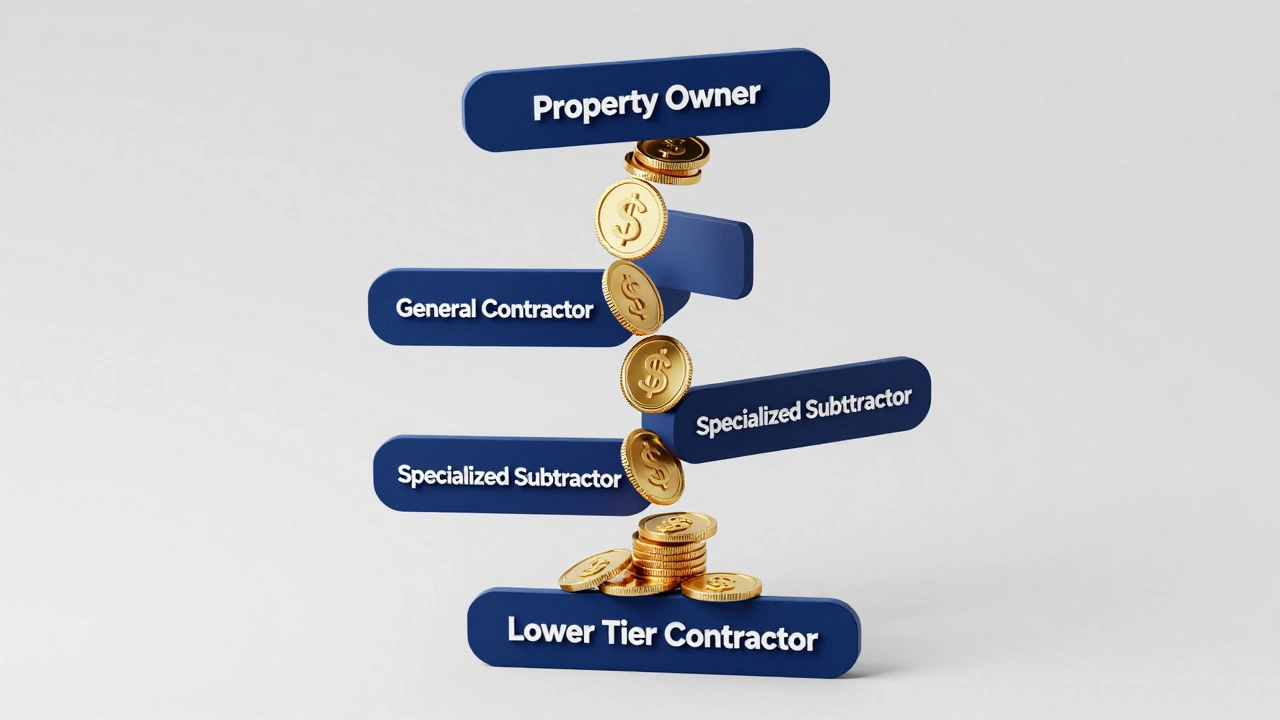
- The hierarchy usually flows: Owner → General Contractor → Subcontractor → Lower Tier Subcontractor.
- Payment flows down the chain, meaning a delay at the top can stop work at the bottom.
- Risk and liability are managed through contracts and insurance at every level.
Breaking Down the Construction Hierarchy
To understand the "lower tier," you first have to look at the top. At the peak is the property owner. They sign a contract with a General Contractor a firm responsible for the overall coordination and execution of a construction project. The General Contractor (GC) is the "prime" or "first tier." They take on the bulk of the risk and manage the schedule.
When the GC needs specific expertise, they hire a Subcontractor a specialized contractor hired by a general contractor to perform a specific task. This person is a second-tier contractor. Now, here is where it gets interesting: if that electrical subcontractor is too busy or needs a specific niche skill-like installing a complex smart-home system-they might hire another specialist. That third person is a lower tier contractor. They have no direct legal relationship with the owner; their only contract is with the second-tier subcontractor.
| Tier Level | Common Name | Who They Contract With | Primary Responsibility |
|---|---|---|---|
| Tier 1 | General Contractor | Property Owner | Project Management & Delivery |
| Tier 2 | Direct Subcontractor | General Contractor | Specialized Trade Execution |
| Tier 3+ | Lower Tier Contractor | Another Subcontractor | Niche Tasks or Labor Support |
Why the Tier System Exists
You might wonder why anyone would add these layers of complexity. Why not just hire everyone directly? It comes down to efficiency and risk. A GC doesn't want to manage 50 different small businesses; they want to manage five large ones. By hiring a large mechanical firm, the GC offloads the stress of finding a specific welder or HVAC technician.
For the Specialty Contractor a contractor who focuses on a specific area of construction, such as plumbing or electrical, lower tiers allow them to scale. If a plumbing company lands a massive hotel project, they might not have enough staff. Instead of turning down the job, they hire a lower tier contractor to handle the rough-in piping while their master plumbers handle the complex finishes. It allows the business to grow without permanently increasing its payroll.
The Danger Zone: Payment and Liens
The biggest problem with lower tier contractors is the "payment gap." Money moves like a waterfall. The owner pays the GC, the GC pays the sub, and the sub pays the lower tier. If the GC decides to withhold payment because of a dispute, the lower tier contractor is the first person to stop getting paid, even if their work was perfect.
This leads to a scary legal tool called a Mechanic's Lien a legal claim against a property by a contractor who has not been paid for work performed. Even though you, the owner, never signed a contract with the lower tier contractor, they can still place a lien on your property if they aren't paid. This means you could be forced to pay for the same work twice-once to your GC and again to the disgruntled lower tier worker-just to clear the title to your home.
Managing Risks When Hiring
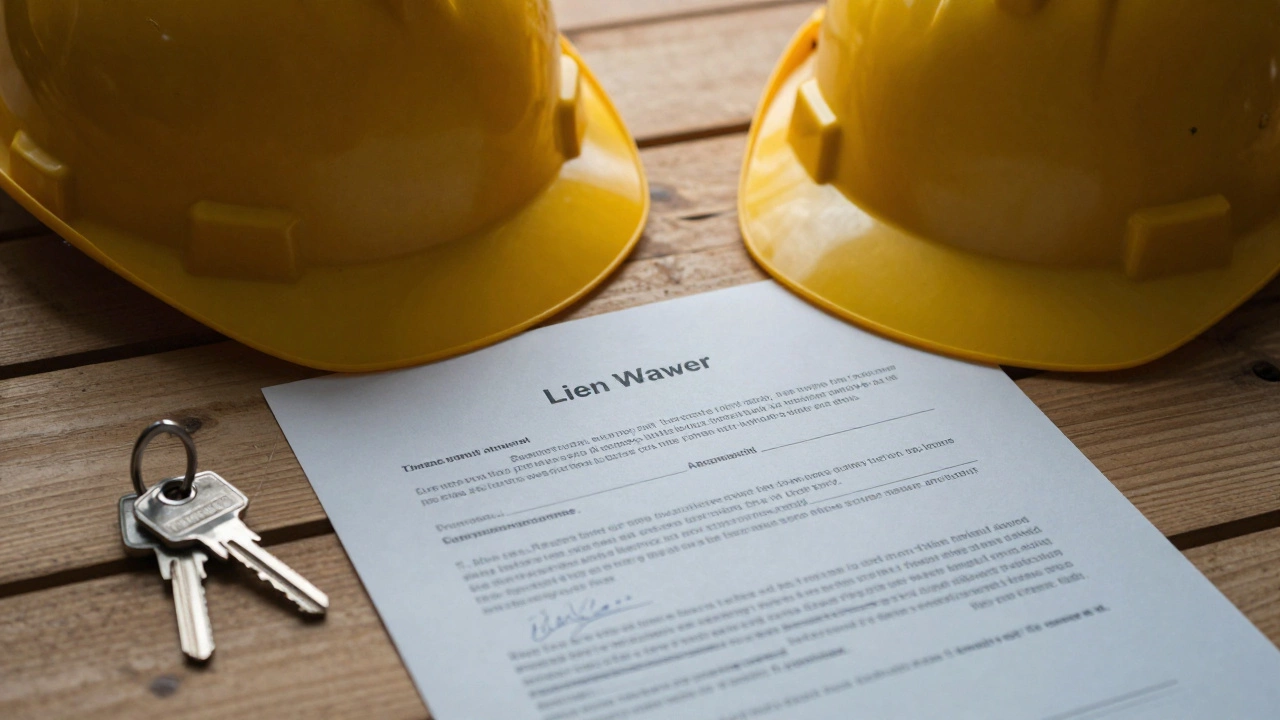
If you are the one hiring, or if you are a GC managing a project, how do you stop these issues? The answer is Lien Waivers documents signed by contractors confirming they have been paid and waive their right to file a lien. A lien waiver is a legal receipt. You should never make a final payment to a GC unless they provide signed waivers from every single person in the chain, including the lower tier contractors.
Another critical piece is General Liability Insurance insurance that protects a business from claims of bodily injury or property damage. You need to ensure that every tier of the project is covered. If a lower tier contractor drops a tool through a ceiling and hits someone, you don't want to find out that only the GC is insured and the lower tier guy is working "under the table." Check for a current Certificate of Insurance (COI) for every entity on site.
How to Spot Lower Tier Contractors on Your Site
Not every project will have three or four layers, but they are common in larger builds. You can usually spot them by looking at the branding. The GC's trucks are everywhere. The second-tier subs have their own branded vans (e.g., "City Plumbing"). Lower tier contractors often arrive in unmarked trucks or are managed by a foreman from the tier above them. They rarely interact with the property owner directly.
If you notice a crew on your property that you don't recognize, don't be afraid to ask your GC: "Who is this team, and what is their relationship to the project?" A professional GC will be transparent about their subcontracting chain. If they get defensive or vague, it might be a sign that they are cutting corners or hiring unlicensed labor to save money.
Is a lower tier contractor the same as a subcontractor?
Technically, yes, but with a difference in position. All lower tier contractors are subcontractors, but not all subcontractors are "lower tier." A first-tier subcontractor contracts directly with the General Contractor. A lower tier contractor contracts with another subcontractor.
Can a lower tier contractor sue the property owner?
Usually, they cannot sue for breach of contract because there is no contract between them and the owner. However, they can file a mechanic's lien against the property to secure payment for the work they performed, which effectively forces the owner's hand.
Who is responsible for the quality of work done by a lower tier contractor?
The General Contractor is ultimately responsible to the owner for the entire project. If a lower tier contractor messes up the wiring, the owner holds the GC accountable, and the GC then holds their subcontractor accountable, who in turn holds the lower tier contractor accountable.
Do lower tier contractors need their own licenses?
Yes. In most jurisdictions, anyone performing specialized trade work (like electrical or plumbing) must be licensed regardless of where they sit in the contract chain. Hiring an unlicensed lower tier contractor can lead to failed inspections and voided insurance policies.
What happens if a lower tier contractor isn't paid?
They may stop working immediately, delaying the project. More seriously, they may file a lien against the property. This is why owners should request lien waivers from all tiers before issuing final payments to the general contractor.
Next Steps for Project Owners
If you are currently managing a construction project, start by requesting a "Subcontractor List" from your GC. This document should list every company and individual working on your site. Once you have that, ask for the insurance certificates for each one. If you are in the final stages of a project, do not release the final retention payment until you have a signed lien waiver from every entity on that list. This simple step prevents 99% of the legal disputes associated with the construction hierarchy.