Bedroom Furnishing Budget Calculator
How much should you spend?
Get a personalized recommendation based on your needs and budget. This calculator uses the article's research on Canadian bedroom furniture costs.
Setting up a bedroom shouldn’t feel like a financial gamble. You want comfort, style, and durability - but you also don’t want to drain your savings. So how much should you actually spend? The answer isn’t one number. It depends on what you need, what you already own, and how long you plan to stay in the space. In Vancouver, where housing costs are high and space is tight, making smart choices matters even more.
Start with the essentials - the big five
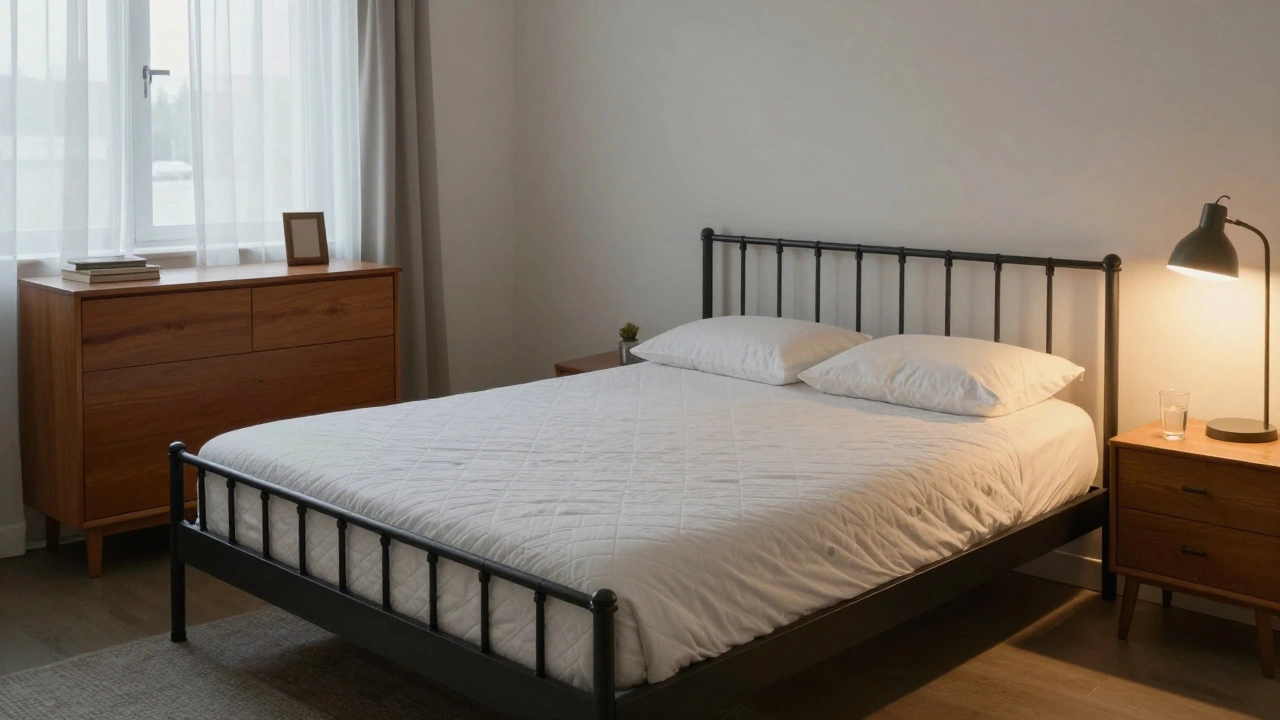
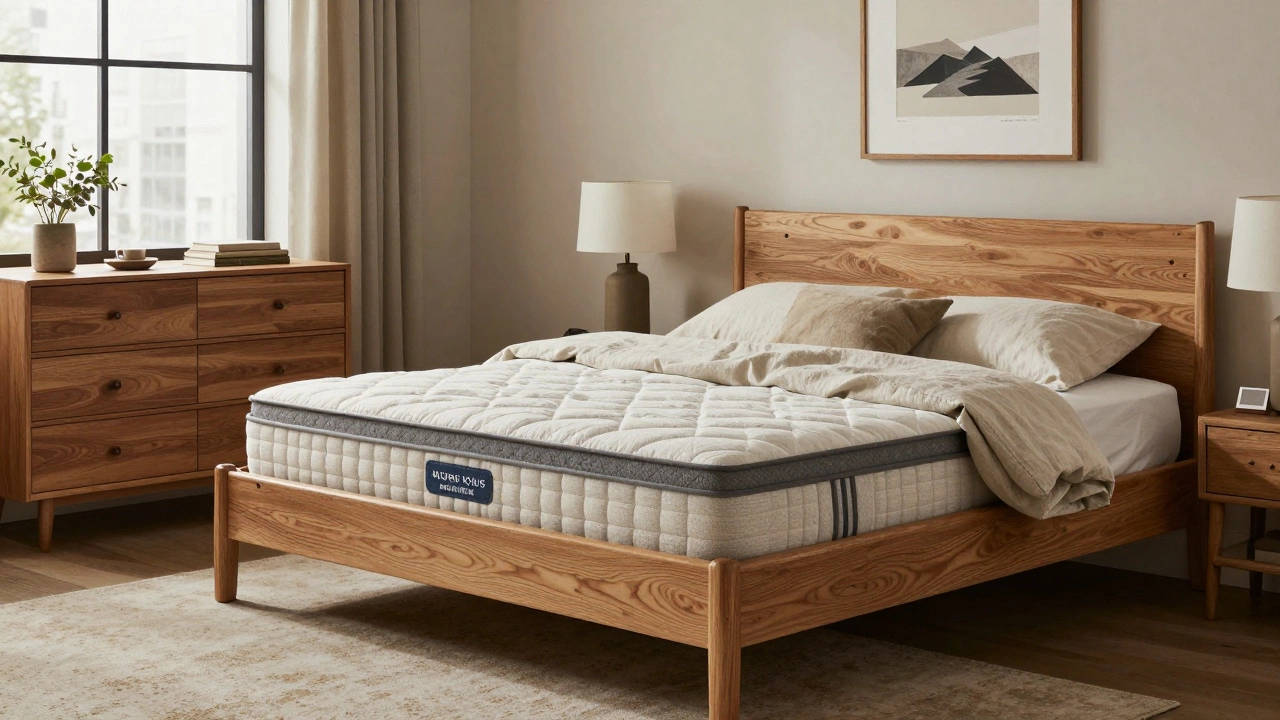
Every bedroom needs five core pieces: a bed frame, mattress, dresser, nightstand, and lighting. These aren’t optional. Skip any of them, and your room won’t function. The average Canadian spends between $1,500 and $4,000 on these five items. That’s not a suggestion - it’s the real range people pay when they’re not buying on impulse.Let’s break it down. A decent bed frame costs $300-$800. Solid wood or metal frames last longer than particleboard. A good mattress? Plan for $800-$1,500. You can find cheaper ones, but if you’re waking up sore, you’ll pay more in the long run. A dresser with five drawers runs $400-$900. Nightstands? $100-$300 each. Add a floor lamp or two bedside lamps, and you’re looking at $150-$400.
That adds up. But here’s the trick: don’t buy all at once. If you’re on a tight budget, get the mattress first. You spend a third of your life on it. Then the bed frame. Then the dresser. Nightstands and lighting can wait a few months. People who spread out purchases over six months end up happier - and less stressed - than those who go all-in on day one.
What’s the bare minimum you can get away with?
If you’re moving into a small apartment or just need a temporary setup, you can do a bedroom for under $1,000. But you’ll have to make trade-offs.- Bed frame: $150-$250 (metal or basic wood from IKEA or Costco)
- Mattress: $500-$700 (mid-range memory foam or hybrid)
- Dresser: $200-$300 (used or flat-pack)
- Nightstand: $50-$100 (repurposed side table or thrift store find)
- Lighting: $50 (a single LED floor lamp)
This setup works. I’ve seen it in student rentals and first-time renters in East Vancouver. It’s not luxurious, but it’s functional. The key? Avoid cheap mattresses under $400. They collapse fast and ruin your sleep. And don’t buy a bed frame without checking the slats - if they’re spaced more than 3 inches apart, you’ll need a box spring or foundation, which adds cost.
When does it make sense to spend more?
If you’re staying put for five years or more, spending $5,000-$8,000 on your bedroom pays off. Why? Because quality lasts. A solid oak bed frame from a local maker can last 30 years. A premium mattress (like those from Saatva or Casper’s higher-end lines) holds its support for 10+ years. A hand-finished dresser with dovetail joints won’t warp or fall apart after two moves.People who invest in higher-end pieces often say they feel calmer in their space. It’s not just about looks - it’s about stability. When your furniture doesn’t creak, wobble, or smell like plastic, your brain relaxes. In a city like Vancouver, where noise and stress are constant, that matters.
Also, consider resale value. If you ever sell your home, a well-furnished bedroom can add perceived value. Buyers notice when furniture looks intentional, not thrown together. Even if you take the pieces with you, they’ll hold their value better if you bought well.
What to avoid - common mistakes
Most people overspend on things that don’t matter. Here’s what to skip:- Matching sets from big-box stores - they’re mass-produced, low quality, and look generic
- Overpriced headboards - a simple upholstered one adds comfort, but a 5-foot-wide velvet monstrosity? Just for Instagram
- Expensive decorative items - art, rugs, and pillows are easy to upgrade later
- Buying online without seeing the mattress - no matter how many reviews you read, you need to lie on it
- Ignoring storage - if you don’t have enough drawers, you’ll end up with cluttered surfaces, which makes the room feel smaller
One client I worked with spent $2,000 on a designer nightstand with drawers that didn’t slide. Two months later, she bought a $120 IKEA nightstand that worked perfectly. Don’t be her.
Where to shop smart in Vancouver
You don’t need to buy everything new. Vancouver has a strong secondhand market.- ReStore (Habitat for Humanity) - great for solid wood dressers, nightstands, and bed frames. Prices start at $50.
- Facebook Marketplace and Kijiji - search "bedroom set" or "used dresser". People often sell full sets after moving or downsizing.
- Local furniture makers - check out shops in Kitsilano or Commercial Drive. They use real wood, offer customization, and often have clearance items.
- Costco and IKEA - good for basics. Costco’s mattress sales in January and July are the best of the year.
Pro tip: Visit ReStore on a Tuesday morning. New stock drops Monday nights, and the best pieces go fast.

How to budget - a simple 3-step plan
1. Set your total limit. Decide what you can afford without touching your emergency fund. Most people spend 5-10% of their annual income on bedroom furniture. If you make $60,000, that’s $3,000-$6,000. 2. Split your budget by priority. Allocate 40% to mattress, 25% to bed frame, 20% to dresser, 10% to nightstands, 5% to lighting. Adjust if you already own some pieces. 3. Wait for sales. Major sales happen in January (after holidays), July (summer clearance), and during Labour Day weekend. Don’t buy in March or October - prices are highest.One woman I know bought her entire bedroom setup over three sales events. She spent $2,800 total - same quality as someone who paid $5,000 upfront.
Final thought: It’s not about the price tag - it’s about the feeling
Your bedroom should feel like a retreat. Not a showroom. Not a Pinterest board. A place where you can breathe. The right furniture doesn’t have to be expensive. But it does have to be right for you.If you’re tired of waking up stiff, if your clothes are piled on the floor because the dresser is full, if your nightstand can’t hold your phone or a glass of water - then you’ve already spent too much. Not in dollars. In sleep. In peace. In time.
Fix that first. The rest follows.
How much should I spend on a mattress for my bedroom?
Plan to spend between $800 and $1,500 on a mattress that lasts 8-12 years. Cheaper options under $500 tend to lose support quickly, leading to back pain and early replacement. Look for memory foam, hybrid, or innerspring models with at least a 10-year warranty. Brands like Casper, Saatva, and Endy offer good value in Canada.
Is it worth buying used bedroom furniture?
Yes, if you know what to look for. Solid wood dressers, metal bed frames, and quality nightstands from the 1980s-2000s often outlast new particleboard pieces. Check for wobbly joints, stains, or pest damage. ReStore, Facebook Marketplace, and local thrift stores in Vancouver are reliable sources. Avoid anything that smells musty or has broken hardware.
Should I buy a matching bedroom set?
No, not unless you’re going for a very specific look. Matching sets are usually cheaply made and look uniform in a way that feels dated. Mixing styles - like a modern bed with a vintage dresser - creates more character and lets you upgrade pieces over time. It’s also cheaper.
What’s the best time of year to buy bedroom furniture in Canada?
The best sales happen in January (post-holiday clearance), July (summer inventory reset), and around Labour Day weekend. Retailers like IKEA, Costco, and local furniture stores drop prices to make room for new stock. Avoid buying in March or October - those are peak pricing months.
Can I furnish a bedroom for under $1,000?
Yes, but you’ll need to be strategic. Focus on essentials: a $500 mattress, a $200 bed frame, a $250 used dresser, a $75 nightstand, and a $50 floor lamp. Skip decorative items. Shop secondhand, wait for sales, and prioritize comfort over style. Many renters in Vancouver do this successfully.