New Home Material Cost & Efficiency Calculator
Why this matters: The materials used in new builds directly affect your home's long-term costs, durability, and energy efficiency. This calculator helps you compare options mentioned in the article.
Climate Considerations
Material Analysis
Cost Impact
Energy Savings
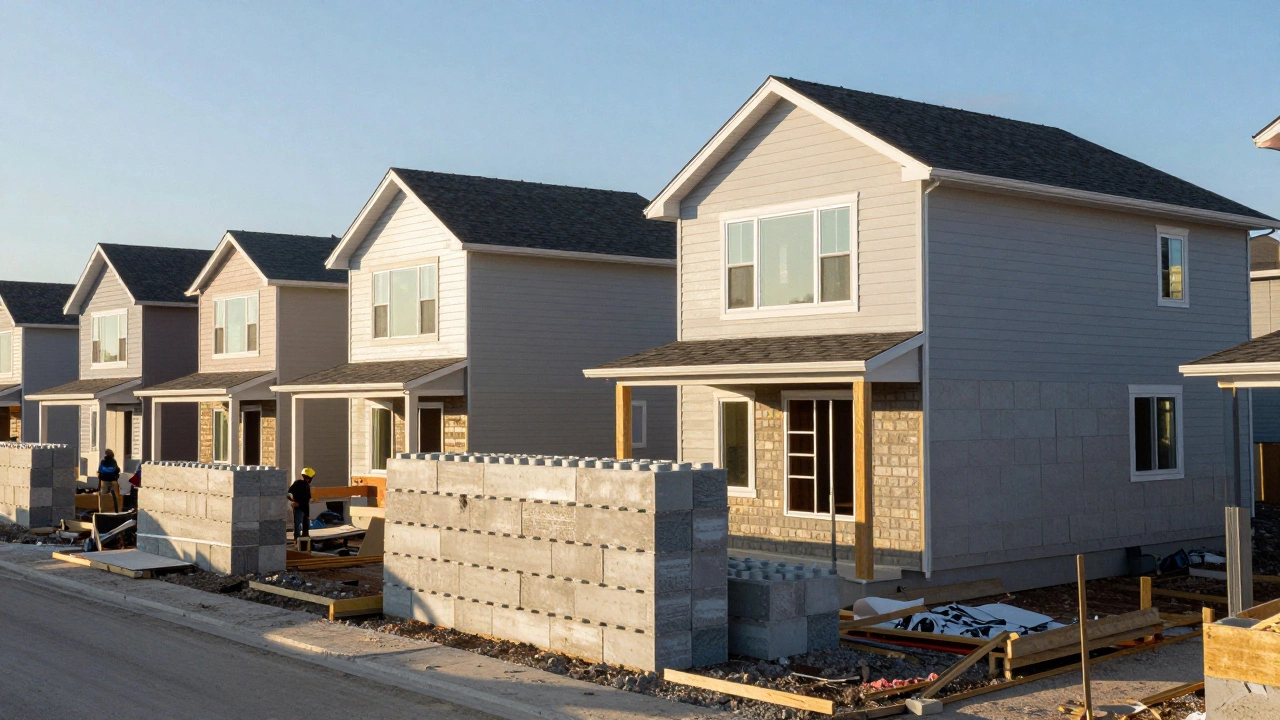
When you walk past a new neighborhood under construction, what do you really see? It’s not just walls and roofs-it’s a mix of materials chosen for speed, cost, durability, and what’s available right now. In 2026, the most common materials used in new builds aren’t what they were ten years ago. The shift has been quiet but massive, driven by supply chain changes, labor shortages, and climate goals. So what’s actually being used to build homes today?
Steel and Wood Are Still the Backbone
Let’s start with the basics. Most single-family homes in North America still use wood framing. It’s not because it’s the best option-it’s because it’s the easiest to work with, widely available, and crews know how to build with it. But even wood has changed. Today’s lumber is mostly engineered wood: I-joists, laminated veneer lumber (LVL), and oriented strand board (OSB). These materials are stronger, more consistent, and use less virgin timber than old-school 2x4s.
Steel is making a bigger push too. Especially in areas prone to wildfires, hurricanes, or earthquakes. Steel frames don’t rot, don’t attract termites, and can handle more load with less material. In Vancouver, where seismic codes tightened in 2023, over 40% of new multi-family builds now use light-gauge steel framing instead of wood. It costs about 15% more upfront, but it cuts insurance premiums by 20-30% and lasts twice as long.
Concrete Is Back in a Big Way
Concrete used to be for basements and driveways. Now it’s in walls, floors, and even roofs. Insulated concrete forms (ICFs) are the fastest-growing material in residential construction. These are foam blocks stacked like LEGO bricks, then filled with reinforced concrete. The result? Walls that are thick, soundproof, and energy-efficient. A home built with ICFs can cut heating and cooling costs by up to 50% compared to traditional wood framing.
Why the surge? Labor. ICFs require fewer skilled workers. One crew can build a full wall in a day. No need for carpenters, framers, or insulation installers. In 2025, the National Association of Home Builders reported that ICF use jumped 67% year-over-year. It’s not just for luxury homes anymore-developers are using it for entry-level condos and townhomes because it saves money over time.
Advanced Insulation and Air Barriers
It’s not just what you build with-it’s what you seal it with. New builds in 2026 all have air-tight envelopes. That means spray foam insulation isn’t optional anymore; it’s standard. Closed-cell spray polyurethane foam is now used in over 80% of new homes in Canada and the northern U.S. It expands to fill every crack, blocks moisture, and acts as its own vapor barrier.
Even windows have changed. Triple-pane windows with low-e coatings and argon gas fills are now the baseline. They’re not expensive anymore-prices dropped 35% since 2022 due to mass production. A home built in 2020 with double-pane windows would be considered outdated today. Builders who skip triple-pane now risk losing sales to buyers who check energy ratings before signing a contract.
Engineered Wood Products Are Replacing Drywall
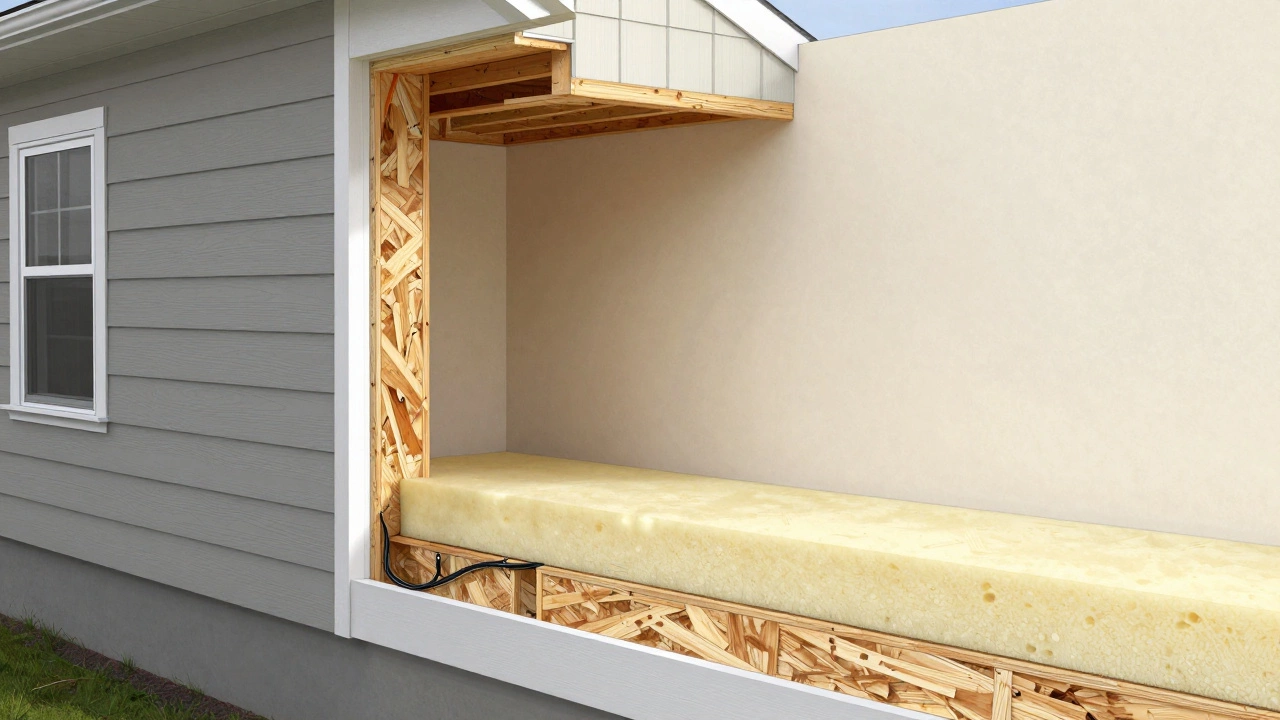
Interior walls? They’re not just drywall anymore. Many new builds use structural insulated panels (SIPs) for both walls and roofs. These are foam cores sandwiched between sheets of OSB. They’re stronger, faster to install, and way more energy-efficient. Some builders are even using prefabricated wall sections that come with wiring, plumbing, and insulation already inside. One company in British Columbia cuts entire wall modules in a factory, then trucks them to site. Installation takes under two days.
Even drywall alternatives are gaining ground. Fiber-reinforced panels made from recycled materials are now used in bathrooms and basements because they don’t mold. Some builders are using cement board as a base for tile instead of traditional drywall. It’s tougher, lasts longer, and doesn’t need a moisture barrier underneath.
Why Plastic and Composite Materials Are Everywhere
Look at the deck. Look at the siding. Look at the trim. Chances are, it’s not wood. Composite decking made from recycled plastic and wood fibers is now the #1 choice for outdoor living spaces. It doesn’t splinter, fade, or rot. And it comes in colors that last. Same goes for siding. Fiber cement siding-made from cement, sand, and cellulose-has replaced vinyl in 70% of new builds since 2023. It’s fire-resistant, termite-proof, and holds paint better than anything else.
Even window frames and door frames are shifting. Vinyl is still common, but aluminum-clad wood and fiberglass frames are growing fast. Fiberglass frames expand and contract less than vinyl, which means they stay sealed longer. In cold climates like Vancouver, that’s a huge deal.
What’s Disappearing?
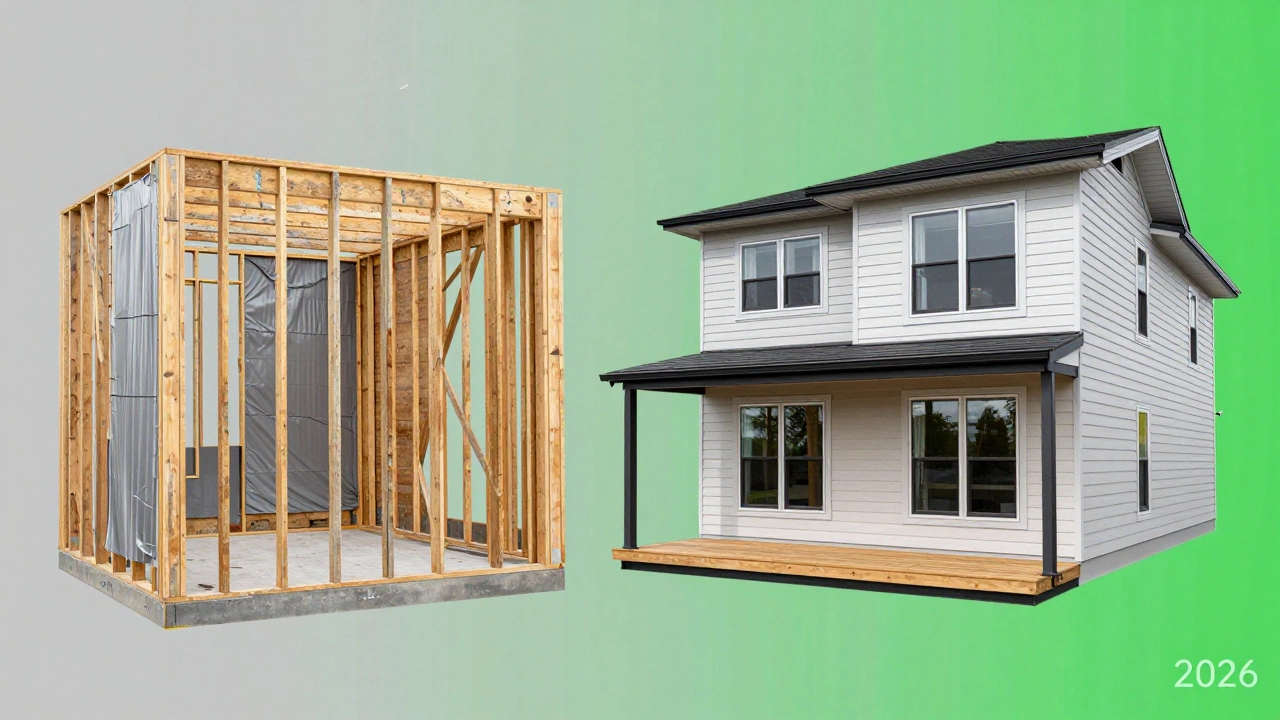
Some materials are fading out. Traditional asphalt shingles? Still around, but being replaced by metal roofing in 60% of new builds. Metal lasts 50+ years, sheds snow better, and is recyclable. Brick veneer? Still used, but mostly for accents now. Full brick exteriors are too expensive and heavy for modern foundations. And don’t expect to see much real wood trim anymore. It’s all fiber cement or composite.
Even insulation types have changed. Fiberglass batts? Still used in some attics, but they’re being phased out of walls. Why? They don’t seal air leaks. Spray foam and rigid foam boards are taking over because they create a continuous barrier.
Why This Matters to You
If you’re thinking of buying a new build, you need to ask: What is this house made of? Not just the finishes-the structure. A home built with ICFs and steel framing will last longer, cost less to heat, and hold its value better. A home built with cheap wood and fiberglass batts might look nice today, but in 10 years, you could be dealing with air leaks, mold, or higher energy bills.
Builders are under pressure to build faster and cheaper. But the smart ones are investing in materials that save money over time. The most common materials in new builds today aren’t flashy. They’re practical. Reliable. And built to last.
When you walk into a new home, don’t just look at the countertops. Ask about the walls. The roof. The insulation. The framing. That’s where the real value is.
What materials are most new homes made of in 2026?
Most new homes in 2026 are built using engineered wood framing, steel for structural support in seismic zones, insulated concrete forms (ICFs) for walls, closed-cell spray foam insulation, triple-pane windows, fiber cement siding, and composite decking. These materials prioritize energy efficiency, durability, and ease of construction.
Is wood still the main material for house framing?
Yes, but it’s not the same wood as before. Today, most homes use engineered wood products like I-joists, LVL beams, and OSB panels instead of solid 2x4s. These are more uniform, stronger, and use less timber. In areas with strict building codes, steel framing is replacing wood in 30-40% of new builds.
Why are ICFs becoming so popular in new builds?
Insulated concrete forms (ICFs) are popular because they’re fast to install, require fewer skilled workers, and deliver exceptional energy efficiency. Homes built with ICFs can cut heating and cooling costs by up to 50%. They’re also fire-resistant, soundproof, and handle extreme weather better than wood frames.
Are triple-pane windows worth the extra cost?
Yes, especially in cold climates like Vancouver. Triple-pane windows with low-e coatings and argon gas reduce heat loss significantly. Since 2023, they’ve dropped in price by over 35% and are now standard in most new builds. Homes without them often struggle to meet modern energy codes and lose resale value.
What’s replacing vinyl siding?
Fiber cement siding is now the top choice. It’s more durable than vinyl, resists fire and insects, holds paint longer, and looks more like real wood. Since 2023, over 70% of new builds in Canada and the northern U.S. use fiber cement instead of vinyl siding.