Couch Storage Suitability Calculator
Assess Your Storage Conditions
Calculate if your storage environment is safe for couch storage
Storage Suitability: Safe
Your storage conditions are ideal for couch preservation. Consider checking the couch every 60 days for moisture.
Storage Suitability: Risk of Damage
These conditions may cause mold, mildew, or fabric damage. Consider these improvements:
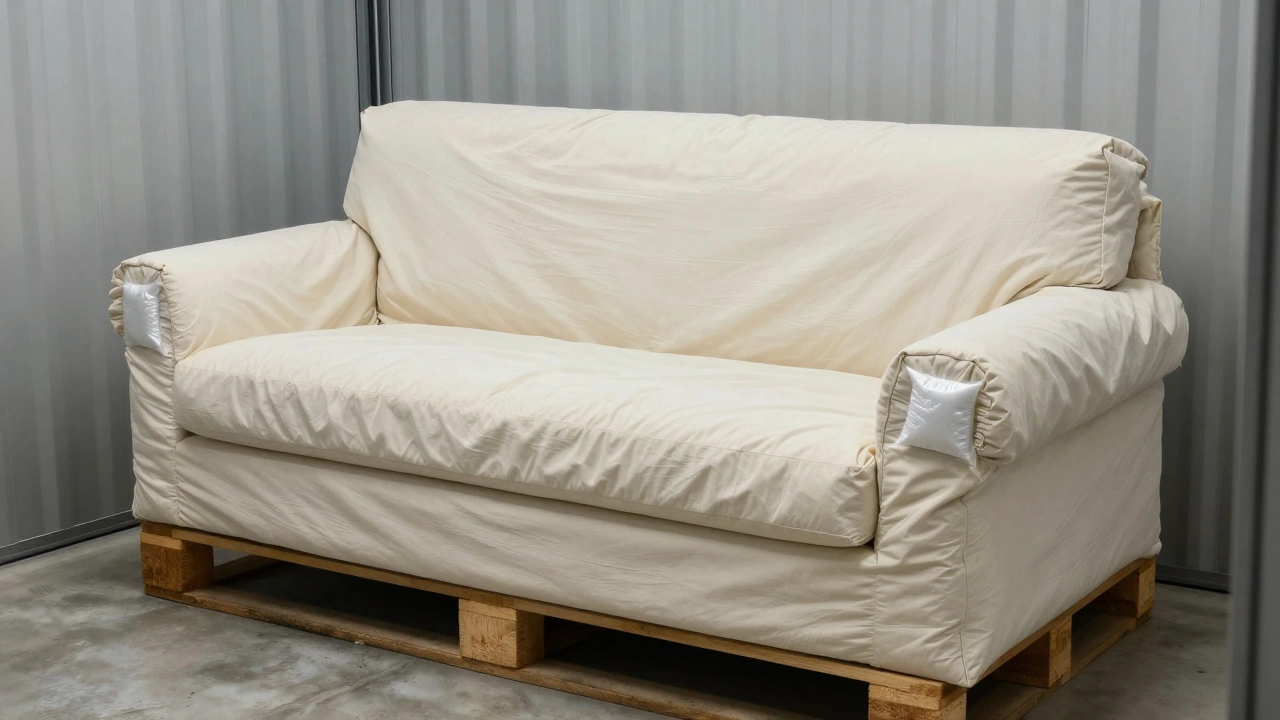
- Use breathable cotton covers
- Add 3-4 silica gel packs
- Elevate the couch at least 4 inches off the floor
Recommended silica gel packs needed:
Key Recommendations
For ideal storage: Maintain 55-75°F temperature and 30-50% humidity with climate-controlled storage.
For garage/attic storage: Always use breathable cotton covers and at least 4 silica gel packs per couch.
Storing a couch shouldn’t mean risking mold, dust, or tears when you pull it out months later. Whether you’re moving, renovating, or just clearing space, a couch left unprotected in a garage, attic, or storage unit can turn into a costly mistake. The good news? Sealing a couch for storage is simple-if you know the right steps. Skip the plastic wrap and guesswork. Here’s how to do it right.
Why sealing a couch matters more than you think
People think couches are tough. They’ve survived kids, pets, spilled coffee, and late-night movie marathons. But storage? That’s a different beast. Humidity turns fabric into a breeding ground for mildew. Dust settles into crevices and becomes impossible to vacuum out. Rodents chew through seams. Sunlight bleaches colors. Even temperature swings can crack leather or warp wood frames.
A 2023 study by the Furniture Care Institute found that 68% of stored sofas showed signs of damage after six months without proper sealing. The biggest culprits? Moisture and poor airflow. Plastic bags trap condensation. Cheap tarps let dust in. And leaving cushions exposed? That’s asking for stains and odors to set in.
Sealing isn’t about covering it up-it’s about creating a breathable, clean, dry barrier. Think of it like putting a tent over a tent. You need layers that protect without suffocating.
What you’ll need before you start
You don’t need fancy gear. Just these basics:
- High-quality cotton or microfiber couch cover (not cheap plastic)
- Heavy-duty moving blankets (at least two)
- Zipper-seal storage bags (for cushions and pillows)
- Desiccant packs (silica gel, not charcoal)
- Staple gun and staples
- Masking tape or painter’s tape
- Vacuum with upholstery attachment
- Lint roller
Don’t use garbage bags, cling film, or cheap tarps. They trap moisture. You want something that lets air move while keeping dust and bugs out. Cotton canvas covers work best-they’re breathable, durable, and easy to clean.
Step-by-step: How to seal your couch for storage
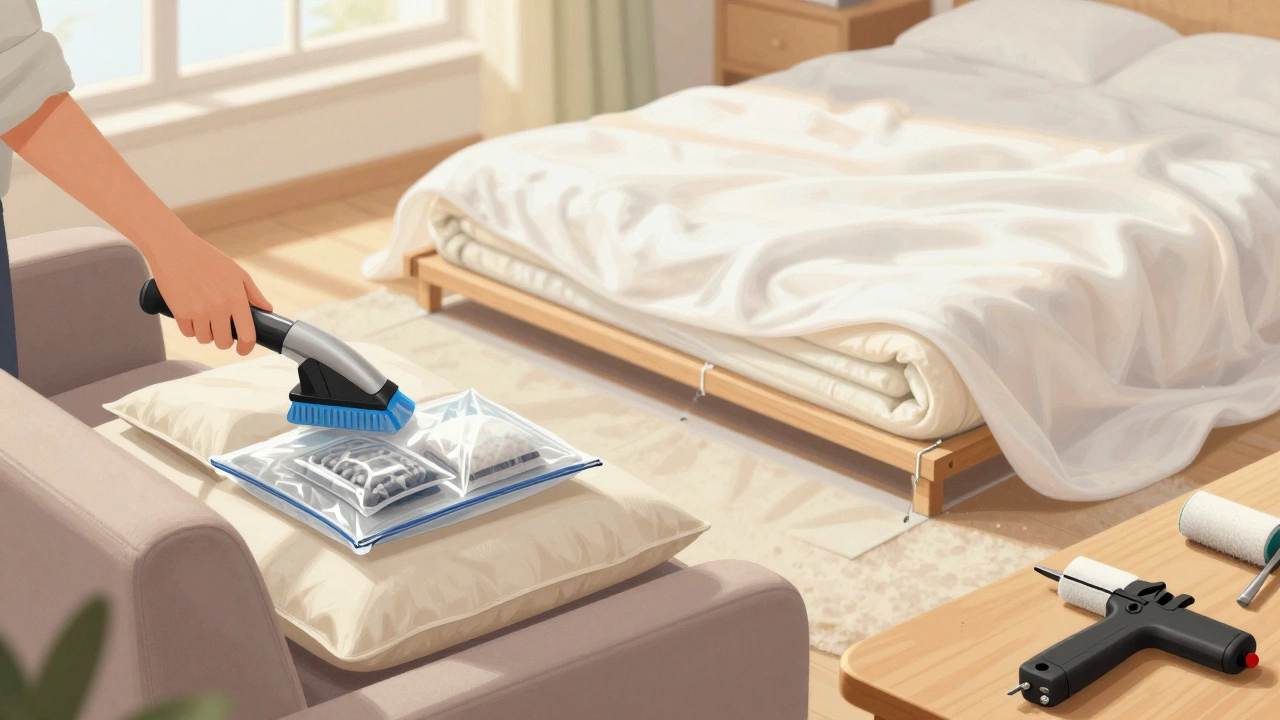
- Deep clean first. Vacuum every seam, crevice, and underside. Use the upholstery tool. Then run a lint roller over the fabric to pick up pet hair and fibers. If the couch is stained, spot-clean with a mild detergent and water. Let it dry completely-24 hours minimum. Wet fabric stored = mold waiting to happen.
- Remove and bag the cushions. Take off all removable cushions and pillows. Vacuum them too. Place each one in a separate zipper-seal storage bag. Add two silica gel packs per cushion. Seal tightly. This keeps moisture out and prevents mildew from forming inside the stuffing.
- Wrap the frame with moving blankets. Lay one moving blanket over the couch frame, covering arms, legs, and back. Tuck it in snugly. Add a second blanket on top, overlapping the first. Use a staple gun to secure the edges along the underside of the frame. Don’t staple into the fabric-only the wooden or metal frame. This protects against scrapes and dents.
- Slide on the cotton couch cover. Put the breathable cover over the entire wrapped couch. Make sure it’s pulled taut. Tuck the excess under the base. Use masking tape to seal any gaps around the legs or back. This creates a full barrier without trapping air.
- Place desiccant packs inside. Tuck two or three silica gel packs into the corners of the cover, near the arms and backrest. These will absorb any hidden moisture that sneaks in over time.
- Store it right. Don’t put the couch directly on concrete. Use wooden pallets or thick cardboard. Elevate it at least 4 inches off the floor. Keep it away from windows, vents, and water pipes. A climate-controlled unit is ideal. If you’re storing it in a garage, make sure it’s dry and insulated.
What not to do
Here’s where most people mess up:
- Don’t use plastic wrap. It traps sweat from the air. Condensation builds up, turns into mold, and stains the fabric permanently.
- Don’t stack things on top. Even a box of books can crush the springs or warp the frame. Keep it clear.
- Don’t store it upright. Couches aren’t designed to stand on end. The weight distorts the frame and loosens joints. Always lay it flat or on its side with support.
- Don’t forget to check it. Every 60 days, open the cover for 10 minutes. Let air circulate. Check for dampness or odors. Replace silica packs if they feel soggy.
How long can you store a sealed couch?
With proper sealing, a couch can stay protected for up to 18 months. After that, the materials start to degrade-even in ideal conditions. If you’re storing it longer than a year, consider re-wrapping the cushions and swapping out desiccant packs. Leather couches need extra care: apply a light coat of leather conditioner before sealing to prevent cracking.
Wood frames? Check for warping every 3 months. Metal legs? Look for rust spots. A quick wipe-down with a dry cloth during your monthly check can save you from a full restoration job later.
What if your couch already smells or has stains?
If you’re storing a couch that’s been exposed to smoke, pet accidents, or spills, cleaning before sealing isn’t optional-it’s essential. Odors get locked in. Stains become permanent.
For smoke smell: Use a fabric deodorizer like baking soda. Sprinkle it generously over the fabric, let it sit for 4 hours, then vacuum thoroughly. Repeat if needed.
For pet stains: Blot with a solution of 1 part white vinegar to 2 parts water. Then dab with a clean cloth. Let dry. Sprinkle baking soda again before sealing.
For food or drink stains: Use a specialized upholstery cleaner like Folex or Woolite. Never use bleach or ammonia-it damages fabric fibers and can discolor dyes.
Once cleaned, let it dry completely. No shortcuts. Even a little moisture left behind can ruin everything.
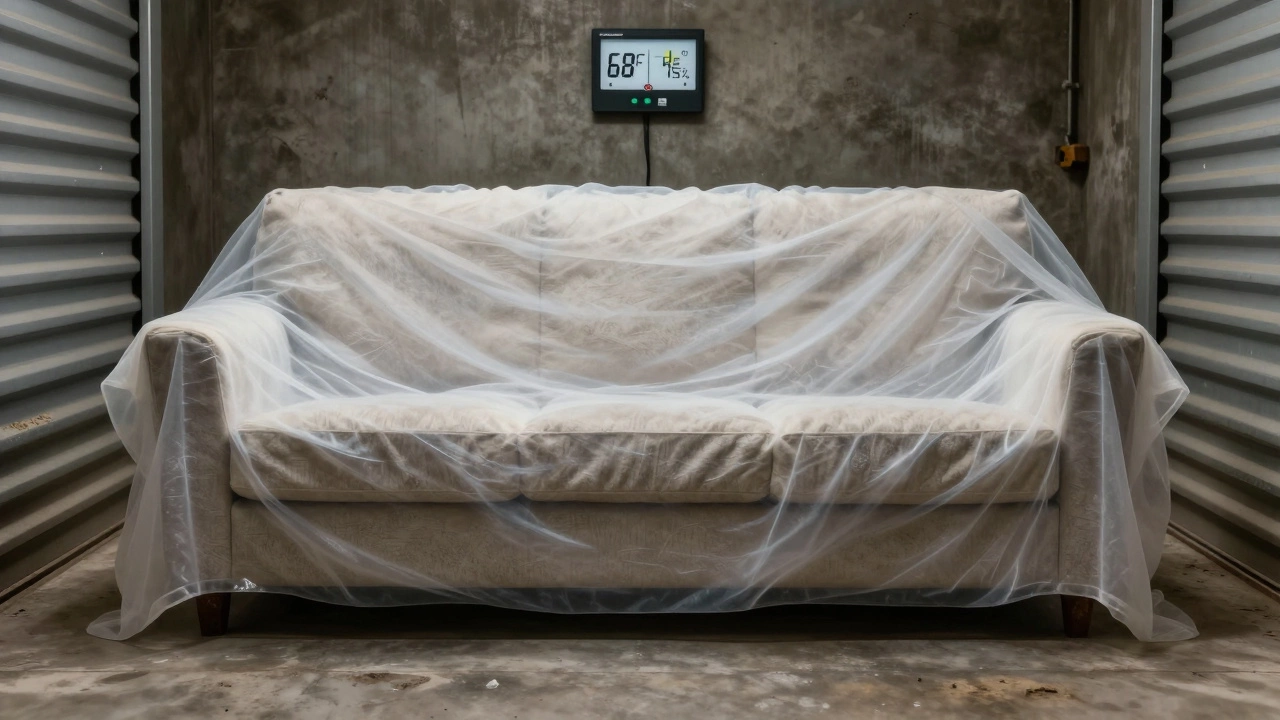
Storage unit tips for couches
If you’re using a storage facility, ask these questions before renting:
- Is it climate-controlled? (Ideal range: 55-75°F, 30-50% humidity)
- Are there any leaks or damp spots near the floor?
- Is the unit rodent-proof? (Check for gaps under doors or vents)
- Can you access it easily if you need to check on it?
Place the couch in the center of the unit, not against a wall. Walls can get cold and cause condensation. Keep it away from other items that might drip or leak.
When to replace instead of store
Not every couch is worth saving. If the frame is cracked, the springs are broken, or the fabric is thinning, sealing it won’t help. You’re just delaying the inevitable.
Ask yourself: Would I buy this couch again at full price? If the answer’s no, consider donating or recycling it. Many cities have furniture recycling programs. Some charities take gently used pieces-even if they’re not perfect.
Storing a couch is only smart if the couch is still worth keeping. Protect what matters. Let go of what doesn’t.
Final checklist before sealing
- ☐ Couch is completely dry
- ☐ Cushions are bagged with silica gel
- ☐ Frame is wrapped in moving blankets
- ☐ Cover is breathable (cotton, not plastic)
- ☐ Desiccant packs are inside
- ☐ Couch is elevated off the floor
- ☐ Stored in dry, climate-controlled space
Follow this, and your couch will come out looking like it never left your living room.
Can I use a plastic trash bag to seal my couch?
No. Plastic trash bags trap moisture and create condensation inside. This leads to mold, mildew, and permanent fabric damage. Always use a breathable cotton cover instead.
How often should I check on my stored couch?
Every 60 days. Open the cover briefly to let air circulate. Check for dampness, odors, or pests. Replace silica gel packs if they feel heavy or soggy. This prevents hidden damage from becoming a big problem.
Should I remove the legs before storing the couch?
Only if they’re detachable and fragile. Most couch legs are meant to stay attached. Removing them increases the risk of losing parts or damaging the frame. If you’re worried about scratches, wrap them in foam or bubble wrap instead.
Can I store a leather couch the same way?
Almost-but with extra care. Clean leather with a damp cloth and mild soap. Then apply a thin layer of leather conditioner before sealing. Never use plastic. Use a cotton cover and keep humidity below 50%. Leather cracks if it dries out too much.
Is climate control really necessary?
Yes, especially if you live in a humid or cold climate. Temperature swings cause materials to expand and contract, leading to cracks, warping, and fabric fatigue. Climate-controlled units maintain steady conditions-this is the single biggest factor in preserving your couch long-term.