Queen Elizabeth's Wardrobe Reuse Calculator
Calculate Your Wardrobe Impact
See how much you could save and reduce waste by following Queen Elizabeth's smart reuse principles. Based on her approach of wearing each outfit 5-10 times.
Your Impact with Queen Elizabeth's Approach
$0
Total savings with reuse
0 items
Items avoided per year
0 times
Your outfits reused
How This Works
Based on Queen Elizabeth's approach of strategically reusing clothing 5+ times before replacement:
- Current new outfits per year $0
- Your estimated new outfits with reuse $0
- Your savings $0
People often assume royalty lives in a constant stream of new outfits-glittering gowns, fresh hats, designer suits every single day. But if you’ve watched Queen Elizabeth II’s public appearances over the decades, you’ve probably noticed something surprising: she wore the same clothes again and again. Not because she couldn’t afford new ones, but because she made a quiet, deliberate choice to reuse what she already owned.
Why Repeating Outfits Was a Statement
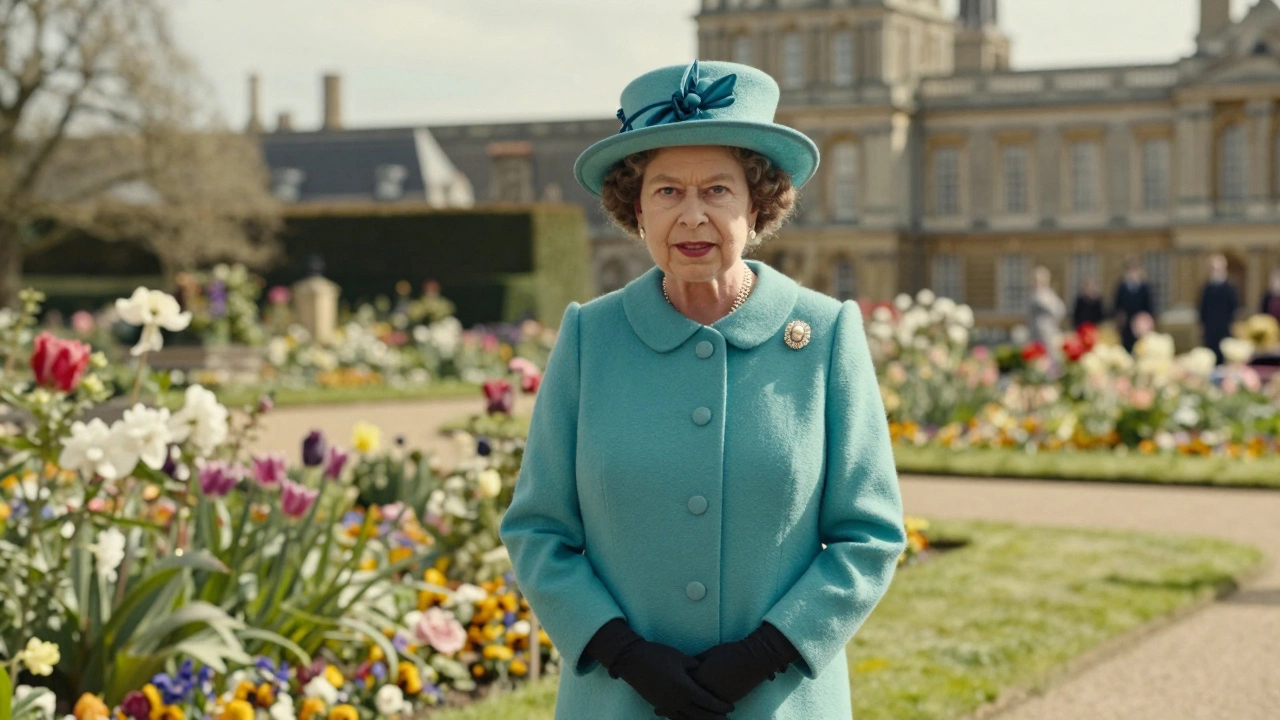
Queen Elizabeth didn’t just wear clothes multiple times-she wore them strategically. Her wardrobe wasn’t about fashion trends. It was about function, symbolism, and consistency. She understood that her clothing wasn’t just fabric; it was a tool. A bright yellow coat meant she’d be visible in a crowd. A matching hat and bag signaled unity. Repeating an outfit wasn’t cheap-it was calculated.For example, her iconic turquoise coat and hat combo from 1983 reappeared at least six times over 30 years. She wore it to meet the Pope, at royal garden parties, and even during a visit to Australia. Each time, the outfit was cleaned, pressed, and sometimes altered slightly to fit changing proportions or seasonal needs. This wasn’t laziness. It was discipline.
The Practical Side of a Royal Wardrobe
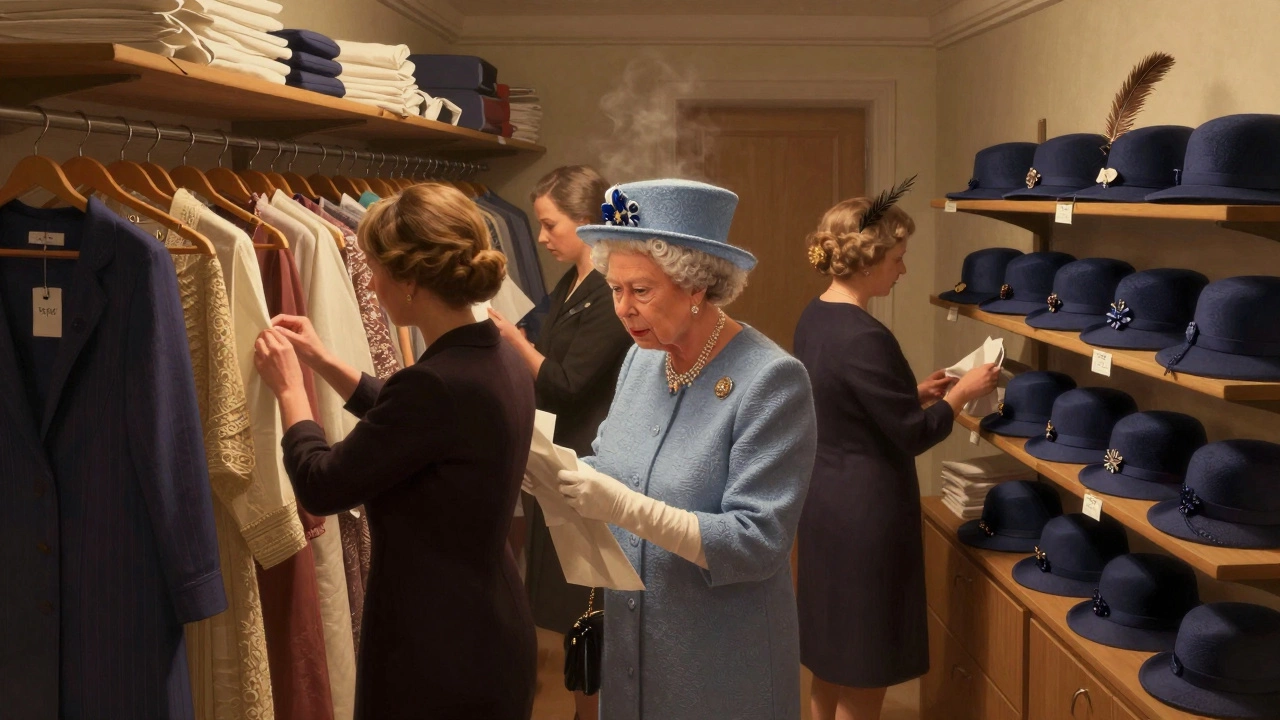
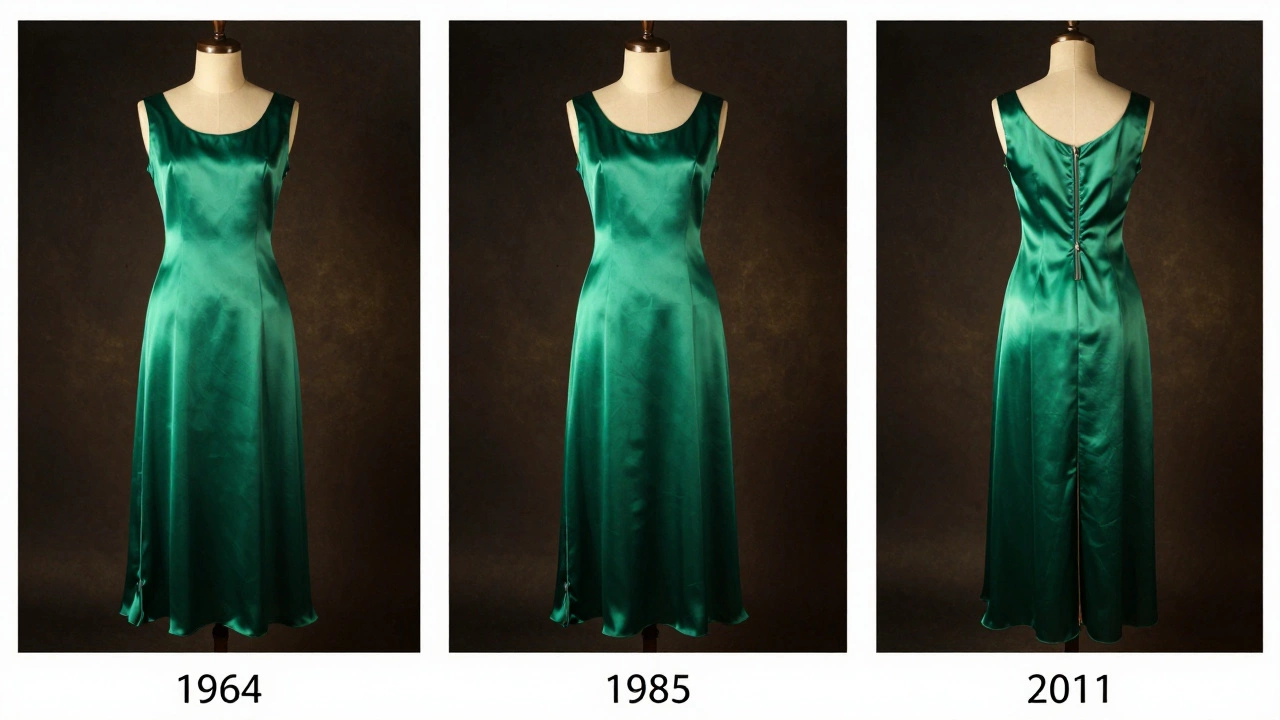
Behind the scenes, the Queen’s wardrobe team worked like a precision operation. Her personal dresser, Angela Kelly, managed over 1,000 outfits. Each piece was cataloged, photographed, and tracked. When something was worn publicly, it was logged so no outfit was repeated too soon in the same region. The team also kept detailed records of fabric care, repairs, and alterations.Many of her dresses were made from durable wool and silk, designed to last. Dresses from the 1950s were still worn into the 2010s. One emerald green silk gown, first worn in 1964, was reused for events in 2011. The lining was replaced. The hem was adjusted. The zippers were upgraded. But the silhouette? Stayed the same.
This wasn’t just about saving money. It was about reducing waste. In a world where fast fashion churns out new trends every few weeks, the Queen’s approach felt almost radical. She didn’t need to prove her wealth by buying new. She proved it by making the most of what she had.
How She Made Repeating Work
There’s a myth that royal fashion is all about constant novelty. But the Queen knew how to make repetition look intentional. She used three key tactics:- Color coding: She never wore the same color to two events in the same area. If she wore a red dress in London, she’d avoid red for weeks in Scotland. This kept her look fresh without buying new items.
- Accessorizing: A single outfit could look completely different with a new hat, brooch, or handbag. Her brooches alone numbered in the hundreds-each with meaning, history, or diplomatic significance.
- Timing: She spaced out repeats by months or even years. An outfit worn in 2008 wouldn’t reappear until 2015 or later. This gave the public the impression of variety, even if the core garment was unchanged.
She also rotated her wardrobe by season and location. A coat worn in winter in Balmoral might be saved for spring in Windsor. A dress worn for a church service in Sandringham might be reused for a state dinner six months later-because the context changed, so did the perception.
The Environmental and Cultural Impact
In 2020, a study by the British Fashion Council found that if every person in the UK reused one outfit per month, it would cut textile waste by over 12%. The Queen didn’t set out to lead a sustainability movement. But her habits quietly became a model.When she wore a dress from 1972 to greet a new prime minister in 2019, it wasn’t seen as outdated. It was seen as timeless. She didn’t chase trends. She built legacy. Her wardrobe became a symbol of endurance-not just in fashion, but in duty.
Even after her passing, her clothing continues to inspire. The royal family now follows her lead. Princess Anne, for instance, has been seen wearing the same coat for over a decade. The Duchess of Cambridge has reused dresses from her early years, often restyling them with new accessories. The Queen’s example didn’t vanish-it evolved.
What You Can Learn From Her Wardrobe
You don’t need to be royalty to apply her principles. Here’s how her habits can work for you:- Buy less, choose well: Invest in quality pieces made from natural fibers. Wool, cotton, and silk last longer and can be repaired.
- Keep a wardrobe log: Take photos of your outfits. Note when you wore them. This helps you avoid repeats too soon and spot gaps.
- Use accessories to refresh: A scarf, belt, or jewelry can turn an old outfit into something new. You don’t need to buy new clothes-you just need to change how you wear them.
- Repair and reuse: Learn basic sewing. Replace zippers. Hem pants. Take things to a tailor. A $30 repair is cheaper than a $200 replacement.
- Rotate seasonally: Store off-season clothes. Bring them out every few years. You’ll be surprised what you forgot you loved.
Queen Elizabeth didn’t just wear clothes more than once. She turned repetition into ritual. Her wardrobe wasn’t about scarcity. It was about intention.
Did She Ever Wear Something Only Once?
Yes-but only when it had to be. State visits, royal weddings, or major anniversaries sometimes called for one-time pieces. She wore a custom-made gown for her 90th birthday celebration in 2016. It was never worn again. But that was the exception.Most of her wardrobe was built to last. Her most-worn items? A black wool coat with a pearl button, worn over 40 times. A navy blue hat with a single feather, seen in over 20 public appearances. These weren’t forgotten relics. They were trusted companions.
Did Queen Elizabeth ever buy new clothes?
Yes, she did buy new clothes, but rarely for fashion’s sake. New pieces were usually commissioned for specific events, like state visits or royal weddings. Her tailors at the House of Norman Hartnell and later Angela Kelly’s team created garments designed to last decades. She didn’t shop for trends-she invested in durability.
How did she keep her clothes looking new after so many wears?
Her team had a strict care routine. Clothes were cleaned by hand using gentle detergents. Delicate fabrics were steamed instead of ironed. Zippers and buttons were replaced before they wore out. Even minor stains were treated immediately. Each item was stored in acid-free tissue paper in climate-controlled rooms to prevent yellowing or moth damage.
Did she ever give away her old clothes?
Very rarely. Most of her clothing was kept in the Royal Collection, preserved for historical value. A few pieces were loaned to museums or worn by other female royals for symbolic reasons-like when Princess Anne wore a dress originally worn by the Queen in 1971. But outright giving away or donating items was uncommon. Her wardrobe was treated as heritage, not inventory.
Why didn’t she wear designer brands more often?
She did wear designers-like Norman Hartnell, Stewart Parvin, and Angela Kelly-but she prioritized function over labels. Many of her most-worn outfits were made by her in-house tailors, not commercial brands. She valued craftsmanship, fit, and longevity more than logos. Her choices were about reliability, not status.
Can I copy her style without spending a fortune?
Absolutely. Start by identifying your core wardrobe staples-like a classic coat, a few versatile dresses, and quality shoes. Buy them in neutral or bright colors that photograph well and suit your skin tone. Learn to repair them. Use accessories to change the look. Focus on pieces you can wear for 10+ years, not just one season. That’s the real lesson of her wardrobe.
Final Thought: Wardrobe Wisdom
Queen Elizabeth didn’t need to buy new clothes to stay relevant. She stayed powerful by being consistent. Her clothes weren’t a reflection of wealth-they were a reflection of discipline. In a world obsessed with the new, her quiet habit of reuse became one of her most powerful statements.You don’t need a royal budget to live like one. You just need to stop seeing clothes as disposable-and start seeing them as part of your story.