Couch Recovery vs. Replacement Decision Calculator
Enter your specific costs and expected lifespans below to see which option offers better long-term value.
Option A: Recover Current Sofa
Option B: Buy New Sofa
Analysis Result
Recovery Cost/Year
New Purchase Cost/Year
- Hygiene: New sofas eliminate dust mites and odors accumulated over years.
- Convenience: Recovery often involves 4-8 weeks of downtime and transportation logistics.
- Aesthetics: Does the current frame still fit your style and room dimensions?
You stare at that sagging spot on your favorite sectional. The fabric is fraying, the cushions have lost their bounce, and it just doesn't look right anymore. But then you check the price of a comparable new model online, and your wallet winces. It’s the classic homeowner dilemma: do you fix what you have or replace it entirely? There is no single correct answer because "cheaper" depends heavily on the current state of your couch and the quality of the replacement you’re eyeing.
The decision usually comes down to a simple math problem involving depreciation and labor costs. If your frame is solid hardwood and the damage is mostly cosmetic, recovery often saves you money in the long run by extending the life of a high-quality piece. However, if the internal structure is compromised, pouring money into repairs on a disposable-grade sofa is like putting premium tires on a rusted-out chassis. Let’s break down exactly when to call the upholsterer and when to hit the "add to cart" button.
Understanding the True Cost of Couch Recovery
Most people underestimate how expensive professional upholstery actually is. It isn’t just about buying new fabric; it’s about skilled labor. A standard three-seater sofa re-upholstery job typically ranges from $800 to $1,500 for mid-range materials. High-end custom work can easily exceed $3,000. This cost includes stripping the old fabric, repairing minor structural issues, replacing foam, and sewing the new cover.
Why so high? Because it’s time-intensive. An experienced upholsterer might spend 10 to 15 hours on a single piece. They are artisans, not assembly-line workers. When you compare this to the sticker price of a new sofa, the gap narrows quickly. A decent new sofa from a mid-tier retailer costs between $1,000 and $2,500. So, unless your existing couch was originally a luxury item costing $4,000+, the upfront cash outlay for recovery might actually be higher than buying a new, lower-quality unit.
| Item | Estimated Cost (USD) | Lifespan Extension |
|---|---|---|
| Professional Re-upholstery | $800 - $1,500 | 5-10 Years |
| New Mid-Range Sofa | $1,000 - $2,500 | 5-7 Years |
| New Luxury Sofa | $3,000+ | 10-15 Years |
| DIY Fabric Cover | $100 - $300 | 1-2 Years |
The Frame Test: Is Your Sofa Worth Saving?
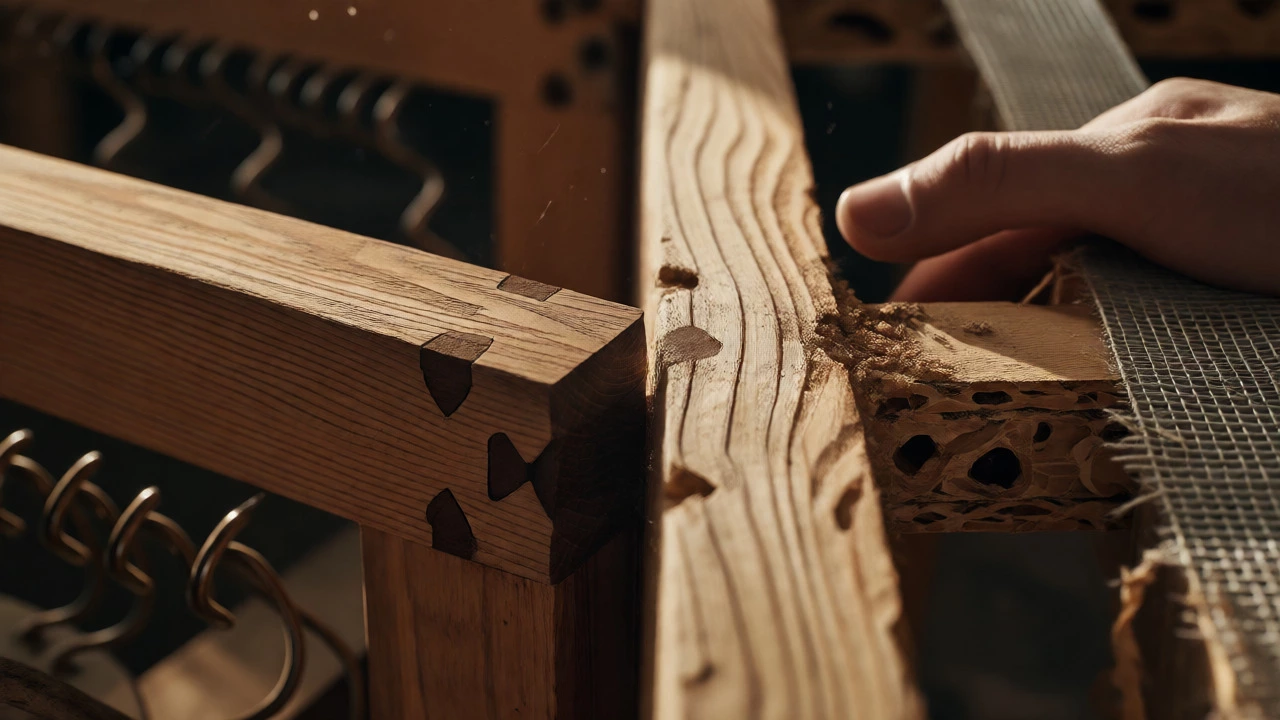
Before you get a quote, perform a quick physical inspection. The value of recovery lies almost entirely in the frame. If the skeleton is sound, the skin can always be changed. Lift one corner of the couch off the floor. If the other side stays firmly planted without creaking or wobbling, you likely have a solid wood or plywood frame. These are built to last decades.
Now, shake the whole thing gently. Does it feel sturdy or does it rattle? A rattling noise often indicates loose joinery or particleboard construction. Particleboard frames are common in fast-furniture brands like IKEA or Wayfair entry-level lines. Once these start failing, they rarely hold up well under re-upholstery tension. You might end up paying $1,200 to recover a frame that will collapse in two years. In this scenario, buying new is objectively cheaper over a five-year horizon.
Check the springs too. Sit on the middle cushion and listen. A metallic squeak suggests worn sinuous springs. While these can be replaced, it adds $100-$200 to the bill. If the webbing underneath has snapped, the repair becomes more complex. If your couch is less than five years old and still feels structurally tight, recovery is usually a smart financial move because you’re preserving the initial depreciation curve.
When Buying New Makes More Sense
Sometimes, the technology behind seating has simply moved on. If your current couch uses low-density polyurethane foam, it probably flattened within three years. Modern high-resilience foams and feather-down blends offer better support and longevity. Replacing old foam with high-quality inserts during recovery helps, but it doesn’t change the fundamental design flaws of an older model.
Consider the size and layout of your living room. Did you recently move? Maybe your old oversized sectional doesn’t fit the new apartment’s dimensions. Selling a bulky, worn-out couch is difficult; you’ll likely pay someone to haul it away rather than getting cash back. In contrast, buying a new modular sofa allows you to customize the configuration. The convenience factor here outweighs the slight cost difference. You aren’t just paying for fabric; you’re paying for spatial flexibility and modern ergonomics.
Also, think about hygiene. Old couches harbor dust mites, pet dander, and odors that deep cleaning can’t fully remove. If anyone in your household suffers from allergies, a brand-new sofa offers a clean slate. No amount of steam cleaning matches the freshness of factory-fresh materials. For allergy sufferers, the health benefit makes buying new worth the extra expense, even if the repair cost is technically lower.
The Hidden Costs of Recovery
It’s not just about the sticker price of the fabric. Logistics play a huge role. Most upholsterers require you to drop off the furniture. Do you have a truck? If not, renting a moving van or hiring a courier service adds $100-$200 to the project. Then there’s the downtime. Professional shops often have a backlog. Waiting six weeks for your main living room seat to return means you’re sitting on folding chairs or dining stools. That inconvenience has a soft cost-your comfort and daily routine suffer.
Furthermore, matching aesthetics is tricky. If you only want to recover the cushions but keep the base, finding a fabric that perfectly complements the existing base color is hard. Often, you have to recover the entire piece to ensure a cohesive look, which doubles the labor estimate. Don’t forget the small stuff: nail heads, piping, and decorative trims all add to the bill. Ask for an all-inclusive quote that covers removal, disposal of old materials, and delivery back to your door.

DIY Options: Cheap Fixes vs. Real Repairs
If you’re handy, DIY slipcovers or fabric wraps can refresh a tired sofa for under $150. These are great stop-gap measures. They hide stains and minor tears effectively. However, they don’t fix structural sagging. If the cushions are flat, a slipcover will just slide around on top of a lumpy surface, looking worse than before.
A middle-ground approach is replacing the foam yourself. You can buy high-density foam blocks from specialty suppliers for $50-$100 per cushion. Cutting them to size and inserting them into existing zippered covers revitalizes the comfort level instantly. This is significantly cheaper than full re-upholstery and improves usability immediately. It’s a valid strategy if the fabric itself is still in good condition but the comfort has degraded. Just measure carefully; foam compresses over time, so order slightly larger than your current insert.
Making the Final Decision
To decide, calculate the "cost per year of use." Take the total cost of the option (repair or buy) and divide it by the expected remaining lifespan. If recovering costs $1,200 and extends the life of a solid oak-frame sofa by another 8 years, that’s $150/year. If buying a new $1,500 sofa lasts 6 years, that’s $250/year. Suddenly, recovery looks much better financially.
But if your current sofa is a budget model with a particleboard frame, recovery might only extend its life by 2 years due to underlying weakness. $1,200 divided by 2 years is $600/year. Clearly, buying new wins there. Always assess the foundation first. Quality beats quantity every time in furniture economics.
How long does professional couch recovery take?
Typically, professional upholstery takes 4 to 8 weeks depending on the shop's workload and material availability. Rush services exist but often incur a 20-30% surcharge. Always ask for a realistic timeline before dropping off your furniture.
Can I recover a leather couch?
Yes, but it is more expensive than fabric. Leather requires specialized tools and skills to stretch properly without tearing. Expect to pay 30-50% more for leather re-upholstery compared to standard cloth. Also, consider whether the leather cracks easily; sometimes synthetic alternatives are more durable for pets.
Is it worth repairing a vintage sofa?
Generally, yes. Vintage sofas often feature superior craftsmanship, such as dovetail joints and kiln-dried hardwood, which are rare in modern mass-produced items. Even if the restoration costs $2,000, the piece may retain significant resale value or heirloom quality, making it a better investment than a new equivalent.
What fabrics are most durable for families with pets?
Microfiber, canvas, and tightly woven synthetics like olefin resist scratches and stains best. Avoid velvet and loose weaves like linen, which snag easily. Performance fabrics treated with stain-resistant coatings are also excellent choices for high-traffic households.
Should I replace just the cushions?
If the frame and outer fabric are intact, replacing only the foam inserts is the most cost-effective upgrade. It restores comfort for a fraction of the cost of full re-upholstery. Ensure the new foam density matches or exceeds the original for better support.