🏗️ Global Construction Giants Comparison Tool
Select a company below to view its detailed profile and compare it against the other top contenders in the 2026 global rankings.
Top 5 Companies (2026)
Side-by-Side Metrics
| Company | HQ Location | Primary Focus | Est. Annual Revenue | Key Strength |
|---|
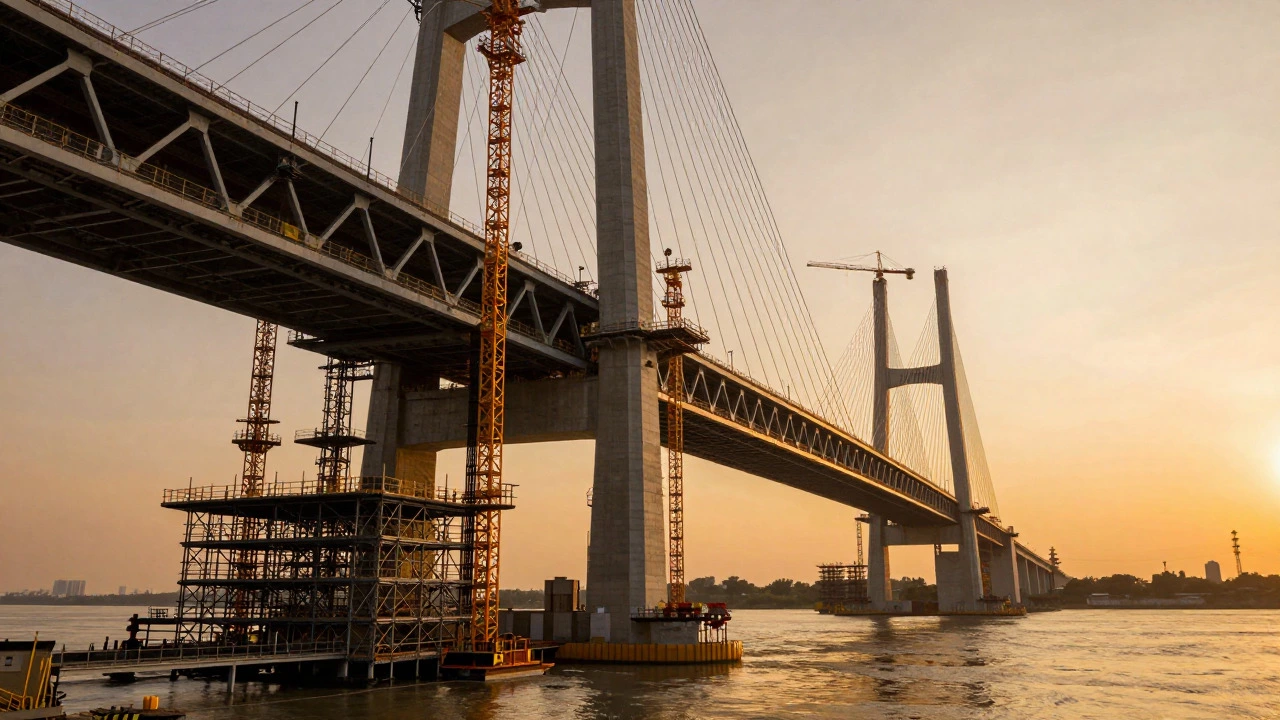
When you look at a massive bridge, a new airport terminal, or a high-speed rail line, who actually built it? The answer isn't always the name on the sign. Behind the steel and concrete are giants that move billions of dollars in revenue annually. If you're trying to figure out who is the biggest construction company right now, the answer depends on how you measure "big." Are we talking about total revenue, market capitalization, or sheer project scale?
The landscape shifted significantly over the last few years. Mergers, acquisitions, and the rise of infrastructure investment have reshaped the top tier. In 2026, the title of "largest" is contested by a handful of multinational conglomerates that operate across continents. Let's break down the current leaders and what makes them tick.
Defining "Big": Revenue vs. Scale
Before naming names, we need to clarify the metric. In the construction industry, two main ways exist to rank companies:
- Revenue: The total income generated from projects. This is the most common metric used by financial analysts and rankings like ENR (Engineering News-Record).
- Market Cap/Assets: The value of the company if publicly traded, or its total asset base. This reflects financial strength rather than just yearly output.
For most practical purposes, especially when discussing who dominates the global job market, Annual Revenue is the primary indicator of a construction firm's operational size and capacity to bid on mega-projects. A company with $50 billion in annual revenue can absorb risks and mobilize resources that a $5 billion firm simply cannot.
The Current Global Leaders
As of mid-2026, the top spot is fiercely guarded. Here are the key players currently vying for the number one position:
1. Bechtel Corporation
Bechtel is a privately held American engineering and construction company headquartered in McLean, Virginia, known for building major infrastructure projects worldwide. Because it is private, its exact internal figures aren't public, but industry estimates consistently place its revenue above $45-$50 billion annually. Bechtel specializes in heavy civil works: dams, power plants, highways, and military bases. Their ability to self-perform critical tasks gives them an edge in complex, long-term contracts.
2. Vinci Group
Vinci is a French multinational corporation that operates in the construction, concessions, and services sectors, making it one of the largest employers in Europe. Vinci often tops the ENR Global 250 list for revenue. They don't just build; they operate toll roads, airports, and water utilities. This diversified model stabilizes their cash flow, allowing them to reinvest heavily into new construction bids. With a workforce exceeding 200,000 people, their human capital is as vast as their balance sheet.
3. Strabag SE
Strabag is an Austrian international construction group specializing in road, railway, and utility infrastructure, active in over 40 countries. Strabag has grown aggressively through acquisitions, particularly in North America and Asia. They focus heavily on linear infrastructure-roads and rails-which puts them at the center of global transportation upgrades. Their recent expansion into green energy projects has added a new layer to their portfolio.
4. SK E&C (Samsung Engineering & Construction)
SK E&C is a South Korean subsidiary of the SK Group, specializing in industrial, residential, and infrastructure construction projects globally. Asian firms have surged up the rankings due to rapid domestic development and aggressive overseas bidding. SK E&C competes strongly in petrochemical plants, LNG terminals, and smart cities, leveraging technology integration as a key differentiator.
5. Skanska AB
Skanska is a Swedish multinational construction and property development company, known for sustainable building practices and large-scale urban regeneration projects. While slightly smaller in raw revenue than the top three, Skanska punches above its weight in profitability and sustainability metrics. They are a leader in modular construction and low-carbon building methods, which is becoming a critical factor in winning government contracts in 2026.
Comparison of Top Contenders
| Company | Headquarters | Primary Focus | Estimated Annual Revenue | Key Strength |
|---|---|---|---|---|
| Bechtel | USA | Heavy Civil, Energy | $48 Billion+ | Self-perform capability, US Govt ties |
| Vinci | France | Concessions, Roads, Rail | $52 Billion+ | Diversified revenue streams, scale |
| Strabag | Austria | Roads, Rails, Utilities | $45 Billion+ | Global footprint, acquisition strategy |
| SK E&C | South Korea | Industrial, Residential | $40 Billion+ | Technology integration, Asian markets |
| Skanska | Sweden | Sustainable Building, Urban Dev | $38 Billion+ | Profitability, Green Building expertise |

Why Does This Matter to You?
You might wonder why this ranking matters if you're not hiring a contractor for a skyscraper. It impacts everything from supply chain stability to labor standards. When a giant like Vinci or Bechtel wins a contract, they set the precedent for safety protocols, environmental compliance, and payment terms for subcontractors. If you work in the trades, knowing which firms are expanding helps you target job opportunities. If you're an investor, these companies represent stable, counter-cyclical assets because infrastructure needs rarely disappear during economic downturns.
Furthermore, the shift toward sustainability means that "big" no longer just means "more concrete." It means "more efficient carbon management." Companies that fail to adapt to green building codes risk losing future bids, regardless of their current size.
Regional Powerhouses vs. Global Giants
While the global list features multinationals, regional dominance still exists. In Canada, for instance, firms like PCL Constructors and Brookfield Infrastructure play pivotal roles. In the Middle East, Al-Futtaim and Nesma are key players. However, for truly mega-projects-like the Hyperloop or cross-border rail lines-you need the global giants. They have the insurance backing and legal teams to handle multi-jurisdictional contracts.
The distinction is important: a regional leader might be the "biggest" in your city, but only a global entity can manage a $10 billion project spanning three countries. Understanding this hierarchy helps stakeholders make informed decisions about partnerships and investments.
Trends Shaping the Future of Size
Three trends will influence who holds the top spot in the next five years:
- Digital Twin Technology: Firms that integrate digital twins into their planning phase reduce waste and cost overruns. This efficiency translates to higher margins and faster growth.
- Modular and Prefabrication: Moving assembly off-site reduces on-site time. Companies mastering this (like Skanska) gain a competitive edge in speed and quality control.
- Green Financing: Access to low-interest green bonds favors companies with strong ESG (Environmental, Social, Governance) scores. This could allow smaller, greener firms to challenge larger, traditional incumbents.
Frequently Asked Questions
Is Bechtel really bigger than Vinci?
It depends on the year and the metric. Vinci often reports higher total revenue due to its concessions business (operating toll roads), while Bechtel's revenue is purely from construction and engineering. In pure construction volume, Bechtel is often considered the heavyweight champion, but Vinci's total corporate revenue frequently edges it out in global rankings.
Which construction company has the most employees?
Vinci typically leads in employee count, with over 200,000 staff worldwide. This is largely due to its service and concession divisions, which require permanent staffing for operations, unlike pure-play construction firms that rely more on temporary project-based labor.
Are Chinese construction companies the biggest?
Companies like China State Construction Engineering Corp (CSCEC) are massive in terms of revenue, often rivaling or exceeding the Western giants listed here. However, they operate primarily within China and along Belt and Road Initiative routes. For international, cross-border commercial projects, the Western and European firms remain the dominant visible players.
How do I find the biggest construction company in my local area?
Look at local chamber of commerce records or state/provincial licensing boards. Search for firms with the highest bonded limits and recent large-scale project completions in your region. Local news archives also highlight who won major municipal contracts.
Does being the biggest construction company mean they are the best?
Not necessarily. Size brings resources and risk absorption, but it doesn't guarantee superior craftsmanship or customer service for smaller jobs. Many mid-sized firms offer more personalized attention and flexibility. Big firms excel at complexity and scale; smaller firms often win on agility and relationship management.