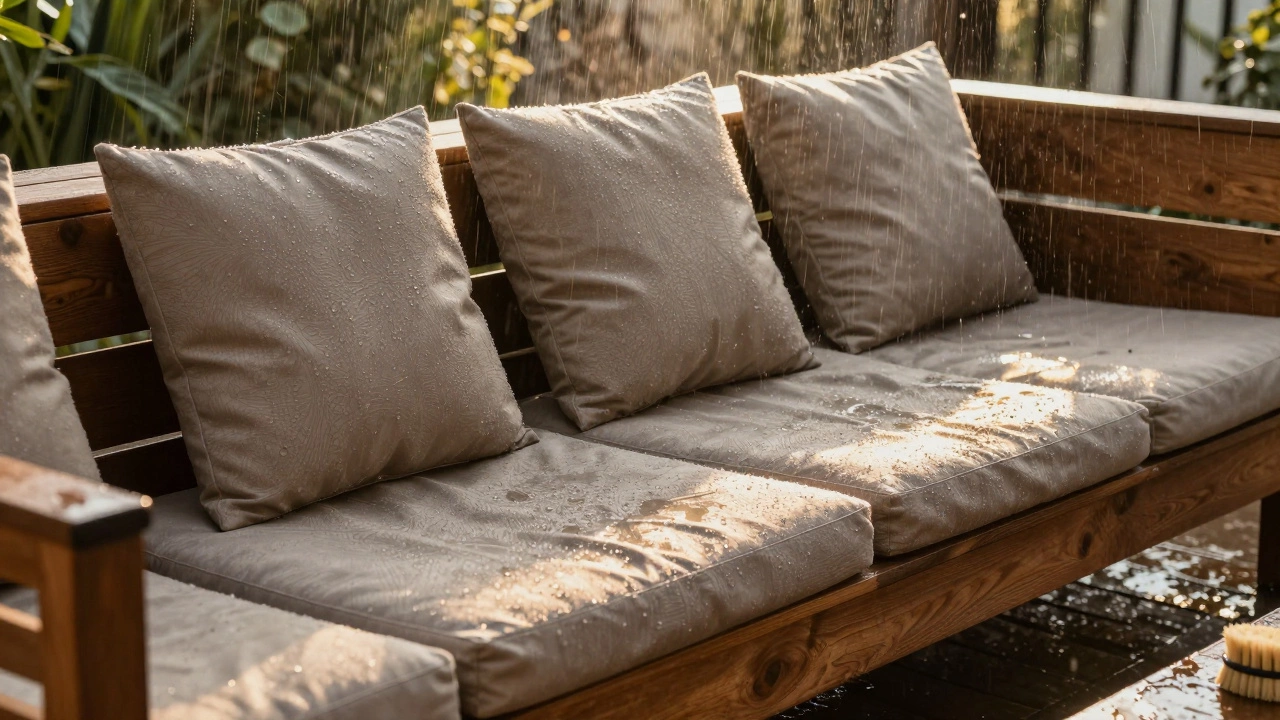
Ever sat down on your patio after a summer storm and found your cushions soaked through? You’re not alone. Many people assume that if a cushion is labeled "outdoor," it can handle anything the weather throws at it. But Sunbrella cushions? They’re different. And knowing the truth can save you hundreds of dollars and a lot of frustration.
Sunbrella Fabric Isn’t Just Water-Resistant-It’s Built to Repel
Sunbrella fabric isn’t your average polyester blend. It’s made from solution-dyed acrylic, which means the color and protective properties are baked into the fibers, not just sprayed on top. This isn’t a coating that wears off after a few washes. It’s engineered to repel water, resist fading from UV rays, and block mildew.
When rain hits a Sunbrella cushion, it beads up and rolls right off. You can test this yourself: pour a glass of water on one. Watch how it doesn’t soak in. That’s by design. The fabric’s tight weave and hydrophobic finish make it one of the most reliable outdoor materials on the market.
But here’s the catch: the fabric might handle rain, but the stuffing inside doesn’t. Most Sunbrella cushions use foam cores-open-cell polyurethane foam-that can absorb water like a sponge if it finds a way in. Zippers, seams, or even tiny holes from wear and tear can let moisture sneak in. Once water gets trapped inside, it doesn’t dry fast. That’s when mildew forms, the foam breaks down, and your cushion starts to smell like a damp basement.
So Can You Leave Them Out in the Rain?
Yes-technically. But should you? Not all the time.
Sunbrella cushions are designed for outdoor use, and many people leave them out year-round without issue. In places like Vancouver, where rain is frequent but rarely extreme, Sunbrella cushions can survive months outside. The fabric will stay vibrant, the surface will stay clean, and the cushions will look good.
But here’s what most people don’t realize: the real enemy isn’t rain. It’s standing water.
If your cushions sit flat on a wet surface-like a wooden deck after a storm-they’ll soak up moisture from below. If they’re tucked under an awning that drips, water pools on top. If they’re not tilted or angled to let water run off, you’re creating a mini swamp. That’s when damage happens.
How to Protect Your Cushions (Without Storing Them)
You don’t need to bring your cushions inside every time it rains. That’s not practical. But you do need to manage how water interacts with them.
- Use a breathable cushion cover. A simple, lightweight, mesh-style cover lets air circulate while keeping rain off the top. Look for ones labeled "breathable"-not plastic. Plastic traps moisture and makes mildew worse.
- Prop them up. Place cushions on a slatted bench or elevate them with small blocks. This lets air flow underneath and helps water drain away.
- Flip them occasionally. After a heavy rain, turn them over so the bottom side dries out. Moisture collects on the underside, especially if the furniture has a solid surface.
- Shake them off. A quick shake after a storm removes most surface water. It takes 10 seconds and prevents pooling.
- Check the seams. If you notice fraying or loose stitching, get them repaired. A tiny gap is all it takes for water to get in.
These aren’t fancy tricks. They’re low-effort habits that make a huge difference. People who do this regularly report their Sunbrella cushions lasting 8 to 10 years-even in wet climates.

What Happens If You Ignore This?
Leaving Sunbrella cushions out in the rain without any care doesn’t mean they’ll instantly rot. But over time, the damage adds up.
After 2-3 seasons of constant moisture exposure, you might notice:
- A musty smell that won’t wash out
- Discoloration inside the cushion, even if the outside looks fine
- Soft, spongy foam that doesn’t bounce back
- Zipper failure from rust or mold buildup
Once the foam degrades, you can’t fix it. You can’t dry it out enough. Replacing just the foam is expensive and often not worth it. Most people end up buying new cushions entirely-and Sunbrella replacements aren’t cheap. A full set can cost $400-$800 depending on size and style.
That’s why prevention matters more than cleaning. You can wash Sunbrella fabric with soap and water. You can’t easily replace degraded foam.
When to Bring Them Inside
You don’t need to store them every night. But there are times when it’s smart to move them:
- During prolonged rainstorms lasting more than 48 hours
- In freezing temperatures-wet foam expands when it freezes and can crack
- Before strong winds or hail that could tear fabric or displace cushions
- If you’re going on vacation for more than a week
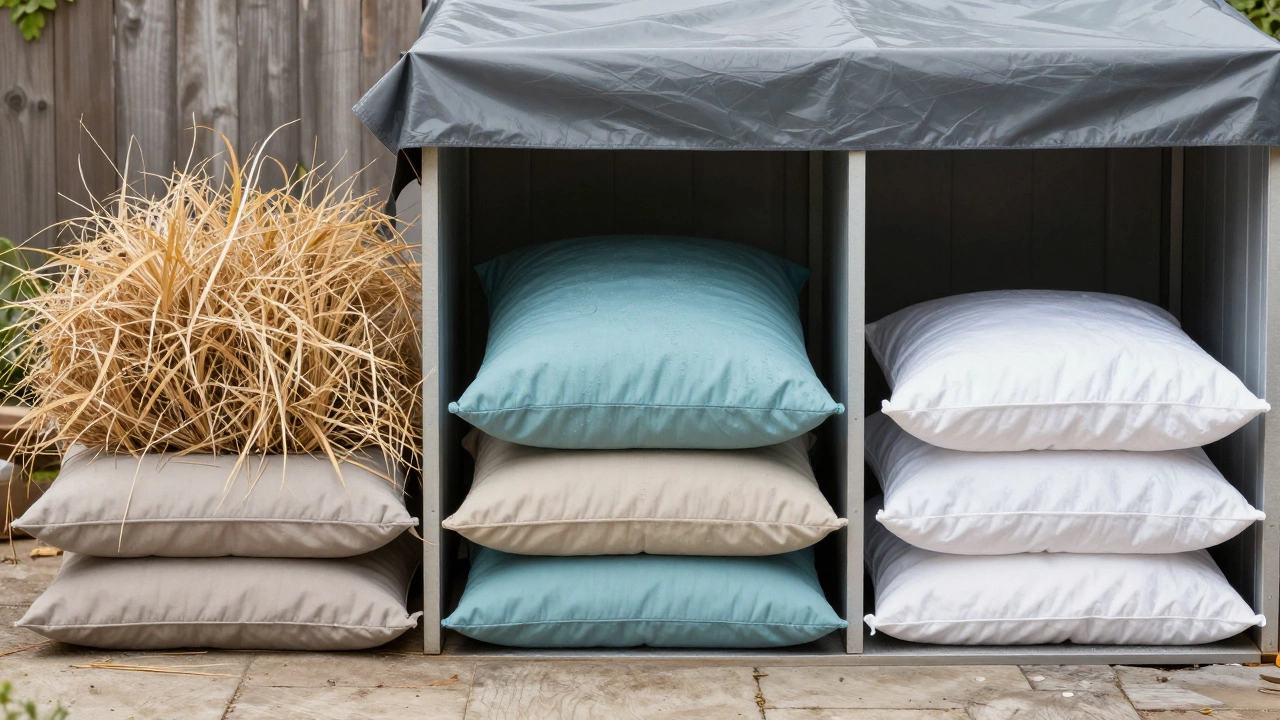
Storing them in a dry garage, shed, or even under a waterproof tarp on a shelf keeps them protected without taking up much space. You don’t need a climate-controlled room. Just dry and out of direct sun.
How to Clean Sunbrella Cushions (When They Get Dirty)
Even if you leave them out, dirt, pollen, bird droppings, and salt air will build up. Cleaning them is easy-and you don’t need special products.
- Brush off loose debris with a soft-bristle brush.
- Mix 1/4 cup mild soap (like Dawn) with 1 gallon of lukewarm water.
- Scrub the fabric gently with a sponge or soft brush. Don’t scrub hard-you’re not trying to remove the color.
- Rinse thoroughly with clean water. Let them air dry completely before putting them back.
Never use bleach, pressure washers, or harsh chemicals. They’ll break down the fabric’s protective finish. And never dry them in direct sunlight for long periods-it can fade the color over time.
What About Other Outdoor Cushions?
Sunbrella is the gold standard, but not all outdoor cushions are created equal. If you have cushions from a big-box store, they’re likely made from olefin or polyester with a water-repellent coating. Those coatings wear off after a year or two. They’re not designed for constant exposure.
Here’s the quick comparison:
| Material | Water Resistance | UV Resistance | Longevity (Outdoor Use) | Cost (Per Cushion) |
|---|---|---|---|---|
| Sunbrella (Acrylic) | Excellent | Excellent | 8-12 years | $60-$150 |
| Olefin | Good | Fair | 3-5 years | $25-$60 |
| Polyester (Coated) | Fair | Poor | 1-3 years | $20-$50 |
| Canvas | Poor | Poor | 1-2 years | $30-$80 |
Sunbrella costs more upfront, but it lasts longer and looks better. If you’re going to leave cushions outside, it’s the only one worth investing in.
Final Verdict: Leave Them Out? Yes-But Not Without Care
You can leave your Sunbrella cushions out in the rain. They’re built for it. But leaving them out without thinking about water drainage, airflow, and maintenance is like leaving your car outside without washing it. It won’t break tomorrow. But over time, the damage piles up.
With a few simple habits-shaking them off, propping them up, checking seams, and cleaning them once a season-you’ll get 10 years out of them. Without them? You might be replacing them in 3.
It’s not about keeping them dry. It’s about keeping them moving. Let air circulate. Let water escape. Let them breathe. That’s how Sunbrella cushions stay beautiful-and why they’re still the top choice for homeowners who want outdoor comfort that lasts.
Can I wash Sunbrella cushions in the washing machine?
No. Machine washing can damage the fabric’s finish and loosen the stitching. Always clean them by hand with mild soap and water. Rinse thoroughly and let them air dry.
Do Sunbrella cushions fade in the sun?
Very rarely. Sunbrella is solution-dyed, meaning the color is locked into the fibers. It’s rated for 1,000+ hours of UV exposure without noticeable fading. In places like Vancouver, where sunlight is moderate, they’ll keep their color for over a decade.
Is mildew a big problem with Sunbrella cushions?
Mildew doesn’t grow on the fabric itself-it grows on trapped moisture inside the cushion or on dirt buildup. Sunbrella resists mildew, but if water sits for days and dirt accumulates, mildew can form on the surface. Clean regularly and ensure airflow to prevent it.
Can I leave Sunbrella cushions out in winter?
If they’re dry, yes. But if they’re wet and freezing temperatures hit, the moisture inside the foam can expand and crack the material. It’s safer to store them in a dry place during winter, especially in places like Vancouver where snow and rain alternate.
How do I know if my Sunbrella cushion needs replacing?
If the foam feels soggy, doesn’t spring back when you sit on it, or smells musty even after cleaning, it’s time to replace the insert. The Sunbrella cover might still look fine, but the inside is ruined. Replacing just the foam is possible, but often it’s cheaper and easier to buy a new cushion.