Kitchen Plate Placement Advisor
Answer a few questions about your kitchen and lifestyle to get a personalized recommendation for where to store your everyday plates.
Recommendation
OptimalWhy this works for you:
You just unpacked your new kitchen. The cabinets are empty, the shelves are bare, and you’re staring at a stack of plates wondering where they actually belong. It seems like a trivial question, but getting it wrong can lead to daily frustration, back pain, or broken dishes. There is no single "correct" answer that applies to every home, but there is a logic to it based on physics, ergonomics, and how you actually cook.
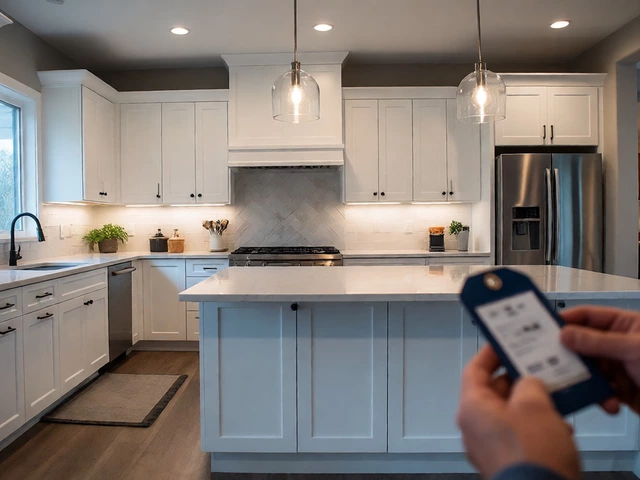
The short answer: if you have standard upper cabinets, plates usually go in the upper cabinets directly above or near the dishwasher. But if you have limited height, mobility issues, or a specific workflow, the lower cabinets might be better. Here’s how to decide without guessing.
Why Location Matters More Than You Think
Kitchen design isn’t just about aesthetics; it’s about minimizing movement. This concept, known as the "work triangle," connects your sink, stove, and refrigerator. Your dishware needs to fit into this flow. If you store plates far from the dishwasher, you’ll walk extra steps every time you unload. Over a year, those steps add up to miles.
Consider the weight factor. A set of dinner plates weighs significantly more than glassware or spices. Lifting heavy stacks repeatedly into high cabinets strains your shoulders and wrists. Conversely, bending down to reach deep lower cabinets stresses your knees and back. The goal is to find the "sweet spot"-usually between waist and shoulder height-where lifting is minimal and reaching is natural.
Plate Storage is the strategic placement of dishware within kitchen cabinetry to optimize accessibility, safety, and workflow efficiency during meal preparation and cleanup. Unlike storing canned goods, which are rarely moved, plates require frequent access, making their location critical for daily comfort.
The Case for Upper Cabinets
For most traditional kitchens, upper cabinets are the default choice for plates. Why? Because they keep counters clear and utilize vertical space that would otherwise sit empty. But not all upper cabinets are created equal.
If you install a pull-down shelf system or a lift-up mechanism, even tall cabinets become accessible. Without these mechanisms, placing plates in the very top shelf is a mistake unless you use them only for seasonal serving ware. Keep your everyday plates on the middle or lower shelves of the upper cabinets.
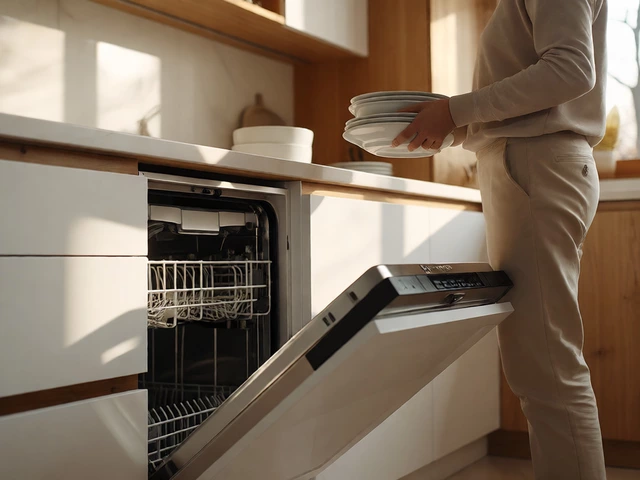
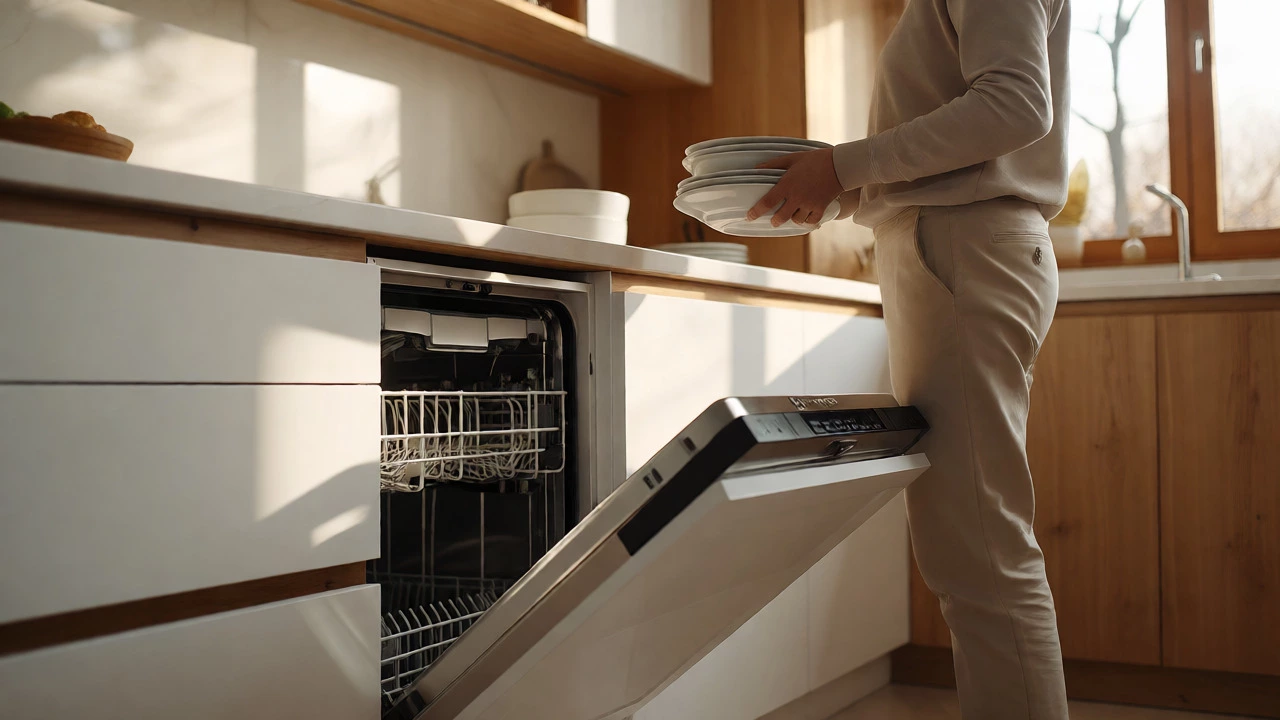
Proximity to the dishwasher is key. Most people load the dishwasher from the left or right side. Placing plates in the cabinet immediately adjacent to the dishwasher reduces carrying distance. If your dishwasher is under the counter near the sink, the upper cabinet directly above is often the most logical spot. It creates a vertical loop: wash, dry, put away. Simple.
When Lower Cabinets Make More Sense
Lower cabinets aren't just for pots and pans. In many modern designs, especially those catering to aging-in-place principles or compact apartments, lower cabinets are superior for plates. Here’s why:
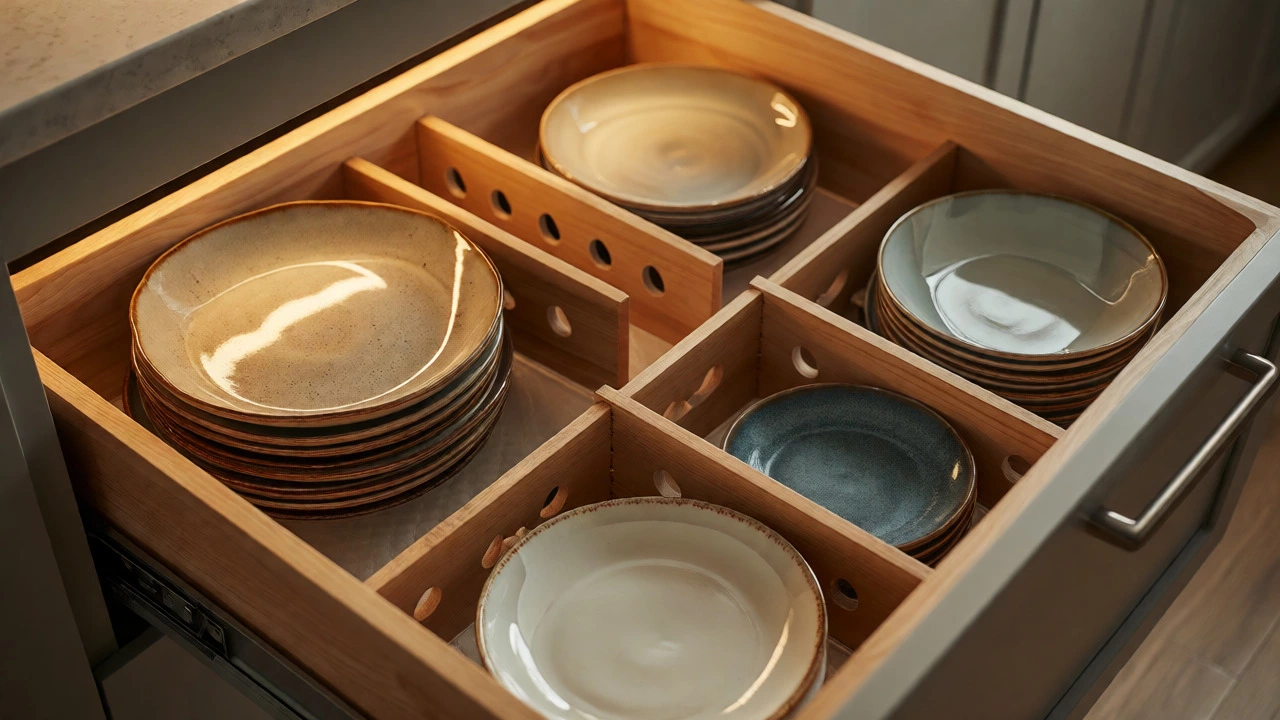
- Ergonomics: Bending slightly is often easier than reaching up, especially if you have shoulder issues or arthritis. Deep drawers with dividers allow you to see and grab plates without digging through stacks.
- Safety: If a plate slips from an upper cabinet, it falls hard onto a hard floor. If it slips from a lower drawer, it lands closer to the ground, reducing breakage risk.
- Visual Balance: Heavy visual weight (like stacks of white porcelain) at eye level can make a small kitchen feel cramped. Moving plates down opens up the sightlines, making the room feel larger.
A common mistake is putting plates in lower cabinets that are too close to the oven. Heat rises, and while modern insulation helps, prolonged exposure to heat can warp certain plastic containers or affect the finish on delicate china over decades. Keep plates away from direct heat sources.
How to Choose Based on Your Kitchen Layout
Your decision should depend on your specific constraints. Use this quick heuristic to decide:
| Scenario | Recommended Location | Reasoning |
|---|---|---|
| Standard Ceiling Height (8-9 ft) | Upper Cabinets (Middle Shelf) | Keeps counters clear; easy reach for average height adults. |
| Low Ceilings (< 8 ft) | Lower Cabinets / Drawers | Prevents bumping heads; avoids awkward upward reach. |
| Mobility Issues / Arthritis | Lower Drawers | Eliminates overhead lifting; uses pull-out mechanics. |
| Small Apartment / Galley Kitchen | Upper Cabinets Near Sink | Maximizes limited counter space; utilizes verticality. |
| Frequent Hosting / Large Sets | Pantry or Tall Base Unit | Stores bulk sets out of daily way; keeps everyday set accessible. |
The Importance of Dishwasher Proximity
Think about your cleanup routine. When you unload the dishwasher, you’re holding wet, slippery plates. You want the shortest path to storage. If your plates are across the kitchen, you’re risking drops. If they’re two steps away, you’re safe.
In Vancouver, where many homes have older layouts, dishwashers are often tucked into corners. If your upper cabinets don’t align with the dishwasher, consider installing a narrow base cabinet next to it specifically for plates. Even a 12-inch wide unit can hold a stack of six plates vertically using a rack. This tiny adjustment saves hours of walking over a lifetime.
Organizing Inside the Cabinet
Once you’ve picked the cabinet, how you arrange the plates matters. Stacking plates loosely leads to chipping. Using plate racks or dividers prevents contact between surfaces.
For upper cabinets, use adjustable shelving pins to customize heights. Standard shelves are often too tall for plates, wasting space. Tighten the gap so plates stand upright or stack neatly with minimal wobble. For lower drawers, invest in soft-close mechanisms. Slamming a drawer full of plates is a recipe for disaster. Soft-close hinges prevent that jarring stop that cracks ceramic.
Don’t forget the lid problem. If you have Tupperware or pot lids, do not mix them with plates. They take up irregular space and create clutter. Keep plates in one dedicated zone and lids in another. Mixing them turns a simple task into a puzzle every time you need a dinner plate.
Special Cases: Glassware and Bowls
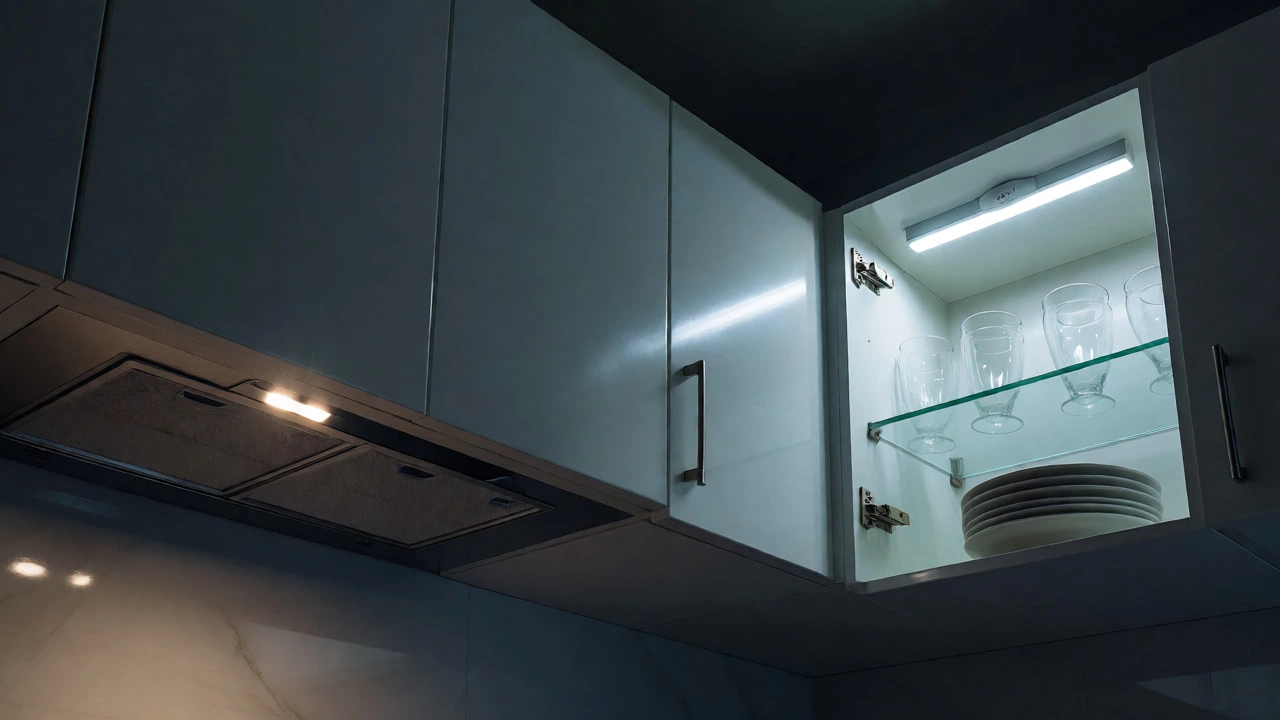
While this guide focuses on plates, you’ll likely wonder about bowls and glasses. Bowls are deeper and harder to stack. They often work best in lower cabinets with pull-out baskets, allowing you to slide the basket out and grab a bowl without tipping others. Glasses, being fragile, should go in upper cabinets away from high-traffic zones like the stove splash area. Steam and grease from cooking can cloud glassware if stored too close to the range.
However, if you drink water frequently, keeping glasses in the lower cabinet near the fridge makes sense. You grab a glass, fill it, and return it. No climbing required. Tailor each item to its usage frequency and physical requirements.
Common Mistakes to Avoid
One major error is hiding plates behind appliances. Some people store plates in the cabinet above the microwave because it’s open. Bad idea. Microwaves generate heat and vibration. Vibration loosens stacks, causing plates to shift and potentially fall when you open the door. Heat can also affect adhesives on decorative plates.
Another mistake is ignoring lighting. Dark upper cabinets are dangerous. If you can’t see clearly, you might misjudge the edge of a shelf and drop a plate. Install motion-sensor LED strips inside your chosen cabinet. It costs little and adds significant safety.
Finally, don’t overload shelves. Check the weight rating of your cabinet shelves. Particleboard shelves sag under heavy loads. If you have stoneware or thick ceramic plates, reinforce the shelf or move them to a base cabinet with a solid bottom panel. Sagging shelves eventually collapse, and nobody wants to clean up shattered ceramics off the floor.
Final Thoughts on Flexibility
Your kitchen isn’t static. As your family grows, your hosting habits change, or your body ages, your storage needs will shift. Start with the setup that feels easiest now. If you find yourself straining your neck, move the plates down. If your counters get cluttered, move them up. The best cabinet is the one you’ll actually use consistently.
Treat this as an experiment. Try one month with plates in the upper cabinet. Then try a month in the lower drawer. Notice which location causes less friction in your daily routine. Data beats tradition every time.
Is it bad to store plates above the stove?
Yes, generally it is not recommended. Grease splatter and steam from cooking can accumulate on plates stored directly above the stove, requiring extra washing before use. Additionally, the heat can make the cabinet environment uncomfortable for long-term storage of delicate materials.
What if my upper cabinets are too high to reach?
If you cannot comfortably reach your upper cabinets, prioritize lower storage solutions. Use deep drawers with plate dividers or install pull-down shelf mechanisms in your upper cabinets. These devices bring the contents down to you, eliminating the need for step stools and reducing injury risk.
Can I store plates in a pantry instead?
You can, but it is usually inefficient for everyday dishes. Pantries are ideal for bulk items or occasional serving ware. Storing daily-use plates in a pantry forces you to leave the main kitchen workspace to set the table, breaking the flow of meal preparation and service.
Do I need special inserts for plate storage?
Not necessarily, but they help. Adjustable shelf pins allow you to customize spacing. For drawers, wooden or plastic dividers prevent sliding and clinking. If you have irregularly shaped plates, custom inserts or simple non-slip liners can stabilize them effectively.
Where should I store serving platters?
Serving platters are large and used infrequently. Store them in the highest available shelf of a lower cabinet or in a dedicated tall pantry unit. Since they are not accessed daily, height is less of a concern than saving prime real estate for everyday items.