
Decluttering Decision Assistant
Add an Item
Evaluation Results
Add items to see your decluttering decisions.
Look around your living room. See that pile of magazines on the coffee table? The drawer full of cables you don't recognize? That's not just mess; it's decision fatigue. We all want a clean home, but most of us get stuck in the weeds of sorting through items we haven't touched in years. You might have heard about the "golden rule" of decluttering. It sounds simple enough, right? But what exactly is it, and why does following it change everything?
The golden rule isn't a single trick or a magic spray. It is a mindset shift. Specifically, it is this: If it doesn't serve a purpose or bring joy, let it go. This concept, popularized by Marie Kondo but rooted in decades of organizational psychology, cuts through the noise. It stops you from asking, "Can I keep this just in case?" and forces you to ask, "Do I need this now?"
Key Takeaways
- The Core Principle: Keep only items that are useful (functional) or meaningful (emotional/joy).
- The "Just in Case" Trap: Most clutter exists because we fear future needs that never happen.
- Decision Framework: Use the "One Year Rule" for sentimental items and the "Utility Test" for functional ones.
- Maintenance: Decluttering is a habit, not a one-time event. Adopt a "one-in, one-out" policy.
- Storage Solutions: Good storage hides complexity; bad storage creates more clutter.
Understanding the Golden Rule: Function vs. Joy
Let's break down that golden rule. It has two pillars: Function and Joy. When you hold an item, it must pass at least one of these tests.
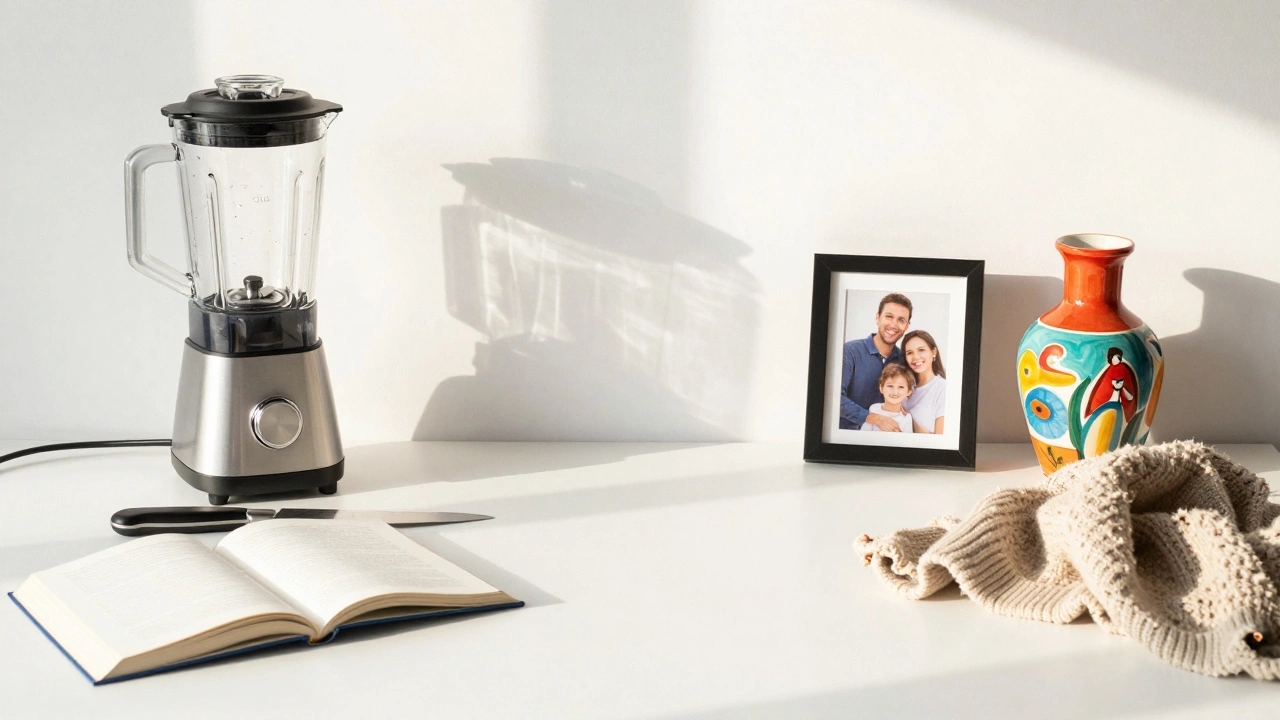
Function is straightforward. Does this tool work? Do you use this appliance regularly? Is this book currently helping you learn something? If you have a blender you used once three years ago, it fails the function test. It takes up counter space, gathers dust, and adds visual noise. Keeping it "just in case" you make smoothies again is a lie we tell ourselves to avoid the guilt of disposal.
Joy is the emotional pillar. This covers photos, heirlooms, gifts, and hobbies. Did that sweater make you feel confident when you wore it? Does this painting remind you of a happy trip? If the answer is yes, keep it. If the answer is "I guess," or "It was expensive," throw it out. Cost is sunk cost. You can't get the money back by keeping a broken chair in the garage.
This binary choice-useful or joyful-removes the gray area where clutter lives. Gray areas are where we procrastinate. By forcing a clear yes or no, you speed up the process significantly.
The Psychology Behind Clutter
Why is it so hard to let go? It’s not laziness. It’s psychology. Humans suffer from the Sunk Cost Fallacy. We think, "I paid $50 for this coat, so I must keep it." But the money is gone. The coat is now costing you storage space and mental energy every time you see it.
There’s also the Endowment Effect. We value things more simply because we own them. You might think a chipped mug is precious because it’s yours, even if you’d never buy it today. Recognizing these biases helps you detach emotionally before you start sorting.
In Vancouver, where housing is compact and expensive, this psychological hurdle is even higher. Every square foot counts. Clutter isn't just annoying; it’s financially inefficient. Understanding that your stuff is working against your peace of mind is the first step to reclaiming your home.
Practical Steps to Apply the Golden Rule
Knowing the rule is easy. Doing it is hard. Here is a step-by-step approach to applying the golden rule without getting overwhelmed.
- Start Small: Don’t tackle the whole house. Pick one drawer. One shelf. One closet rod. Success builds momentum.
- Remove Everything: Take all items out of the chosen space. Clean the empty container. This gives you a blank slate.
- Sort into Three Piles:
- Keep: Items that are functional or bring joy.
- Donate/Sell: Items in good condition that others could use.
- Trash/Recycle: Broken, expired, or unusable items.
- Apply the One-Year Rule: For clothes and non-essential tools, ask: "Have I used this in the last 12 months?" If no, donate it. Seasonal items (like winter coats in summer) are exceptions, but be honest about usage frequency.
- Return Only What Stays: Put back only the "Keep" items. Notice how much space remains? That’s your new buffer zone.
This method prevents the "pile migration" problem, where you move clutter from one room to another without actually reducing it.
Common Pitfalls and How to Avoid Them
Even with the golden rule, people stumble. Here are the most common traps:
- The "Maybe" Box: Some people box up uncertain items and store them away, promising to review them later. These boxes rarely get opened. They become ghost clutter. If you’re unsure, take a photo of the item. If you miss it in a month, you can always buy it back. If you don’t look at the photo, you didn’t need it.
- Guilt Tripping: "My aunt gave me this vase." Your aunt wants you to be happy, not burdened. Thank her mentally, then donate it. Or, if it truly brings joy, display it prominently. Hiding it in a closet means it’s not serving its purpose.
- Perfectionism: You don’t need a magazine-ready home. You need a functional one. Aim for "good enough" rather than perfect. Progress over perfection.
Comparison: Popular Decluttering Methods
The golden rule is the foundation, but different frameworks help apply it. Here’s how it compares to other popular systems:
| Method | Core Focus | Best For | Pros | Cons |
|---|---|---|---|---|
| Golden Rule (KonMari) | Emotional connection & utility | Sentimental items, long-term lifestyle change | Deeply satisfying, reduces anxiety | Time-intensive, requires emotional honesty |
| Flying Tiger Method | Speed (15-minute bursts) | Busy professionals, quick wins | Fast, low pressure | May miss deeper emotional attachments |
| Danah Zohar’s 4 Ds | Discard, Donate, Delegate, Defer | Office clutter, administrative tasks | Structured, logical | Less focus on emotional value |
| Minimalism (Extreme) | Owning less than 100 items | Philosophical commitment to simplicity | Maximum freedom, low maintenance | Not practical for families or collectors |
For most households, the Golden Rule offers the best balance between practicality and emotional well-being. It doesn’t demand you live with nothing; it demands you live with intention.

Maintaining Your Space: The One-In, One-Out Policy
Decluttering isn’t a destination. It’s a maintenance routine. Without a system, clutter returns within weeks. The most effective strategy is the One-In, One-Out Policy.
Here’s how it works: Whenever you buy a new item, you must remove an old one. Bought a new shirt? Donate an old one. Got a new gadget? Recycle the old charger. This keeps your total volume of possessions constant. Over time, you naturally upgrade your inventory while preventing accumulation.
This rule also curbs impulse buying. Before you purchase, you’ll ask yourself, "What will I have to give up to make room for this?" Often, the answer makes you reconsider the purchase entirely. It’s a built-in spending brake.
Smart Storage Solutions for a Decluttered Home
Once you’ve applied the golden rule, you’ll notice you have far fewer items. Now, organize what remains. Good storage solutions enhance the decluttering effect.
- Vertical Space: Use wall-mounted shelves and hooks. Floor space is valuable; walls are free real estate.
- Clear Containers: Use uniform, clear bins for pantry items or craft supplies. Seeing contents reduces the "out of sight, out of mind" duplication problem.
- Zoning: Group similar items together. All cleaning supplies in one cart. All office supplies in one drawer. Contextual grouping saves time searching.
- Hidden Storage: Use ottomans with compartments, beds with drawers, and under-stair cabinets. Hide the functional but ugly items.
Remember: Storage should support your life, not hide your failure to decide. If you need massive storage for hundreds of items, you likely haven’t finished the decluttering process yet.
When to Seek Help
Some situations require professional assistance. If you’re dealing with hoarding tendencies, grief-related clutter, or overwhelming family resistance, consider hiring a professional organizer. In Vancouver, many organizers specialize in downsizing for seniors or post-divorce moves. They provide neutral judgment and physical labor, which can be invaluable when emotions run high.
Don’t view this as a failure. It’s an investment in your mental health and home efficiency. A few hours with a pro can save months of struggling alone.
Is the golden rule of decluttering the same as minimalism?
No. Minimalism often aims to own very few items regardless of their use. The golden rule allows you to keep as many items as you want, as long as each one serves a function or brings joy. You can have a large collection of books if they all bring you joy, whereas a minimalist might limit themselves to ten.
How do I handle sentimental items using the golden rule?
Be strict. Ask if the item brings active joy, not just passive nostalgia. Limit sentimental keepsakes to one box per category (e.g., one box for childhood photos). Digitize documents and photos where possible. Display only the top 5-10 most meaningful items; store the rest or let them go.
What if my family disagrees with my decluttering choices?
Respect boundaries. Only declutter your own possessions. For shared spaces, negotiate rules together. Never throw away someone else’s property without permission. Lead by example; often, others will follow once they see the benefits of a cleaner environment.
How often should I re-declutter?
Aim for a seasonal review (four times a year). Spring is traditional, but any consistent schedule works. Additionally, do a quick "reset" weekly: spend 10 minutes returning items to their designated homes and discarding obvious trash.
Where should I donate unwanted items in Vancouver?
Vancouver has several excellent options: Social Enterprise Store (SEC), Salvation Army thrift stores, Habitat for Humanity ReStore (for building materials), and local community centers. Many offer pickup services for large donations. Always check current acceptance policies before donating.