Wallpaper vs Paint Cost Calculator
Estimate Your Project Costs
See how much you could save by choosing paint over wallpaper for your next renovation
Cost Comparison
Wallpaper Costs
Paint Costs
in savings by choosing paint
This estimate includes materials and professional installation costs
Walk into any new home built after 2020, and you’ll notice something missing: wallpaper. It’s not just rare-it’s practically a relic. Ten years ago, bold florals and geometric patterns were everywhere. Today, you’re more likely to see smooth, painted walls in soft whites, warm grays, or muted earth tones. So what happened? Why did wallpaper fall out of favor so fast?
It’s harder to install and remove
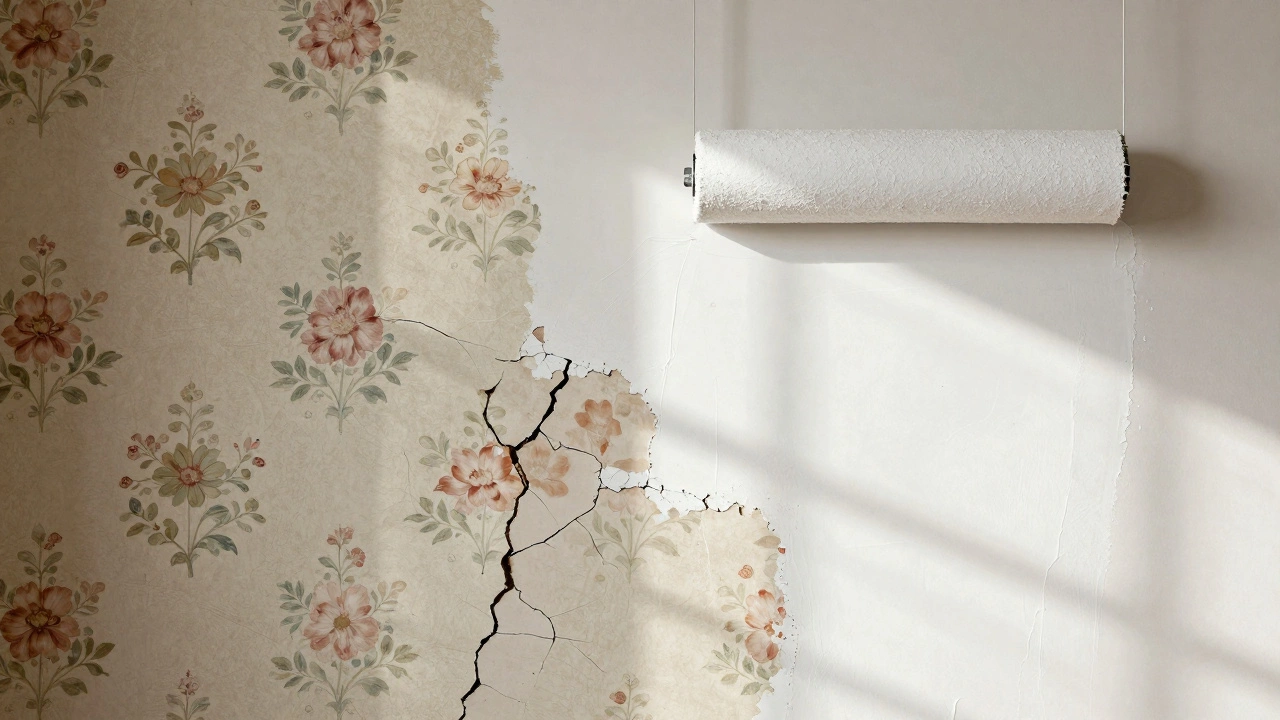
Wallpaper used to be a DIY project you could tackle on a weekend. Now? It’s a headache. Modern wallpapers-especially the high-end, vinyl-backed or non-woven types-require precise cutting, perfect alignment, and specialized paste. One wrong move and you’re dealing with bubbles, tears, or misaligned seams. And if you change your mind later? Removing it can mean scraping, steaming, or even sanding down drywall. Paint? You roll it on, let it dry, and repaint when you’re done. No mess, no stress.
Homeowners today want flexibility. They move more often. Rental tenants can’t risk damaging walls. Even homeowners who plan to stay long-term don’t want to commit to something that’s nearly impossible to undo. Paint is the ultimate reset button.
Wallpaper doesn’t age well
Look at a wall covered in wallpaper from the 90s or early 2000s. Chances are, the edges are peeling, the color has faded unevenly from sunlight, or the pattern looks dated in a way that’s hard to ignore. Wallpaper doesn’t just look old-it *feels* old. It traps dust, holds moisture, and can develop mold behind it in humid climates like Vancouver’s rainy winters.
Paint, on the other hand, can be refreshed with one coat. A new color can instantly modernize a room. Wallpaper? You’re stuck with it until you tear it all off. That’s a big risk when trends change every few years.
Minimalism took over
The rise of minimalism didn’t just change furniture-it changed walls. Clean lines, open spaces, and neutral palettes became the gold standard. Wallpaper, especially busy patterns, fights against that aesthetic. A floral border or damask print draws attention to the wall itself, which breaks the calm, uncluttered vibe people now want.
Think about Instagram home tours from 2020 to now. The most popular rooms have one thing in common: walls that don’t compete. They’re quiet. They let furniture, lighting, and art take center stage. Wallpaper often does the opposite. It shouts. And in a world of endless visual noise, people crave silence.
Cost and value don’t add up
Good wallpaper isn’t cheap. High-quality rolls cost $50 to $150 each. A full room can run $800 to $2,000 just for materials-not including professional installation, which adds another $500 to $1,500. Paint? You can cover an entire room for under $200, including brushes and primer.
And here’s the kicker: wallpaper doesn’t boost home value. Real estate agents don’t list homes as “featuring custom wallpaper.” They say “freshly painted” or “neutral palette.” Buyers see wallpaper as a renovation risk, not a selling point. Paint is an investment. Wallpaper? It’s a liability.
Technology changed expectations
Today’s homeowners expect instant results. Apps like Pinterest and Instagram show rooms that look perfect the moment you walk in. Wallpaper takes days to hang properly. It needs drying time. It needs touch-ups. It needs patience. Paint dries in hours. You can paint a room in a morning and enjoy it by dinner.
Plus, paint technology has improved. Today’s paints offer washable finishes, odor-free formulas, and even smart pigments that change tone slightly with light. You can get matte, satin, eggshell, or high-gloss-all with the same ease. Wallpaper? You’re limited to what the manufacturer printed.
It’s not gone-just niche
Don’t mistake “unpopular” for “dead.” Wallpaper still has its place. High-end designers use it in accent walls, powder rooms, or ceilings to create drama. Luxury hotels still line their lobbies with custom prints. But these are exceptions, not trends.
Wallpaper is now a deliberate choice, not a default. You don’t pick it because it’s trendy-you pick it because you love it so much you’re willing to live with the hassle. That’s a small group.
For most people, wallpaper feels like a chore. It’s expensive, hard to remove, hard to match, and doesn’t fit today’s lifestyle. Paint is faster, cheaper, and smarter. It’s not about taste-it’s about convenience.
What’s replacing wallpaper?
Textured paint is one. A matte finish with a subtle grain gives depth without pattern. Wall panels made from wood, cork, or recycled materials are growing fast-they add character without the mess. And then there’s removable wall decals and vinyl murals. They’re cheap, easy to put up, and even easier to take down. You can change your wall art every season without damaging anything.
Even paint itself has evolved. Color experts now recommend layered neutrals-like a base of warm gray with a second coat of soft beige-to create dimension without pattern. It’s subtle, but it works. And it lasts.
Will wallpaper ever come back?
Possibly. But not the way it was. If it returns, it’ll be as a statement piece-not a room filler. Think one wall in a bedroom, or a ceiling in a hallway. It’ll be high-end, custom-designed, and installed by professionals. It won’t be something you buy at a big-box store and hang yourself.
For now, the shift is clear: people want walls that blend in, not stand out. They want options, not commitments. And they want to be able to change their minds without breaking the bank.
Wallpaper isn’t unpopular because it’s ugly. It’s unpopular because it’s impractical.
Is wallpaper coming back in 2026?
Wallpaper isn’t making a full comeback. Instead, it’s becoming a luxury accent-used sparingly in high-end interiors, not as a mainstream wall covering. You’ll see it in boutique hotels, designer showrooms, or as a single feature wall in modern homes. But for everyday use, paint and other low-maintenance finishes will dominate.
Why do real estate agents avoid homes with wallpaper?
Agents avoid wallpaper because it’s a turnoff for buyers. Most people assume it’s outdated, hard to remove, or hiding damage underneath. Even if the wallpaper is in perfect condition, buyers worry about the cost and effort to replace it. Painted walls are neutral, safe, and ready for personalization-which makes homes easier to sell.
Can I paint over wallpaper?
You can, but it’s risky. If the wallpaper is peeling, bubbled, or glued to damaged drywall, paint will make it worse. The moisture from paint can reactivate old adhesive, causing more bubbles. If you’re determined, strip the wallpaper first. If you can’t, use a shellac-based primer like BIN to seal it, then paint. But stripping is always the better long-term solution.
What’s the cheapest way to update walls without paint?
Removable wall decals and vinyl murals are the cheapest and easiest option. They start at under $30, peel off cleanly, and come in hundreds of designs-from abstract art to faux brick. Wall panels made from cork or recycled wood are another option, offering texture and sound absorption without permanent installation.
Does wallpaper increase home value?
No. Unlike updated kitchens or hardwood floors, wallpaper doesn’t add measurable value to a home. In fact, it can hurt resale potential. Buyers see it as a renovation project they’ll need to undo. Paint, on the other hand, is seen as a neutral, low-risk upgrade that appeals to the broadest audience.
If you’re thinking about wallpaper for your next project, ask yourself: Do I love this enough to live with it for five years-and pay to remove it later? If the answer isn’t a strong yes, stick with paint. It’s not boring-it’s smarter.