Luxury Flooring Estimator & Guide
Select a room size and flooring preference to see estimated costs and key characteristics based on current luxury market trends.
Material Comparison Chart
| Material | Durability | Maintenance | Best For | Avg. Cost* |
|---|
You walk into a million-dollar home in Vancouver or Beverly Hills, and something hits you immediately. It isn't just the view or the square footage. It's under your feet. The floor sets the tone for everything else. If it looks cheap, the whole house feels compromised. If it looks right, the space breathes.
So, what flooring do high-end homes use? It’s not always the most expensive option per square foot. It’s about durability, aesthetic consistency, and how the material ages. Let’s break down exactly what the pros are installing in luxury builds right now.
The Foundation: Why Material Choice Matters More Than Price
High-end homeowners aren’t buying flooring; they’re buying an experience. They want silence underfoot, warmth in winter, and a surface that doesn’t scream "maintenance required" every time someone spills coffee. Standard builder-grade laminate rarely makes the cut here. Instead, we see materials with higher density, better acoustics, and tighter installation tolerances.
Think of flooring as the canvas of your home design. You can change paint colors in a weekend. You change floors once every twenty years. That longevity drives the decision-making process. Buyers look for materials that hold value. A scratched pine floor lowers resale appeal. A well-maintained walnut or marble floor raises it.
Hardwood: The Timeless Standard for Luxury
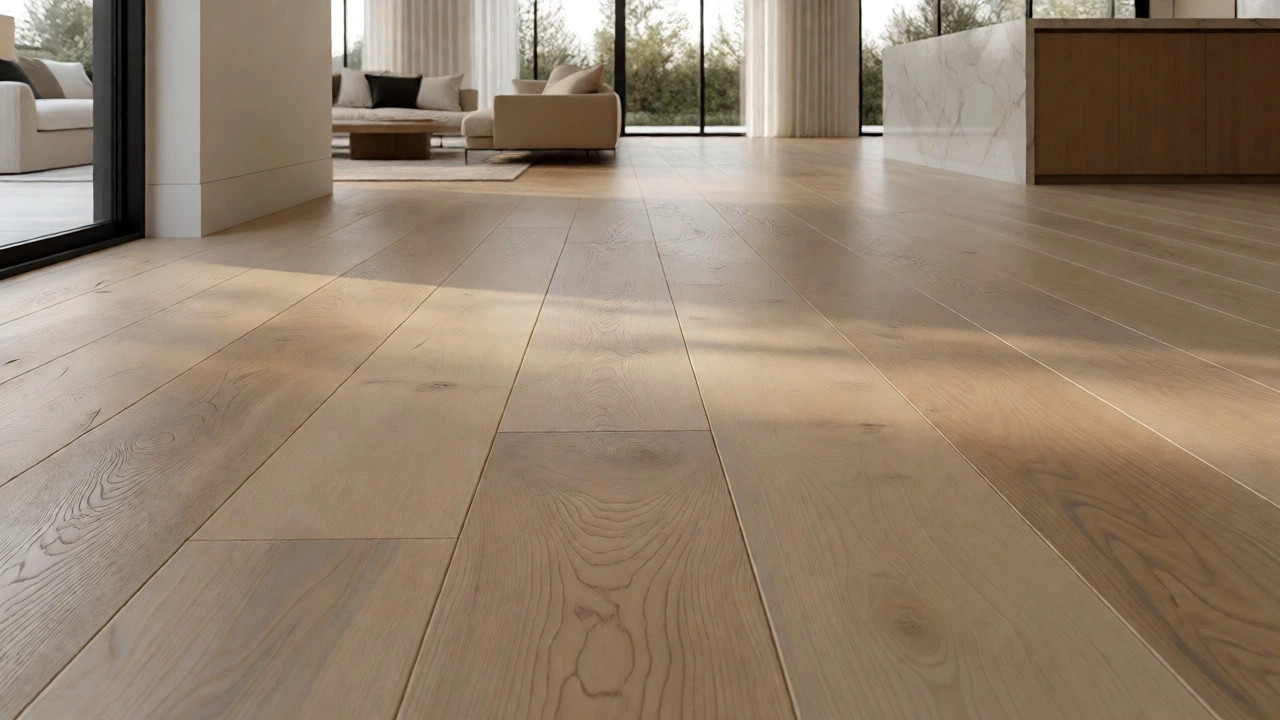
If there is one constant in luxury real estate, it’s wood. But not all wood is created equal. In high-end builds, you’ll mostly see two types: solid hardwood and engineered hardwood. Solid hardwood is milled from a single piece of timber. It can be sanded and refinished multiple times. Engineered hardwood has a real wood veneer on top of plywood layers. It handles humidity changes better, which matters if you live in coastal areas like Vancouver.
White Oak is currently dominating the luxury market. It’s hard, durable, and takes stain beautifully. People love its light color because it makes rooms feel larger and airier. Walnut offers a darker, richer contrast. It’s softer than oak but brings warmth to modern minimalist spaces. Exotic woods like Brazilian Cherry or Teak still appear, but trends have shifted toward native North American species for sustainability reasons.
Installation method also signals quality. Nail-down installation is preferred over glue-down where possible because it allows the wood to move naturally. Wide planks-7 inches or wider-are a hallmark of custom homes. Narrow strips look dated and busy. Wide planks show off the grain patterns without visual clutter.
Natural Stone: Marble, Limestone, and Slate
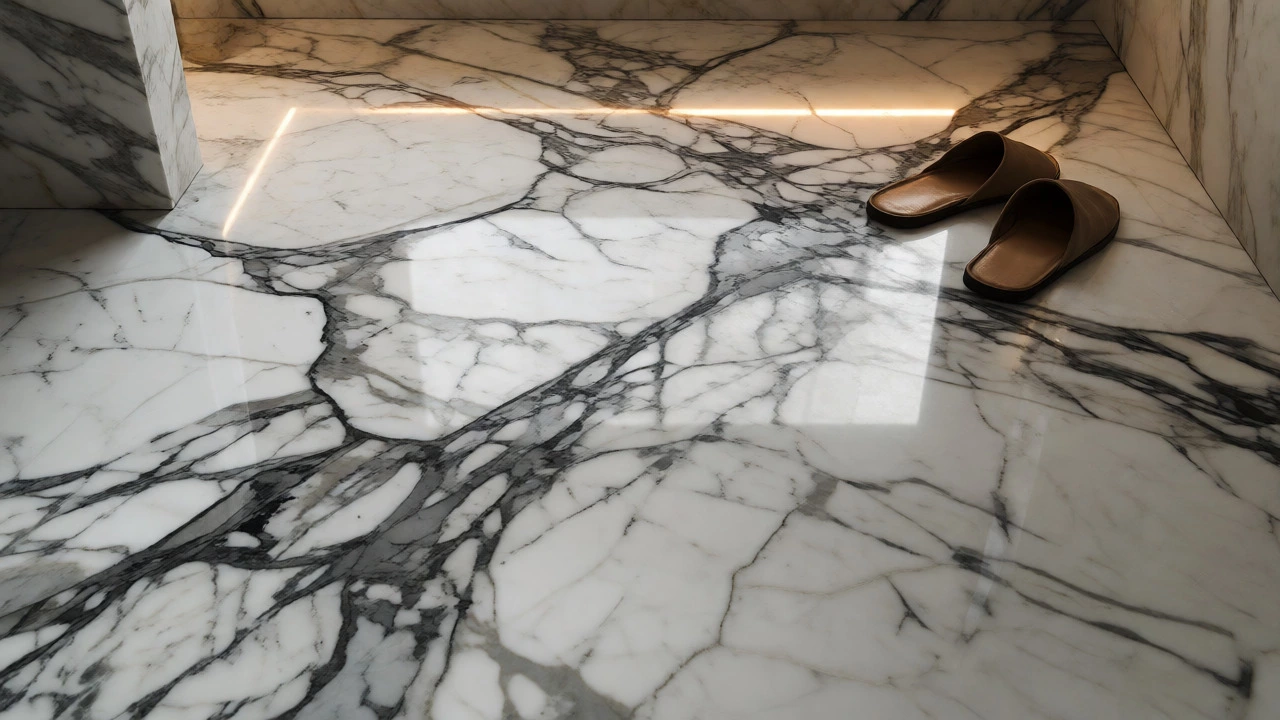
Stone says "permanent." It’s cool to the touch, incredibly durable, and unique to each slab. No two pieces match perfectly, which adds character. However, stone requires serious subfloor preparation. It’s heavy. Your joists need to support the weight.
Marble remains the gold standard for entryways and master bathrooms. Carrara and Calacatta varieties are popular for their dramatic veining. But marble is porous. It stains if you don’t seal it regularly. Many luxury buyers opt for Limestone instead. It’s softer visually, less prone to etching from acidic cleaners, and provides a smoother, matte finish that feels sophisticated rather than flashy.
Slate is another contender, especially in rustic-modern estates. It’s tough, slip-resistant, and comes in earthy tones. The downside? It’s cold. Without radiant heating underneath, slate floors can be uncomfortable in January. Most high-end builders integrate hydronic radiant heat systems beneath stone tiles to solve this problem.
The Rise of Luxury Vinyl Plank (LVP) in Premium Spaces
You might think vinyl belongs in rental apartments. Think again. Modern Luxury Vinyl Plank (LVP) is revolutionizing high-end interiors. Brands like Coretec and NuCore offer products that mimic wood so closely you can’t tell them apart by sight alone. Some even replicate texture underfoot.
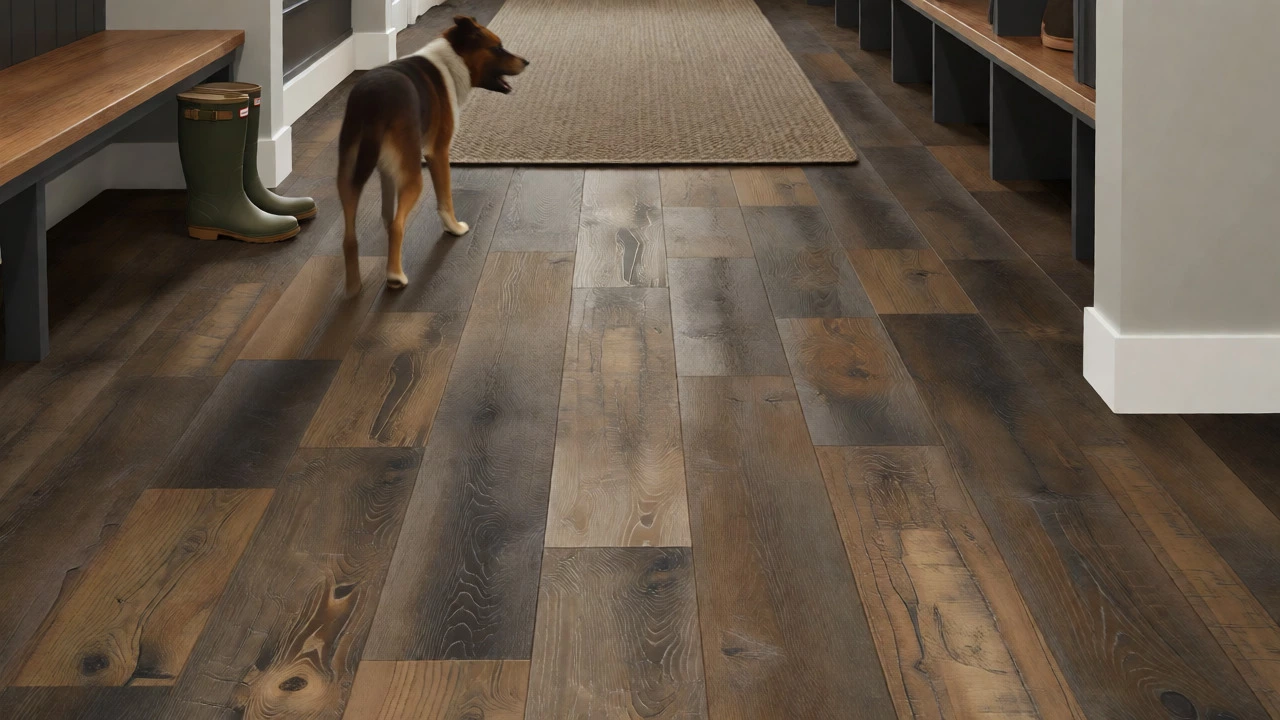
Why choose LVP in a mansion? Practicality. It’s waterproof. You can install it in basements, mudrooms, and kitchens without worrying about warping. It’s quieter than tile and warmer than stone. For families with pets or kids, it’s often the smartest choice despite the lower material cost compared to exotic hardwoods. The key is selecting planks with a thick wear layer (20 mil or more) and rigid core construction. Cheap vinyl flexes too much and sounds hollow. Rigid-core LVP feels solid and stable.
Carpeting Done Right: Wool and Custom Weaves
Wall-to-wall carpet fell out of favor in open-concept designs, but it never disappeared from luxury bedrooms and media rooms. The difference lies in the fiber. Synthetic nylon carpets stain easily and flatten quickly. High-end homes use Wool Carpet. It’s naturally flame-retardant, resists crushing, and cleans up surprisingly well.
Beyond wool, custom woven rugs define zones in large open-plan living areas. Instead of covering the entire floor, designers place large-scale hand-knotted rugs over hardwood or stone. This adds acoustic dampening and visual interest without committing to full coverage. Tufted silk or viscose blends add sheen and depth, turning the floor into a focal point.
Comparison: Choosing the Right Material for Your Lifestyle
How do you decide? It depends on traffic, moisture, and maintenance tolerance. Here’s a quick breakdown of how these materials stack up against each other.
| Material | Durability | Maintenance | Best For | Avg. Cost Range* |
|---|---|---|---|---|
| White Oak Hardwood | High | Medium (Refinish every 10-15 yrs) | Living Rooms, Hallways | $8 - $15 / sq ft |
| Calacatta Marble | Medium (Prone to scratching) | High (Sealing required) | Entryways, Bathrooms | $12 - $25+ / sq ft |
| Rigid-Core LVP | Very High | Low (Sweep/Mop only) | Kitchens, Basements, Mudrooms | $4 - $9 / sq ft |
| Wool Carpet | High | Medium (Professional cleaning) | Bedrooms, Media Rooms | $6 - $12 / sq ft |
| Limestone | High | Medium (Sealing) | Pools, Patios, Foyers | $10 - $20 / sq ft |
*Costs include professional installation. Prices vary by region and supplier availability in 2026.
Key Trends Influencing Luxury Floors in 2026
Design preferences shift slowly, but some clear patterns emerge in current luxury builds. First, matte finishes are outperforming high-gloss. Glossy floors show dust, footprints, and scratches instantly. Matte or satin finishes hide imperfections and reflect light softly, creating a serene atmosphere.
Second, mixed materials are gaining traction. You might see wide-plank oak in the living room transitioning seamlessly into large-format porcelain tiles in the kitchen. The transition strip is minimal or non-existent, using tight grout lines or matching grout colors to create continuity. This technique expands the perceived size of the home.
Third, sustainability is no longer a niche concern. Buyers ask for FSC-certified wood and low-VOC adhesives. Recycled glass tiles and cork flooring are appearing in eco-luxury properties. Cork, once considered outdated, is back due to its thermal insulation properties and renewable nature.
Common Mistakes to Avoid
Even wealthy homeowners make costly errors. One big mistake is ignoring the subfloor. If your concrete slab has moisture issues, putting hardwood directly on top will cause cupping within five years. Always test for moisture content before installation. Another error is choosing trendy colors over timeless ones. Gray-stained floors were huge ten years ago; now they can look sterile. Stick to natural wood tones or neutral stones that won’t date quickly.
Also, don’t underestimate lighting. Dark floors absorb light, making small rooms feel smaller. Light floors reflect it. Match your flooring choice to your window orientation. South-facing rooms handle dark woods well. North-facing rooms benefit from lighter oaks or limestone.
Frequently Asked Questions
Is engineered hardwood considered high-end?
Yes, absolutely. High-quality engineered hardwood with a thick wear layer (4mm+) is indistinguishable from solid wood and often performs better in humid climates or over radiant heating systems. It is widely used in luxury condos and coastal homes.
Which floor type adds the most value to a home?
Hardwood consistently offers the highest ROI, typically recouping 70-80% of its cost at resale. Natural stone adds prestige but may not yield direct financial returns unless it complements the overall property tier. LVP adds functional value but generally does not increase appraisal value as significantly as real wood or stone.
Are dark floors still popular in luxury homes?
Dark floors remain popular but are used more selectively now. Instead of painting entire floors black, designers use deep espresso or charcoal stains in specific areas like studies or dining rooms, contrasting them with lighter walls or rugs to maintain balance.
Do I need radiant heating for stone floors?
While not strictly mandatory, radiant heating is highly recommended for stone floors in colder climates. It transforms the comfort level of marble or slate, making them pleasant to walk on year-round and enhancing the luxurious feel of the space.
What is the most durable flooring for high-traffic luxury homes?
Rigid-core Luxury Vinyl Plank (LVP) and Porcelain Tile are the most durable options. They resist scratches, water, and heavy furniture movement better than wood or soft stone. For those insisting on wood, White Oak or Hickory are the hardest common domestic species.
Next Steps for Your Project
Ready to upgrade? Start by assessing your lifestyle. Do you have dogs? Go with LVP or distressed hardwood. Do you host dinner parties? Consider polished stone or wide-plank oak. Get samples. Place them in different lights throughout the day. See how they look next to your curtains and cabinets. Don’t rush the decision. Your floor is the foundation of your home’s aesthetic. Choose wisely.