Room Lighting Calculator
Your Lighting Plan
Enter your room details to see recommendations.
Walk into a poorly lit room, and you know it immediately. The corners are dark shadows, the center is glaringly bright, or everything feels flat and lifeless. You might have installed expensive fixtures, but if the light doesn't feel right, the space fails. This isn't just about aesthetics; bad lighting causes eye strain, headaches, and makes even a beautifully furnished room look cheap.
So, what is the actual rule of thumb for lighting? It’s not a single magic number. Instead, it relies on three core principles: measuring intensity in foot-candles, calculating total lumens based on square footage, and layering your sources to create depth. Getting these three elements right transforms a house from a series of boxes into a home that feels welcoming and functional.
The Intensity Standard: Understanding Foot-Candles
Most people think in terms of "bright" or "dim," but designers and electricians use a specific metric called foot-candles (fc). A foot-candle measures how much light hits a surface area of one square foot. Think of it like rainfall: one inch of rain covers every square foot evenly. One foot-candle means one lumen of light is hitting every square foot of your floor or table.
You don’t need a fancy meter to start using this rule. Different activities require different levels of illumination. Here is the general breakdown for residential spaces:
- Ambient/Accent Lighting (10-20 fc): Hallways, closets, and dining rooms during casual meals. This level creates mood without demanding focus.
- General Ambient (30-50 fc): Living rooms, bedrooms, and kitchens for general navigation. This allows you to move around safely and see clearly without squinting.
- Task Lighting (50-75 fc): Bathrooms (for grooming), kitchen counters (for chopping food), and home offices. This is where precision matters.
- High-Intensity Task (100+ fc): Detailed work like sewing, reading small print, or intricate hobby crafts.
If your living room feels gloomy despite having a ceiling fan with a light kit, check the foot-candles. A standard 60-watt equivalent bulb in a central fixture often only provides 10-15 fc at the edges of a large room. To hit that comfortable 30-50 fc range, you need more total output or better placement.
The Lumen Calculation: Brightness by Square Footage
Once you know the desired foot-candle level, you can calculate exactly how many bulbs you need. This brings us to the second part of the rule of thumb: lumens per square foot.
Lumens measure the total amount of visible light emitted by a source. Unlike watts, which measure energy consumption, lumens tell you how bright the light actually is. Here is the quick math formula most interior designers use:
- Measure your room: Multiply length by width to get square footage.
- Determine the target: Use the foot-candle guidelines above. For a living room, aim for ~20 lumens per square foot. For a kitchen, aim for ~40-50 lumens per square foot.
- Calculate total lumens: Multiply square footage by the target lumens-per-square-foot number.
- Divide by bulb output: Divide the total needed lumens by the lumens provided by one bulb to find out how many bulbs you need.
Let’s say you have a 12x12 foot living room (144 sq ft). You want a cozy but usable space, so you aim for 20 lumens per sq ft.
Total Lumens Needed = 144 * 20 = 2,880 lumens.
If you buy modern LED bulbs that produce 800 lumens each:
2,880 / 800 = 3.6 bulbs.
Rounding up, you need four 800-lumen bulbs. If you rely on a single ceiling fixture with two sockets, you’re short by half the necessary light. That explains why the room feels dim. You either need higher-output bulbs (like 1,600 lumens) or additional light sources.
| Room Type | Target Lumens/Sq Ft | Primary Purpose |
|---|---|---|
| Living Room | 10-20 | Relaxation, Socializing |
| Kitchen (General) | 30-40 | Cooking, Cleaning |
| Bathroom | 50-70 | Grooming, Safety |
| Bedroom | 10-20 | Sleep, Reading |
| Home Office | 30-50 | Focus, Computer Work |
Layering Light: The Three-Tier System
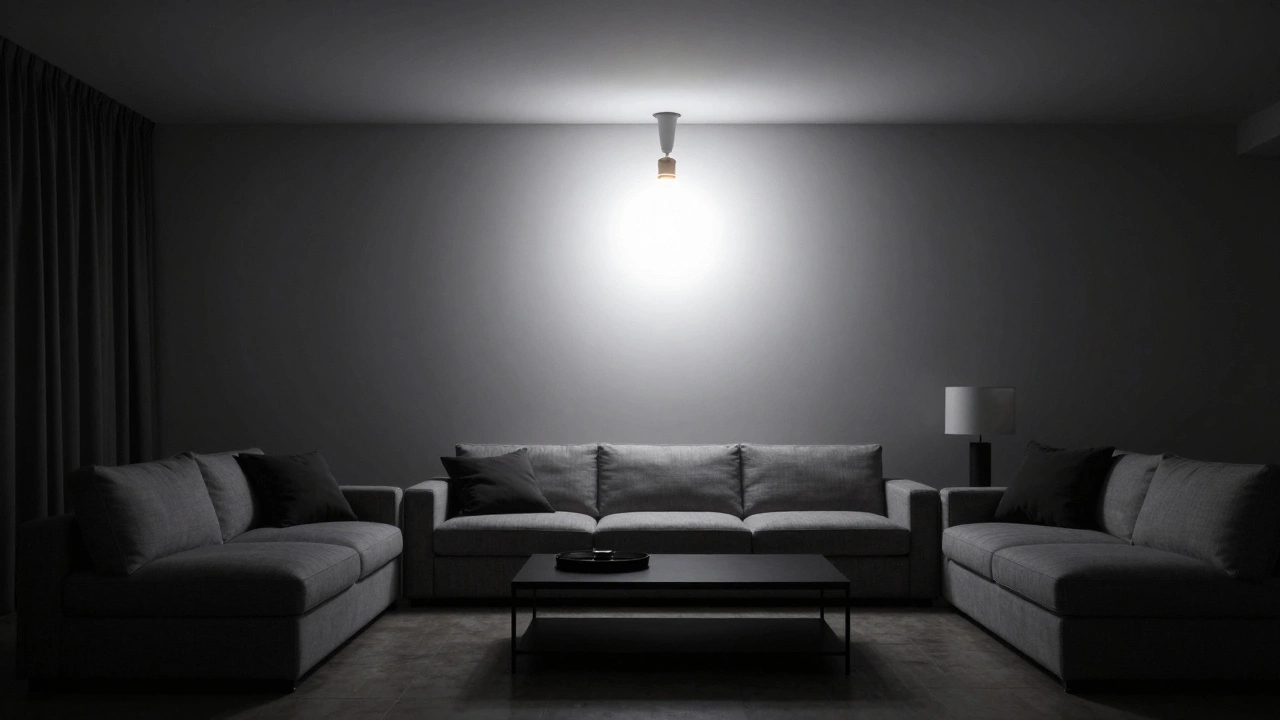
Even if you nail the lumen count, a room can still look flat if all the light comes from one place-usually the center of the ceiling. This creates harsh shadows behind furniture and leaves corners dark. The solution is layered lighting, which consists of three distinct types working together.
1. Ambient Lighting This is your base layer. It provides general illumination so you can walk around safely. Recessed cans, ceiling-mounted fixtures, or track lighting serve this purpose. However, ambient light alone is rarely enough for a comfortable environment.
2. Task Lighting This layer focuses light where you need it. In a kitchen, under-cabinet LEDs illuminate the countertop so you don’t cast a shadow while chopping vegetables. In a bedroom, a bedside lamp helps you read without waking up your partner with overhead glare. Task lighting should be brighter than the ambient layer to reduce eye strain.
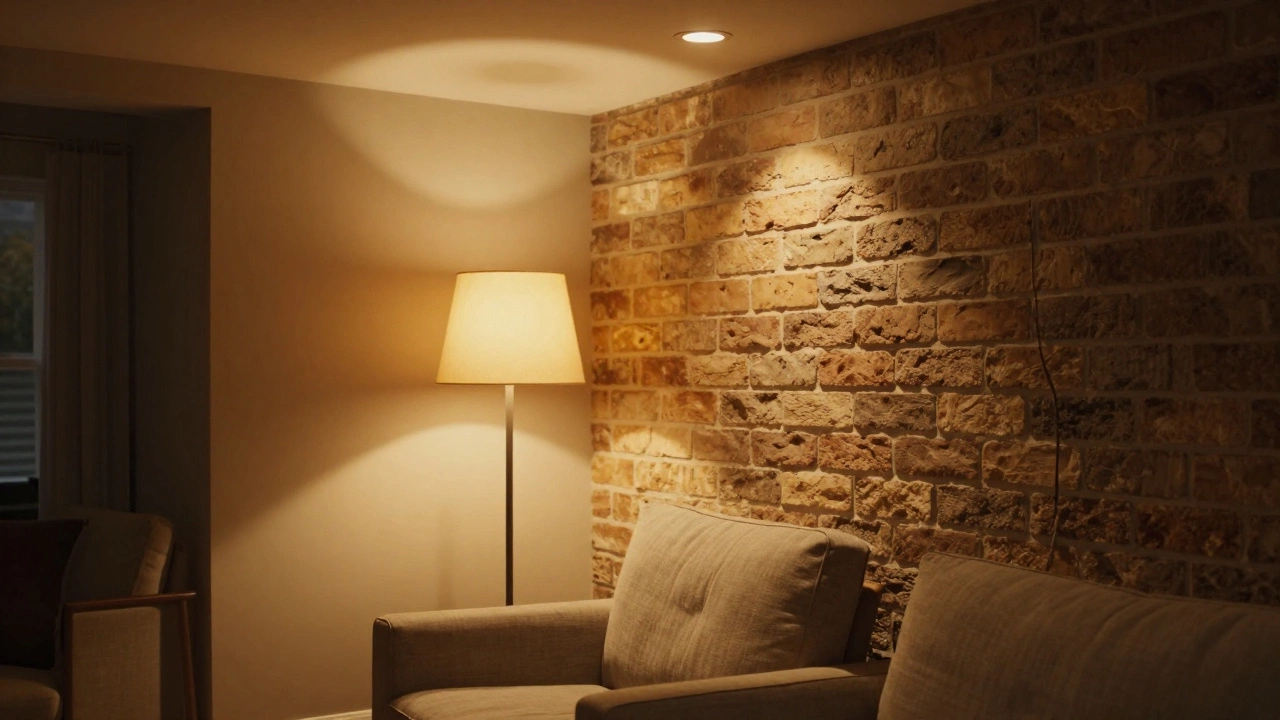
3. Accent Lighting This is the decorative layer that adds drama and depth. Picture lights over artwork, LED strips inside bookshelves, or a spotlight highlighting a textured wall. Accent lighting draws the eye to specific features and makes the room feel designed rather than just lit.
A good rule of thumb for balancing these layers is the 60-30-10 rule: 60% of your light should be ambient, 30% task, and 10% accent. Adjust these percentages based on the room's function. A kitchen might skew heavily toward task lighting (40%), while a media room leans into ambient and accent (70%).
Color Temperature: Setting the Mood
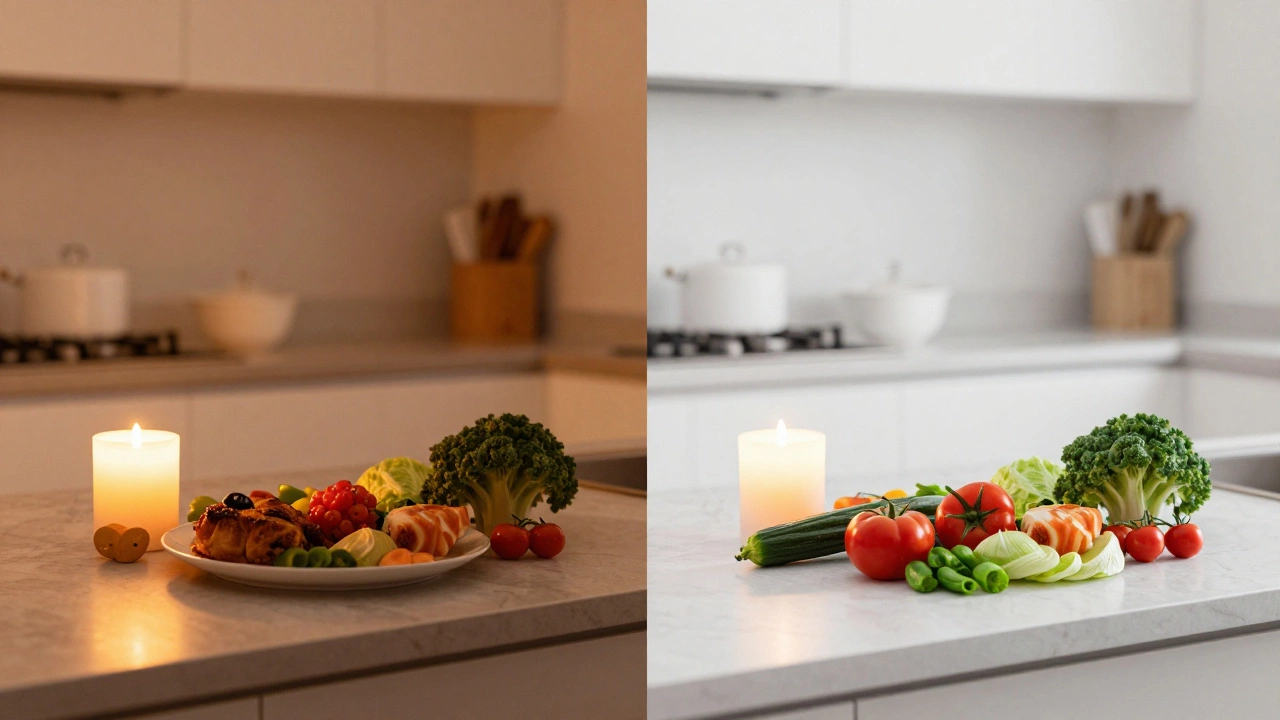
Brightness isn't the only variable. The color of the light drastically changes how a space feels. Measured in Kelvins (K), color temperature ranges from warm yellow to cool blue.
- 2700K - 3000K (Warm White): Ideal for living rooms, bedrooms, and dining areas. These tones mimic candlelight or sunset, promoting relaxation and comfort. They make skin tones look healthy and wood finishes appear rich.
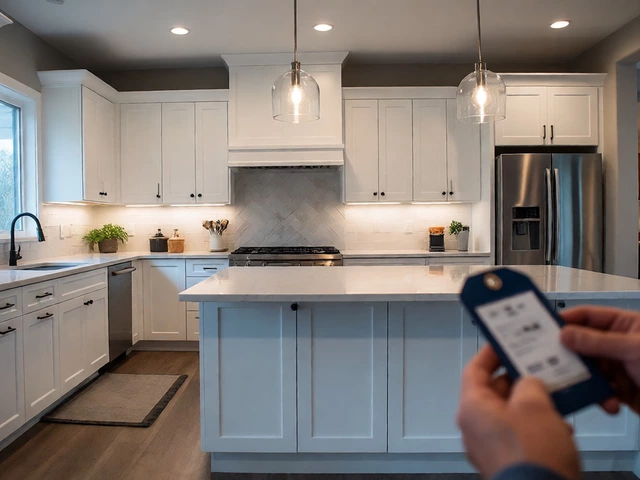
- 3500K - 4000K (Neutral White): Best for kitchens, bathrooms, and home offices. This crisp, clean light reveals true colors, making it easier to cook, apply makeup, or focus on work. It feels energetic without being sterile.
- 5000K+ (Daylight/Cool White): Rarely used in residential interiors except for specific tasks like detailed craft work or garage workshops. In a living room, this temperature can feel clinical and hospital-like.
Mixing temperatures within the same room is a common mistake. If your recessed lights are 4000K and your table lamps are 2700K, the room will look disjointed and unprofessional. Stick to one dominant temperature per zone. If you must mix them, ensure they are close on the spectrum (e.g., 2700K and 3000K) and separated by distinct functional areas.
Common Pitfalls to Avoid
Even with the right calculations, small errors can ruin the effect. Here are the most frequent mistakes homeowners make when applying lighting rules.
Ignoring Wall Color Reflectivity Dark walls absorb light; light walls reflect it. If you paint your living room navy blue, you’ll need roughly 20-30% more lumens than if you painted it off-white. Dark surfaces eat up foot-candles, requiring stronger bulbs or additional fixtures to maintain visibility.
Overlooking Ceiling Height Standard lumen calculations assume an 8-foot ceiling. If you have 10-foot or vaulted ceilings, light spreads out more before hitting the floor. Add 10-15% more lumens for every foot of height above 8 feet to compensate for the distance.
Using Dimmers Incorrectly Dimmer switches are essential for flexibility, but not all bulbs work well with all dimmers. Cheap incandescent-style LEDs may flicker or buzz at low settings. Invest in high-quality triac-compatible LED bulbs and matching dimmer switches to ensure smooth control from 100% down to 10% brightness.
Practical Application: A Step-by-Step Plan
Ready to fix your lighting? Follow this checklist to apply the rules effectively.
- Assess Current Needs: Identify what activities happen in the room. Is it mostly for relaxing (low fc) or working (high fc)?
- Calculate Square Footage: Measure the room dimensions accurately.
- Determine Total Lumens: Multiply sq ft by the recommended lumens/sq ft factor from the table above.
- Select Fixtures: Choose a mix of ambient, task, and accent sources. Don’t rely solely on ceiling lights.
- Choose Bulbs: Pick LEDs with the correct color temperature (2700K for warm, 4000K for neutral) and sufficient lumen output per bulb.
- Install Dimmers: Put at least the ambient lights on dimmers to allow adjustment throughout the day.
- Test and Adjust: Turn on all lights. Do you see harsh shadows? Are there dark corners? Add a floor lamp or under-cabinet strip to fill gaps.
Lighting is both science and art. The math gives you a solid foundation, but your eyes ultimately decide what feels right. Start with these rules of thumb, then tweak until the space feels exactly how you want it. Good lighting doesn't just help you see; it helps you live.
How many lumens do I need for a 200 sq ft living room?
For a 200 sq ft living room, you generally need between 2,000 and 4,000 total lumens. This assumes a target of 10-20 lumens per square foot for a relaxed atmosphere. If you plan to do activities like reading or gaming in the same space, aim for the higher end of that range or add dedicated task lighting.
What is the difference between lumens and watts?
Watts measure energy consumption, while lumens measure brightness. With older incandescent bulbs, a 60-watt bulb produced about 800 lumens. Modern LEDs can produce the same 800 lumens using only 9-12 watts. Always shop by lumens to ensure consistent brightness across different bulb types.
Is 3000K too yellow for a kitchen?
3000K is on the warmer side for a kitchen but can work if you prefer a cozy vibe. However, most professionals recommend 3500K to 4000K for kitchens because neutral white light better reveals food colors and reduces eye strain during prep work. If you choose 3000K, ensure you have ample task lighting to compensate for the softer glow.
How far apart should recessed lights be?
A common rule of thumb for recessed lighting spacing is to divide the ceiling height by two. For an 8-foot ceiling, place lights 4 feet apart. Also, position them about half that distance (2 feet) from the wall to avoid dark corners. This creates an even wash of light across the ceiling and floor.
Can I use daylight bulbs (5000K) in my bedroom?
It is generally not recommended. Daylight bulbs emit a blue-rich spectrum that suppresses melatonin production, making it harder to fall asleep. Bedrooms benefit from warm white bulbs (2700K-3000K) which promote relaxation. Save the 5000K bulbs for garages, basements, or high-focus workspaces.