Japanese Bedding Suitability Checker
Fill out the form and click "Analyze" to see if Japanese bedding fits your lifestyle.
Quick Takeaways
- Japanese bedding centers around the futon (specifically the shikibuton) and the tatami mat.
- It is designed for small spaces, allowing a bedroom to double as a living area.
- Regular airing and folding are required to prevent mold and maintain firmness.
- It offers a firmer sleep surface which many find better for back alignment.
The Core Components: More Than Just a Mattress
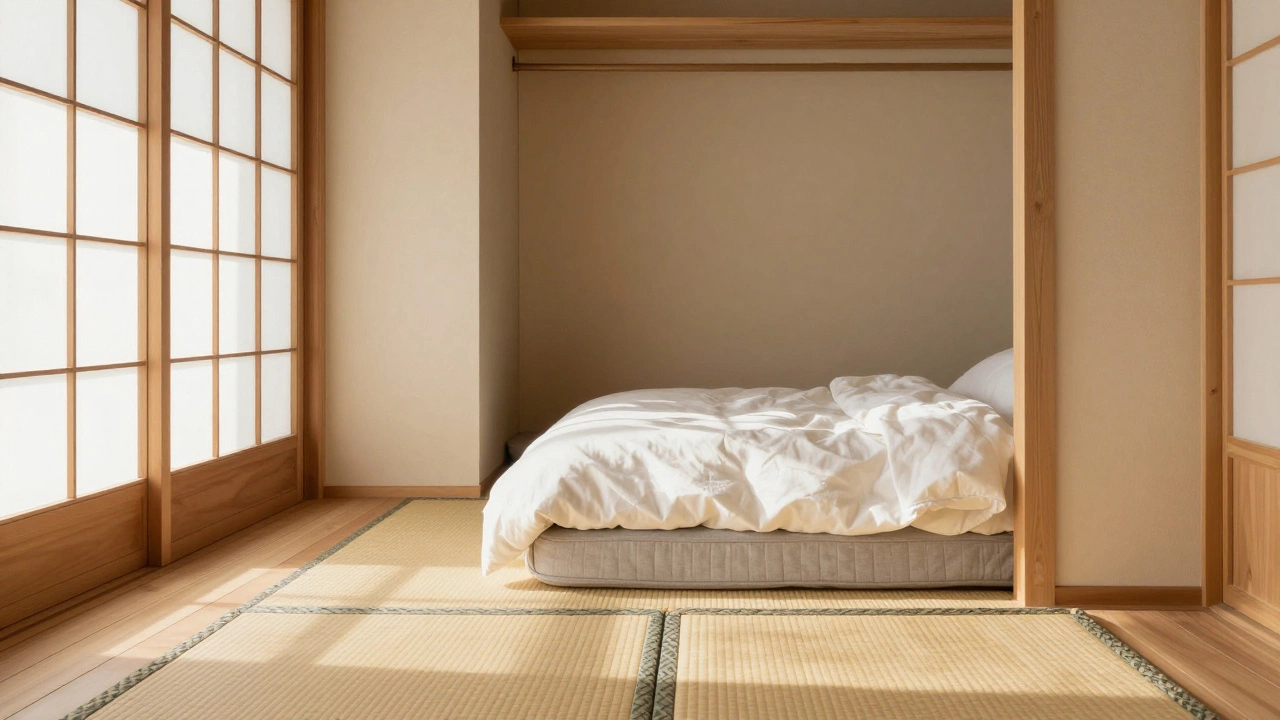
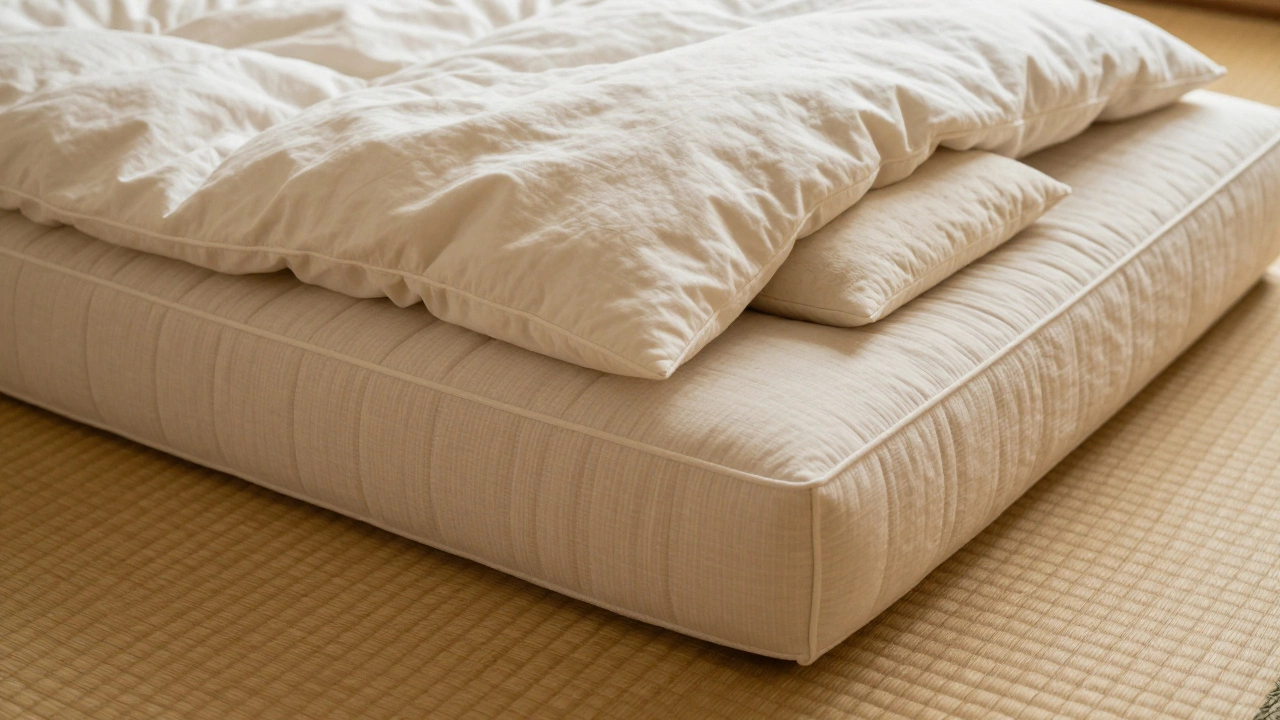
When people say "futon" in the West, they usually think of a folding sofa bed with a metal frame. In Japan, that is not what a futon is. To understand how this works, you have to look at the three main layers. First, there is the Shikibuton. This is the actual floor mattress. Unlike a Western mattress that relies on thick springs, a shikibuton is a thin, quilted pad filled with cotton or synthetic fibers. It is designed to be firm. If you have ever woken up with a sore lower back from a mattress that was too soft, this is where the appeal lies. The firmness provides a stable base that keeps your spine neutral. Then you have the Futon (the duvet). In the Japanese context, the term "futon" often refers to the entire set, but specifically, the top layer is a thick, quilted blanket that acts as both a comforter and a weighted blanket. Finally, there is the Tatami. You cannot just throw a cotton mattress on a cold hardwood floor. A tatami mat is a traditional flooring made from woven rush grass. These mats provide a layer of insulation from the cold ground and, more importantly, they breathe. Because they are porous, they allow moisture from your body to escape, which prevents the mattress from getting damp.Why Choose Floor Bedding Over a Traditional Bed?
Why go through the effort of folding your bed every morning? For many, it comes down to space. In cities like Tokyo or Vancouver, square footage is expensive. If your bedroom is also your office or your lounge, having a bed that disappears is a game-changer. But it is not just about the room size. There is a physical benefit to sleeping closer to the ground. Many people find that the firm support of a shikibuton reduces tossing and turning. When you aren't sinking into a "memory foam hole," your muscles can relax more fully. There is also a psychological shift. There is something grounding about starting and ending your day on the floor. It strips away the clutter and focuses the room on simplicity. Plus, for parents with toddlers, a floor bed removes the danger of a midnight fall from a high frame.| Feature | Japanese Shikibuton | Western Mattress |
|---|---|---|
| Support Level | Firm / Rigid | Variable (Soft to Firm) |
| Space Use | Foldable & Storable | Permanent Footprint |
| Breathability | High (with Tatami) | Low (unless high-end foam) |
| Maintenance | Needs daily folding/airing | Rotate every 6 months |
| Portability | Very High | Low |
The Art of Maintenance: Avoiding the Mold Trap
Here is the part where most beginners fail. You cannot treat a Japanese floor mattress like a standard bed. If you leave a cotton mattress on the floor for a week without moving it, you will likely find mold growing on the bottom. Why? Because your body releases moisture while you sleep, and that moisture gets trapped between the fabric and the floor. To keep your bedding fresh, you need to follow a few non-negotiable rules:- Fold it daily: As soon as you wake up, fold the shikibuton and put it in a closet or on a rack. This lets the floor and the mattress breathe.
- Sun-drying: Once a month, hang your mattress outside in the sun. The UV rays kill bacteria and the fresh air removes odors. In Japan, people often beat their futons with a bamboo stick to fluff up the cotton and knock out dust.
- Use a barrier: If you don't have tatami mats, use a tri-fold mattress or a breathable bamboo slat mat. This creates a small air gap that prevents moisture buildup.
Adapting Japanese Style to a Modern Home
You don't have to live in a traditional Japanese house to enjoy this setup. Many people are now mixing these elements with modern furniture. For example, if you have a guest room that is rarely used, a set of high-quality shikibutons is far more practical than a guest bed that collects dust all year. If you are transitioning from a soft bed, don't do it overnight. Your body needs time to adjust to the firmness. Start by placing your shikibuton on a rug or a thin foam topper for a few nights. Once your back adjusts, you can move to the tatami or bare floor for that authentic experience. Another great way to adapt this is by using a Sofa Bed logic. While traditional Japanese bedding is separate, some modern versions come with a foldable base that allows you to transition from a seating area to a sleeping area in seconds. This gives you the "best of both worlds"-the support of a floor bed and the convenience of a piece of furniture.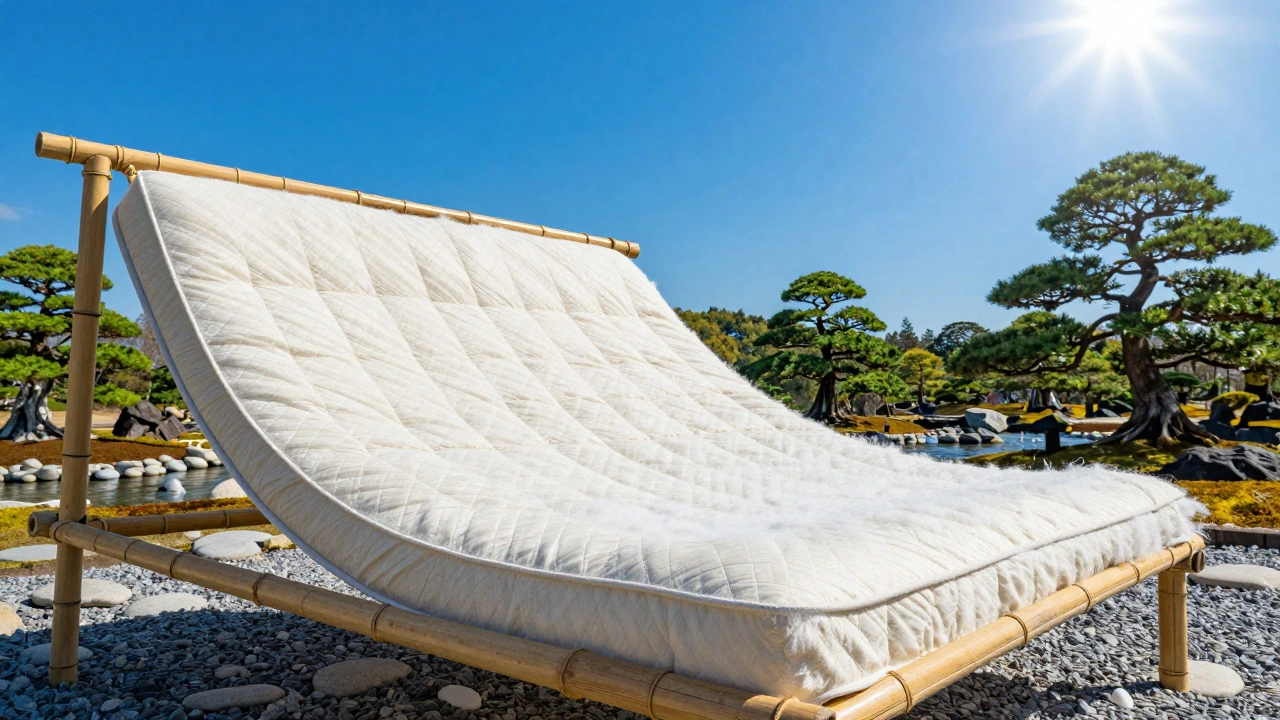
Common Mistakes to Avoid
One of the biggest errors is buying a "cheap" futon from a big-box store. These are often just thin pieces of polyester foam that don't provide any real support and trap heat. A real Japanese mattress is weighted and dense. If it feels like a camping pad, it is not a shikibuton. Another mistake is ignoring the temperature. Since you are sleeping on the floor, you are closer to the cold air that settles at the bottom of a room. In winter, you will need a thicker Kakefuton (the heavy duvet) or an electric heating pad underneath the mattress to stay warm. Finally, don't forget about your pillows. Traditional Japanese pillows were often small, firm buckwheat hulls (Sobakawa). If you use a massive, fluffy Western pillow with a flat floor mattress, you might actually strain your neck because your head will be propped up too high compared to your body.Is Japanese bedding good for back pain?
For many, yes. The firm surface prevents the hips from sinking, which is a common problem with soft mattresses that causes spinal misalignment. However, if you have specific medical conditions or very thin skin, the extreme firmness might cause pressure points. It is always best to transition slowly.
Do I really need tatami mats for a futon?
You don't strictly need them, but they are highly recommended. Tatami provides a crucial layer of ventilation and cushioning. If you sleep on hardwood or tile without a mat, you increase the risk of mold growth and feel the cold more intensely during winter.
How often should I clean a shikibuton?
You should vacuum the surface once a week. For deep cleaning, the best method is air-drying in the sun every 2-4 weeks. Because you cannot put a thick cotton mattress in a standard washing machine, using a washable mattress protector is a smart way to keep it hygienic.
Can I use a Japanese futon every day?
Absolutely. Millions of people in Japan do. The key is the routine: fold it every morning and air it out. If you have the discipline to spend three minutes folding your bed, it is a perfectly sustainable long-term sleep solution.
What is the difference between a futon and a shikibuton?
In the broadest sense, "futon" refers to the entire bedding set. However, specifically, the shikibuton is the mattress that goes on the floor, while the kakefuton is the duvet that covers you. In the West, "futon" usually refers to the folding sofa bed frame, which is quite different from the traditional Japanese version.