Bookcase Stability & Anchor Selector
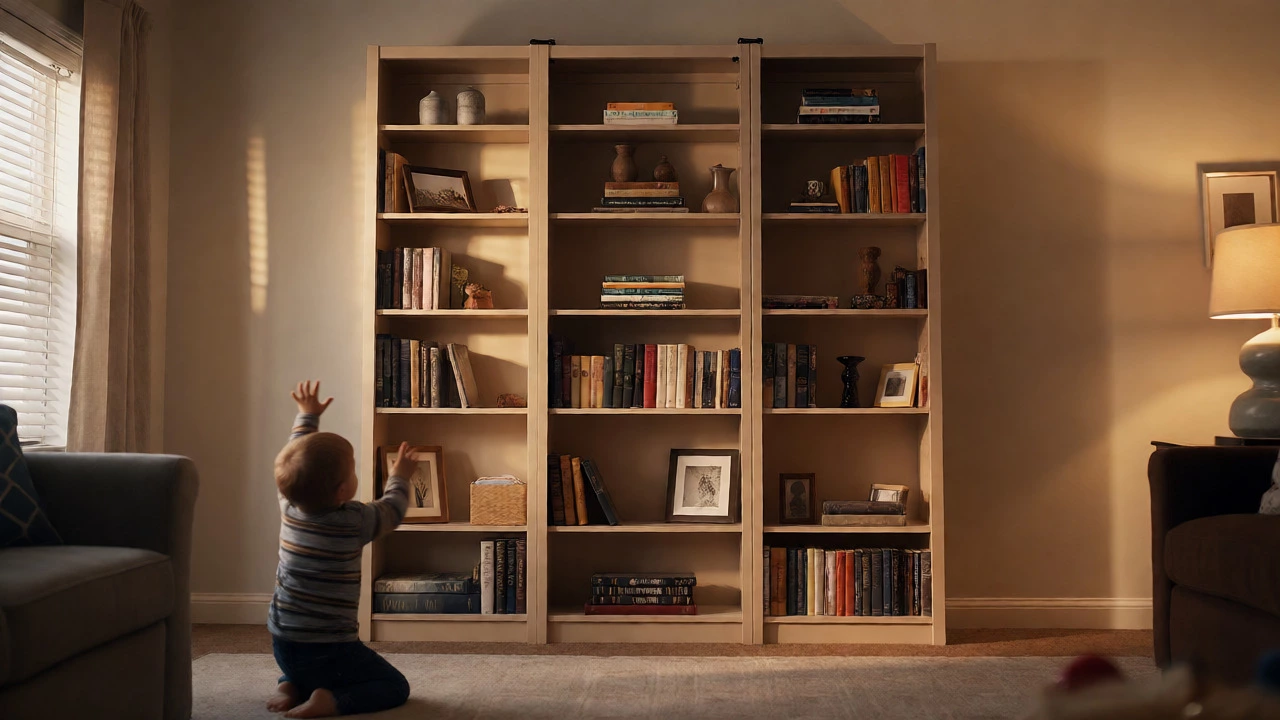
You just bought that beautiful freestanding bookcase from the store. It looks perfect in your living room corner, holding all your favorite novels and photo frames. But here is the scary part: if a toddler climbs it, or you bump into it while vacuuming, it can tip over in less than two seconds. That is faster than you can blink. Securing this piece of furniture isn't just about protecting your stuff; it's about preventing serious injury. If you have kids, pets, or just live in an earthquake-prone area like Vancouver, anchoring your bookcase is non-negotiable.
Most people think their heavy bookcase won't move because it weighs fifty pounds. Physics disagrees. When weight shifts upward-like when someone pulls out the top shelf-the center of gravity rises. A tall, narrow unit becomes unstable. You don't need to be an engineer to fix this. You just need the right hardware and five minutes. This guide walks you through exactly how to secure a freestanding bookcase so it stays put, no matter what chaos happens around it.
Why Free-Standing Bookcases Tip Over
Think about the last time you saw a news story about furniture tipping. It usually involves a chest of drawers or a TV stand, but bookcases are equally vulnerable. The problem lies in the ratio between height and depth. A standard IKEA Billy or similar flat-pack unit is often six feet tall but only eleven inches deep. That makes it top-heavy.
Furniture stability depends on the base footprint relative to the center of mass. When you load the bottom shelves with heavy books, the center of mass drops, making it safer. But life isn't static. Kids pull books off high shelves. Cats jump onto the top. Or worse, they climb. Once the center of mass moves above the front edge of the base, the unit rotates forward. Gravity takes over. Anchoring prevents this rotation by creating a pivot point at the wall.
Choosing the Right Anchor Hardware
Not all anchors are created equal. Using the wrong one is like wearing flip-flops in a snowstorm-it might hold for a bit, but it will fail when it matters. Your choice depends entirely on what kind of wall you have.
| Wall Type | Recommended Anchor | Load Capacity (Approx.) | Installation Difficulty |
|---|---|---|---|
| Drywall (Hollow) | Toggle Bolt or Molly Bolt | 50-100 lbs | Moderate |
| Drywall (Near Stud) | Screw directly into stud | 200+ lbs | Easy |
| Plaster/Lath | Self-drilling toggle or specialized plaster anchor | 40-80 lbs | Hard |
| Concrete/Brick | Masonry sleeve anchor | 300+ lbs | Hard (requires hammer drill) |
| Tile/Bathroom | Specialized tile anchor | Varies | Moderate |
If you rent and can't drill into studs, use toggle bolts. They spread the load across a larger area behind the drywall. For concrete walls, common in older Vancouver apartments, you absolutely need masonry anchors. Regular screws will strip the hole immediately.
Step-by-Step Installation Guide
Ready to get your hands dirty? Here is the straightforward process. Don't skip steps, especially measuring.
- Locate the Studs: Use a stud finder. Mark the center of the stud with a pencil. Anchoring into wood is always stronger than anchoring into drywall alone.
- Position the Bookcase: Place the bookcase where you want it. Ensure it is level. If the floor is uneven, shim the legs before anchoring. An unlevel bookcase puts stress on the anchor points.
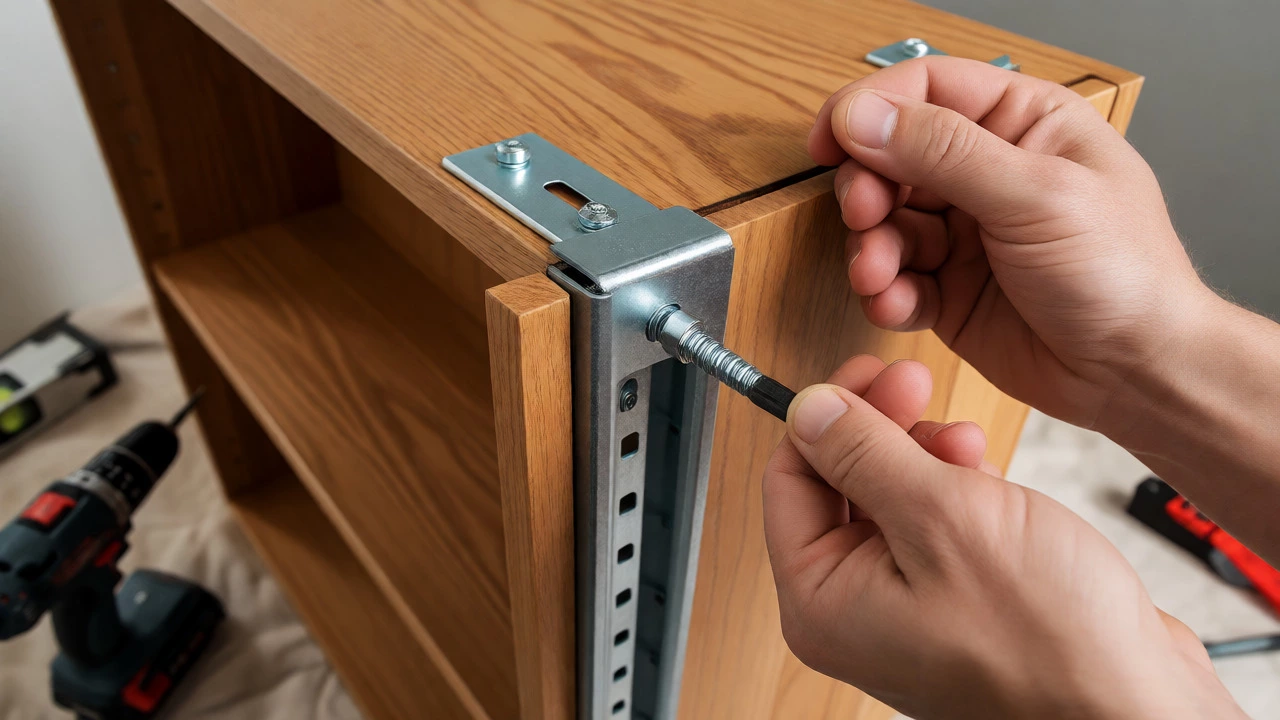
- Mark the Bracket Location: Most anti-tip kits come with L-brackets or straps. Hold the bracket against the back of the bookcase near the top. Mark where the screw goes into the wood. Then, mark the corresponding spot on the wall stud.
- Drill Pilot Holes: Drill a small pilot hole into the bookcase back panel to prevent splitting. For the wall, drill a pilot hole slightly smaller than your anchor screw.
- Install Wall Anchor: Insert the anchor into the wall. Tighten the screw until snug. Do not overtighten if using plastic anchors, as they can crack.
- Attach Bracket to Furniture: Screw the other end of the bracket or strap into the bookcase. Use screws short enough not to poke through the front face.
- Test the Stability: Give the bookcase a firm push. It should feel rigidly connected to the wall. There should be minimal movement.
Anti-Tip Straps vs. L-Brackets: Which is Better?
You'll see two main types of hardware in stores: metal L-brackets and nylon webbing straps. Both work, but they serve different needs.
L-Brackets are rigid. They physically block the bookcase from tilting backward. They are ideal for solid walls and permanent installations. However, they require precise alignment. If your wall is uneven, the bracket might twist the bookcase frame.
Nylon Anti-Tip Straps are flexible. They allow slight movement, which reduces stress on the furniture joints. They are easier to install on angled walls or if you're worried about damaging the paint. The downside? Nylon stretches over time. Check them annually. If they feel loose, tighten them or replace them. For rental properties, straps are often friendlier because they leave smaller holes if you decide to move out.
Special Considerations for Heavy Loads
A bookcase full of encyclopedias behaves differently than one with paperbacks. Weight distribution matters. If you plan to fill the bottom shelves heavily, the unit is naturally more stable. But if you keep the bottom empty for baskets or decor, the risk increases.
For units over 60 inches tall, consider double anchoring. Install one strap at the very top and another at the middle height. This creates a triangular support structure. In seismic zones like British Columbia, this redundancy is crucial. During a tremor, lateral forces can shear a single connection point. Two points distribute the energy.
Also, check the back panel thickness. Many budget bookcases have thin hardboard backs. Screwing directly into this material offers little grip. Always anchor into the vertical side panels or the top rail of the frame, not just the back sheet.
Troubleshooting Common Mistakes
Even careful DIYers make errors. Here are the most frequent ones and how to fix them.
- Using Drywall Anchors in Plaster: Old homes have lath and plaster. Standard plastic toggles break through the brittle surface. Use self-drilling metal toggles designed for plaster.
- Ignoring Floor Levelness: If the bookcase wobbles, the anchor bears all the rotational force. Shim the feet first. A stable base extends the anchor's life.
- Screws Too Long: A long screw can punch through the front of your nice oak bookcase. Measure the depth of the side panel. Choose screws 1/4 inch shorter than that depth.
- Missing the Stud: If you miss the stud and hit hollow space with a regular screw, it holds nothing. Pull it out, patch the hole, and re-measure. Never rely on friction alone.
Remember, securing furniture is cheap insurance. A $10 kit costs less than a broken toe or a damaged heirloom. Take ten minutes today to anchor every tall piece in your home. Your future self-and your children-will thank you.
Do I really need to anchor my bookcase if it has glass doors?
Yes, absolutely. Glass doors add significant weight to the front of the unit, raising the center of gravity and making it more likely to tip forward if bumped. Additionally, if a free-standing unit tips, glass shatters, creating sharp hazards. Anchoring prevents the fall entirely.
Can I use adhesive strips instead of drilling?
Adhesive products exist, but they are generally considered temporary solutions. They may hold a light bookcase steady against minor bumps, but they rarely withstand the force of a child climbing or a significant seismic event. For true safety compliance, mechanical fasteners (screws and anchors) are recommended by safety standards organizations.
What if I live in a rental and can't drill holes?
You have options. Some landlords allow small anchor holes that can be patched with spackle upon move-out. If not, look for "no-drill" furniture anchors that clamp to the baseboard or use strong industrial adhesives rated for furniture. Another option is placing the bookcase in a corner where two walls provide natural stability, though this is less reliable than anchoring.
How often should I check the anchors?
Check them twice a year, perhaps when you change your smoke detector batteries. Wood expands and contracts with humidity changes, which can loosen screws over time. Nylon straps also degrade slowly under UV light and tension. A quick tug test ensures they remain tight and functional.
Is it safe to anchor a bookcase to a hollow-core door?
No. Hollow-core doors cannot support the lateral force of a tipping bookcase. The screw would rip out easily. Always anchor to a structural wall, either into a stud or using heavy-duty masonry/toggle anchors suitable for the wall material.