Non-Commercial License Checker
Use this tool to determine if your intended use of design assets complies with non-commercial licenses. This is critical for commercial construction projects where design elements like signage, wall graphics, and interior finishes are used in revenue-generating spaces.
Ever seen a design, image, or blueprint labeled licensed for non-commercial and wondered what that actually means for your construction project? It’s not just legal jargon-it can stop your project dead if you ignore it. In commercial construction, where every detail from signage to wall graphics matters, using something without the right license can lead to fines, lawsuits, or even being forced to tear down work you’ve already paid for.
What 'Licensed for Non-Commercial' Actually Means
When something is licensed for non-commercial use, it means you can only use it for personal, educational, or charitable purposes. You cannot use it in any way that makes money, promotes a business, or supports a profit-driven activity. That includes everything from logos on your office walls to photos on your company website, or even a custom tile pattern you copied from a free design site.
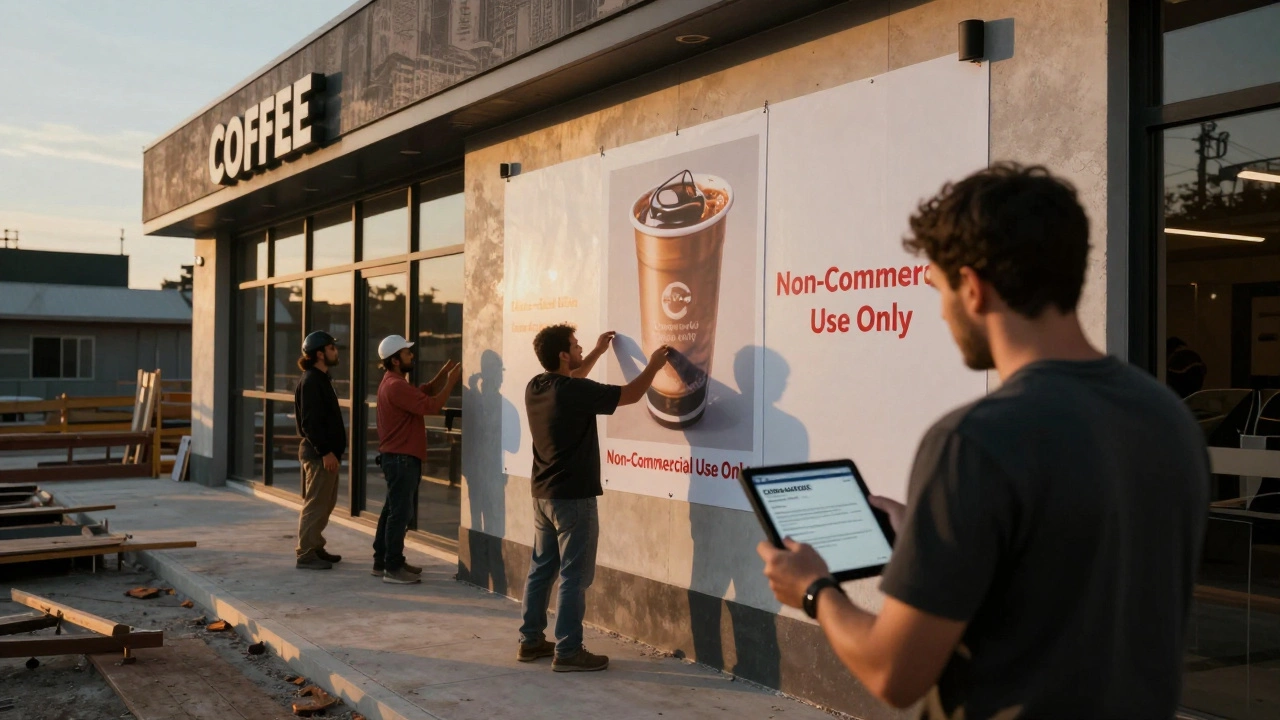
Let’s say you find a beautiful mural design online labeled “free for non-commercial use.” You love it. You think, “I’ll just print it on the back wall of my client’s coffee shop.” That’s a problem. Even if you’re not charging for the design itself, you’re using it to enhance a business space that generates revenue. That’s commercial use-and it breaks the license.
Why This Matters in Commercial Construction
Commercial construction isn’t just about beams and concrete. It’s about branding, ambiance, and customer experience. You’re often installing:
- Wall graphics and decals
- Custom signage with licensed fonts or artwork
- Interior finishes with copyrighted patterns
- Digital displays showing stock footage or music
- Lighting designs based on patented concepts
Each of these could be covered by a license. Many architects and designers grab assets from sites like Unsplash, Pixabay, or Creative Commons thinking they’re safe. But if the asset says “non-commercial only,” and you’re building a retail store, restaurant, or office tower-you’re in violation.
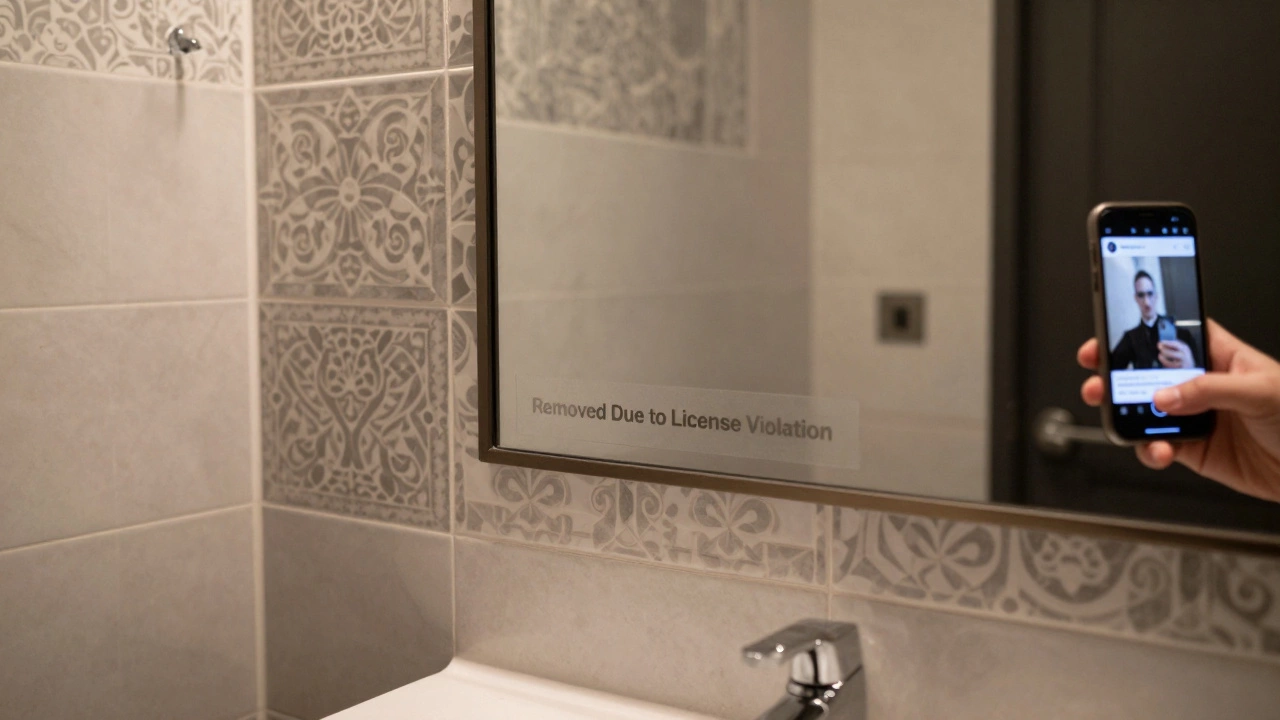
Real-world example: A Vancouver-based contractor used a free downloadable pattern for bathroom tiles in a new boutique hotel. The original artist, a local illustrator, found out months later when the hotel went viral on Instagram. They sent a cease-and-desist letter. The hotel had to remove all tiles at their own cost-$28,000 in labor and materials lost.
What Counts as Commercial Use?
It’s not always obvious. Here’s what counts as commercial use in construction:
- Using copyrighted images or designs on client-facing surfaces (walls, floors, ceilings)
- Printing logos, artwork, or patterns on branded materials for a business client
- Including licensed content in marketing photos of your completed project
- Using fonts in signage that aren’t licensed for commercial display
- Reproducing architectural renderings from free stock sites on proposals or websites
Even if you’re not selling the design, if the space you’re building generates income-rent, sales, services, advertising-you’re in commercial territory. The license doesn’t care who designed it or who paid for it. It cares about how the asset is being used.
What Happens If You Break the License?
Most people assume copyright holders won’t notice. They’re wrong.
Companies like Getty Images, Adobe Stock, and even independent artists use automated tools to scan the web and social media for unlicensed use. If your project gets posted online-and most commercial projects do-you’re visible.
Potential consequences:
- Legal demand letters demanding payment (often $500-$5,000+ per item)
- Forced removal or destruction of installed materials
- Damage to your company’s reputation
- Loss of client trust
- Insurance claims denied if the violation is deemed negligence
In 2024, a construction firm in Calgary was sued after using a licensed font in a hospital signage project without a commercial license. The font creator had sold the license to a third-party enforcement agency. The firm paid $12,000 in damages and legal fees-even though they didn’t know the font was restricted.
How to Avoid Trouble
You don’t need to avoid all free resources. You just need to know how to use them right.
- Check the license every time-even if it’s “free.” Look for keywords: “non-commercial,” “personal use only,” “no resale,” “no business use.”
- Use only commercial-licensed assets-Sites like Adobe Stock, Shutterstock, and Envato Elements offer commercial licenses for a fee. Many include construction-specific assets like textures, patterns, and signage templates.
- Buy licenses for fonts-Google Fonts are mostly safe for commercial use, but always double-check. Avoid random font sites. A single font license can cost under $30 and save you thousands.
- Get written permission-If you find something you love but it’s non-commercial, email the creator. Many will grant a commercial license for a small fee or even for free if you credit them properly.
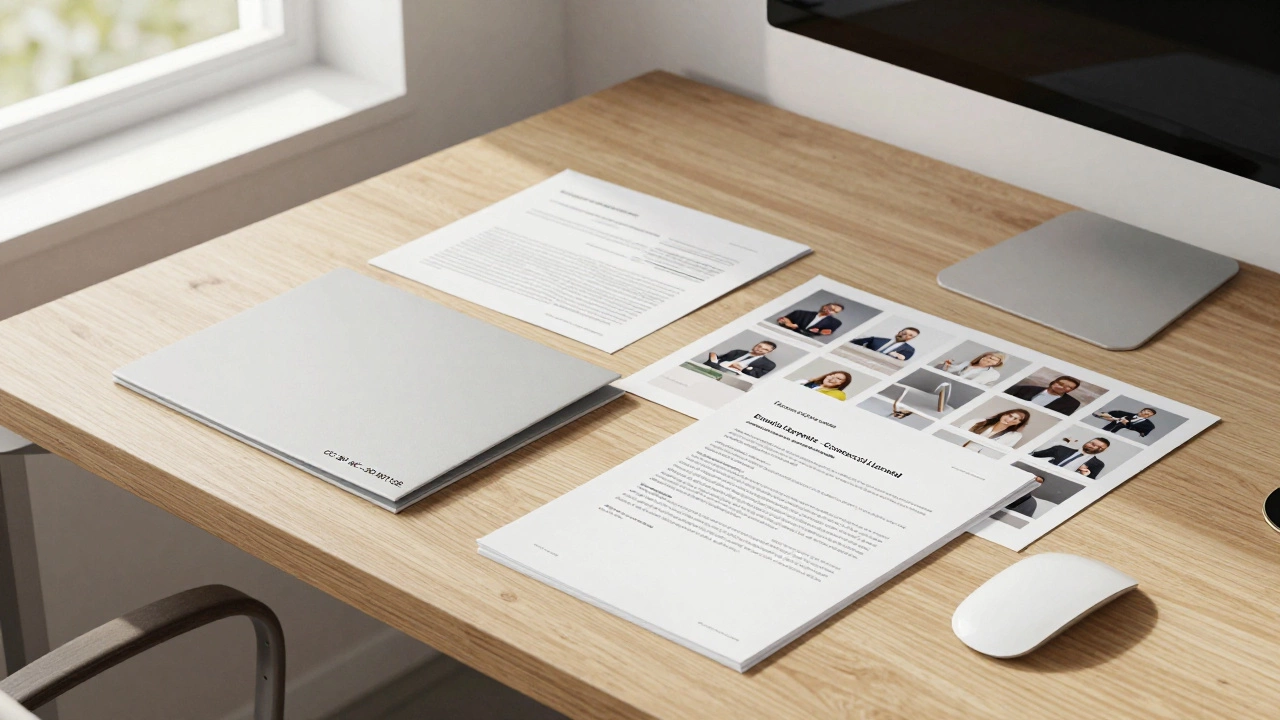
- Document everything-Keep a folder of license agreements, receipts, and permissions. If you’re ever questioned, you need proof you did it right.
What About Public Domain or Creative Commons?
Not all free content is created equal.
Public domain means no copyright at all. You can use it for anything-commercial or not. But very little modern content is truly public domain. Most things labeled “free” are under Creative Commons (CC) licenses, which come in many flavors.
Here’s what to watch for:
- CC0 = Public domain. Safe for commercial use.
- CC BY = Free to use, but you must credit the creator. Can be commercial.
- CC BY-NC = Non-commercial only. Don’t use in construction.
- CC BY-ND = No derivatives. You can’t modify it-so no resizing logos or changing colors.
Always look for the exact license type. If it says “NC” (non-commercial), walk away.
What Should You Use Instead?
There are plenty of safe, affordable alternatives:
- Adobe Stock - Offers commercial licenses for images, vectors, and templates. Many are tailored for interiors and signage.
- Envato Elements - Unlimited downloads for a monthly fee. Includes fonts, textures, icons, and 3D models usable in commercial projects.
- Google Fonts - All fonts here are open source and free for commercial use.
- OpenClipart - Free vector graphics, public domain. Safe for any use.
- Hire a local designer - For custom wall art, logos, or patterns, a local artist can create something unique for a few hundred dollars. You own the rights.
One Vancouver firm switched to Envato Elements for all their design assets. Their monthly cost is $16.50. In two years, they’ve saved over $40,000 in legal risks and rework.
Final Rule: When in Doubt, Don’t Use It
Construction is expensive enough. Don’t risk your profit, your reputation, or your client’s trust because you grabbed a free image. If you’re unsure about a license, assume it’s restricted. Find a safe alternative. It takes 10 minutes to verify a license. It could cost you months to fix a mistake.
Commercial construction isn’t just about building structures. It’s about building trust. And trust starts with doing things the right way-even when no one’s watching.
Can I use a non-commercial design if I’m not charging the client for it?
No. It doesn’t matter if you’re not charging for the design itself. If the space you’re building is used for business-like a store, office, or restaurant-you’re using the design commercially. The license is based on the end use, not how you bill the client.
Are free stock photos from Unsplash safe for commercial construction?
Most Unsplash photos are free for commercial use, but always check the individual image’s license. Some contributors add restrictions. Look for the license link under each photo. If it says “non-commercial,” avoid it. Stick to photos labeled “free for commercial use” or with a CC0 license.
What if I modify a non-commercial design? Can I use it then?
Usually not. Most non-commercial licenses prohibit any use-even modified versions. If the license says “non-commercial,” changing colors or resizing the image doesn’t make it legal. You need a commercial license to make any changes for business use.
Can I use a non-commercial logo in my own company’s marketing materials?
No. Even if you’re not selling the logo, using it in your portfolio, website, or social media to attract clients is commercial use. You’re promoting your business. That’s a violation. Always use original or commercially licensed logos in your marketing.
Do I need a license for custom tile patterns I design myself?
No-if you designed it yourself, you own the rights. But if you copied or based it on someone else’s artwork, even loosely, you may be infringing. Always create original designs or use assets with clear commercial licenses.