Ever walked into a French home and wondered why they don’t have a "closet" like you do? It’s not because they don’t store clothes - they do, just differently. The word you’re looking for isn’t "armoire" like some online guides claim. It’s actually armoire - and it’s not just a translation. It’s a whole different concept.
It’s Not Just a Word - It’s a Piece of History
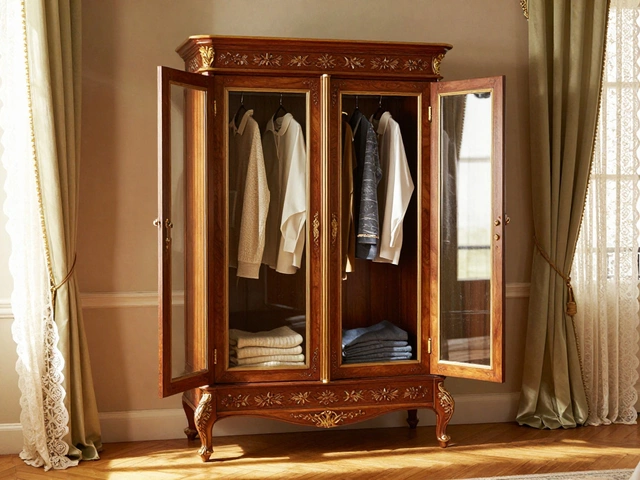
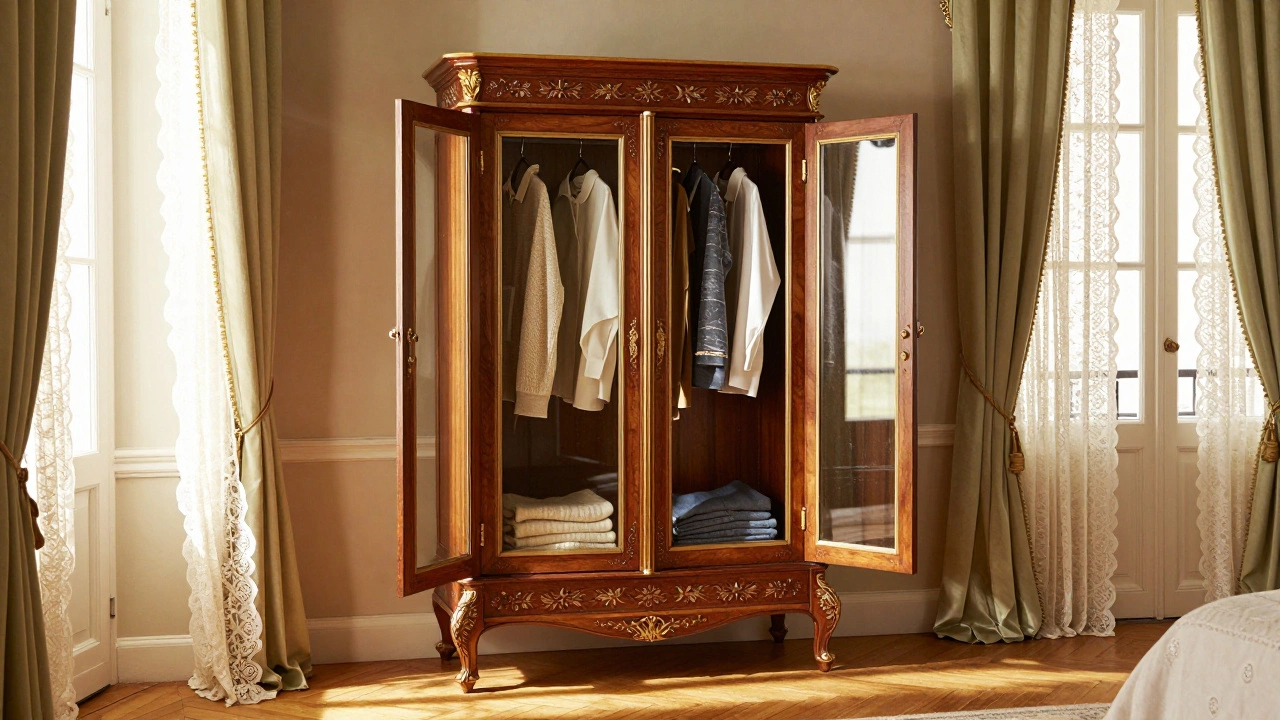
In French, a wardrobe is called an armoire. But if you think that’s just the French version of your closet, you’re missing the point. An armoire isn’t a built-in space in the wall. It’s a freestanding piece of furniture - often tall, wooden, and sometimes ornate. You’ll find them in living rooms, bedrooms, even hallways. They’re not hidden. They’re displayed.
Back in the 17th century, French nobility used armoires to store clothes, linens, and even weapons. They were status symbols. Crafted from walnut or oak, often carved with floral patterns or gilded edges, they were as much about art as function. Today, you still see them in old Parisian apartments, country homes in Provence, and even modern minimalist lofts - reimagined, but still unmistakably an armoire.
Why Don’t the French Use "Placard"?
You might hear "placard" thrown around online as the French word for closet. That’s misleading. Placard does exist in French, but it means something else entirely. It’s a small storage space - like a pantry, a linen cupboard, or a narrow cabinet in a hallway. Think of it as a utility closet, not a clothing storage unit.
Real French homes rarely have walk-in closets. Even in luxury apartments in Lyon or Bordeaux, you won’t find a dedicated clothing room. Instead, you’ll find one or two armoires per bedroom. They’re practical, durable, and easy to move. If you’re remodeling, you can swap out an armoire in an afternoon. No drywall, no electrician, no permit.
How Do French People Use Their Armoires?
It’s not just about hanging clothes. A typical French armoire has:
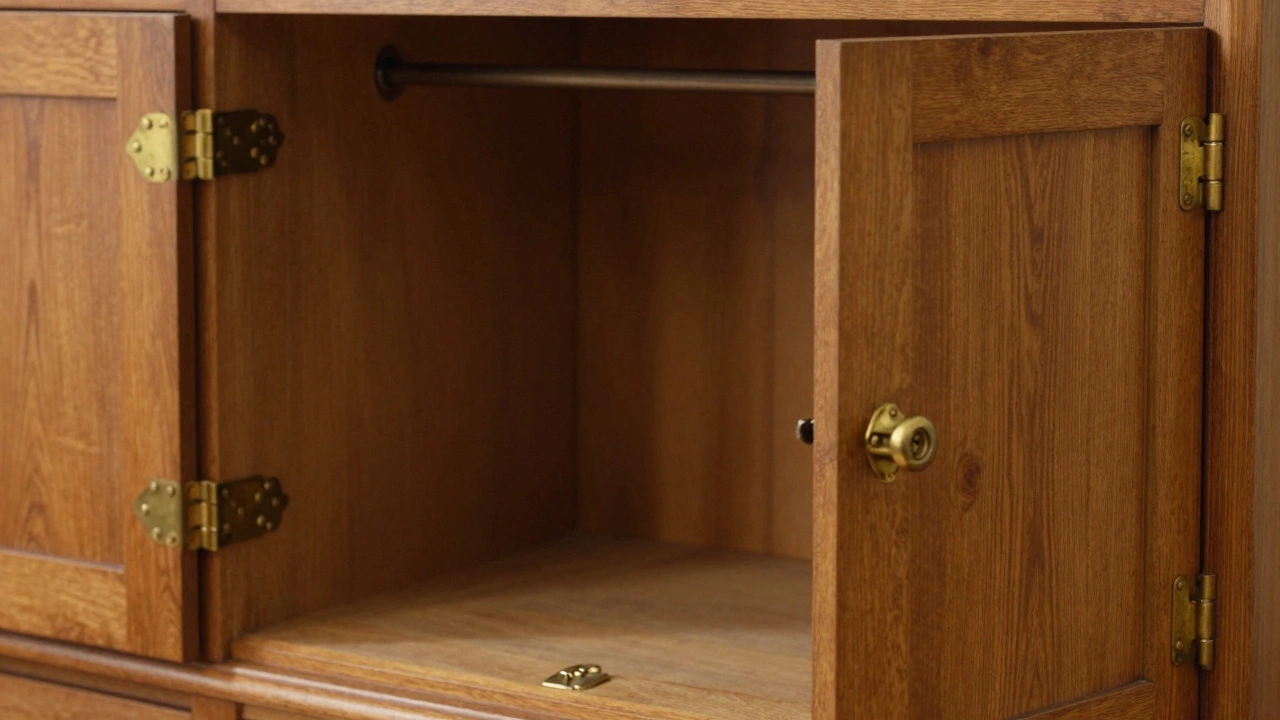
- Two large doors with internal hanging rods
- Shelves on one side for folded sweaters or scarves
- A drawer unit at the bottom for underwear, socks, or belts
- A mirror on the inside of one door (a classic feature)
Many armoires also have a small lock - not because they’re storing valuables, but because they’re part of the room’s aesthetic. The idea isn’t to hide your clothes. It’s to keep them organized, protected from dust, and easy to access. You open the doors, see everything at once, and pick what you need. No rummaging through piles.
It’s why French people often have fewer clothes. With everything visible and neatly arranged, you notice what you own. You don’t buy duplicates. You don’t forget what’s in there. It’s a system that encourages mindful consumption.
Modern Armoires: What They Look Like Today
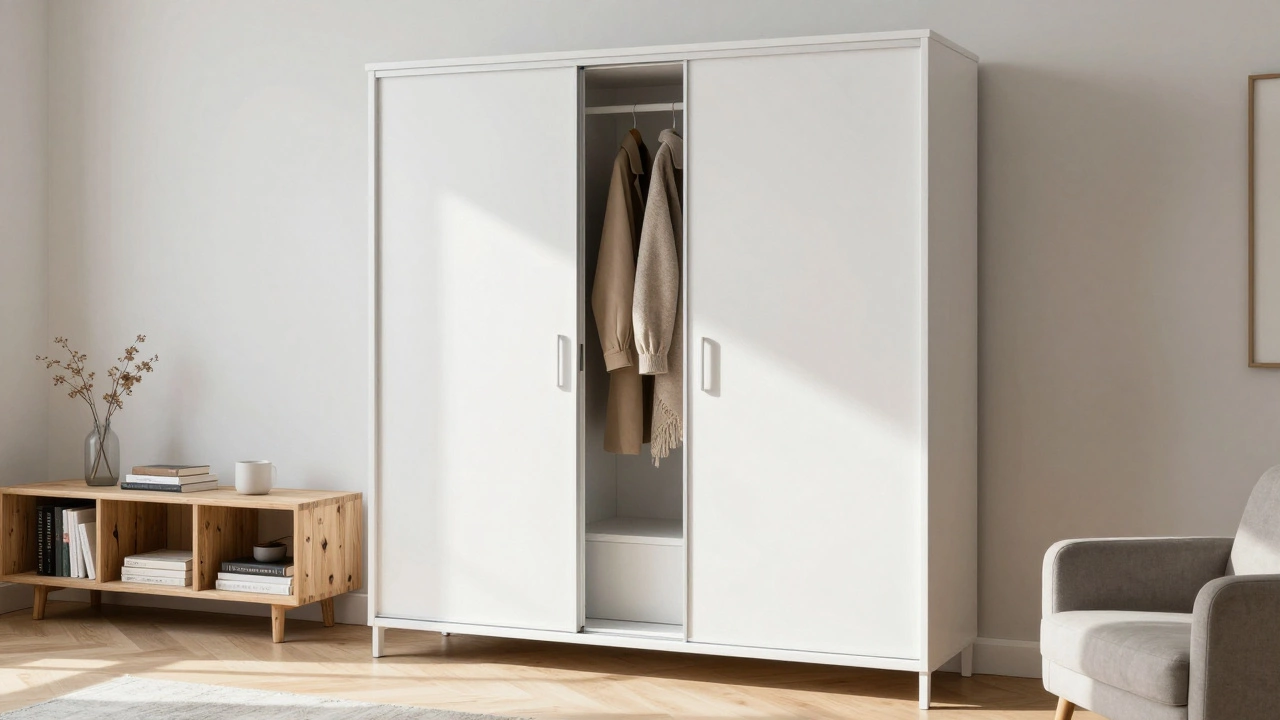
Today’s armoires aren’t all heavy oak with gold trim. You’ll find sleek, white-painted versions in urban studios. Some have sliding doors to save space. Others are made from reclaimed wood or bamboo. IKEA even sells a minimalist armoire that looks like a cross between a closet and a bookshelf.
But here’s the truth: if you buy a "French-style wardrobe" online and it’s just a closet with doors, you’re being sold a myth. True armoires are furniture. They’re designed to be seen. They’re meant to last decades. You don’t install one. You choose one.
Look at the craftsmanship. The hinges. The wood grain. The way the doors close with a soft click. That’s what makes it French. Not the name. Not the translation. The intention.
Why This Matters for Your Home
If you’re thinking about replacing your closet, consider this: the French way isn’t about space. It’s about control. Built-in closets eat into your walls. They’re permanent. Armoires give you flexibility. You can move them. You can repaint them. You can upgrade them. You can even turn one into a bar cart or a TV stand if your needs change.
They’re also great for renters. No drilling. No damage. Just roll it in, open it up, and you’ve got storage that looks intentional - not like an afterthought.
And if you’re into slow living, minimalism, or Scandinavian design? An armoire fits right in. It’s quiet. It’s sturdy. It doesn’t shout. It just works.
Where to Find One - and How to Spot a Real One
You won’t find authentic French armoires at big-box stores. Look at flea markets, vintage furniture shops, or online marketplaces like Vintage Dwellings or 1stDibs. A real antique armoire from the 1800s might cost $2,000 or more. But a well-made modern version from a French artisan can run $500-$1,200.
How to tell if it’s genuine?
- Check the wood: Solid hardwood, not particleboard
- Look at the joints: Mortise and tenon, not screws
- Test the doors: They should swing smoothly and close with weight, not a spring
- Smell it: Real wood has a subtle, warm scent - not plastic or varnish
And if the seller calls it a "French closet," walk away. That’s not how it’s done.
Final Thought: Language Is Design
The French don’t call a wardrobe a "closet" because they don’t think of it that way. They don’t hide their clothes. They honor them. The word armoire carries centuries of design, craftsmanship, and quiet elegance. It’s not a translation. It’s a philosophy.
Next time you’re shopping for storage, ask yourself: Do I want something that disappears into the wall? Or something that lasts - and looks beautiful while doing it?
Is "armoire" the only word the French use for wardrobe?
Yes, "armoire" is the standard and most accurate term for a freestanding wardrobe in French. While "placard" is sometimes mistakenly used online, it actually refers to a small storage cupboard, not a clothing storage unit. "Armoire" is the word used in homes, furniture catalogs, and design magazines across France.
Do French people have walk-in closets?
Very rarely. Walk-in closets are uncommon in French homes, even in luxury apartments. Space is limited, and armoires are preferred because they’re flexible, movable, and don’t require construction. When a closet does exist, it’s usually a small, built-in unit for linens or shoes - not clothing.
Can I buy an armoire outside of France?
Absolutely. Many French furniture makers export armoires, and you’ll find them in high-end home stores across North America and Europe. Brands like Ligne Roset, Roche Bobois, and even smaller artisans on Etsy sell modern and vintage armoires. Look for solid wood construction and traditional hinges to ensure quality.
Are armoires only for bedrooms?
No. While they’re most common in bedrooms, armoires are often used in living rooms, hallways, and even home offices. In older French homes, you’ll find them storing linens, books, or even china. Their versatility is part of why they’ve lasted for centuries.
What’s the difference between an armoire and a cabinet?
An armoire is specifically designed for clothing storage and usually includes hanging rods, shelves, and drawers. A cabinet is more general - it might store dishes, tools, or electronics. Armoires are taller, have doors that open fully, and are built for frequent access. Cabinets are often smaller and meant for less-used items.