Total Cost of Ownership Calculator
Estimated Total Investment
Cost Breakdown
Value Verdict
Calculating...
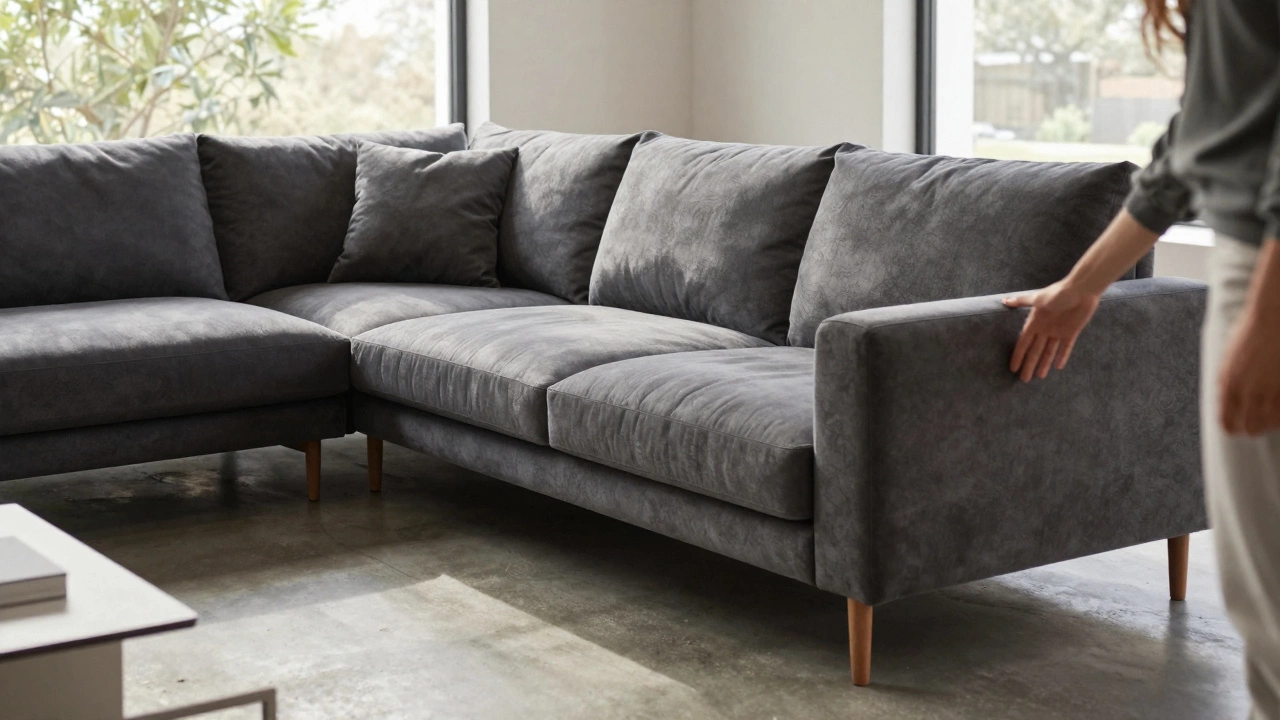
You walk into a showroom, sit on a plush sectional that feels like a cloud, and then see the price tag. Your eyes widen. It’s not just expensive; it’s mortgage-expensive. Now you’re stuck wondering if you can get that same comfort without selling a kidney. The truth is, the market for good quality sofa options has shifted dramatically since the pandemic boom. Prices have stabilized, but so have expectations for durability. If you are looking to buy a sofa that lasts more than two years, you need to know exactly what you are paying for.
In 2026, the average price for a truly decent, long-lasting sofa sits between $1,200 and $2,500. This range covers mid-range brands that use solid hardwood frames and high-resilience foam. Anything below $800 usually cuts corners on materials, while anything above $3,000 often pays for brand prestige rather than structural superiority. Let’s break down why this number makes sense and how to spot a winner at any price point.
The Three Tiers of Sofa Pricing
To understand where your money goes, you have to look at the construction. Sofas generally fall into three distinct buckets based on build quality and materials. Knowing which bucket fits your lifestyle is the first step to avoiding buyer’s remorse.
| Tier | Price Range (2026) | Frame Material | Cushion Fill | Lifespan Expectancy |
|---|---|---|---|---|
| Budget / Entry-Level | $400 - $900 | Plywood, particleboard, or softwoods (pine) | Low-density polyurethane foam, polyester fiberfill | 2-4 years |
| Mid-Range / "Good Quality" | $1,200 - $2,500 | Kiln-dried hardwood (oak, maple, ash) | High-resilience (HR) foam, down blends | 7-10 years |
| High-End / Luxury | $3,000 - $8,000+ | Solid hardwood, mortise-and-tenon joinery | Hand-tufted down, premium natural fibers | 15+ years |
The budget tier is tempting. Retailers push these hard because they move fast. But here is the catch: cheap sofas sag. The foam compresses within months, leaving you with a flat, uncomfortable surface. The frame, often made from engineered wood, can warp in humid climates. If you are renting or furnishing a guest room rarely used, this might work. For daily living? It’s a false economy.
The mid-range tier is where most smart shoppers land. You are paying for kiln-dried hardwood. Why does drying matter? Because green wood shrinks as it dries in your home, causing joints to loosen and legs to wobble. Kiln-drying stabilizes the moisture content, ensuring the frame stays rigid. You also get high-resilience foam, which bounces back after you stand up, rather than staying depressed.
The luxury tier offers craftsmanship. Think hand-stitched leather, custom fabrics, and intricate wood carving. While beautiful, the jump from $2,500 to $5,000 rarely doubles the comfort. It buys aesthetics and status. Unless you have a specific design vision or heirloom intent, the mid-range sweet spot offers the best value.
Decoding the Materials: Where the Money Goes
When you see a price tag, ask yourself: what is inside? Two components dictate longevity: the frame and the cushion fill. Fabric is replaceable; structure is not.
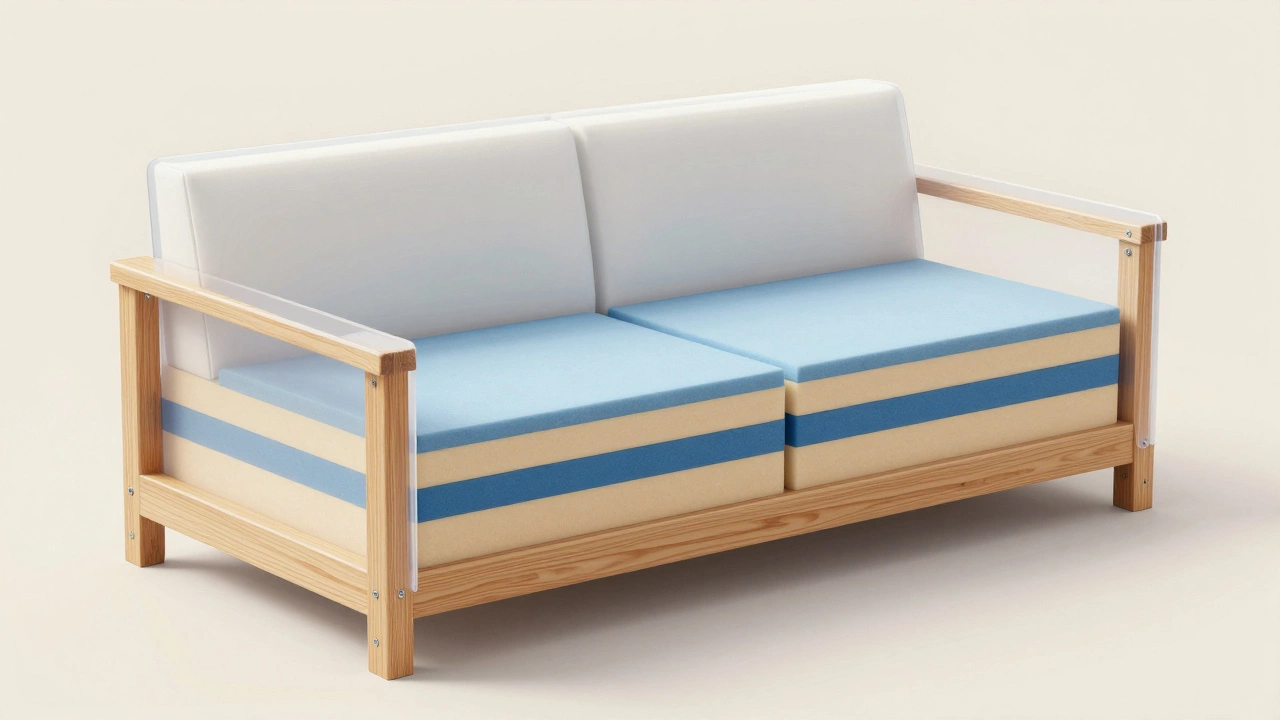
Hardwood Frames are the backbone of a durable sofa, typically made from oak, maple, or ash, which resist warping and cracking over time. Look for terms like "kiln-dried" and "hardwood" in the product description. Avoid "softwood" or "pine" if you want longevity. Pine is lightweight and cheap, but it dents easily and doesn’t hold screws as well as hardwood. A good sign? The sofa should feel heavy. A lightweight sofa usually means thin wood or hollow construction.
Joinery matters too. Staples and glue alone will fail. You want corner blocks reinforced with screws or dowels. Mortise-and-tenon joints-the kind where one piece of wood slots into another-are the gold standard, but even simple screw-reinforced corner blocks are acceptable in the mid-range.
Now, let’s talk about cushions. High-Resilience (HR) Foam is a dense, elastic foam material that retains its shape and support better than standard polyurethane foam. Standard foam is cheap and fluffy initially but flattens out. HR foam has a higher density rating (usually 1.8 to 2.5 pounds per cubic foot). It feels firmer at first but supports your body evenly. Many mid-range sofas use a hybrid: an HR foam core wrapped in a layer of softer foam or down feathers for comfort. This gives you the best of both worlds-support and sink-in softness.
Fabric choice affects price significantly. Performance fabrics like Rustic Weave or Crypton are tightly woven textiles treated to repel stains, moisture, and wear, extending the life of the upholstery. These cost more upfront but save you money on cleaning or replacement later. If you have kids or pets, skip the delicate linen or silk blends. Opt for microfiber or tight-weave cotton blends. They hide dirt and withstand vacuuming.
Hidden Costs That Blow Your Budget
The sticker price is never the final price. When calculating the average cost of a good quality sofa, factor in these hidden expenses:
- Delivery Fees: White-glove delivery (where they bring it inside, assemble it, and remove packaging) can add $150 to $400. Curbside drop-off is cheaper but risky if you don’t have help moving a 150-pound object.
- Customization: Choosing a non-stock fabric or color often adds a 10-20% surcharge and extends lead times by 4-8 weeks.
- Protection Plans: Extended warranties are rarely worth it. Most manufacturers offer a 1-year warranty on parts and labor. Third-party plans are profit centers for retailers, not insurance policies. Skip them unless you have a very young child who loves crayons.
- Accessories: Don’t forget throw pillows, blankets, and perhaps a sofa cover if you plan to protect the investment. Budget an extra $100-$200 for these soft goods.
For example, a $1,500 sofa with white-glove delivery, a custom fabric upgrade, and a rush fee could easily hit $2,000. Plan your total budget accordingly.
Where to Buy: Showroom vs. Online
In 2026, the gap between online and brick-and-mortar pricing has narrowed, but the experience differs wildly.
Brick-and-Mortar Stores: Places like Ethan Allen, Restoration Hardware, or local boutique dealers allow you to test the seat depth and firmness. This is crucial. A sofa that looks great in photos might have a seat depth that’s too shallow for your legs. Salespeople can also negotiate prices, especially on floor models or end-of-season clearances. However, markups are higher to cover rent and staff.
Online Retailers: Brands like Article, Burrow, or AllModern cut out the middleman. Their prices are often 10-20% lower for similar quality. They offer free shipping and easy returns. The risk? You can’t sit on it before buying. Mitigate this by checking customer reviews specifically for comments on "sagging" or "firmness." Look for photos from real users, not just studio shots.
Outlet Malls: If you are patient, outlet stores sell discontinued styles or minor defects (like a small scratch on the leg) at significant discounts. You can find $2,500 quality sofas for $1,500 here. Just inspect thoroughly.
Signs of a "Good Quality" Sofa (Checklist)
Before you swipe your card, run through this quick inspection. If the salesperson hesitates, keep walking.
- Lift the Seat Cushions: Feel the frame underneath. Is it solid wood? Does it feel sturdy? If it feels like cardboard or thin plastic, walk away.
- Check the Legs: Are they attached securely? Do they wobble when you push on the sofa? Wobbly legs indicate poor assembly or weak materials.
- Sit Down Hard: Listen for creaks. A little noise is normal, but loud popping or cracking suggests loose joints or weak springs.
- Inspect the Stitching: Run your hand along the seams. Are they straight and tight? Loose threads or uneven stitching signal rushed manufacturing.
- Ask About Warranty: A reputable brand stands behind its frame. Look for a lifetime warranty on the frame and at least 5 years on the suspension and cushions.
Is Expensive Always Better?
No. There is a point of diminishing returns. Once you pass $3,000, you are paying for design exclusivity, brand heritage, or exotic materials like full-grain leather or Italian velvet. These are nice, but they don’t necessarily make the sofa more comfortable or durable than a $1,800 model with a solid oak frame and HR foam.
Consider your usage. If you nap on the sofa daily, invest in thicker cushions and a deeper seat. If you entertain guests, prioritize stain-resistant fabric over ultra-plush comfort. Match the features to your life, not the marketing brochure.
Maintaining Your Investment
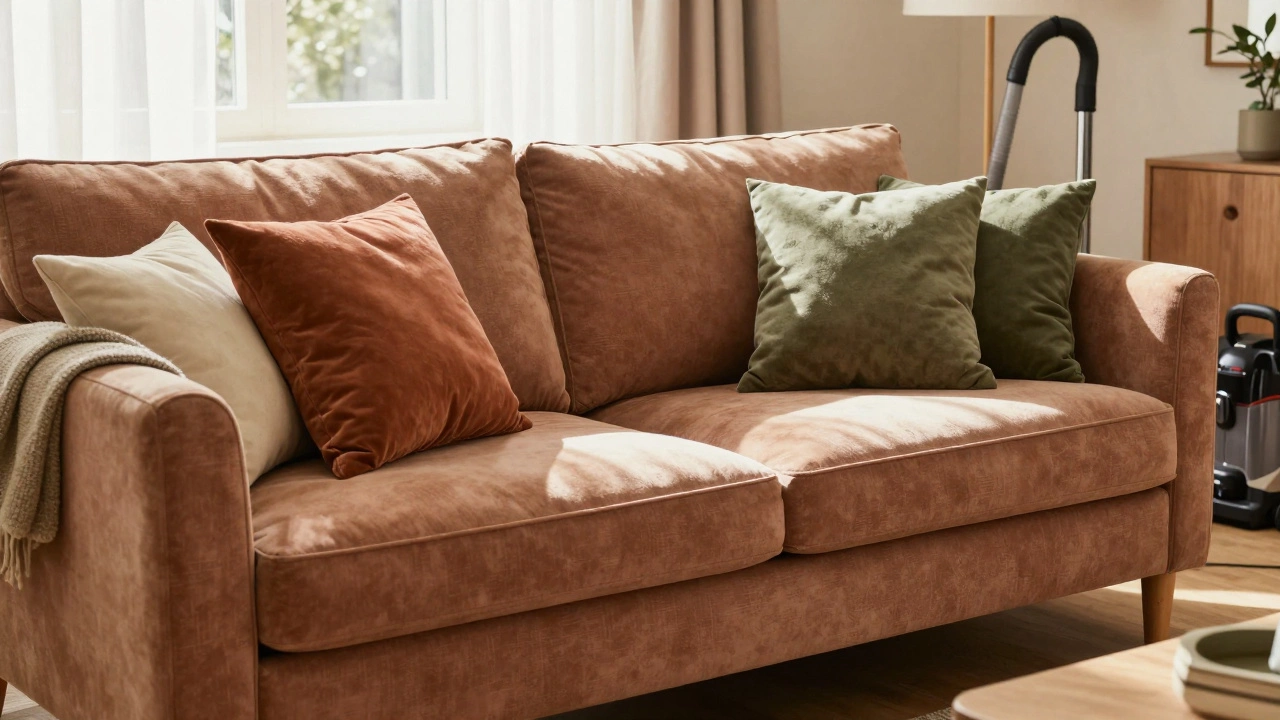
A good quality sofa is an asset. Treat it like one. Vacuum weekly to prevent dust from grinding into the fibers. Rotate cushions monthly to ensure even wear. Keep direct sunlight off the fabric to prevent fading. Use coasters and trays to protect against spills. These small habits extend the life of your sofa by years, protecting your initial investment.
Can I find a good quality sofa under $1,000?
It is difficult. Under $1,000, you are mostly limited to budget tiers with particleboard frames and low-density foam. However, you might find deals during major sales events like Black Friday or Memorial Day at mid-range brands. Look for floor models or open-box items. Even then, expect a lifespan of 3-5 years rather than a decade.
What is the most durable fabric for a sofa?
Performance fabrics like Crypton or tightly woven microfibers are the most durable. They resist stains, moisture, and abrasion. Leather is also highly durable and ages well, but it requires conditioning to prevent cracking. Avoid loose weaves like linen or chenille if you have pets or young children.
How long should a mid-range sofa last?
A well-made mid-range sofa ($1,200-$2,500) with a hardwood frame and high-resilience foam should last 7 to 10 years with normal use. With proper maintenance, such as rotating cushions and keeping it out of direct sunlight, it can last even longer.
Is it worth buying a second-hand sofa?
Only if you can verify the condition. Check for spring damage, frame integrity, and fabric wear. Upholstered furniture can harbor bed bugs, mold, or allergens. Cleaning and reupholstering a vintage frame can be cost-effective, but buying a used sofa sight-unseen is a gamble. Stick to new if you want hygiene and warranty protection.
Do I need to pay for extended warranties?
Generally, no. Most manufacturer warranties cover defects in materials and workmanship for 1-5 years. Extended warranties sold by retailers are often difficult to claim and exclude normal wear and tear. Save that money for a high-quality protector spray instead.