TV Placement Decider
Answer these quick questions to determine the ideal setup based on your specific room constraints and lifestyle.
Why this fits:
- ✓
- ✓
- ✓
You spend hours staring at it, so why ignore where it sits? The debate over TV placement is one of those silent arguments everyone has while shopping for living room furniture. You walk into a showroom, see a screen floating mid-air, and think "sleek." Then you get home, put it on the stand, and wonder if it looks awkwardly low. There is no magic bullet here because the best looking setup depends entirely on your room dimensions, your furniture, and how you actually sit.
Ideal aesthetics clash with practical reality almost every time. We want the minimalist look of a mounted screen, but we need the flexibility of a stand. Let’s break down exactly what happens visually and functionally when you choose between these two options.
The Visual Impact of Wall Mounting
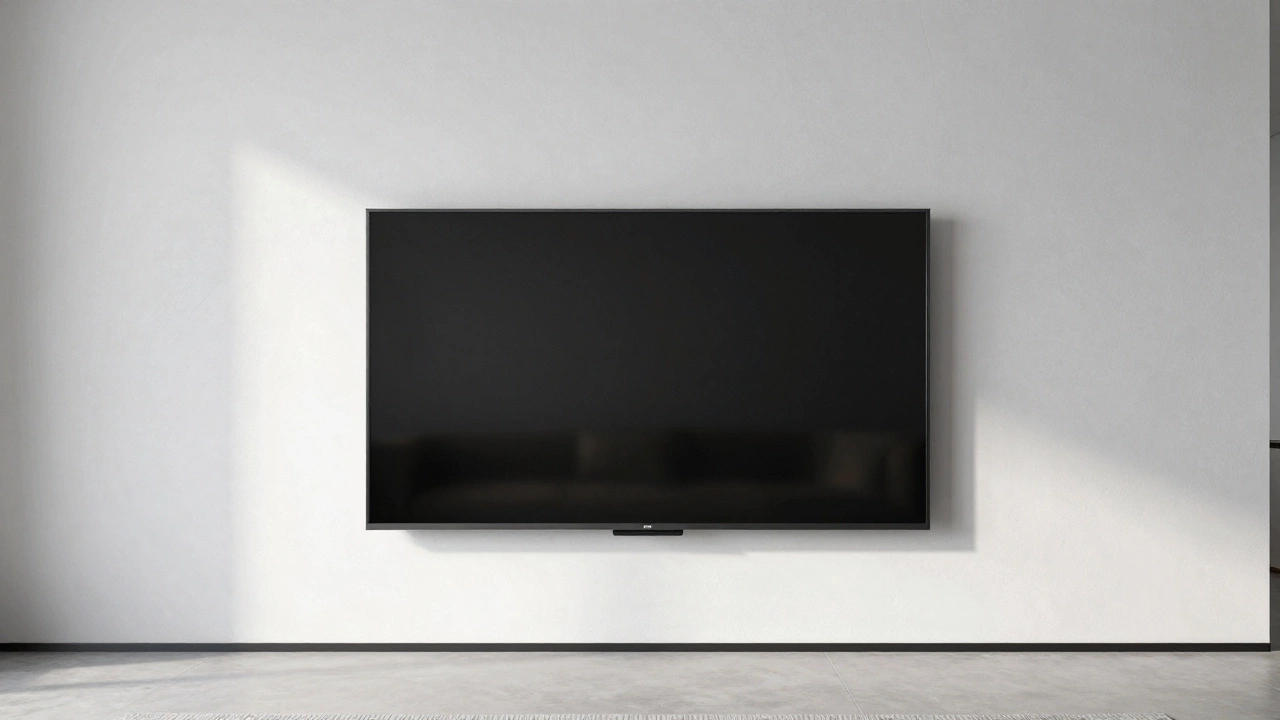
Wall Mount is a bracket system designed to secure a television directly onto a wall surface. It creates a streamlined silhouette that many interior designers prefer because it eliminates clutter.When you hang a TV on the wall, it becomes part of the architecture. It stops looking like a temporary piece of equipment and starts looking like a feature, similar to artwork or a built-in cabinet. This works exceptionally well in small spaces where floor real estate is tight. If your coffee table is close to the sofa, adding a bulky wooden cabinet in front of the wall eats up valuable walking space. Removing the base unit frees up the floor, making the room feel larger.
However, the "look" isn't just about saving floor space. A mounted TV hides the legs of older style cabinets or cheap plastic feet often found on budget units. Without a stand, the back of the TV is visible. If your wires aren’t managed through the wall, the benefit is instantly ruined by a snake of black cables dangling down. That unsightly cord mess destroys the clean aesthetic you worked hard to achieve.
In 2026, most screens are ultra-thin, which helps the floating illusion work better than ever. The bezel-less design disappears against a solid color wall. Think of a large 65-inch OLED panel. On a stand, it occupies a wide footprint. On the wall, it floats like a portal. This is the primary reason people lean toward mounting-for the clean, gallery-like appearance.
Why TV Stands Still Win on Style
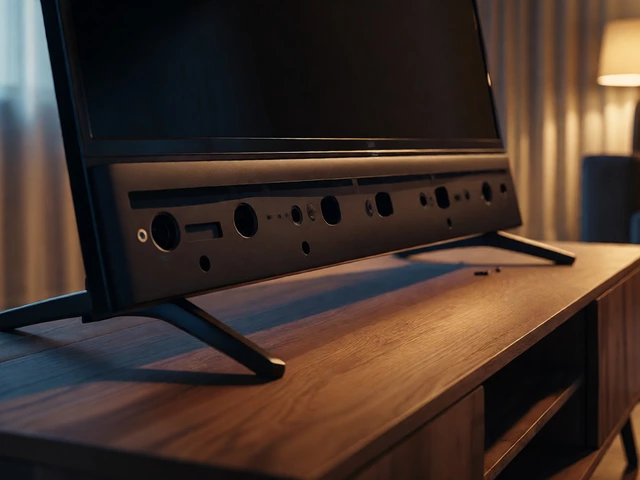
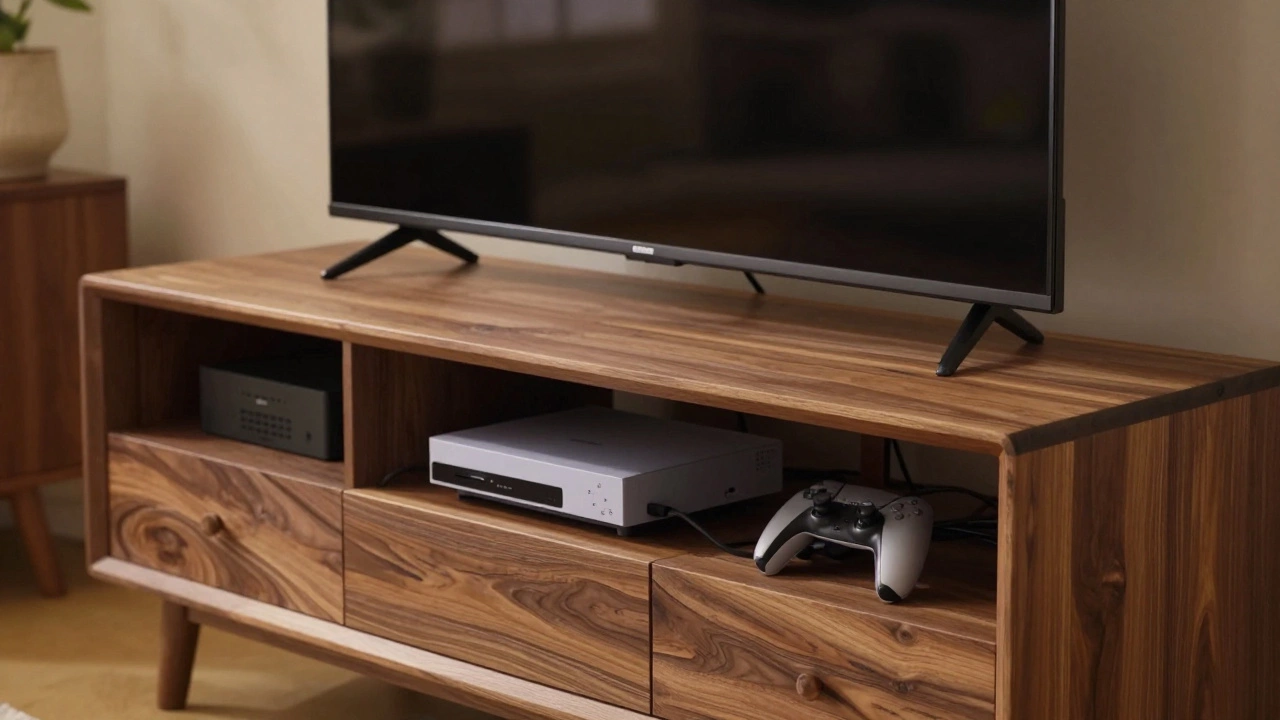
Sometimes, a TV looks lonely without a frame. In traditional or eclectic decor styles, a massive naked screen hanging on drywall feels disconnected from the rest of the room. A wooden media console bridges the gap between high-tech electronics and warm, organic furniture materials. Oak, walnut, or reclaimed wood finishes add texture that cold steel brackets simply cannot match.
Storage is the hidden hero of the stand. While a wall mount saves square footage, a stand offers cubic volume for your gaming consoles, soundbars, streaming sticks, and game controllers. These devices have wires too. Having a closed cabinet to tuck them away keeps the "visual noise" down even if the TV itself isn’t hidden behind glass. It creates a cohesive block of furniture rather than disparate pieces.
There is also a distinct psychological element. A stand grounds the object. It makes the technology feel owned and integrated rather than installed. In living rooms that double as play areas or family command centers, having open shelving on the unit allows kids to grab a tablet or controller quickly without hunting around the wall cavities. A wall mount forces everything to be out of sight unless you cut custom access doors into your drywall.
Viewing Height Changes Everything
Eye Level is the vertical position of the average viewer’s eyes when seated, critical for comfortable viewing. Ideally, the center of the screen should align with this point.The most common mistake in aesthetics isn’t about style; it’s about posture. People love to mount TVs next to fireplaces, assuming the fireplace mantle is the perfect spot. Usually, it ends up too high. When your neck cranes backward to watch a movie, the picture looks worse because the geometry changes. Reflections off the window become more pronounced, and colors shift slightly due to the viewing angle.
A TV stand allows you to place the screen lower. This works perfectly if your sofa is low profile. For a standard recliner, a stand often puts the center of the screen closer to your natural line of sight. You can adjust the tilt or pull the stand slightly closer without worrying about structural anchors in the plaster.
On the other hand, wall mounting gives you precision control over the exact vertical inchage. With a tilting arm, you can aim the screen downward precisely to hit eye level from the sofa, correcting for any ceiling height issues. A fixed TV stand might force you to sit on cushions to get the right angle. In modern homes with open concept dining areas, where you might watch while eating at a counter, a wall mount allows you to drop the height specifically for that secondary seating area.
Installation Logistics and Costs
Visual appeal crashes when the installation fails. Installing a heavy 75-inch set requires finding wall studs. Most modern construction uses 16-inch or 24-inch stud spacing. If your wall mount spans a single stud, it’s risky. Hollow wall anchors are notorious for failing over years of vibration.
Hiring a pro costs roughly $150 to $300 depending on your region. They bring the tools to fish cables inside the wall cavity. Doing it yourself means cutting drywall, fishing wires through insulation, and risking the finish. If you damage the drywall significantly, the "clean look" gets replaced with patches of mismatched paint.
Buying a quality Entertainment Center avoids the drill entirely. Assembly is usually required, but it doesn't involve permanent modifications to the house. This matters immensely for renters. Landlords do not appreciate holes drilled into painted surfaces. Moving out requires patching or paying fees. A stand leaves zero trace of your residency, maintaining the resale value condition of the apartment.
Cable Management Reality
Cables are the enemy of the clean look. On a wall mount, the power cord and HDMI cables run vertically down the wall. Without a conduit box or recessed channel, they are visible. You can buy raceway covers that stick to the paint, matching the trim, but they still add bulk. Recessing cables requires opening walls, which brings us back to renovation costs.
With a stand, the cables disappear behind the unit immediately. Power strips live inside the drawers. High-speed internet routers can sit on top or in the back. The messy ball of wires at the back is hidden from plain sight. Unless you have a very specific wall-plug location right behind where the TV hangs, the stand wins this battle for ease of maintenance.
Environmental Factors and Heat
We often forget that TVs run hot. Especially the larger 4K and 8K models used today. Ventilation is key to longevity. When you enclose a TV completely in a closed-wall cabinet or mount it flush to the wall without clearance, heat builds up. Manufacturers design vents on the bottom. A TV stand with an open bottom ensures airflow naturally circulates. Wall mounts often hold the TV inches away from the surface, trapping heat in that narrow gap.
Fire safety is another factor. Mounting near a gas fireplace or heating vent is dangerous. Even electric radiators can warp the plastic casing over time. If your ideal wall spot is near a heat source, a stand lets you pull the unit away safely. A mounted unit is fixed in place, potentially cooking your expensive electronics.
Decision Matrix for Your Room
| Feature | Wall Mount | TV Stand |
|---|---|---|
| Floor Space | Saves space | Takes up footprint |
| Moving Home | Requires re-drilling | Pick up and go |
| Storage | Limited/Hidden | Built-in shelves |
| Aesthetics | Minimalist | Traditional/Warm |
| Ventilation | Potential issue | Natural airflow |
If you prioritize minimal visuals and have a dedicated media cabinet elsewhere, mount it. If you need storage for consoles and care about heat dissipation, grab a stand. The truth is, hybrid setups exist. You can use a low-profile riser on a cabinet to simulate the height of a mount without losing storage benefits.
Summary of Recommendations
Don’t let marketing dictate your choice. Look at your couch depth. Measure the distance from the floor to your eye level. Check where your outlets are located. These three data points matter more than any trend on Instagram. If the wall mount requires running new wiring and patching drywall, is the cleaner look worth the headache? Often, it is not. But if you are renovating anyway, installing a low-voltage box during construction makes the wall mount superior.
Should I mount my TV above the fireplace?
Generally, no. Fireplaces are often mounted too high, causing neck strain. Additionally, the heat rising from the fire can damage the electronics and distort the picture quality over time. If you must, use a tilting mount angled downward and keep the fire usage minimal.
Can I put a wall-mounted TV on a stand later?
Yes, but only if the manufacturer provides a base kit compatible with your model. Some premium OLEDs come with a separate metal stand plate that bolts to the same VESA pattern used for wall mounts. Always check the manual before purchasing a mount.
How high should a TV be from the floor?
The center of the screen should align with your seated eye level, typically 42 inches from the floor. If you mount higher, consider a swivel arm that allows you to angle it down for comfort.
Is it safe to mount on hollow core drywall?
Only with specific toggle bolts rated for the weight. However, securing into wood studs is far safer. If you cannot find studs, use a reinforced plywood backing board spanning multiple studs to spread the load.
Do stands protect TVs during earthquakes?
Not necessarily. Freestanding units can tip. In seismic zones, you must use anti-tip straps whether the TV is on a stand or the wall. Never rely solely on the weight of the TV to stay put.
Ultimately, the decision comes down to lifestyle versus luxury. A wall mount offers that high-end architectural look, fitting seamlessly into modern designs. A stand offers warmth and utility, grounding the room in practicality. Evaluate your specific constraints before buying hardware. A beautiful setup is one you can actually enjoy watching comfortably without adjusting your neck muscles constantly.