Residential vs. Commercial Construction Comparison Tool
Select a category below to see how residential and commercial construction differ.
Residential Construction
Commercial Construction
Imagine you’re standing on a vacant lot in Vancouver. On one side, there’s a blueprint for a cozy three-bedroom family home. On the other, plans for a ten-story office tower with retail space on the ground floor. Both are buildings. Both require concrete, steel, and sweat. But if you tried to build that office tower using the same rules, crew, and schedule as the house, you’d be bankrupt before the foundation was poured.
The major difference between residential construction and commercial construction isn’t just about size. It’s about the entire ecosystem surrounding the project. We’re talking about different laws, different materials, different crews, and vastly different financial stakes. If you’re planning a build-or just curious about why skyscrapers don’t look like McMansions-here is exactly where those worlds diverge.
The Scale and Complexity Gap
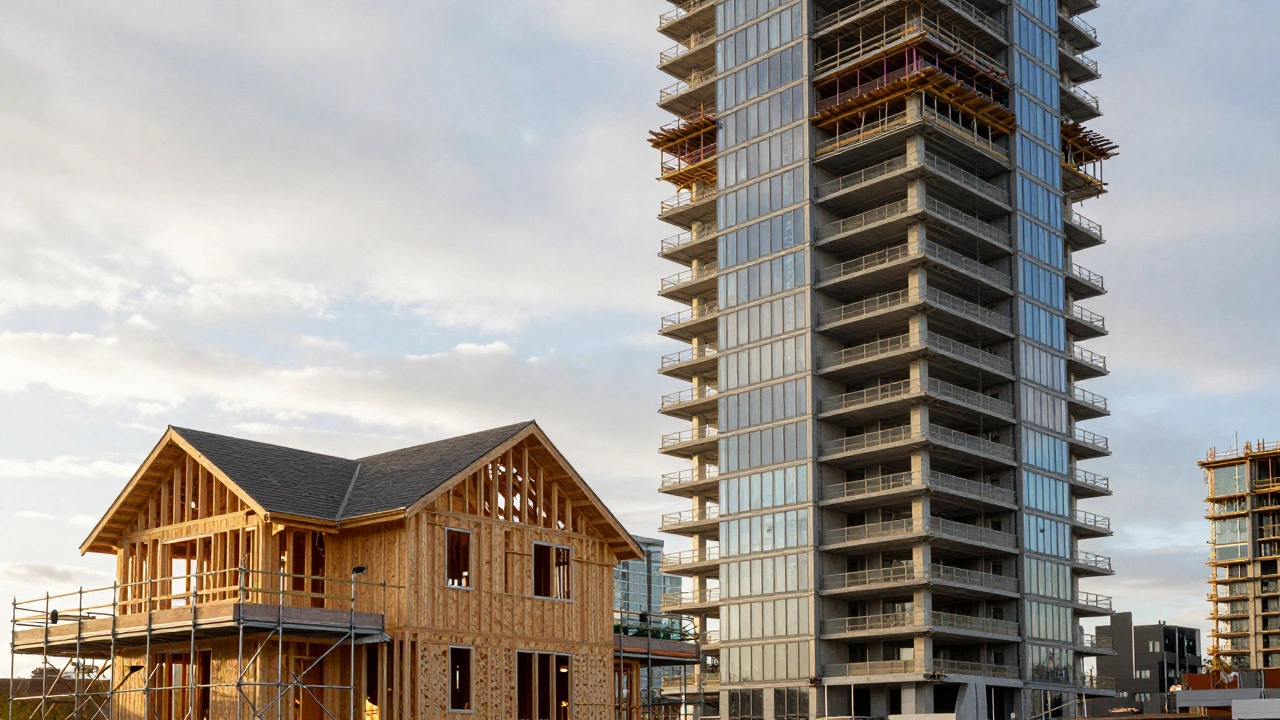
Let’s start with the obvious: size. Residential projects are typically single-family homes, duplexes, or small apartment complexes (usually under four stories). Commercial projects range from strip malls and warehouses to high-rise office buildings and hospitals. This size difference dictates everything else.
In residential builds, the scope is contained. You have a defined footprint, a standard number of rooms, and predictable utilities. In commercial construction, the complexity explodes. A single commercial site might involve coordinating dozens of subcontractors simultaneously-electrical, plumbing, HVAC, fire suppression, elevator installation, and security systems-all needing to fit into tight timelines. The margin for error shrinks as the square footage grows.
- Residential: Focuses on livability, comfort, and personal taste.
- Commercial: Focuses on functionality, durability, safety compliance, and return on investment.
This shift in focus means that while a homeowner might choose hardwood floors because they “feel nice,” a commercial developer chooses polished concrete because it withstands thousands of footsteps daily and costs less to maintain over twenty years.
Materials: Wood Frame vs. Steel and Concrete
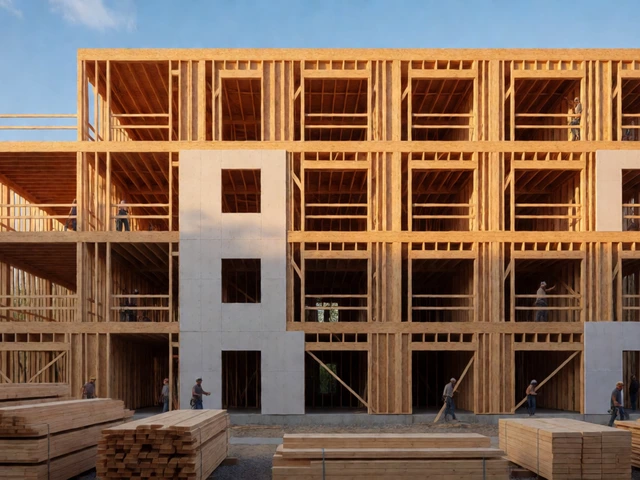
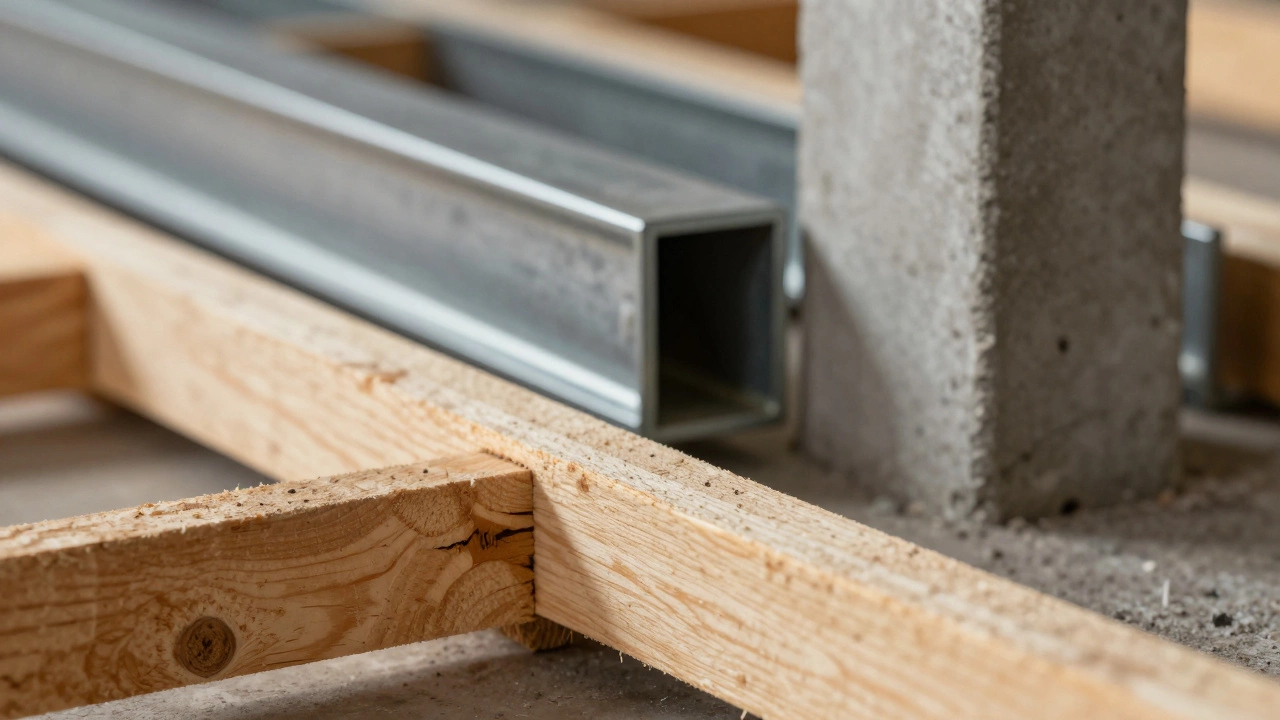
If you peek behind the walls, you’ll see the most tangible difference: the skeleton of the building. Most residential homes in North America use wood framing. It’s cheaper, easier to work with, and provides good insulation. Commercial buildings, however, almost exclusively use steel frames and reinforced concrete.
Why? Because commercial buildings need to support more weight, resist higher wind loads, and meet stricter fire codes. Steel beams can span wider distances without support columns, creating the open floor plans common in offices and retail spaces. Concrete offers superior fire resistance and structural integrity for multi-story structures.
This material choice impacts cost significantly. Steel and concrete are more expensive upfront than lumber, but they offer longevity and stability that wood simply cannot match for large-scale structures. Additionally, commercial exterior finishes often include curtain walls (glass facades) or metal panels, whereas residential exteriors stick to siding, brick, or stucco.
| Feature | Residential Construction | Commercial Construction |
|---|---|---|
| Framing Material | Wood (Lumber) | Steel and Reinforced Concrete |
| Exterior Finish | Siding, Brick, Stucco | Curtain Walls, Metal Panels, Glass |
| Flooring | Carpet, Hardwood, Tile | Polished Concrete, Vinyl Composite, Carpet Tiles |
| HVAC Systems | Central Air/Heat (Single Zone) | Rooftop Units, Chillers, Multi-Zone VAV |
| Plumbing | PVC, Copper | Cast Iron, Stainless Steel, Large Diameter Pipes |
Regulations and Building Codes
This is where many DIY enthusiasts and first-time builders hit a wall. Residential and commercial buildings operate under different rulebooks. In Canada, we refer to the National Building Code (NBC), which has separate divisions for these sectors.
Division B covers residential buildings (typically up to six stories). The codes here prioritize occupant safety but allow for some flexibility in design and material choices. Inspections are rigorous but follow a relatively straightforward path.
Division C covers commercial and institutional buildings. These codes are exponentially stricter. They mandate complex fire suppression systems, advanced egress routes (multiple exits, fire-rated doors), accessibility standards (like barrier-free design under the Accessible Canada Act), and energy efficiency benchmarks that far exceed residential requirements.
For example, a residential kitchen needs a smoke detector. A commercial kitchen requires an automatic fire suppression system above the hood, specific ventilation rates, and grease traps in the plumbing. Ignoring these distinctions doesn’t just mean failing an inspection; it can result in massive fines, legal liability, and inability to obtain insurance or occupancy permits.
Project Timelines and Phasing
Time is money, but it behaves differently in each sector. A typical custom home might take six to twelve months to complete. A commercial project, depending on its scale, can take two to five years. However, the *intensity* of work during those periods varies wildly.
Residential construction often follows a linear sequence: foundation, framing, roofing, interior finish. Delays happen, but they usually affect only one trade at a time. Commercial construction uses phased scheduling. While the foundation is being poured, the steel fabrication might already be happening off-site. Electrical rough-ins begin before drywall goes up, which starts before flooring is installed.
This parallel processing requires precise coordination. A delay in steel delivery can halt the entire project, costing tens of thousands of dollars per day in idle labor and equipment rentals. Commercial contracts often include liquidated damages clauses-penalties paid by the contractor if the building isn’t ready by the opening date. Residential contracts rarely have such severe penalties, focusing instead on completion milestones.
The Teams: General Contractors vs. Specialized Subcontractors
Who actually builds the thing? In residential construction, you might hire a general contractor who manages a small team of carpenters, electricians, and plumbers. Many of these tradespeople are skilled jack-of-all-trades, capable of handling multiple tasks within a single day.
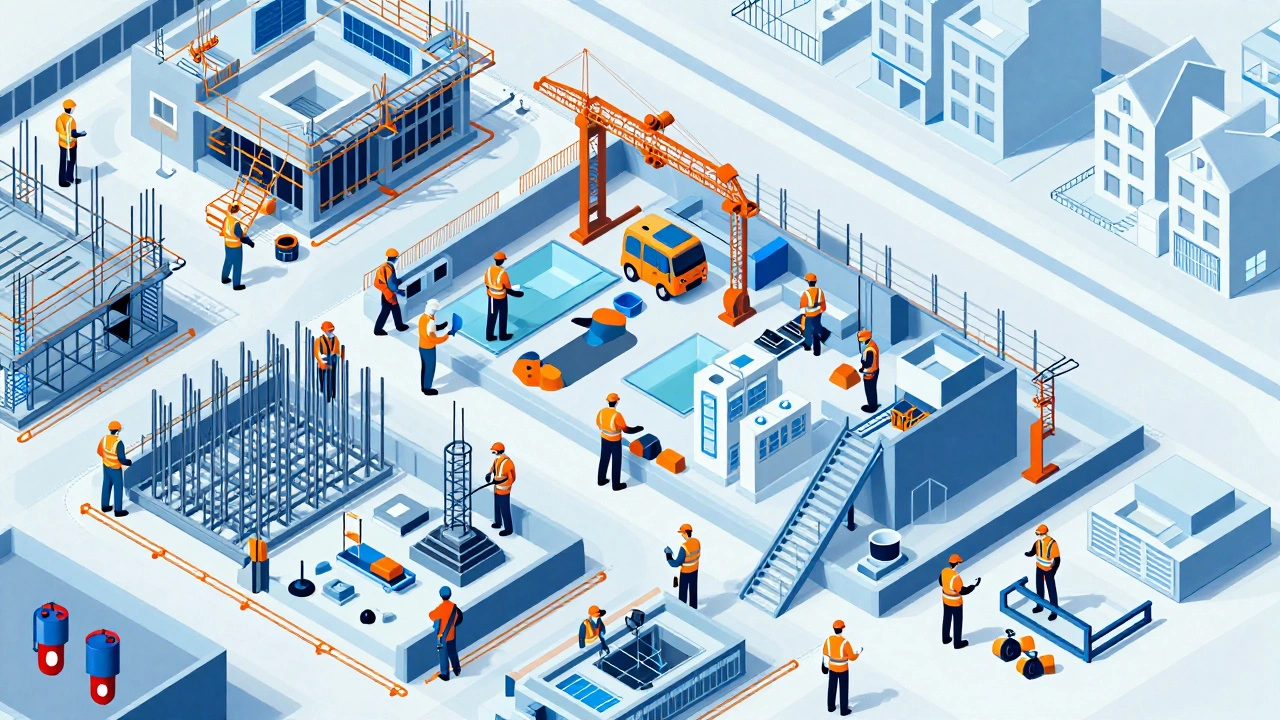
Commercial construction relies on a highly specialized workforce. You won’t find a single carpenter framing walls, installing doors, and finishing trim. Instead, you have dedicated teams for each task. There are steel erectors, glaziers (window installers), millwork specialists, and commissioning agents who test every system before handover.
The leadership structure also differs. Residential GCs often work directly with homeowners. Commercial projects involve a project manager, assistant project managers, superintendents, and safety officers. Communication flows through formal channels-daily reports, weekly meetings, and digital construction management software like Procore or Autodesk Build. This bureaucracy ensures accountability but adds layers of overhead that residential projects simply don’t need.
Financial Structures and Risk
Money moves differently too. Residential projects are often funded by personal savings, mortgages, or small construction loans. The budget is fixed, and changes are negotiated individually. If the homeowner wants to upgrade the countertop, they pay extra.
Commercial construction involves complex financing. Developers secure lines of credit, equity investments, and sometimes government grants. Costs are tracked meticulously using estimating software like RSMeans or MasterSpec. Change orders are formal documents requiring approval from multiple stakeholders. The risk profile is higher because the stakes are larger. A mistake in a residential bathroom might cost $5,000 to fix. A mistake in a commercial HVAC system could cost $500,000 and delay tenant move-in by months.
Insurance requirements reflect this disparity. Commercial contractors need higher limits of liability coverage, workers’ compensation policies, and builder’s risk insurance that covers the entire value of the project. Bonding is also common in commercial work, ensuring the project completes even if the contractor goes bankrupt.
Design Intent and Functionality
Finally, consider why the building exists. Residential design is emotional. It’s about creating a sanctuary. Architects and designers focus on aesthetics, natural light, and personal flow. Open concepts, large windows, and unique architectural features are common.
Commercial design is functional. It’s about maximizing usable space and minimizing operational costs. Every square foot must generate revenue or serve a business purpose. This leads to standardized layouts, efficient circulation paths, and durable finishes. Flexibility is key; office spaces need to be reconfigured as companies grow or shrink. Retail spaces need to adapt to changing merchandise displays.
This functional approach influences technology integration. Commercial buildings are wired for smart building systems-energy management, security access control, and IoT sensors. Residential smart homes are growing, but they remain optional add-ons rather than core infrastructure.
Can I build a commercial building on residential land?
Generally, no. Zoning laws strictly dictate what type of structures can be built on specific parcels of land. Residential zones prohibit commercial activities due to differences in traffic, noise, utility demands, and parking requirements. Attempting to do so would result in immediate stop-work orders and potential demolition.
Is commercial construction more expensive per square foot?
Yes, typically. Due to the use of steel/concrete, complex MEP (mechanical, electrical, plumbing) systems, and stricter code requirements, commercial construction costs are significantly higher per square foot than residential builds. However, economies of scale can reduce costs for very large projects.
Do residential contractors work on commercial projects?
Rarely, unless it’s a small commercial project like a single-story retail store. Most residential contractors lack the licensing, bonding capacity, and specialized subcontractor networks required for commercial work. Conversely, commercial contractors often avoid residential work due to lower margins and different client expectations.
How long does it take to get permits for commercial vs. residential?
Residential permits can often be processed in weeks. Commercial permits take months, sometimes over a year, due to the need for extensive engineering reviews, environmental assessments, fire department approvals, and public consultations. Early engagement with municipal planners is crucial for commercial projects.
What is the biggest risk in commercial construction?
Schedule delays and cost overruns. Because commercial projects involve so many interdependent trades and strict deadlines tied to lease agreements or financing terms, any disruption can cascade throughout the project, leading to significant financial penalties and reputational damage.