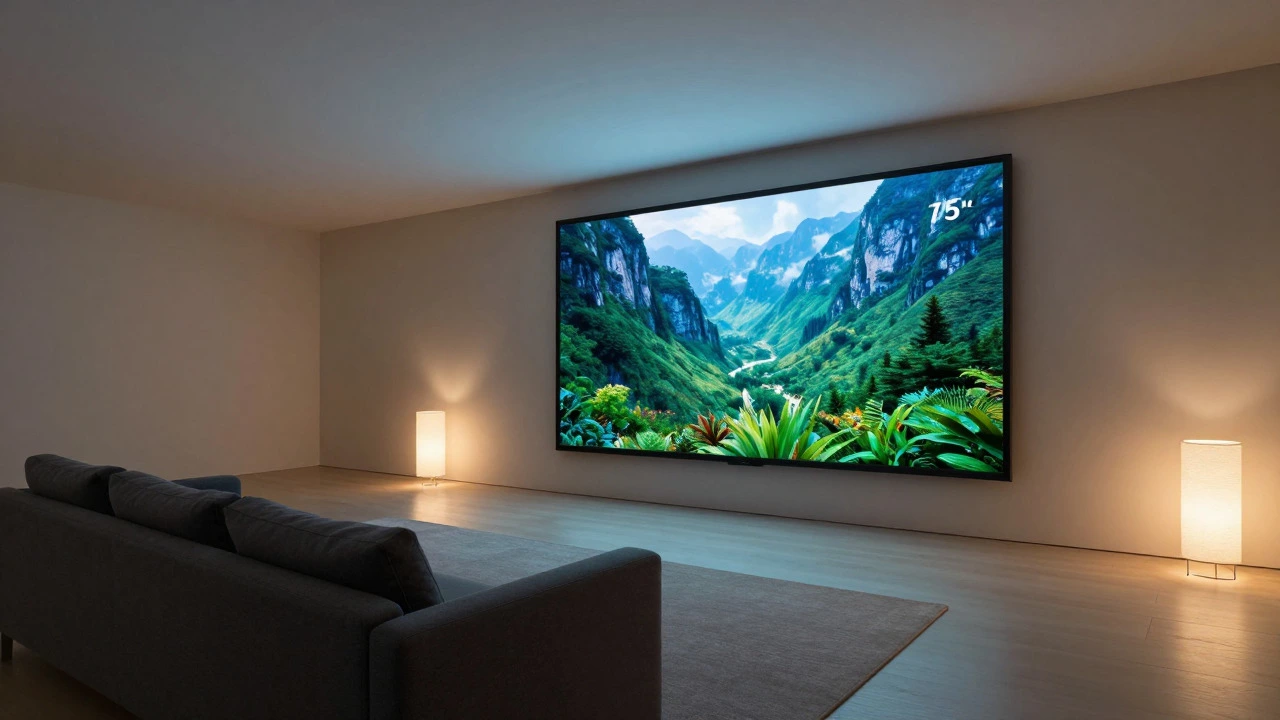
TV Size & Stand Compatibility Checker
Center of screen should sit at eye level when seated. The larger the screen, the higher its center rises.
Standing in front of a wall with a 65-inch television feels comfortable. You can see the whole picture without turning your head too much. But when you swap that for a 75-inch model, the room changes. The screen doesn't just get wider; it takes up significantly more vertical space and demands more clearance. If you are wondering how much bigger is a 75 TV than a 65, the answer isn't just about width. It's about depth, weight, and whether your current furniture can actually hold the new panel.
This guide breaks down the exact physical differences between these two popular sizes. We will look at the numbers, the impact on your living room layout, and the specific requirements for mounting or placing these sets on stands. Whether you are upgrading from a 65 to a 75 or deciding between them for a new purchase, understanding these dimensions prevents costly mistakes.
The Physical Dimensions: Width, Height, and Depth
First, let’s clear up a common misconception. The "size" of a TV refers to the diagonal measurement of the screen, not its width or height. Because most modern TVs use a 16:9 aspect ratio, we can calculate the exact width and height using simple geometry. However, the actual cabinet size (the bezel and back) varies by manufacturer. A 75-inch Samsung might be slightly narrower than a 75-inch LG due to thinner bezels.
Here is how the screen area compares:
- 65-inch TV Screen Area: Approximately 48 inches wide by 27 inches high.
- 75-inch TV Screen Area: Approximately 65 inches wide by 37 inches high.
This means a 75-inch screen is roughly 17 inches wider and 10 inches taller than a 65-inch screen. That extra 10 inches of height is often the dealbreaker for many people. It pushes the center of the screen higher up, which can force you to sit further back or raise your eyes more frequently during long viewing sessions.
| Feature | 65-inch Model | 75-inch Model | Difference |
|---|---|---|---|
| Screen Width | ~48 inches | ~65 inches | +17 inches |
| Screen Height | ~27 inches | ~37 inches | +10 inches |
| Typical Weight (with stand) | 45 - 55 lbs | 60 - 80 lbs | +15 - 25 lbs |
| Depth (without stand) | 1 - 2 inches | 1 - 2 inches | Negligible |
Note that the table above shows approximate values. Always check the specific product manual for your model, as premium OLED models tend to be lighter than budget QLED panels of the same size.
Weight and Structural Load Capacity
If you are keeping your existing TV stand, weight is the critical factor. A 65-inch set usually weighs between 45 and 55 pounds including the plastic feet. A 75-inch set jumps to the 60-80 pound range. This extra load matters because older media consoles were often designed for smaller CRTs or early flat screens.
Many mid-century modern style stands or lightweight particleboard units have a weight limit of around 50-60 pounds. Placing an 80-pound 75-inch TV on such a unit risks cracking the shelf or warping the legs over time. Before buying, check the manufacturer's specified weight capacity for your stand. If it’s not listed, assume a conservative limit of 60 pounds unless the stand is made of solid hardwood or metal.
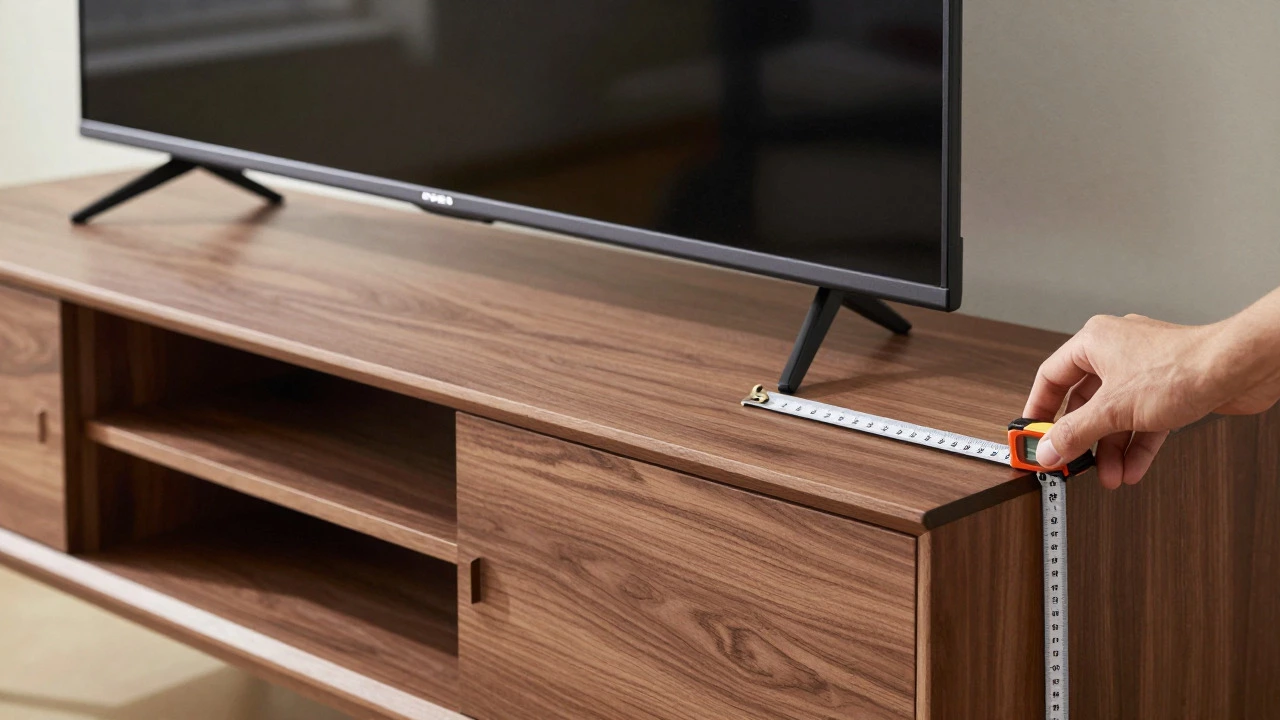
Also consider the footprint. The base of a 75-inch TV is wider. If your stand has a narrow top surface, the TV might overhang the edges. While this looks fine, it creates a tipping hazard if someone bumps the side of the TV. Ensure the TV’s base fits comfortably within the stand’s boundaries, leaving at least 2 inches of clearance on each side.
Viewing Distance and Room Layout
Size isn't just about fitting the box; it's about how far you need to sit. Industry standards suggest a minimum viewing distance based on the screen size to avoid eye strain and to fully appreciate 4K resolution.
- For a 65-inch TV: The recommended viewing distance is typically between 8 and 10 feet.
- For a 75-inch TV: The recommended viewing distance increases to 10 to 12 feet.
If your sofa is only 9 feet away from the wall, a 65-inch TV provides an immersive experience without forcing you to scan the entire image. A 75-inch TV at that same distance can feel overwhelming. Your eyes may struggle to take in the full frame, leading to fatigue during movies or sports broadcasts.
However, if you have a large open-plan living room where the seating is pushed back against a kitchen island or a distant wall, the 75-inch size shines. It fills the visual field appropriately. Measure the distance from the center of your primary seating position to the wall where the TV will hang. If that distance is under 10 feet, stick with the 65-inch option for comfort.
Stand Compatibility and Mounting Considerations
Choosing between a 65 and a 75 often comes down to what furniture you already own. Here is how to assess your current setup:
- Width Check: Measure the width of your TV stand. A 75-inch TV requires a stand at least 66-68 inches wide to prevent overhang. A 65-inch TV needs a stand at least 50 inches wide.
- VESA Mounting Hole Pattern: Most modern TVs use VESA patterns. A 65-inch TV commonly uses a 400x400mm pattern. A 75-inch TV often uses a 600x400mm or 400x400mm pattern. If you plan to wall-mount, ensure your bracket supports the larger hole spacing and weight class.
- Depth Clearance: If you are placing the TV on a stand near a window or curtain, remember that the stand itself adds depth. A 75-inch TV on a standard stand protrudes about 12-15 inches from the wall. A 65-inch TV on the same stand protrudes less because the stand base is often shallower relative to the screen size, though the total depth remains similar.
If you are building a custom entertainment center, account for the cable management. Larger TVs often have more ports located centrally, but the bulkier back panel of some 75-inch models can make routing cables behind the unit tighter. Leave extra space in your cable channels if you anticipate swapping sizes later.
Cost and Value Per Inch
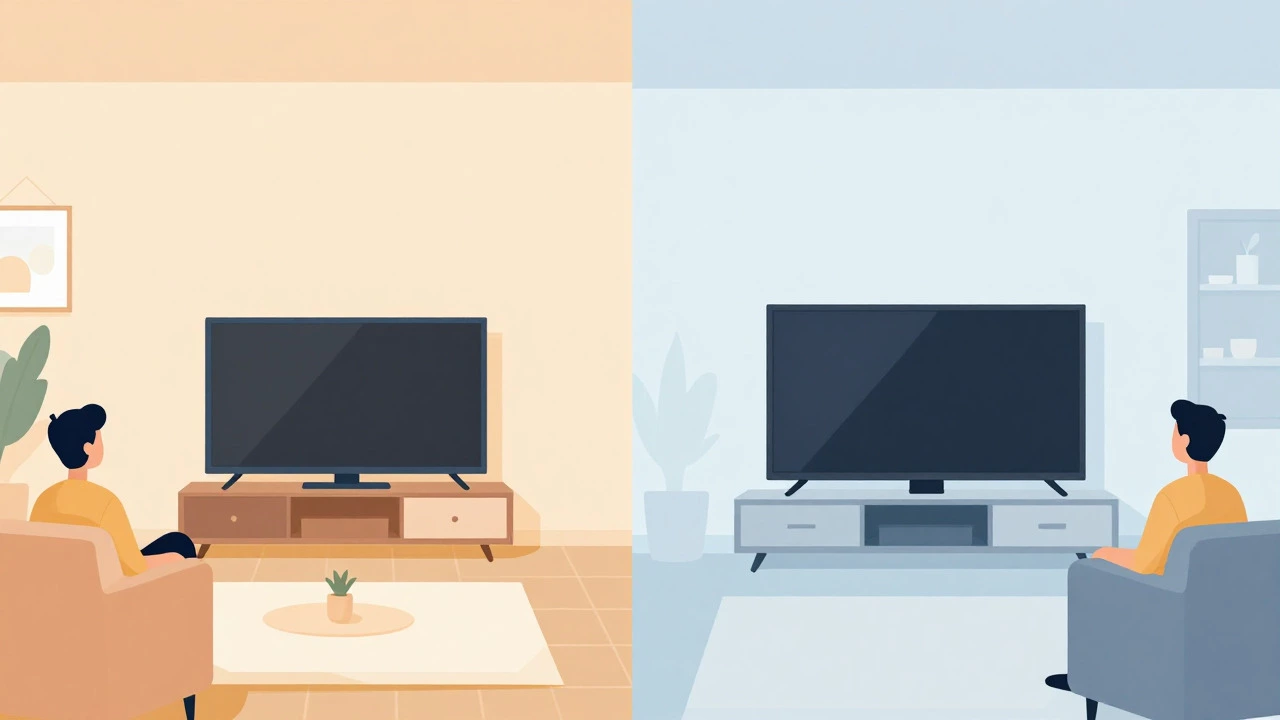
Price is another major differentiator. Generally, you pay more for the jump from 65 to 75, but the cost per square inch decreases. For example, a mid-range 65-inch 4K TV might cost $800. A comparable 75-inch model might cost $1,100. That is a $300 increase for 30% more screen area.
Is that worth it? If you watch content regularly and value immersion, yes. If you mostly use the TV for background noise or occasional streaming, the 65-inch offers better value. The energy consumption also scales up. A 75-inch panel draws more power, especially if it has a high peak brightness feature like HDR. Over three years, the electricity difference could amount to $50-$100 depending on usage hours.
Common Mistakes to Avoid
People often buy the biggest TV they can afford without measuring their space. Here are the top errors to avoid:
- Ignoring Wall Protrusion: Some 75-inch TVs have thicker backs due to cooling systems or battery backups. If you are flush-mounting, check the depth spec. A 2-inch difference can mean the difference between a clean look and a bulky box sticking out.
- Overlooking Stand Stability: Never place a heavy 75-inch TV on a wobbly or decorative stand not rated for the weight. Use a level to ensure the stand is stable before placing the TV.
- Misjudging Vertical Position: The center of a 75-inch screen sits higher than a 65-inch. If you mount it too low, you’ll be looking up. If you mount it too high, you’ll be looking down. Aim for the center of the screen to be at eye level when seated.
By taking precise measurements and considering these factors, you ensure that your upgrade enhances your home theater experience rather than disrupting your living space.
Can I put a 75 inch TV on a 65 inch TV stand?
Yes, provided the stand is wide enough and sturdy. The stand must be at least 66 inches wide to accommodate the base of a 75-inch TV without significant overhang. Also, verify the weight capacity exceeds the TV's weight, which is typically 15-25 pounds heavier than a 65-inch model.
What is the ideal viewing distance for a 75 inch TV?
The ideal viewing distance for a 75-inch 4K TV is between 10 and 12 feet. Sitting closer than 10 feet may cause eye strain as your eyes work harder to process the entire image. Sitting further than 12 feet diminishes the perceived detail and immersion benefits of the larger screen.
How much heavier is a 75 inch TV compared to a 65 inch?
A 75-inch TV is typically 15 to 25 pounds heavier than a 65-inch TV. For example, a 65-inch model might weigh 50 pounds, while a 75-inch model of similar technology could weigh 70 pounds. Always check the specific product specifications for accurate weight data.
Will a 75 inch TV fit in the same wall slot as a 65 inch?
Usually, no. The VESA mounting hole pattern for 75-inch TVs is often larger (e.g., 600x400mm) than for 65-inch TVs (e.g., 400x400mm). You may need a different wall bracket or additional anchors to secure the larger TV safely to the wall studs.
Does a bigger TV consume significantly more electricity?
Yes, but the difference is modest. A 75-inch TV consumes roughly 15-20% more power than a 65-inch TV under identical settings. Over several years, this translates to an additional $50-$100 in electricity costs, assuming average daily usage.