Commercial Construction Insurance Scenario Checker
Select Your Project Profile
New Commercial Building Construction
CommonGround-up construction of office buildings, retail spaces, or warehouses
Major Renovation/Remodeling
FrequentSignificant upgrades to existing structures including interior and exterior work
Design-Build Project
SpecializedSingle entity responsible for both design and construction phases
Heavy Equipment & Machinery Intensive
EquipmentProjects requiring cranes, excavators, bulldozers, and specialized tools
Large Multi-Contractor Project
ComplexMultiple subcontractors working simultaneously on large-scale developments
Insurance Requirements Analysis
Required Coverage Types:
Common Risk Scenarios:
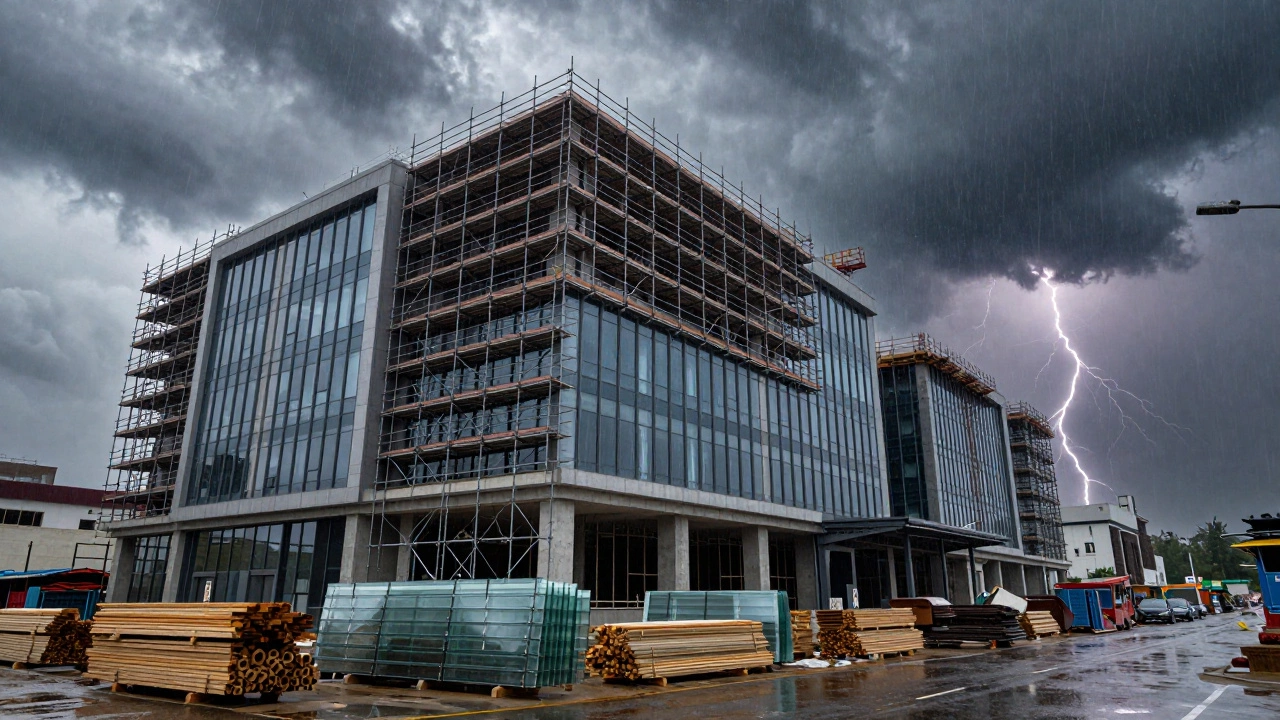
Imagine pouring $500,000 into a new office building only to have a storm destroy the roof before you even cut the ribbon. Without the right protection, that loss falls squarely on your shoulders. This is why understanding commercial construction insurance isn't just paperwork-it’s the difference between staying in business and facing bankruptcy.
If you are planning a build, renovation, or expansion, knowing exactly what is covered under commercial policies is critical. Most contractors and property owners assume their standard business insurance covers everything on site. It usually doesn’t. Construction projects carry unique risks that require specialized layers of protection. Let’s break down exactly what these policies cover, what they exclude, and how to ensure you aren’t left holding the bag when things go wrong.
The Core: Builder’s Risk Insurance
Builder’s Risk Insurance is a specialized form of property insurance that protects buildings and structures while they are under construction. Think of this as the backbone of any commercial project. Unlike standard property insurance, which kicks in once a building is completed and occupied, Builder’s Risk covers the structure from day one until it is handed over to the owner.
This policy is typically purchased by the property owner, though sometimes the general contractor handles it depending on the contract terms. Here is what it generally covers:
- Materials on Site: Lumber, steel, glass, and fixtures sitting at the job site are covered against theft, fire, and vandalism.
- In-Transit Materials: If materials are being delivered to the site and get damaged in a truck accident, this policy often picks up the tab.
- Temporary Structures: Cranes, scaffolding, and temporary fencing used during construction are included.
- Soft Costs: If the project is delayed due to a covered loss (like a fire), the policy may cover extended loan interest, architectural fees, and permit costs incurred during the delay.
However, there are strict limits. Builder’s Risk does not cover land itself, nor does it cover equipment owned by subcontractors unless specifically added. It also typically excludes wear and tear, faulty workmanship, or design errors. If a wall collapses because the engineer calculated the load wrong, Builder’s Risk won’t pay for the repair-that’s a professional liability issue.
General Liability: Protecting Against Third-Party Claims
While Builder’s Risk protects the physical asset, Commercial General Liability (CGL) is insurance that protects businesses from lawsuits related to bodily injury, property damage, and personal injury caused by their operations. This is non-negotiable for any commercial contractor. If a worker drops a hammer on a pedestrian’s foot, or if water leakage from your plumbing job ruins a tenant’s carpet in an adjacent unit, CGL steps in.
Key elements covered under CGL include:
- Bodily Injury: Medical bills and legal fees if someone gets hurt on your site.
- Property Damage: Repair costs for damage you cause to other people’s property.
- Personal and Advertising Injury: Legal defense against claims like libel or slander in your advertising.
It is crucial to understand that CGL does not cover injuries to your own employees. That falls under Workers’ Compensation. It also does not cover auto accidents involving company vehicles, which requires Commercial Auto Insurance. Many clients mistakenly believe one policy covers all liabilities, leading to dangerous gaps in coverage.
Workers’ Compensation: The Employee Safety Net
Construction is inherently dangerous. From falls to machinery accidents, the risk of injury is high. Workers’ Compensation Insurance is a state-mandated insurance program that provides wage replacement and medical benefits to employees injured in the course of employment. In most jurisdictions, including British Columbia where I operate, this is legally required for any business with employees.
This coverage pays for:
- Medical expenses resulting from work-related injuries.
- Lost wages if an employee cannot return to work immediately.
- Rehabilitation costs and vocational training if the injury prevents them from returning to their previous role.
Without this, employers can be sued directly by injured workers for massive damages. It also protects the employer from most lawsuits brought by employees regarding workplace injuries. For commercial projects, ensuring every subcontractor carries their own Workers’ Comp is vital. If a sub goes uninsured and their worker gets hurt, the general contractor could be held liable.
Commercial Property vs. Construction Coverage
A common point of confusion is the distinction between Commercial Property Insurance and coverage for existing buildings versus those under active construction. Standard Commercial Property Insurance applies to finished, occupied buildings. It covers perils like fire, lightning, windstorms, and hail for the structure and its contents.
When you start a major renovation or new build, your existing property policy might suspend coverage for the parts of the building being worked on. This is where Builder’s Risk bridges the gap. Once construction is complete, the Builder’s Risk policy expires, and the standard Commercial Property policy takes over again. It is essential to coordinate these two policies so there is no lapse in coverage during the handover period.
| Coverage Type | Primary Protection | Who Buys It? | Key Exclusions |
|---|---|---|---|
| Builder’s Risk | Structure & Materials | Owner or GC | Faulty Workmanship, Land |
| General Liability | Third-Party Injury/Damage | Contractors | Employee Injuries, Auto Accidents |
| Workers’ Comp | Employee Injuries | All Employers | Intentional Self-Harm, Commuting |
| Professional Liability | Design Errors/Negligence | Architects/Engineers | Physical Damage, Breach of Contract |
Specialized Risks: Equipment and Vehicles
Commercial sites are filled with expensive machinery. Excavators, bulldozers, and cranes represent significant capital investment. Inland Marine Insurance is a type of property insurance that covers movable property, tools, and equipment while they are in transit or stored off-site. This is distinct from Commercial Auto Insurance, which covers vehicles driven on public roads.
If a crane breaks down due to mechanical failure, or if a set of power tools is stolen from a trailer parked overnight, Inland Marine or specific Equipment Breakdown riders provide the necessary funds for repair or replacement. Standard property policies often exclude mobile equipment. Contractors must verify whether their tools are covered under their general policy or if they need a separate floater policy.
Professional Liability for Design-Build Projects
In modern commercial construction, many projects follow a Design-Build model where one entity handles both design and construction. This introduces a new layer of risk: professional errors. Professional Liability Insurance, also known as Errors and Omissions (E&O), is insurance that protects professionals from claims of negligence, errors, or omissions in their services.
If an architect specifies the wrong grade of concrete, leading to structural cracks five years later, Professional Liability covers the legal defense and settlement costs. General Liability will not cover this because it is considered a service error, not a physical accident. For large commercial projects, owners often require proof of E&O coverage from all design professionals involved.

Common Gaps and How to Fill Them
Even with robust policies, gaps exist. One major exclusion across almost all construction insurance is faulty workmanship. If a contractor installs windows incorrectly and they leak, the insurance company will not pay for the cost of removing and reinstalling the windows. However, if the leaking windows cause water damage to the drywall inside, the General Liability policy might cover the drywall repair, but not the window fix.
To mitigate this, contractors should consider adding a Wrap-Up Policy (Owner Controlled Insurance Program or OCIP). This allows the project owner to purchase a single policy that covers all contractors and subcontractors on the job. It simplifies administration and ensures consistent coverage levels across the entire project team. It is particularly useful for large-scale commercial developments where managing dozens of individual subcontractor policies would be chaotic.
Verifying Coverage Before Breaking Ground
Before signing contracts, always request Certificates of Insurance (COIs) from all parties involved. Check the following details carefully:
- Policy Limits: Ensure the dollar amounts meet the project’s scale. A $1 million liability limit might be insufficient for a $10 million skyscraper.
- Additional Insured Status: Make sure you are listed as an "Additional Insured" on your subcontractors’ policies. This gives you direct access to their coverage if you are sued due to their actions.
- Waiver of Subrogation: This clause prevents the insurer from suing you to recover costs they paid out. It is standard in commercial contracts to prevent circular litigation.
- Effective Dates: Confirm the policy is active for the entire duration of the project, including potential delays.
Ignoring these checks can lead to disastrous outcomes. I’ve seen projects stall because a key subcontractor’s lapsed insurance meant the owner couldn’t proceed without risking massive liability exposure.
Next Steps for Project Owners and Contractors
Protecting your commercial construction project requires a proactive approach. Start by auditing your current policies with a broker who specializes in construction. Identify any exclusions that don’t align with your specific project risks. If you are an owner, mandate specific insurance requirements in your contracts. If you are a contractor, invest in comprehensive coverage to protect your reputation and financial stability. Remember, insurance is not just a cost; it is a strategic tool that enables you to take on larger, more complex projects with confidence.
Does commercial general liability cover construction defects?
Generally, no. Commercial General Liability (CGL) excludes damage to your own work or faulty workmanship. It covers third-party property damage or bodily injury caused by your operations. If your defective work causes damage to other parts of the building or neighboring properties, CGL may cover those secondary damages, but not the cost of fixing your own poor work.
Who is responsible for buying Builder’s Risk insurance?
Typically, the property owner purchases Builder’s Risk insurance. However, in some contracts, the general contractor may be required to secure it. It is crucial to define this responsibility clearly in the construction contract to avoid gaps in coverage. The policy should name both the owner and the contractor as insured parties.
What is the difference between Builder’s Risk and Commercial Property Insurance?
Builder’s Risk covers the building while it is under construction, including materials and temporary structures. Commercial Property Insurance covers the completed, occupied building. Builder’s Risk is short-term and project-specific, while Commercial Property is ongoing. There is often a transition period where coordination between the two policies is necessary.
Do subcontractors need their own insurance?
Yes, absolutely. Subcontractors should carry their own General Liability, Workers’ Compensation, and Commercial Auto insurance. While an Owner Controlled Insurance Program (OCIP) can cover everyone, relying solely on the owner’s policy is risky. Subcontractors’ own policies provide primary coverage for their specific operations and employees.
What is a Wrap-Up insurance policy?
A Wrap-Up policy, such as an OCIP (Owner Controlled Insurance Program) or CCIP (Contractor Controlled Insurance Program), is a single insurance policy purchased by the project owner or general contractor that covers all participants in the construction project. It streamlines insurance management and ensures consistent coverage levels across all subcontractors.
Does insurance cover delays in construction projects?
Standard policies do not cover delays. However, Builder’s Risk policies can include "Soft Cost" endorsements that cover additional expenses like loan interest, architectural fees, and permits if the project is delayed due to a covered peril, such as fire or storm damage. Delays caused by labor strikes, material shortages, or financing issues are typically excluded.
What is Professional Liability insurance for construction?
Professional Liability, or Errors and Omissions (E&O), protects architects, engineers, and designers from claims of negligence, errors, or omissions in their design services. It covers legal defense costs and settlements if a design flaw leads to financial loss or structural issues. It does not cover physical damage or bodily injury.
How long does Builder’s Risk coverage last?
Builder’s Risk coverage typically lasts for the duration of the construction project, plus a grace period (often 30 to 60 days) after completion to allow for final inspections and punch list items. The exact term is specified in the policy. It is important to ensure the policy end date aligns with the expected project completion date to avoid lapses.