Flooring Cost Estimator & Advisor
Project Details
Select Flooring Material:
Sheet Vinyl
Cheapest OptionWaterproof, good for wet areas.
Laminate
Best ValueDurable, easy DIY click-lock.
Luxury Vinyl (LVP)
Rising StarWaterproof, realistic look.
Carpet Tiles
CoziestPeel & stick, modular.
Estimated Budget
Select a material to see advice.
Enter your room details and select a flooring type to generate a budget estimate.
Staring at a cracked, ugly floor can feel like a punch to the gut. You want it fixed, but your wallet is already screaming from other renovation costs. The good news? You don’t need to spend a fortune to get a floor that looks decent and lasts. In fact, some of the best-looking floors today are among the cheapest on the market.
If you are asking what is the least expensive type of flooring, the answer isn't just one material. It depends on whether you want to install it yourself or hire a pro, and how much moisture you have in the room. Generally, laminate flooring is the most affordable option for large areas when installed professionally, while sheet vinyl is the absolute cheapest material per square foot if you DIY. Let’s break down exactly where your money goes so you can stop guessing and start planning.
The Absolute Cheapest Option: Sheet Vinyl
When we talk about raw material cost, nothing beats sheet vinyl. This isn't the trendy luxury vinyl plank (LVP) with realistic wood grains. I’m talking about the old-school, rolled-out vinyl that comes in patterns or solid colors. You buy it by the roll, cut it to fit, glue it down, and you’re done.
In 2026, basic sheet vinyl costs between $1 and $3 per square foot. That is incredibly cheap. If you have a small bathroom or a laundry room, this is the smart move. It is waterproof, easy to clean, and forgiving on uneven subfloors because it conforms to the shape of the ground beneath it.
However, there is a catch. Installing sheet vinyl requires skill. If you make a mistake cutting or gluing, it is hard to fix without ruining the whole sheet. Most people hire a professional for this, which adds labor costs. But even with installation, it often stays under $5 per square foot total, making it the budget king for wet areas.
The Best Value for Living Areas: Laminate Flooring
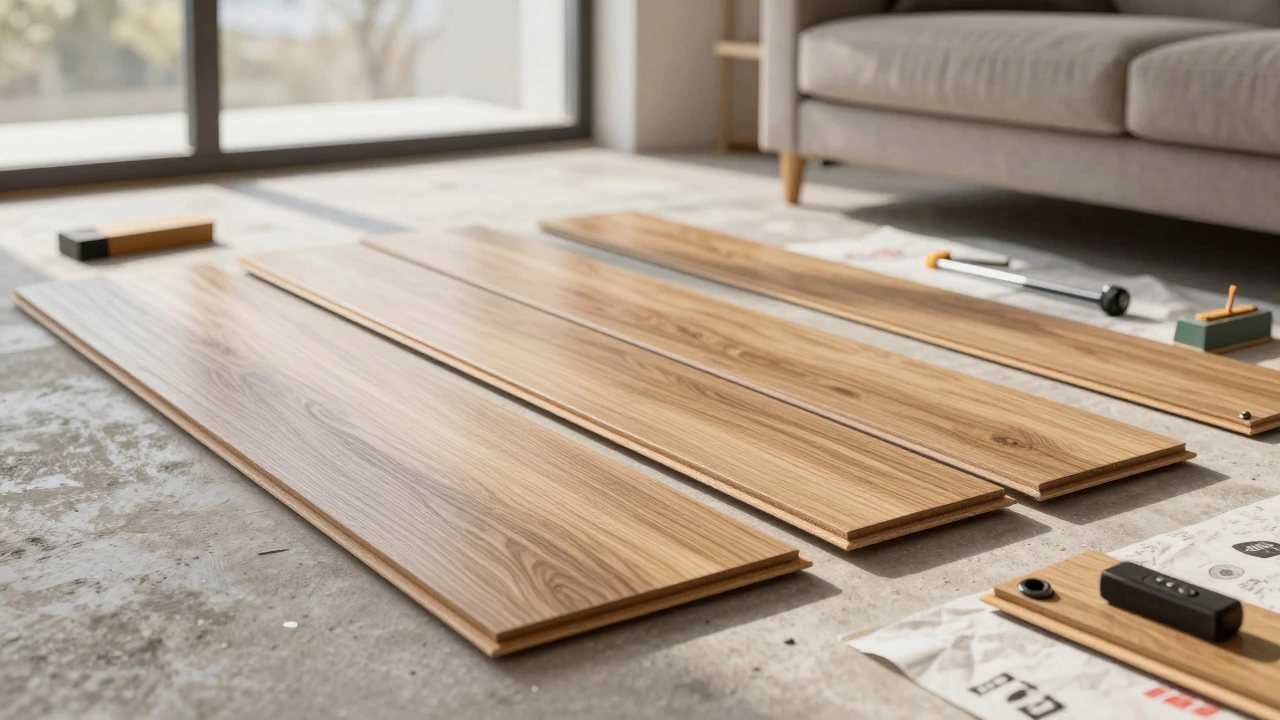
If you are looking to cover a living room, bedroom, or hallway, laminate flooring is a synthetic product made of compressed fiberboard with a photographic image layer on top. It mimics the look of hardwood or stone but costs a fraction of the price.
Laminate typically runs from $2 to $5 per square foot for materials. Why is it so popular? Because it is durable. The top wear layer resists scratches from pets and kids better than many real wood floors. Plus, most laminate uses a click-lock system. This means you don’t need glue or nails. You just snap the planks together like puzzle pieces.
This click-lock feature is huge for your budget. It makes laminate the easiest DIY flooring project for beginners. If you have a friend who owns a table saw or knows how to use a jigsaw, you can install an entire house of laminate over a weekend. No glue smell, no waiting for drying time, just pure savings.
| Flooring Type | Price Range ($/sq ft) | DIY Difficulty | Water Resistance |
|---|---|---|---|
| Sheet Vinyl | $1 - $3 | Hard (Glue required) | Excellent |
| Laminate | $2 - $5 | Easy (Click-lock) | Poor (Avoid wet areas) |
| Luxury Vinyl Plank (LVP) | $3 - $8 | Easy (Click-lock/Glue) | Excellent |
| Engineered Hardwood | $4 - $10 | Medium (Nail/Staple) | Moderate |
| Carpet Tiles | $2 - $4 | Very Easy (Peel & Stick) | Poor |
The Rising Star: Luxury Vinyl Plank (LVP)
A few years ago, LVP was considered a mid-range product. Today, due to mass production and competition, prices have dropped significantly. Basic LVP now starts around $3 per square foot. While this is more than laminate, it offers something laminate cannot: water resistance.
If you live in a basement, a kitchen, or a bathroom, laminate will swell and warp if water gets underneath it. LVP is made of plastic polymers, so water doesn’t hurt it. For the extra dollar or two per square foot, you get peace of mind. Many modern LVP products also come with attached underlayment, which saves you another step and cost during installation.
I recommend LVP if your budget allows for a slight increase over laminate. It feels more solid underfoot, looks more realistic than cheaper laminate, and lasts longer in high-traffic zones. It is the sweet spot between cost and performance in 2026.
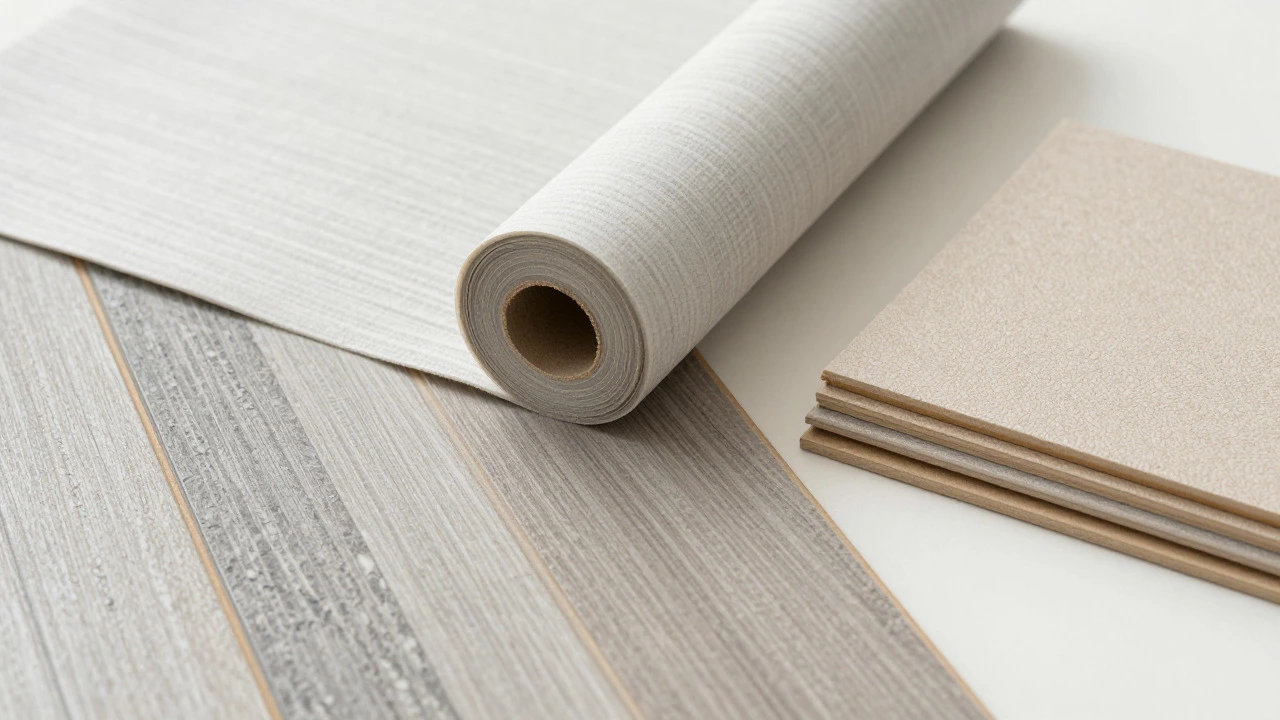
Cheap Carpet Alternatives: Carpet Tiles
Don’t dismiss carpet if you need softness and warmth. Traditional wall-to-wall carpet installation is expensive because it requires padding, tack strips, and skilled labor. However, carpet tiles are individual squares of carpet that can be glued down or use peel-and-stick backing.
These tiles cost between $2 and $4 per square foot. The beauty of tiles is modularity. If you spill red wine on one tile, you don’t replace the whole room. You just swap out that single square. They are perfect for home offices, bedrooms, or playrooms where you want comfort without the high cost of traditional carpeting.
Installation is as simple as laying them out like a grid. Some require adhesive, while others stick directly to the subfloor. Just ensure your subfloor is clean and flat before you start.
Hidden Costs That Kill Your Budget
Here is where most people get burned. They see a low price tag on the box and forget about everything else. To truly find the least expensive flooring, you must account for these hidden costs:
- Subfloor Preparation: If your current floor is uneven, you might need self-leveling compound or plywood underlayment. This can add $1 to $2 per square foot. Cheap flooring on a bad subfloor will fail quickly.
- Removal of Old Flooring: Hiring someone to rip up old carpet or tile costs money. Disposal fees at the landfill also add up. DIY removal saves cash but takes physical effort.
- Transition Strips: You need metal or wood strips to cover gaps between different floor types or at doorways. These small pieces add up in cost and complexity.
- Tools: Do you own a jigsaw, tapping block, pull bar, and knee pads? If not, renting or buying these tools for a laminate or LVP install can cost $50 to $100 upfront.
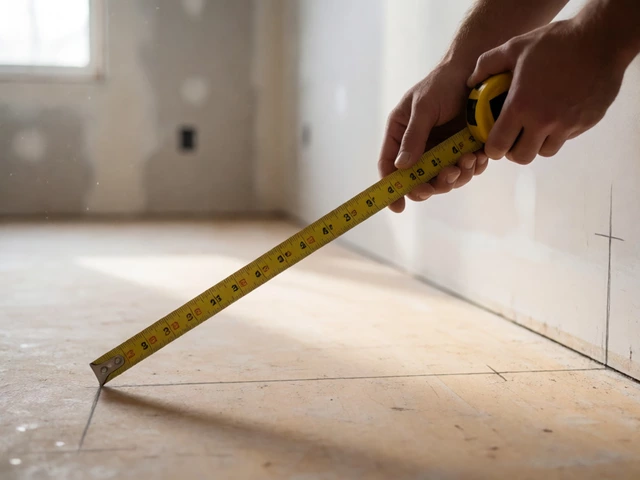
To keep costs low, measure your room accurately. Buy 10% extra material for cuts and mistakes, but not 20%. Order from local suppliers to avoid shipping fees, which can be surprisingly high for heavy boxes of flooring.
Which Room Gets Which Floor?
Your choice should depend on the room’s function. Here is a quick guide to matching the cheapest option to the right space:
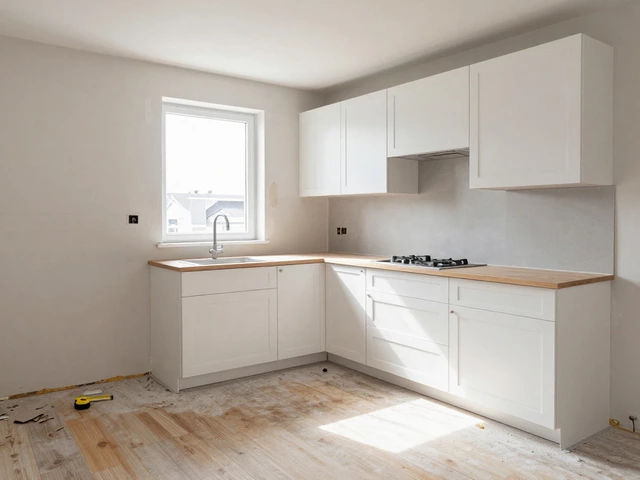
- Kitchen: Use LVP. It handles spills and drops better than laminate. Avoid sheet vinyl here unless you are on an extreme budget, as seams can trap grease.
- Bathroom: Sheet vinyl or LVP. Moisture is the enemy. Laminate will rot here.
- Bedroom: Laminate or Carpet Tiles. You want warmth and quiet. Laminate is easy to clean; carpet tiles offer coziness.
- Living Room: Laminate or LVP. High traffic needs durability. Laminate is cheaper; LVP lasts longer.
- Basement: LVP only. Basements are prone to dampness. Laminate and carpet will mold or warp.
Final Thoughts on Saving Money
Finding the least expensive flooring isn't just about picking the cheapest box at the store. It is about balancing material cost with installation effort and longevity. If you are handy, laminate gives you the best bang for your buck. If you are terrified of water damage, spend a little more on LVP. If you need to cover a small, wet area quickly, grab a roll of sheet vinyl.
Remember, a cheap floor installed poorly is a waste of money. Take your time measuring, prep your subfloor well, and watch those videos twice before you start cutting. Your future self will thank you when you walk across a smooth, beautiful floor that didn't break the bank.
Is laminate flooring cheaper than vinyl?
Generally, yes. Standard laminate flooring is usually cheaper than luxury vinyl plank (LVP). However, basic sheet vinyl is cheaper than both. If you compare click-lock planks, laminate wins on price, but LVP wins on water resistance and durability.
What is the cheapest flooring to install yourself?
Carpet tiles with peel-and-stick backing are the easiest and cheapest to install yourself. Laminate flooring is a close second because of its click-lock system, which requires no glue or nails. Sheet vinyl is cheap material-wise but difficult to install alone due to the need for precise cutting and gluing.
Can I put laminate flooring in a bathroom?
It is not recommended. Laminate has a fiberboard core that swells and warps when exposed to standing water or high humidity. Over time, bathroom conditions will damage the planks. Use LVP or sheet vinyl for bathrooms instead.
How much does it cost to remove old flooring?
Professional removal costs between $1 and $3 per square foot, depending on the material. Carpet is easier and cheaper to remove than tile or hardwood. If you do it yourself, you only pay for dumpster rental or landfill fees, which can range from $50 to $150.
Does cheap flooring last long?
Cheap laminate can last 10 to 15 years with proper care. Sheet vinyl may last 10 to 20 years. The key is installation quality. Even expensive flooring fails if the subfloor is uneven. Proper preparation extends the life of any budget-friendly floor.