When you hear the word construction, you might picture a new house, a shopping mall, or an office building. But there’s another side of construction that doesn’t show up in real estate ads or home improvement blogs. It’s the massive, invisible backbone of modern life - roads, bridges, dams, water systems, and power plants. That’s heavy civil construction.
What Exactly Is Heavy Civil Construction?
Heavy civil construction refers to large-scale infrastructure projects that serve the public and support the function of entire communities or regions. Unlike commercial or residential building, it’s not about creating spaces for people to live or work inside. It’s about building the systems that make those spaces possible.
Think of it this way: you can’t run a hospital without clean water, electricity, or a road to get ambulances in. You can’t have a city without sewers, storm drains, or bridges. Heavy civil projects build those essentials. They’re often funded by governments, municipalities, or public agencies because they’re too big, too expensive, or too critical for private developers to handle alone.
Common Examples of Heavy Civil Projects
Here’s what heavy civil actually looks like in the real world:
- Highways and major roadways - including interchanges, overpasses, and tunnel systems
- Bridges and overpasses - from small rural crossings to massive suspension bridges like the Golden Gate
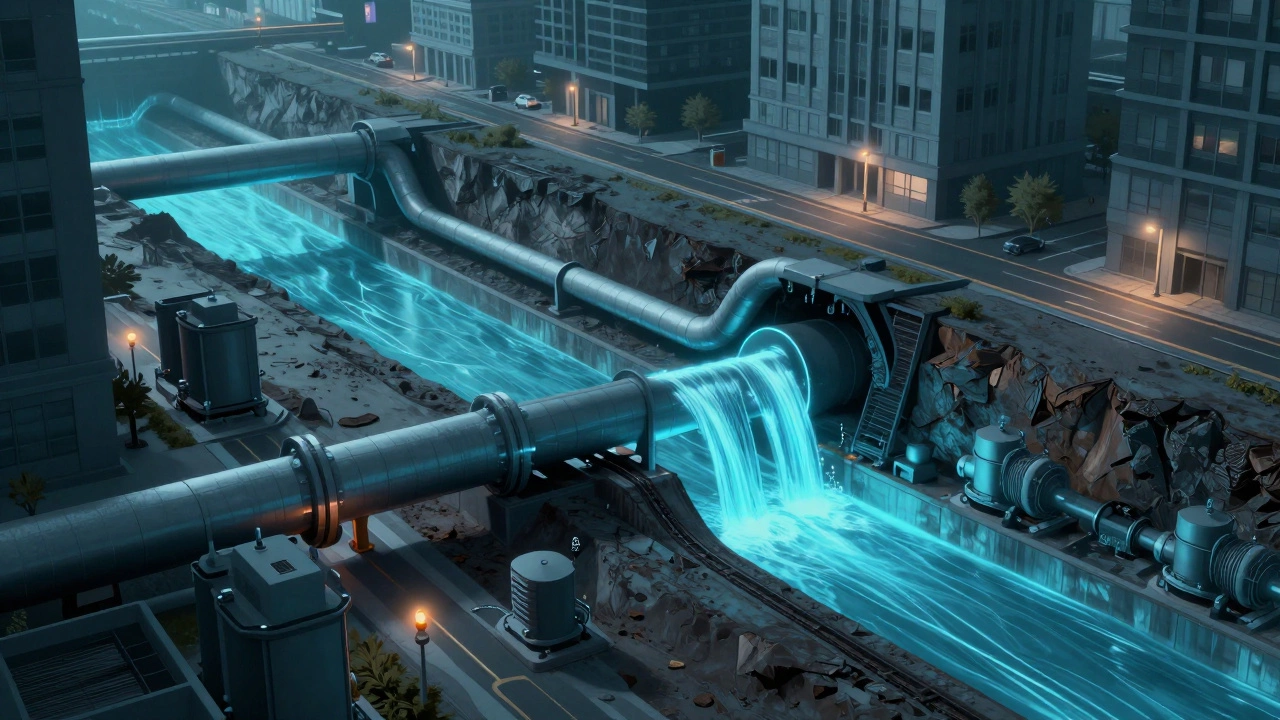
- Dams and reservoirs - for flood control, drinking water, and hydroelectric power
- Water and wastewater treatment plants - cleaning water for millions of people
- Stormwater drainage systems - preventing urban flooding during heavy rain
- Railroad tracks and transit systems - including subway tunnels and elevated rail lines
- Power transmission lines and substations - moving electricity from plants to cities
- Ports and harbors - handling cargo ships and maritime trade
- Airport runways and taxiways - not the terminals, but the paved surfaces planes use
These aren’t projects you finish in a few months. They often take years, sometimes decades, to complete. A single highway expansion can involve hundreds of workers, thousands of tons of concrete and steel, and complex coordination with environmental regulators, traffic planners, and utility companies.
How Heavy Civil Differs From Commercial Construction
It’s easy to confuse heavy civil with commercial construction. After all, both involve big buildings and lots of workers. But the differences are critical.
Commercial construction builds structures for business use: offices, retail stores, hotels, warehouses. The goal is to create usable interior space. The focus is on finishes, HVAC systems, lighting, and tenant needs.
Heavy civil construction builds the foundation - literally and figuratively - that those buildings sit on. It’s about earthmoving, grading, drainage, structural supports, and long-term durability under extreme loads and weather. A commercial contractor might install a roof. A heavy civil contractor builds the landfill underneath it that won’t sink when it rains.
Materials differ too. Heavy civil uses massive amounts of concrete, asphalt, rebar, and compacted earth. Commercial projects use more drywall, glass, insulation, and finishes. Heavy civil projects often require heavy machinery like excavators, bulldozers, pile drivers, and crane rigs that can lift 100-ton steel girders. Commercial sites use more ladders, scaffolding, and power tools.

Who Does Heavy Civil Work?
These projects aren’t handled by your local handyman or small remodeling crew. They’re led by specialized contractors with deep experience in large-scale civil engineering.
Companies that do heavy civil work typically have:
- Heavy equipment fleets - not just trucks, but massive loaders, compactors, and tunnel boring machines
- Engineering teams - civil engineers, geotechnical experts, hydrologists
- Permitting expertise - navigating federal, state, and local regulations
- Financial backing - these projects often cost hundreds of millions of dollars
In Canada, firms like SNC-Lavalin, PCL Construction, and EllisDon regularly bid on and execute heavy civil contracts. In the U.S., companies like Bechtel, Fluor, and Kiewit dominate the space. These aren’t small businesses - they’re global enterprises with decades of experience in public infrastructure.
Why Heavy Civil Matters
Most people don’t think about heavy civil until something breaks. A bridge closes for inspection. A water main bursts. A highway floods during a storm. That’s when you realize how much we rely on these hidden systems.
Heavy civil construction keeps society running. It supports economic growth by enabling trade, commuting, and energy delivery. It protects public health through clean water and waste removal. It saves lives by reducing flood risks and improving emergency access.
In Vancouver, where earthquakes and heavy rainfall are common, heavy civil projects like the seawall along the waterfront or the sewer upgrades in the Downtown Eastside aren’t just nice-to-haves - they’re critical for safety and resilience.
What’s Not Considered Heavy Civil?
Not every big project counts. Here’s what’s usually excluded:
- Shopping malls, office towers, or hotels - these are commercial construction
- Single-family homes or apartment buildings - residential construction
- Landscaping or park benches - even if done by a city, they’re minor public works
- Small road repairs or patching potholes - these are maintenance, not new construction
- Interior renovations of public buildings - like upgrading a library’s lighting
It’s not about size alone. It’s about function. A 50-story tower is huge, but if it’s just a building with offices inside, it’s not heavy civil. A 200-foot bridge that carries 100,000 cars a day? That’s heavy civil.
The Future of Heavy Civil
Infrastructure in North America is aging. The American Society of Civil Engineers gave the U.S. infrastructure a D+ grade in 2025. Canada’s situation isn’t much better - many bridges and water systems were built in the 1950s and 60s and are now past their design life.
That means a huge wave of replacement and upgrade work is coming. Governments are pouring billions into rebuilding roads, replacing lead pipes, modernizing transit systems, and upgrading power grids to handle renewable energy.
There’s also a shift toward sustainable heavy civil. New projects now include green stormwater systems, permeable pavements, and designs that reduce carbon emissions during construction. In British Columbia, new highway projects now require carbon impact assessments and use recycled materials wherever possible.
Heavy civil isn’t glamorous. You won’t see it on Instagram. But without it, modern life would collapse. The water you drink, the roads you drive on, the electricity that powers your home - all of it started with a heavy civil project.
How to Tell If a Project Is Heavy Civil
Still unsure? Ask yourself these three questions:
- Is the project designed to serve the public, not private tenants?
- Is the main output a system or structure (like a bridge or pipeline), not a building?
- Does it require heavy machinery, large-scale earthwork, or long-term public funding?
If you answered yes to all three, it’s heavy civil.
Is a new highway always considered heavy civil construction?
Yes. Even if it’s just a two-lane road, if it’s a new public highway built to connect regions, carry heavy traffic, and involve major earthmoving, drainage, and bridge work, it’s heavy civil. The scale and public purpose define it, not the number of lanes.
Can a private company do heavy civil work?
Absolutely. While most heavy civil projects are publicly funded, private companies often win the contracts to build them. For example, a private firm might be hired by a city to design and construct a new wastewater treatment plant. The funding is public, but the work is done by private contractors with heavy civil expertise.
Do heavy civil projects require environmental permits?
Yes, and they’re often the most complex part of the process. Heavy civil projects frequently disturb large areas of land, affect waterways, or impact wildlife habitats. In Canada, permits from federal agencies like Environment and Climate Change Canada and provincial bodies like the BC Ministry of Environment are required. Delays in permitting can add years to a project timeline.
Is heavy civil construction dangerous?
It can be. Heavy civil sites involve large machinery, deep excavations, high-voltage lines, and hazardous materials. Safety standards are extremely strict, and accidents are rare compared to other industries - but when they happen, they’re often severe. Workers must be trained in confined space entry, crane safety, and traffic control. Most firms require OSHA or WorkSafeBC certifications.
How long do heavy civil projects take to complete?
It varies. A small stormwater retention pond might take 6-8 months. A major highway expansion or bridge replacement can take 5 to 10 years, including planning, permitting, and construction. Delays are common due to weather, funding changes, or community feedback.