Modern Decor Style Checker
How Modern Is Your Space?
This tool assesses your home decor against key principles of modern design. Answer these questions to get a personalized score and recommendations.
Modern home decor isn’t about being cold or sterile. It’s about creating spaces that feel calm, intentional, and alive with purpose. If you’ve walked into a room with clean walls, simple furniture, and no clutter-and felt instantly relaxed-that’s modern decor at work. It’s not a trend you’ll outgrow. It’s a way of living that prioritizes space, light, and function over noise and excess.
What Makes a Style "Modern"?
The term "modern" in home decor refers to a design movement that began in the early 20th century, roughly between 1920 and 1950. It broke away from ornate Victorian and Edwardian styles, favoring simplicity, honest materials, and new technologies. Think Bauhaus, Le Corbusier, and Mies van der Rohe. Modern design isn’t the same as contemporary, which changes with the times. Modern is fixed in its roots: clean lines, open floor plans, and a focus on form following function.
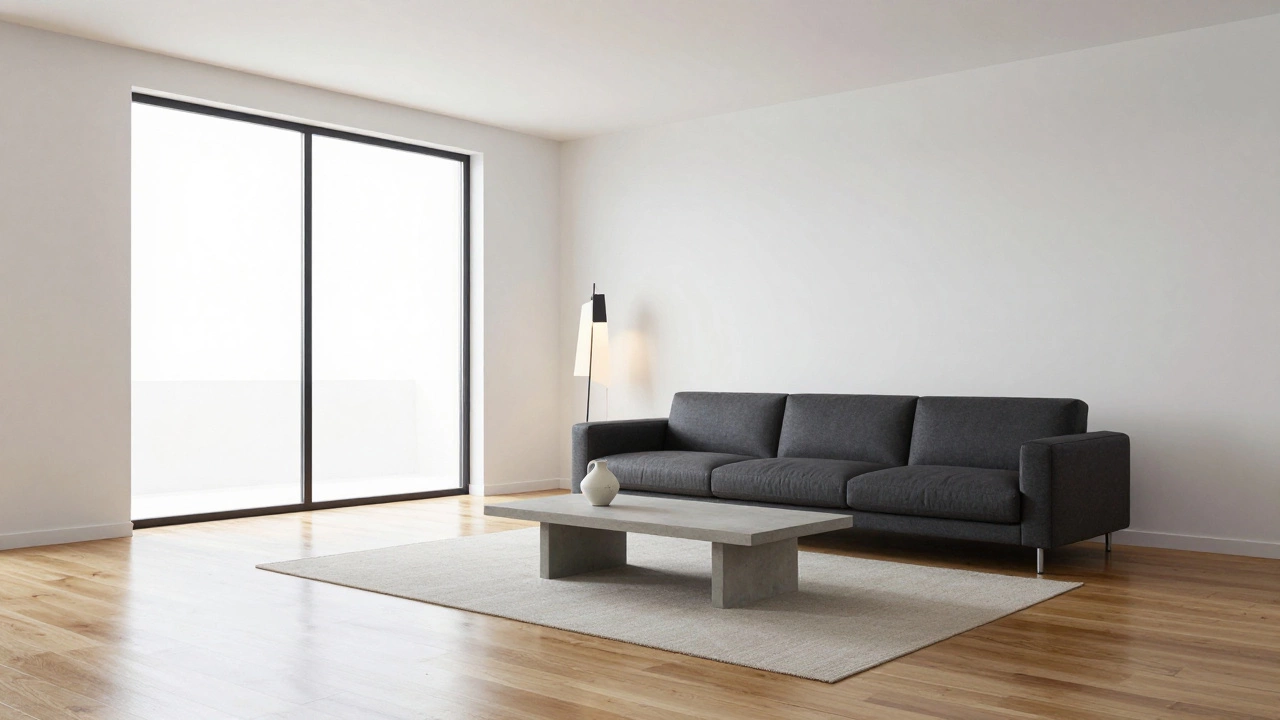
Modern homes don’t use decorative moldings, carved wood, or heavy drapes. Instead, they rely on the shape of the furniture, the texture of the materials, and the way light moves through the space. A modern living room might have a low-slung sofa in charcoal wool, a single geometric floor lamp, and a concrete coffee table. No throw pillows. No knickknacks. Just enough to serve a purpose-and nothing more.
Key Elements of Modern Home Decor
Modern decor has a clear set of rules. Break them, and you risk losing the feeling of calm clarity that defines the style.
- Neutral color palettes: Whites, grays, beiges, and blacks dominate. Accents come from natural wood tones or deep blues and greens-not from patterned wallpaper or bright yellows.
- Minimal ornamentation: If it doesn’t serve a function, it doesn’t belong. Art is chosen for its impact, not its quantity. One large abstract painting replaces a gallery wall of small frames.
- Open floor plans: Walls are minimized. Kitchens flow into dining areas, which open into living rooms. This creates a sense of airiness and connection.
- Industrial and natural materials: Steel, glass, concrete, and leather are common. So are untreated wood floors and stone countertops. These materials are left in their raw state, not covered in paint or veneer.
- Geometric shapes: Furniture and lighting often feature straight lines, right angles, and circular or oval forms. Curves are intentional, not decorative.
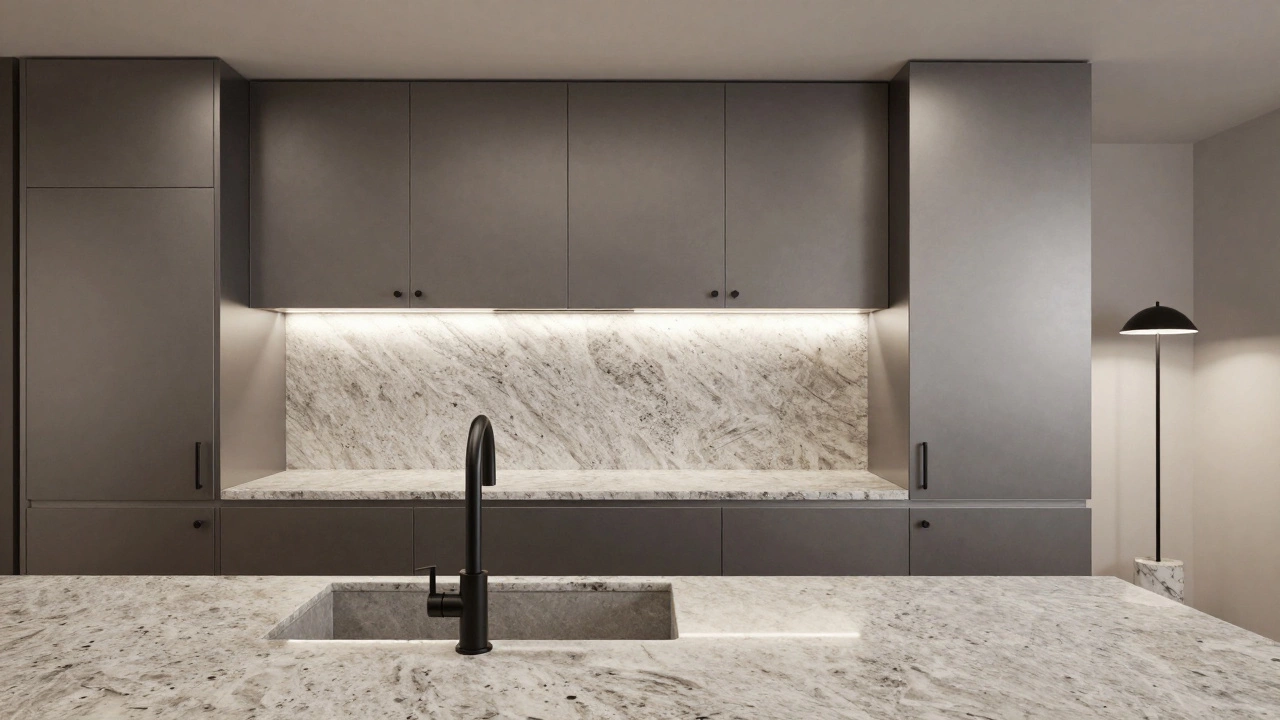
Take a modern kitchen, for example. Cabinets are handleless, flush with the wall. The sink is a single basin, deep and rectangular. The countertops are quartz or honed granite-smooth, cool, and unbroken. There’s no backsplash tile. No decorative knobs. Just clean surfaces that make cleaning easy and the space feel larger.
Modern Furniture: Less Is More
Modern furniture isn’t about luxury. It’s about precision. Pieces are designed to be seen from every angle, not just the front. A modern armchair might have exposed metal legs and a single cushion with no piping. A dining table could be a slab of walnut on two steel legs.
Brands like IKEA, Herman Miller, and Muuto popularized modern design for everyday homes. The Eames Lounge Chair, designed in 1956, still sells today because it balances comfort and structure. The Barcelona Chair, by Mies van der Rohe, looks like a sculpture-but you can sit in it for hours.
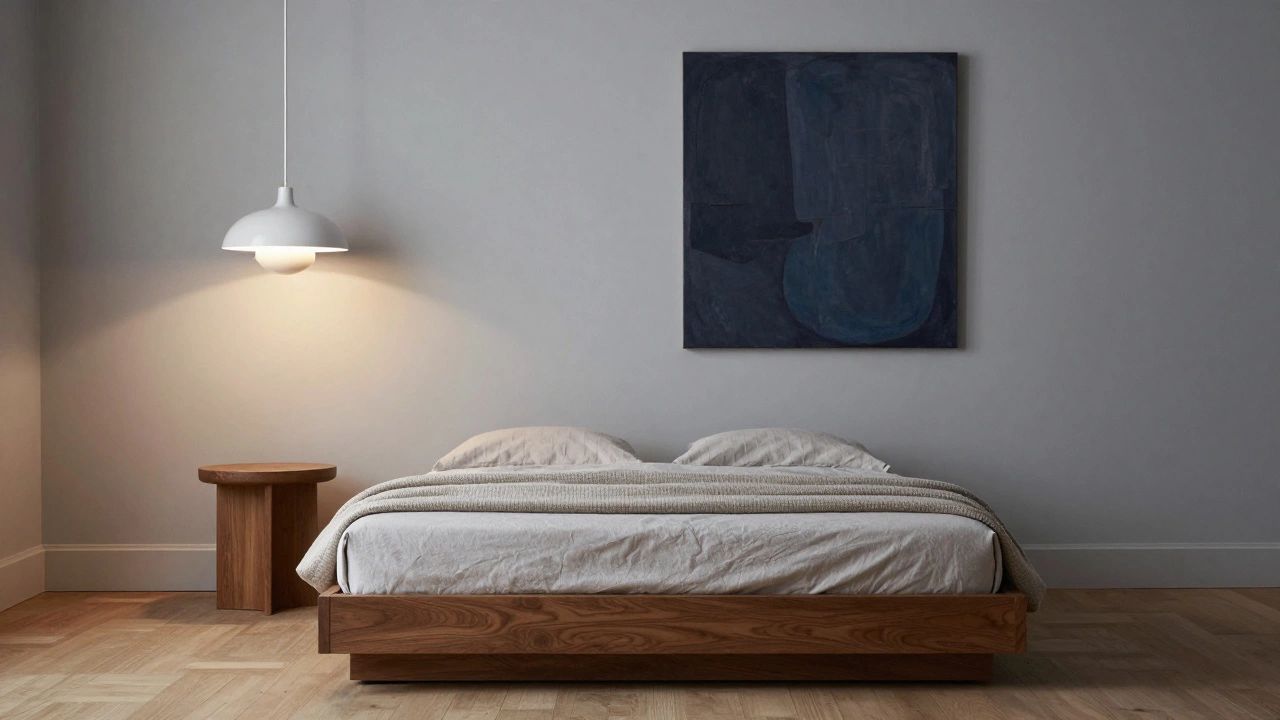
Modern furniture avoids upholstered headboards, tufted sofas, or carved legs. Instead, you’ll find low profiles, tapered legs, and hidden storage. A modern bed frame might sit flush on the floor with no box spring. A media console could be a long, flat cabinet with sliding doors, hiding wires and devices.
Lighting: Function Meets Sculpture
Lighting in modern homes isn’t an afterthought. It’s part of the design. Pendant lights hang low over dining tables. Floor lamps have slim, angular bases. Recessed lighting is used to highlight walls or create ambient glow without visible fixtures.
Popular modern lighting includes the Arco Floor Lamp by Flos, with its sweeping curved arm and marble base. Or the Louis Poulsen PH 5, a soft, diffused pendant that doesn’t glare. These aren’t just lights-they’re art pieces that serve a function.
Forget chandeliers or crystal sconces. Modern lighting avoids ornament. It uses metal, glass, and matte finishes. Bulbs are often LED, not incandescent, because they’re efficient and emit a clean, white light.
Why Modern Decor Feels So Calm
Modern decor works because it reduces visual noise. Our brains are wired to feel overwhelmed by clutter. Modern spaces give us room to breathe. Studies from the University of California, Los Angeles, show that clutter increases cortisol levels-the stress hormone. A clean, open room lowers that response.
Modern design doesn’t mean empty. It means curated. One well-placed ceramic vase. A single book on a shelf. A wool rug that anchors the space. These items aren’t decorative. They’re chosen for their texture, weight, and presence.
People who live in modern homes often say they feel more focused, less distracted. That’s not coincidence. It’s design psychology. When your environment doesn’t compete for your attention, your mind can rest.
Modern vs. Contemporary: What’s the Difference?
This is a common mix-up. Modern refers to a specific historical period (1920s-1950s). Contemporary means "of the now." Contemporary decor changes every few years. Right now, it might include warm woods, textured linens, and organic shapes. But five years ago, it was all gray and chrome.
Modern is timeless. Contemporary is trendy. You can mix them-like pairing a modern steel-framed sofa with a contemporary jute rug. But if you want true modern style, stick to the original principles: simplicity, structure, and restraint.
How to Start Decorating in Modern Style
Starting with modern decor doesn’t mean buying everything new. It means editing what you have.
- Remove clutter: Put away anything that doesn’t serve a purpose or bring you joy. That includes excess decor, outdated electronics, and unused furniture.
- Paint the walls white or light gray: This is the foundation. Light walls reflect natural light and make rooms feel bigger.
- Choose one statement piece: A modern armchair, a sculptural lamp, or a large piece of abstract art. Let it be the focal point.
- Use natural materials: Swap plastic for wood, metal, or stone. Even small changes-like a wooden cutting board on the counter-add warmth.
- Limit color: Stick to three colors max: one neutral, one accent, and one material tone (like oak or black steel).
You don’t need to spend a lot. Thrift stores often have mid-century modern pieces from the 1950s and 60s. Look for clean lines, tapered legs, and solid wood. A $50 vintage side table can become the centerpiece of your living room.
Common Mistakes to Avoid
Even experienced decorators mess up modern style. Here’s what to watch for:
- Overdoing minimalism: A room with nothing in it feels empty, not serene. Add texture with a wool throw or a ceramic vase.
- Using too many materials: Mixing wood, metal, glass, and plastic creates visual chaos. Stick to two or three.
- Ignoring lighting: Relying on overhead lights alone makes a room feel flat. Add floor and table lamps for depth.
- Choosing trendy instead of timeless: A neon accent wall or a patterned rug might look cool now, but it won’t age well. Modern is built to last.
Who Modern Decor Is For
Modern decor isn’t for everyone. If you love velvet sofas, floral wallpaper, or collections of figurines, this style might feel too strict. But if you value peace, clarity, and simplicity, it’s a perfect fit.
It works well in small apartments because it makes spaces feel larger. It suits busy professionals who want a calm retreat after work. It’s ideal for families who want easy-to-clean surfaces and fewer things to organize.
Modern homes don’t scream. They whisper. And in a world full of noise, that’s powerful.
Is modern home decor the same as minimalist decor?
No. Minimalism strips everything down to the bare essentials-often just a bed, a chair, and a lamp. Modern decor still allows for comfort, texture, and a few intentional objects. It’s not about having less; it’s about having the right things. You can have a sofa, a rug, and a side table in modern style and still feel full, not empty.
Can modern decor work in a traditional home?
Yes, but it takes careful editing. Start by removing ornate moldings or heavy drapes. Paint over dark wood trim in white. Swap a chandelier for a simple pendant. Replace cluttered shelves with one clean console table. You don’t need to tear down walls-just simplify what’s there.
What colors work best in modern home decor?
Neutrals are the base: white, light gray, beige, and black. For accents, choose one or two deep tones-navy, forest green, or charcoal. Avoid pastels, bright primaries, or warm oranges. Natural wood tones like oak, walnut, or ash add warmth without breaking the palette.
Do I need to buy expensive furniture for modern style?
No. Many modern pieces from the 1950s-70s are affordable at thrift stores or online marketplaces. Look for clean lines, solid wood, and metal legs. Brands like IKEA and Article offer modern-inspired pieces at low prices. The key isn’t the price-it’s the form.
How do I add warmth to a modern room?
Use texture. A chunky knit throw, a jute rug, or a ceramic lamp with a matte finish adds softness. Wood floors are warmer than concrete. Indoor plants like fiddle-leaf figs or snake plants bring life without clutter. Warm lighting-2700K bulbs-makes the space feel inviting, not clinical.
Next Steps: Try This Today
Take one room. Clear off every surface. Remove everything that doesn’t serve a function. Paint one wall white. Buy one piece of furniture with clean lines-maybe a simple wooden stool or a black metal lamp. Sit in the space for 10 minutes. Notice how it feels. That’s modern decor-not because it looks a certain way, but because it lets you breathe.