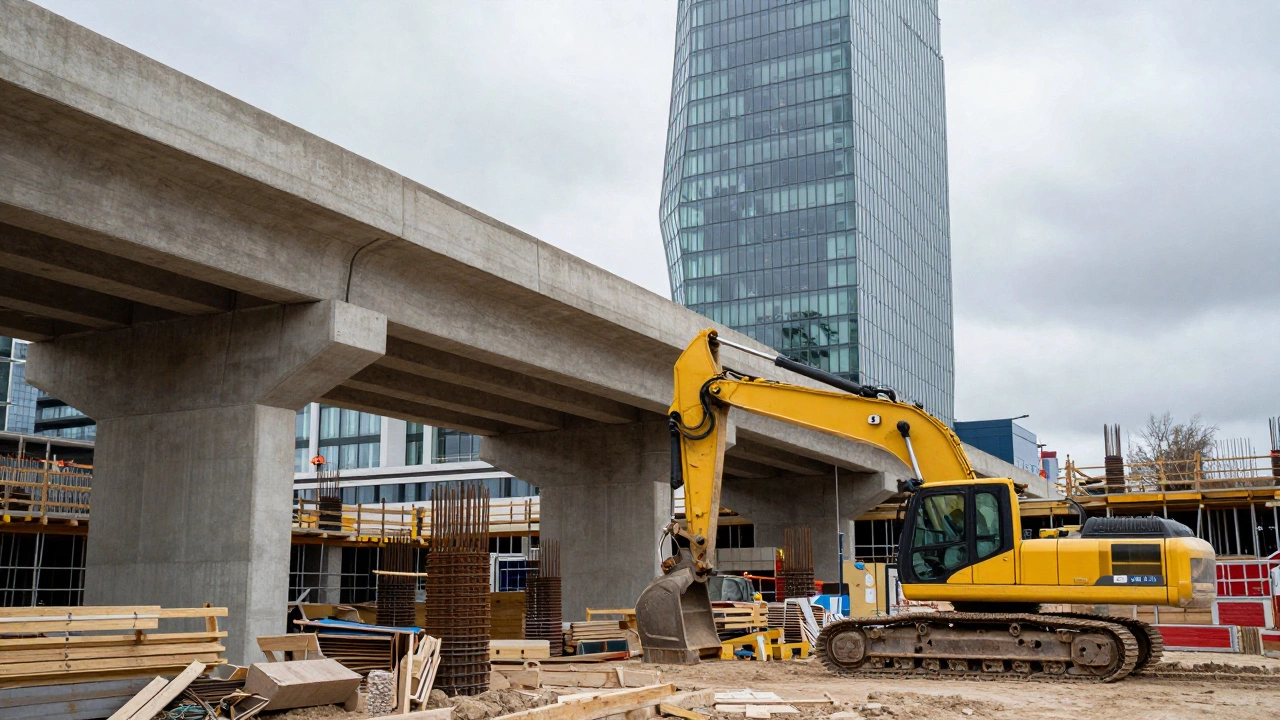
Have you ever looked at a massive highway overpass and then turned your head to see a gleaming office tower being erected nearby? Both are feats of engineering, both involve cranes and concrete trucks, but they belong to two completely different worlds. If you are trying to figure out whether a project is civil construction or commercial construction, the answer isn't always obvious just by looking at the size of the site. The distinction comes down to purpose, funding, regulation, and who actually uses the finished product.
Understanding this split is crucial if you are planning a build, investing in real estate, or just trying to navigate the industry. Getting it wrong can lead to budget overruns, permit nightmares, or hiring the wrong team for the job. While civil projects shape the public landscape, commercial builds create the spaces where business happens. Let’s break down exactly where one ends and the other begins.
Before we dive into the technicalities, it helps to have a clear reference point for how industries classify these services. For example, while most directories focus on local contractors, some niche platforms like kizdar net show how specific sectors organize their listings based on service type and location, much like how construction firms categorize themselves by specialization.
The Core Purpose: Public Good vs. Private Profit
The biggest difference lies in the "why" behind the build. Civil construction, often called infrastructure development, is designed to serve the general public. Think of roads, bridges, tunnels, dams, sewage systems, and airports. These projects are built to facilitate movement, provide utilities, or ensure safety for an entire community or region. They are rarely designed to generate direct profit from the users; instead, they support the economy as a whole.
Commercial construction, on the other hand, is driven by private enterprise. Its goal is to create spaces that generate revenue or support business operations. This includes office buildings, retail stores, shopping malls, hotels, hospitals, and warehouses. When a developer builds a new condo complex or a tech company constructs its headquarters, that is commercial construction. The primary metric of success here is return on investment (ROI) and functionality for the tenant or owner.
Funding Sources: Taxpayers vs. Investors
Who pays the bills? In civil construction, the money almost always comes from government sources. This means federal, state, or municipal budgets funded by taxes. Because public money is involved, the bidding process is highly regulated. Contracts are awarded through strict tender processes to ensure transparency and fair pricing. This often leads to longer procurement times but provides stability once the contract is signed.
Commercial projects are funded by private investors, banks, or corporate entities. A developer might use a mix of equity and debt financing to fund a new hotel. Since the risk is private, the timeline is often tighter. Investors want their capital back quickly, so there is immense pressure to finish on schedule and under budget. There is no public tender board watching every penny, which allows for more flexibility in negotiations but also higher financial risk for the builder.
Regulations and Permits: The Red Tape Difference
If you think getting a building permit is hard, wait until you try to get approval for a civil project. Civil construction faces a mountain of environmental regulations, historical preservation laws, and public impact assessments. Building a bridge requires studying soil composition, water flow, wildlife habitats, and traffic patterns. Every step is scrutinized by multiple government agencies.
Commercial construction still deals with zoning laws, building codes, and fire safety regulations, but the process is generally more streamlined. You need permits for structural integrity, electrical work, and plumbing, but you aren’t usually required to prove that your new office building won’t disrupt a local ecosystem. However, commercial builders must adhere strictly to accessibility standards (like the ADA in the US) and occupancy limits, which can be just as complex in their own way.

Materials and Techniques: Durability vs. Aesthetics
Civil engineers prioritize durability and longevity above all else. A highway needs to withstand millions of tons of traffic and harsh weather for decades. Therefore, civil construction relies heavily on reinforced concrete, steel rebar, asphalt, and heavy-duty machinery. The design focuses on load-bearing capacity and resistance to erosion or seismic activity. Aesthetics matter less than function; a dam doesn’t need to look pretty, it just needs to hold back water.
Commercial construction balances structure with interior experience. While the foundation still needs to be solid, a significant portion of the budget goes into finishes. Think drywall, glass facades, HVAC systems, lighting, and flooring. The materials are chosen not just for strength, but for how they look and feel to the people using the space. A luxury hotel lobby uses marble and custom woodwork because those materials convey value and comfort to guests.
Project Lifecycles and Timelines
Civil projects tend to have longer lifecycles. Planning for a new airport can take ten years before the first shovel hits the ground. Once built, these structures are expected to last 50 to 100 years. Maintenance is ongoing but predictable. Road resurfacing or bridge inspection happens on set schedules.
Commercial buildings have shorter design lives, typically 30 to 50 years, though many last longer. The lifecycle is faster because market trends change. A retail space designed in 2010 might need a major renovation by 2025 to stay competitive. Commercial developers often tear down older buildings to make way for newer, more efficient designs. The turnover rate is higher, and the pace of construction is accelerated to meet market demand.
| Feature | Civil Construction | Commercial Construction |
|---|---|---|
| Primary Goal | Public utility & infrastructure | Private profit & business space |
| Funding Source | Government/Taxpayer funds | Private investors/Banks |
| Bidding Process | Strict public tenders | Negotiated contracts |
| Key Materials | Concrete, Steel, Asphalt | Drywall, Glass, Wood, Finishes |
| Regulatory Focus | Environmental & Safety | Zoning & Accessibility |
| Lifespan Expectation | 50-100+ years | 30-50 years (often renovated) |

Who Builds What? Specialization Matters
You wouldn’t hire a bakery chef to fix your car engine, and you shouldn’t hire a residential home builder to construct a wastewater treatment plant. Civil contractors specialize in heavy equipment and large-scale earthmoving. They manage logistics for thousands of workers and coordinate with utility companies to avoid digging up gas lines.
Commercial general contractors (GCs) focus on managing subcontractors like electricians, plumbers, and carpenters. Their skill lies in scheduling and quality control of interior finishes. They deal with architects and designers constantly to ensure the final product matches the vision. Some firms do both, but they usually have separate divisions for each because the expertise required is so distinct.
Why Does This Distinction Matter to You?
If you are a homeowner, this mostly affects you when roadwork closes your street or when a new mall opens near your house. But if you are an investor or a business owner, knowing the difference helps you assess risk. Commercial real estate values fluctuate with the economy. If the retail sector crashes, a shopping center loses value. A highway, however, will still be needed regardless of the stock market. Civil assets are considered "safe" investments, while commercial properties offer higher potential returns but with greater volatility.
For developers, mixing up the two can be disastrous. Trying to apply commercial speed tactics to a civil project will result in failed inspections and fines. Conversely, applying civil-level bureaucracy to a small office build will eat up all your profits in legal fees and delays. Understanding the ecosystem ensures you partner with the right experts and set realistic expectations for timelines and costs.
Is a hospital considered civil or commercial construction?
A hospital is typically classified as commercial construction, specifically within the institutional or healthcare sub-sector. Even if it is publicly funded, the building serves a specific organizational function rather than being a piece of public infrastructure like a road. It involves complex medical gas systems, specialized HVAC, and patient care environments, which align with commercial building standards.
Can a single contractor handle both civil and commercial projects?
Yes, large construction firms often have divisions for both. However, they operate separately. The team that builds highways uses different equipment, software, and labor unions than the team that finishes office interiors. Small contractors usually specialize in one area due to the specific licensing and insurance requirements for each.
Which type of construction is more profitable?
It depends on the market cycle. Commercial construction can be more profitable during economic booms when demand for office and retail space is high. Civil construction tends to be more stable during recessions because governments often increase infrastructure spending to stimulate the economy. Commercial margins can be higher, but the risk of non-payment or project cancellation is also greater.
Do civil construction projects require architectural plans?
They require engineering plans, which are different from architectural drawings. Civil projects focus on structural integrity, hydrology, and geotechnical data. Architects may be involved for aesthetic elements like bridge railings or station entrances, but the core documentation is produced by civil and structural engineers.
How long does it take to get permits for each type?
Civil projects can take months or even years for permitting due to environmental reviews and public hearings. Commercial projects usually take weeks to a few months, depending on the complexity and local jurisdiction efficiency. Simple renovations might get approved in days, while a new high-rise could face prolonged zoning debates.