Foundation Crack Repair Cost Calculator
Estimate repair costs based on crack width and time delay. Vancouver's soil and weather accelerate damage.
Ignoring a foundation crack isn’t just about aesthetics-it’s like ignoring a leaky pipe until your basement floods. In Vancouver, where the ground freezes in winter and rains heavily in fall, even a hairline crack can turn into a $50,000 problem in under two years. Most homeowners think, It’s just a crack. It’s not getting worse. But foundations don’t heal. They only get worse-and fast.
The crack you see isn’t the whole story
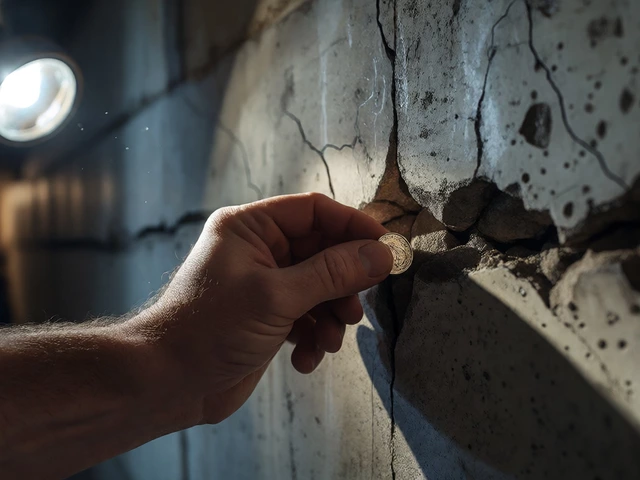
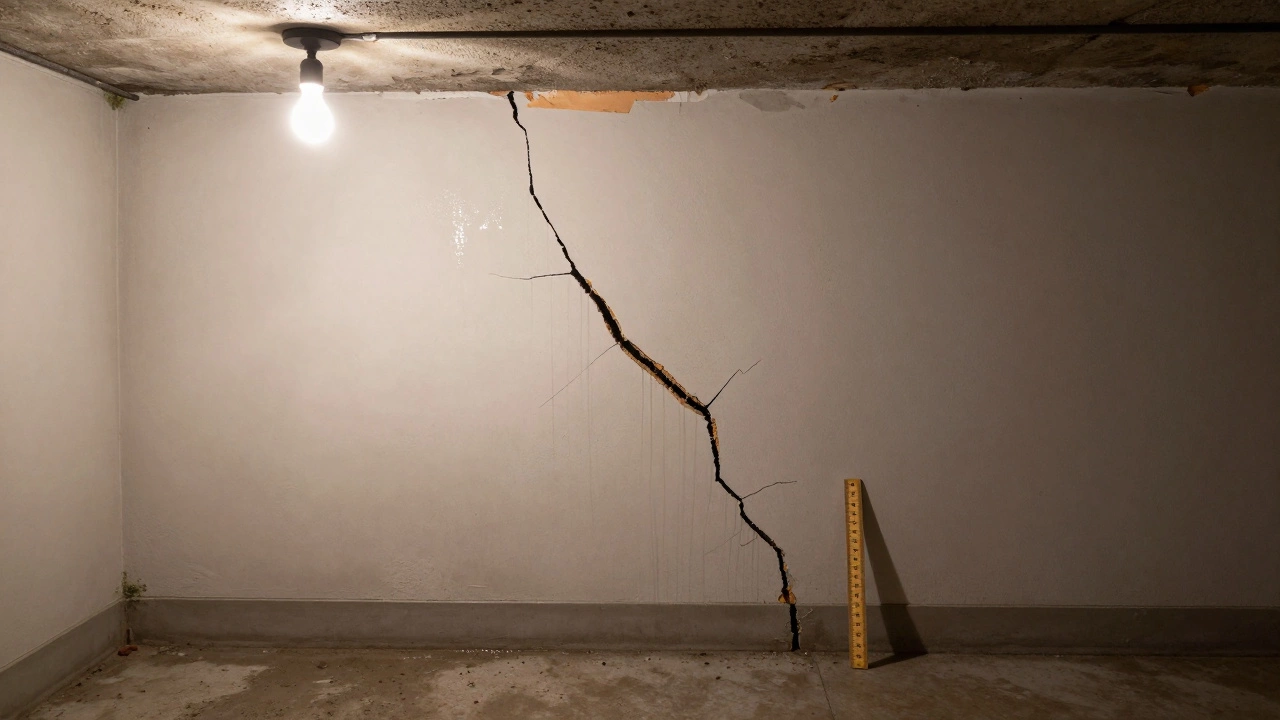
What you notice on the wall is usually just the tip. Foundation cracks start deep, where the concrete meets the soil. Water seeps in, freezes, expands, and pushes the wall outward. Over time, that small vertical crack widens. If it’s wider than 1/8 inch, it’s already letting moisture in. If it’s diagonal or stair-stepped through brick or block, the foundation is shifting. That’s not normal settling. That’s structural movement.
In Vancouver’s clay-heavy soil, foundations don’t just crack-they sink. One homeowner in Burnaby noticed a 3mm crack near her front door in 2023. She waited. By spring 2025, the door wouldn’t close. The floor slanted. The crack had grown to 12mm. The foundation had settled 1.5 inches on one side. Repair cost: $42,000. Had she acted when the crack was small, it would’ve been $8,000.
Water damage follows fast
Once water gets into a foundation crack, it doesn’t stop. It runs down the wall, pools in the basement, and soaks into drywall, insulation, and flooring. Mold grows in as little as 48 hours. In humid Vancouver winters, that’s not rare. Basements become damp, smelly, and unhealthy. The EPA says indoor mold exposure is linked to asthma and respiratory issues. If you’ve got a musty basement and a crack in the wall, they’re connected.
Water doesn’t just ruin your belongings-it eats away at the concrete itself. Salt from winter road treatments and groundwater minerals slowly break down the cement binder. That’s called spalling. You’ll see chunks of concrete flaking off. That’s not surface dirt. That’s structural decay. Once spalling starts, the foundation loses strength. It can’t hold up the house anymore.
Doors and windows start acting weird
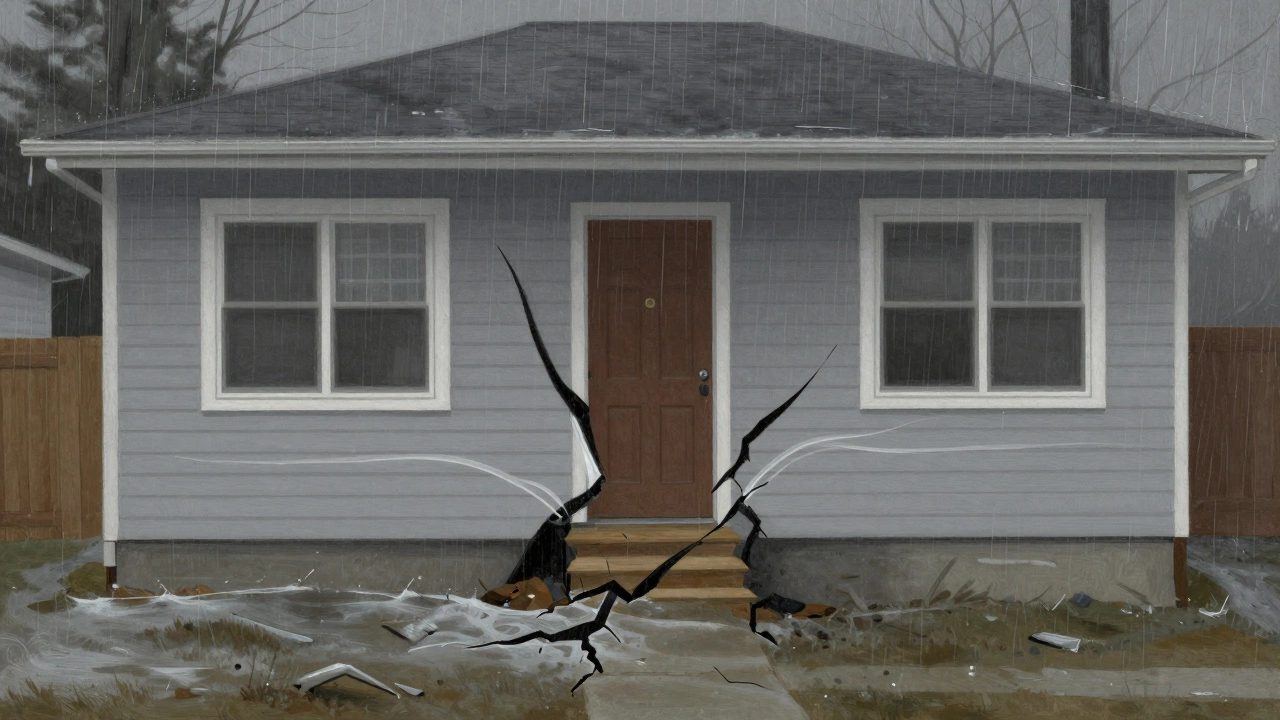
Have you noticed your front door sticks? Or your windows won’t open all the way? That’s not because they’re old. It’s because the house is twisting. When a foundation shifts, the whole structure moves. Walls tilt. Floors slope. Framing gets out of square. That’s why doors jam. Why cabinets won’t close. Why your kitchen island suddenly looks crooked.
In 2024, a survey of 200 Vancouver homes with unaddressed foundation cracks found that 78% had at least one door or window that no longer operated properly. Half of those homeowners had tried to fix it by sanding the door frame or adjusting the hinges. None of it worked. The problem wasn’t the door-it was the foundation beneath it.
Structural damage spreads to the rest of the house
A cracked foundation doesn’t stay isolated. It pulls the rest of the house with it. Chimneys lean. Roof lines sag. Interior walls crack again-this time in plaster or drywall. You might think those are just "normal" cracks from settling. But if they’re wider than 1/4 inch, or if they’re running diagonally from corners, they’re signs of foundation movement.
When a foundation sinks unevenly, it creates what’s called differential settlement. One part of the house drops while another stays put. That stress travels up through the framing. Studs bend. Joists twist. Trusses warp. The roof starts to leak-not because the shingles are bad, but because the walls are no longer vertical. Repairing the roof won’t help. Fixing the drywall won’t help. Only the foundation will.
Insurance won’t cover it
Most home insurance policies in British Columbia exclude foundation damage caused by gradual settling, soil movement, or poor drainage. That means if your foundation cracks because of rain, freeze-thaw cycles, or old pipes leaking, your insurer won’t pay. They’ll say it’s "wear and tear."
Only damage from sudden events-like a burst pipe flooding the basement or an earthquake-is covered. But even then, if you’ve ignored the crack for months or years, insurers can deny your claim based on lack of maintenance. That’s not just a policy detail. It’s a legal loophole homeowners don’t know they’re walking into.
Your home’s value drops fast
Real estate agents in Vancouver won’t lie to you: a house with an unaddressed foundation crack is worth 15-30% less. Buyers hire inspectors. Inspectors find cracks. They write reports. And most buyers walk away-even if the house is otherwise perfect.
One listing in North Vancouver sat on the market for 11 months because the buyer’s inspector flagged a 5mm crack in the basement wall. The seller refused to fix it, thinking it was "just cosmetic." The final sale price was $210,000 below asking. The repair cost? $12,000.
It gets more expensive every month
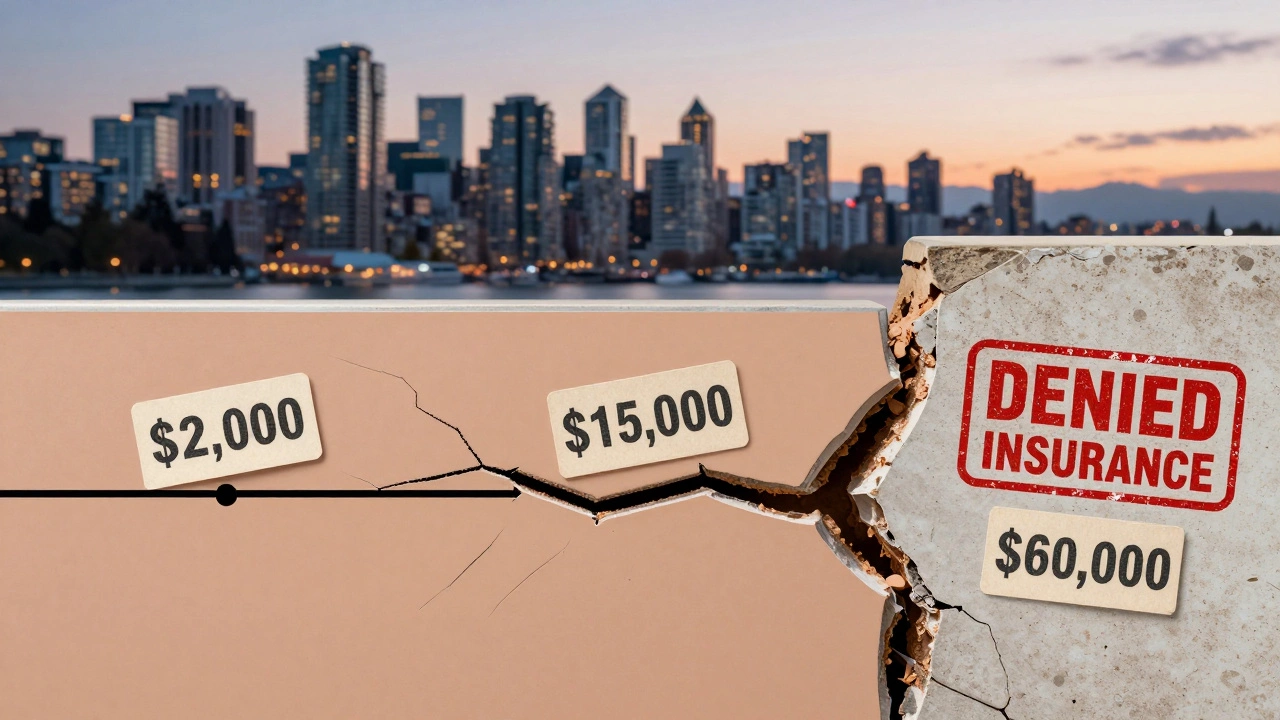
Foundation repair isn’t like fixing a leaky faucet. The longer you wait, the worse it gets-and the more it costs. A small crack repaired with epoxy injection? $1,500-$3,000. A full underpinning job because the foundation has sunk? $30,000-$70,000. That’s not inflation. That’s physics.
Here’s how it breaks down:
- Crack under 1/8 inch: Epoxy injection or carbon fiber straps - $2,000-$4,000
- Crack 1/8 to 1/4 inch with minor settling: Piering or slabjacking - $8,000-$15,000
- Crack over 1/4 inch, doors stuck, walls bowing: Full underpinning or wall replacement - $30,000+
Every year you wait, the cost climbs. And so does the risk.
Health and safety risks are real
A failing foundation isn’t just expensive. It’s dangerous. Walls can collapse. Floors can sag enough to trip someone. In extreme cases, entire sections of a home can become unstable. There are documented cases in British Columbia where homes with ignored foundation cracks had to be evacuated because the structure was at risk.
Plus, mold from water damage can cause long-term health problems. Children and seniors are especially vulnerable. If you’ve got allergies, asthma, or chronic coughing that gets worse at home, check your foundation. It might be the source.
What to do now
If you see a crack-no matter how small-don’t wait. Take a photo. Measure it with a ruler. Note if it’s growing. Check for other signs: sticking doors, sloping floors, gaps between walls and ceilings. Then call a licensed foundation inspector. Don’t go with the cheapest bid. Look for someone with at least 10 years of experience in Vancouver’s soil conditions.
Most reputable companies offer free inspections. They’ll use a laser level to measure settlement, check for moisture, and show you exactly where the problem lies. If they say it’s "normal," ask for a written report. If they say it needs repair, get a second opinion. But don’t delay.
Foundation cracks don’t fix themselves. They don’t disappear. And they don’t get better with time. They only get worse. And when they do, they take your wallet, your peace of mind, and sometimes your home with them.
Can a small foundation crack fix itself?
No. Concrete doesn’t heal. A small crack might stop growing temporarily, but it won’t close or seal on its own. Moisture, freeze-thaw cycles, and soil pressure will keep pushing it open. What looks like a quiet crack today could be a major structural issue in 12-18 months.
Is a hairline crack in the foundation normal?
Hairline cracks under 1mm are common in new homes as concrete cures. But if the crack is wider than 1/8 inch (3mm), runs diagonally, or is getting wider over time, it’s not normal. In older homes-especially those built before 1990-any crack should be treated as a warning sign.
How do I know if my foundation crack is serious?
Look for these signs: cracks wider than 1/4 inch, stair-step patterns in brick, doors that stick or won’t latch, sloping floors, gaps between walls and ceilings, or water pooling in the basement. If you see two or more of these, you need a professional inspection immediately.
Will fixing a foundation crack increase my home’s value?
Yes. A repaired foundation can add back 15-30% of your home’s lost value. More importantly, it makes your home sell faster. Buyers in Vancouver are cautious. A repaired foundation removes their biggest concern and often leads to higher offers.
Can I repair a foundation crack myself?
You can seal a very small, non-structural crack with a DIY epoxy kit-but only if it’s truly cosmetic. If the crack is caused by movement, sealing it without fixing the root cause is like putting a bandage on a broken bone. It hides the problem, but the damage keeps growing. For any crack over 1/8 inch, hire a professional.