Fire Resistance Rating Calculator
Commercial Building Fire Resistance Calculator
Determine the minimum fire resistance rating required for your commercial building based on building type, height, and occupancy. Compare the performance of different construction types.
Fire Resistance Rating Results
Minimum Required Fire Rating
2 hours
Construction Type Comparison
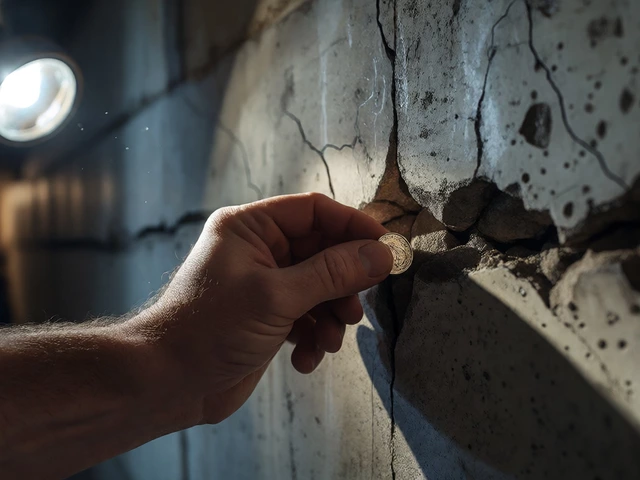
Reinforced Concrete
Concrete doesn't burn, doesn't melt, and retains structural strength under extreme heat. A 6-inch concrete wall can resist fire for up to four hours without losing strength. It's the most reliable option for commercial buildings.
Fire Rating: Up to 4 hours
Steel Frame with Fireproofing
Steel can achieve the same fire rating as concrete with protection, but requires ongoing inspection. Fireproofing can be damaged during construction or maintenance, creating weak points.
Fire Rating: Up to 4 hours (when properly protected)
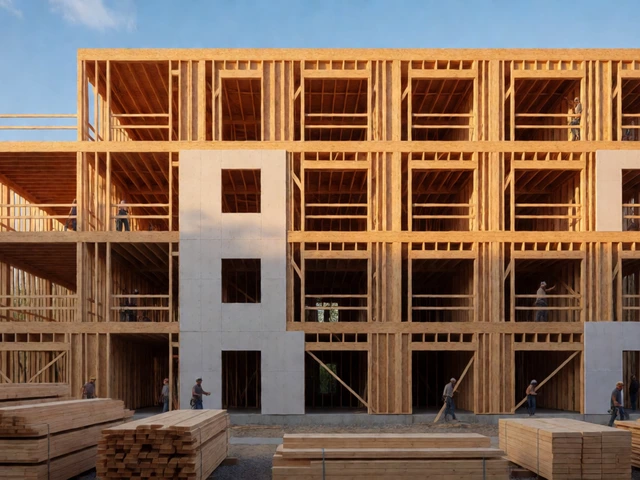
Wood Frame Construction
Wood burns and chars through quickly. Even treated wood fails in under 15 minutes under fire. Limited to small buildings by code due to high fire risk.
Fire Rating: Maximum 2 hours (with special protection)
Why Concrete Wins
- Doesn't degrade over time
- No ongoing inspection required
- Doesn't rely on protective coatings
- More durable and predictable
When you're building a commercial property, fire isn't just a risk-it's a legal, financial, and human threat. A single blaze can shut down operations for months, destroy millions in inventory, and worse, cost lives. That’s why choosing the right construction type isn’t about aesthetics or cost savings-it’s about survival. So which type of construction is actually the most fire-resistant? The answer isn’t as simple as picking wood over steel. It’s about how materials behave under extreme heat, how they’re assembled, and what codes demand today.
Fire Resistance Isn’t Just About Materials
Many people think fire resistance means a material won’t burn. That’s a mistake. Fire resistance is about how long a structure holds up under fire without collapsing, letting flames spread, or losing structural integrity. A material might not catch fire easily, but if it softens or cracks under heat, it’s still dangerous. That’s why building codes classify construction types by their fire-resistance ratings-measured in hours.
The most common commercial construction types are labeled Type I through Type V in the International Building Code (IBC). Type I is the most fire-resistant. Type V is the least. And among Type I, there are two main contenders: reinforced concrete and steel frame with fireproofing.
Reinforced Concrete: The Unshakable Choice
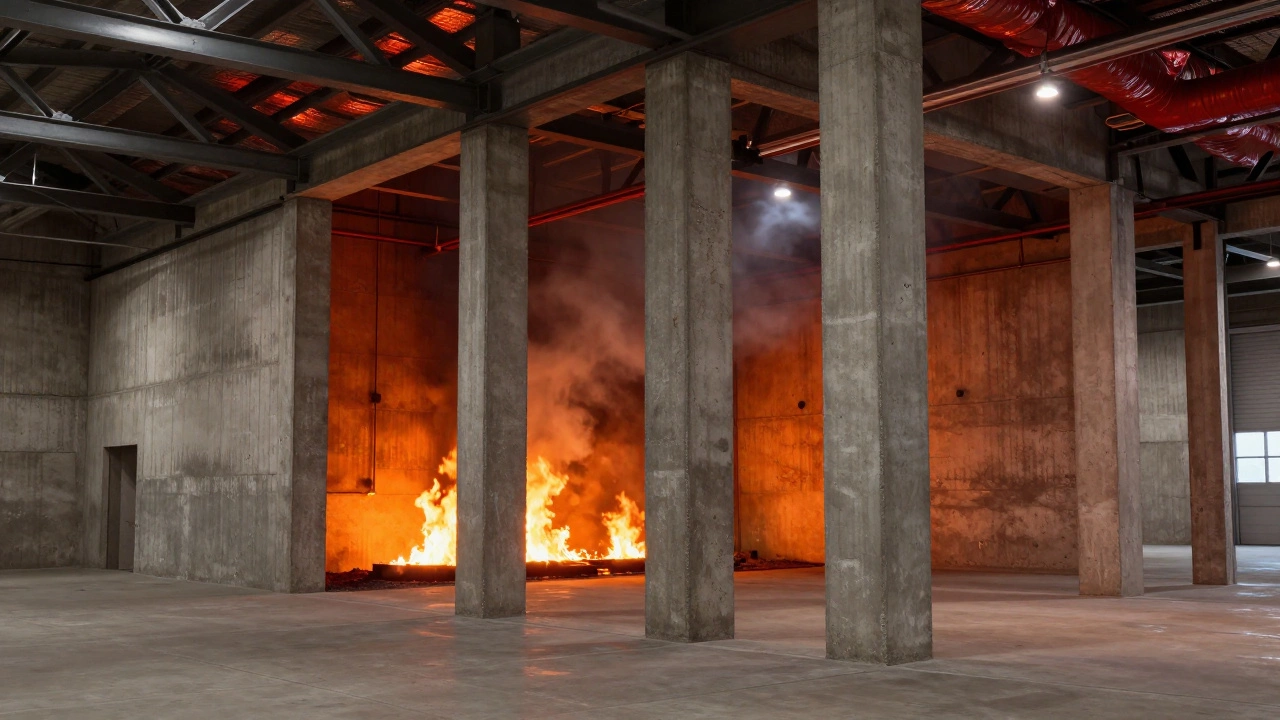
Concrete doesn’t burn. It doesn’t melt. It doesn’t even warp significantly until temperatures hit over 1,000°F. That’s why hospitals, data centers, and high-rise office buildings in cities like New York and Chicago rely on it. A 6-inch thick concrete wall can resist fire for up to four hours without losing strength. That’s longer than most fire departments take to fully contain a blaze.
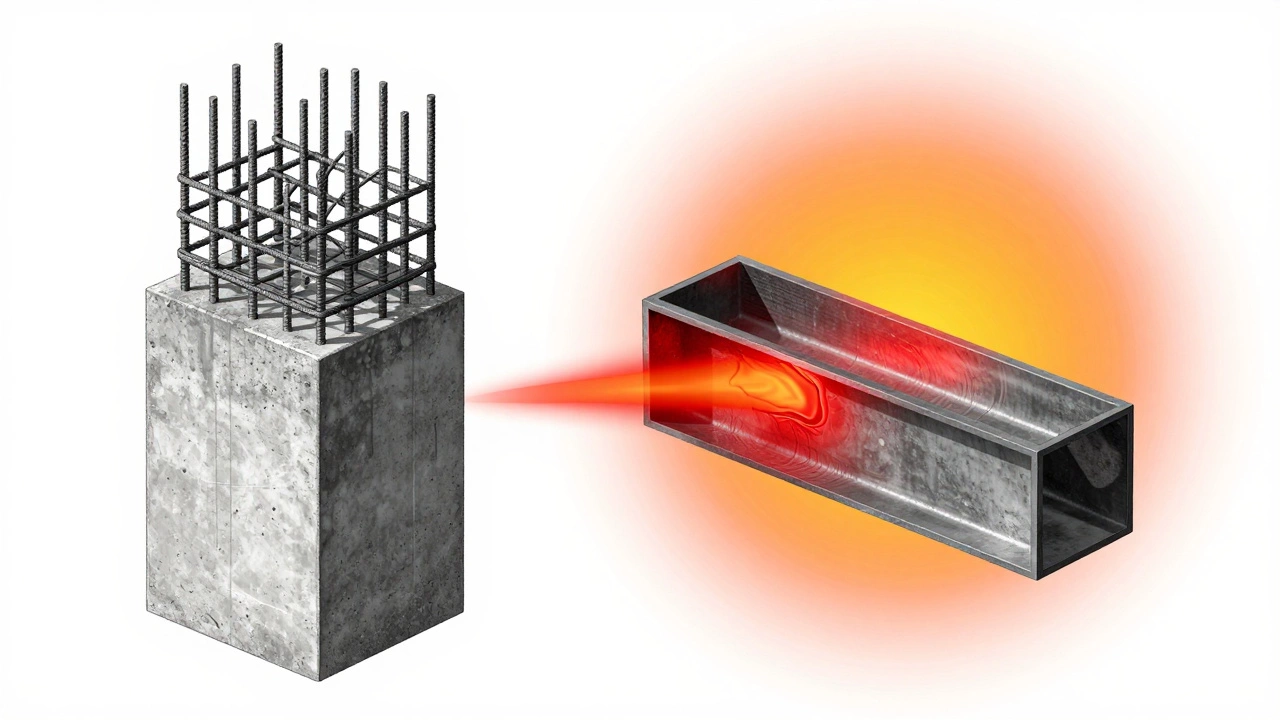
What makes concrete even stronger is the steel rebar inside it. The rebar adds tensile strength, and the concrete protects it from heat. Steel alone starts to lose strength at around 800°F, but when it’s wrapped in concrete, it stays cool and functional. In the 2023 fire at the old Milwaukee warehouse, the concrete structure held for over three hours while the interior burned out. The building didn’t collapse. It was saved.
Concrete also doesn’t emit toxic fumes when heated. Unlike some insulation or synthetic materials, it’s inert. That’s critical for occupant safety during evacuation.
Steel Frame Construction: Strong, But Only With Protection
Steel is incredibly strong. It’s why skyscrapers stand tall. But pure steel starts to soften at 800°F and can lose up to 50% of its strength at 1,100°F. That’s why you never see exposed steel beams in a fire-rated commercial building.
Fireproofed steel-wrapped in gypsum board, sprayed with intumescent coatings, or encased in concrete-can achieve the same four-hour fire rating as concrete. But here’s the catch: those protective layers can be damaged during construction, maintenance, or even cleaning. A single hole in the spray coating can create a weak spot. In 2024, a fire in a Chicago office tower spread faster than expected because a contractor had accidentally removed fireproofing during a renovation. The steel beams buckled in 47 minutes.
Steel is faster to build with and allows for open floor plans. But it’s only as fire-resistant as its protection. And protection requires ongoing inspection. Concrete doesn’t need that.
Why Wood and Light Frame Construction Fail in Commercial Use
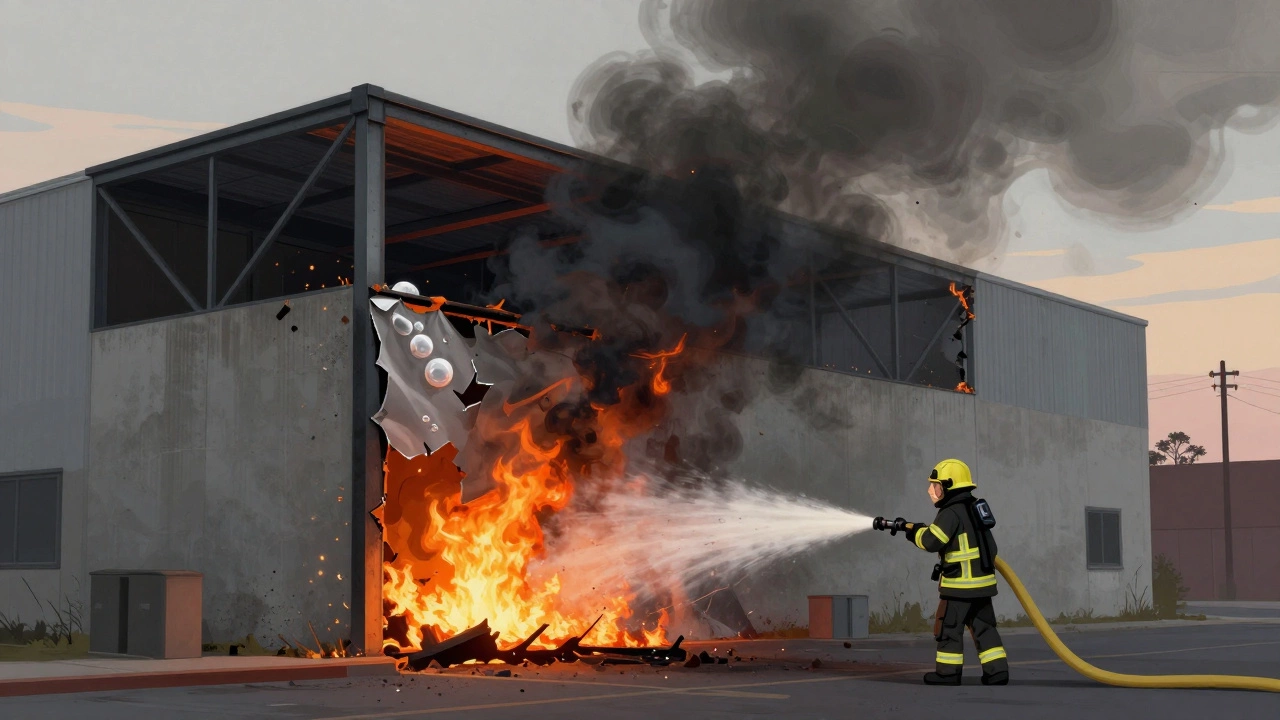
You’ll see wood-framed buildings in small retail shops or restaurants. But they’re limited by code to under three stories and under 5,000 square feet. Why? Because wood burns. Even treated wood. A 2x4 stud can char through in under 15 minutes under a full fire load. That’s why Type V construction is banned for most commercial high-rises.
Engineered wood products like cross-laminated timber (CLT) are getting better. Some new CLT panels can achieve up to two-hour fire ratings when protected. But they’re still not trusted for large commercial spaces where occupancy is high and evacuation takes longer. Fire departments still treat wood-frame commercial buildings as high-risk.
What Codes Actually Require
The International Building Code doesn’t just say “use concrete.” It ties construction type to building height, occupancy, and fire load. For example:
- Any commercial building over 75 feet tall must be Type I construction.
- Hospitals and nursing homes require a minimum of two-hour fire resistance in all structural elements.
- Warehouses storing flammable goods need fire-rated walls between sections, even if the rest of the building is concrete.
In 2025, several states updated their codes to require automatic sprinklers in all new commercial buildings over 2,500 square feet-even if they’re Type I. That’s because even the most fire-resistant structure can be overwhelmed if the fire isn’t controlled early.
Real-World Performance: What Happens When Fire Hits
In 2022, a fire broke out in a Type I concrete warehouse in Atlanta. The fire started in a storage area filled with plastic packaging. Flames reached 1,400°F. The concrete walls held. The roof didn’t collapse. The steel roof trusses, protected by fireproofing, stayed intact. The building was a total loss inside-but the shell stood. Insurance adjusters called it a miracle. The owners reopened six months later.
Compare that to a similar-sized Type III (brick and wood) building in Ohio. The same fire burned through the wooden roof trusses in 22 minutes. The walls cracked. The entire structure collapsed. It took six months just to clear the debris. The business never reopened.
The Bottom Line: Concrete Wins
Steel with fireproofing can match concrete in theory. But in practice, concrete is more reliable. It doesn’t degrade over time. It doesn’t need inspections. It doesn’t rely on coatings that can be scraped off. It’s simpler, more durable, and more predictable.
If you’re building a commercial property-whether it’s a bank, a factory, a data center, or a hospital-go with reinforced concrete. It’s not the cheapest option upfront. But when you factor in insurance costs, downtime risk, and safety liability, it’s the only smart choice.
Don’t be fooled by flashy steel designs or cost-cutting wood frames. Fire doesn’t care about aesthetics. It only cares about weak points. Concrete has none.
What About Other Materials? Masonry, Insulated Panels, and More
Masonry-brick, block, stone-is also fire-resistant. But it’s rarely used alone in modern commercial construction. It’s heavy, slow to build with, and doesn’t provide the same structural flexibility as concrete. It’s often used as cladding over a concrete or steel frame.
Insulated metal panels (IMPs) are popular for warehouses and retail centers because they’re fast to install. But their cores are often foam. Even fire-retardant foam can melt or release toxic smoke. Most IMPs are rated for only one hour. That’s not enough for most commercial buildings.
Fire-rated drywall? It’s great for interior partitions, but it’s not structural. It won’t hold up a roof. Don’t confuse fire-resistant finishes with fire-resistant construction.
Final Decision Checklist
Before you sign off on your commercial building plans, ask these questions:
- Is the main structure made of reinforced concrete or fully protected steel?
- Are all load-bearing walls, columns, and beams rated for at least two hours of fire resistance?
- Has the fireproofing been inspected and certified by a licensed professional?
- Are sprinklers required by local code-and are they included in the design?
- Is there a fire separation between high-risk areas like storage or kitchens?
If you answered yes to all five, you’re on the right track. If not, you’re gambling with lives and assets.
Is concrete really the most fire-resistant construction material?
Yes. Reinforced concrete doesn’t burn, doesn’t melt, and retains structural strength under extreme heat better than any other common building material. It can resist fire for up to four hours without collapsing, making it the top choice for commercial buildings where safety and durability matter.
Can steel buildings be fireproof?
Steel itself isn’t fireproof-it weakens at high temperatures. But when protected with fireproofing like intumescent spray, gypsum board, or concrete encasement, steel can achieve the same fire ratings as concrete. The catch? That protection can be damaged during construction or renovation, creating hidden risks.
Why can’t we use wood for commercial buildings?
Wood burns. Even treated wood. Most building codes limit wood-frame construction to small, low-rise buildings because it can’t withstand the fire loads of larger commercial spaces. A wood roof truss can fail in under 20 minutes under fire, leading to total collapse.
Does adding sprinklers make a building fire-resistant?
No. Sprinklers control or extinguish fires early-they don’t make the structure itself resistant. Fire resistance comes from materials and design. Sprinklers are a life-safety system that works alongside fire-resistant construction, not a replacement for it.
What’s the minimum fire rating for commercial buildings?
Most commercial buildings require a minimum two-hour fire rating for load-bearing walls and columns. Hospitals, high-rises, and facilities with high occupancy often need three or four hours. Local codes vary, but Type I construction with concrete is the standard for compliance.