Commercial Building Zoning Calculator
Property Assessment
Select your current property classification
Choose your intended business activity
Check your property's current zoning classification
Estimate average daily business traffic
Zoning Assessment Results
When you think of a commercial building, you probably picture an office tower, a shopping mall, or a warehouse. But what actually makes a building "commercial"? It’s not just about who uses it or how big it is. The line between residential and commercial isn’t always clear, but in construction, the difference changes everything-from the materials used to the permits you need and even how long the project takes.
It’s About Use, Not Size
A 10,000-square-foot house with a home gym, theater, and wine cellar is still residential. A 2,000-square-foot strip mall with three small shops? That’s commercial. The key isn’t square footage-it’s purpose. Commercial construction is defined by buildings designed for business activities. That includes retail stores, restaurants, hotels, medical offices, warehouses, factories, and office complexes. If money changes hands inside the building-whether it’s selling goods, providing services, or renting space-it’s commercial.
This distinction matters because zoning laws treat them differently. In most cities, including Vancouver, residential zones forbid business operations. You can’t legally run a daycare out of a single-family home in a purely residential neighborhood without a variance. But if you build on a commercial lot, you’re allowed to operate a business right from the start. That’s why developers don’t just pick any piece of land-they check the zoning map before they break ground.
Building Codes Are Stricter
Commercial buildings have to meet far more demanding safety and accessibility standards than homes. The International Building Code (IBC) sets the baseline, but local amendments often make it even tougher. For example:
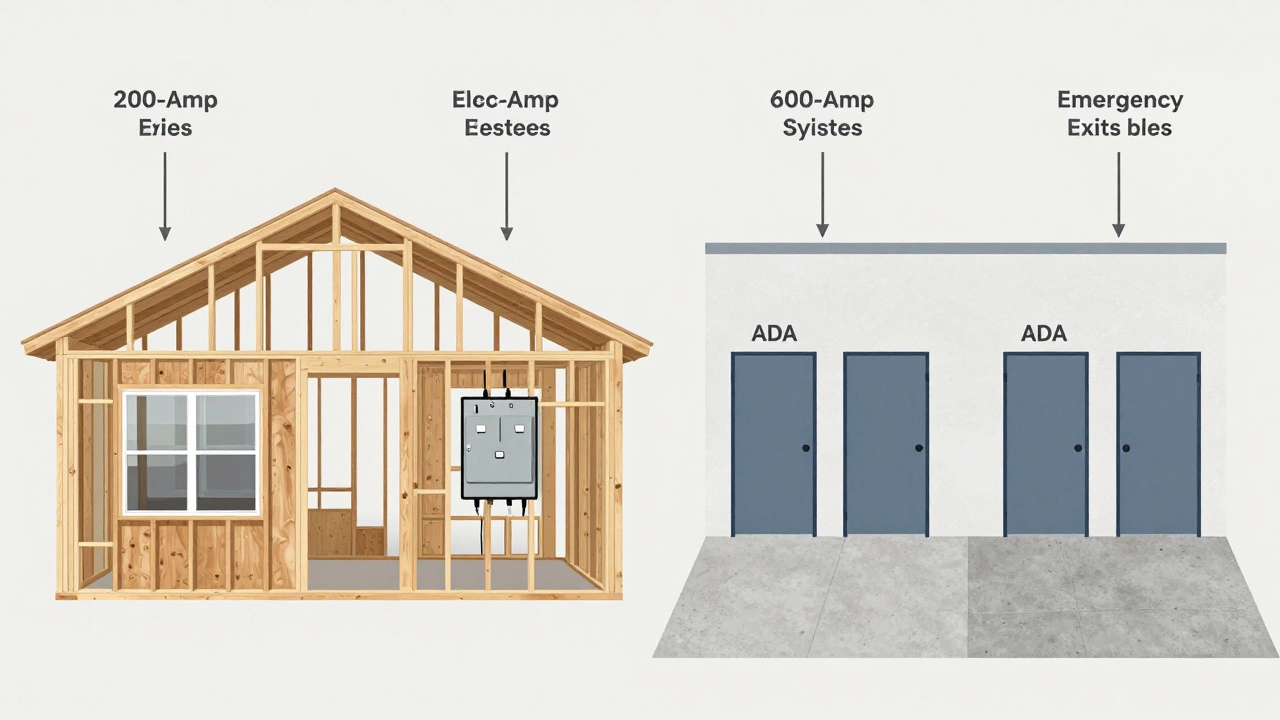
- Commercial buildings must have at least two means of egress (emergency exits) on every floor, often more depending on occupancy.
- Fire-rated walls and sprinkler systems are mandatory in most cases, even for small structures.
- Restrooms must meet ADA requirements-not just for accessibility, but for clear turning radii, sink heights, and grab bar placement.
- Electrical systems must handle higher loads. A home might need 200 amps. A small retail store could need 400 or 600.
These aren’t suggestions. They’re enforced by inspections at multiple stages. Skip one, and your project gets halted. In 2024, a Vancouver-based developer lost six weeks on a mixed-use project because the fire alarm system didn’t meet commercial code requirements for occupancy load. The building was meant to house a café on the ground floor and apartments above. The café side triggered the full commercial code, even though the upper floors were residential.
Materials and Design Are Different
Residential construction often uses wood framing, drywall, and vinyl siding. Commercial buildings? They lean toward steel, concrete, curtain walls, and fire-resistant materials. Why? Because they’re built to last longer, handle heavier foot traffic, and resist wear from constant use.
Think about a grocery store. The floor needs to handle forklifts, pallets, and thousands of customers a day. That means polished concrete with epoxy sealant, not carpet or hardwood. The walls? They need to be cleanable, durable, and often require antimicrobial coatings. Even the lighting is different-commercial spaces use high-efficiency LED systems designed for 12-hour days, not the softer, dimmable lights you’d find in a living room.
Windows matter too. Residential windows are sized for views and natural light. Commercial windows are sized for energy efficiency, solar heat gain, and structural integrity under wind loads. A 10-story office building can’t use the same double-pane windows as a two-story house. The pressure differences alone would cause failure.
Permits and Paperwork Are a Different Beast
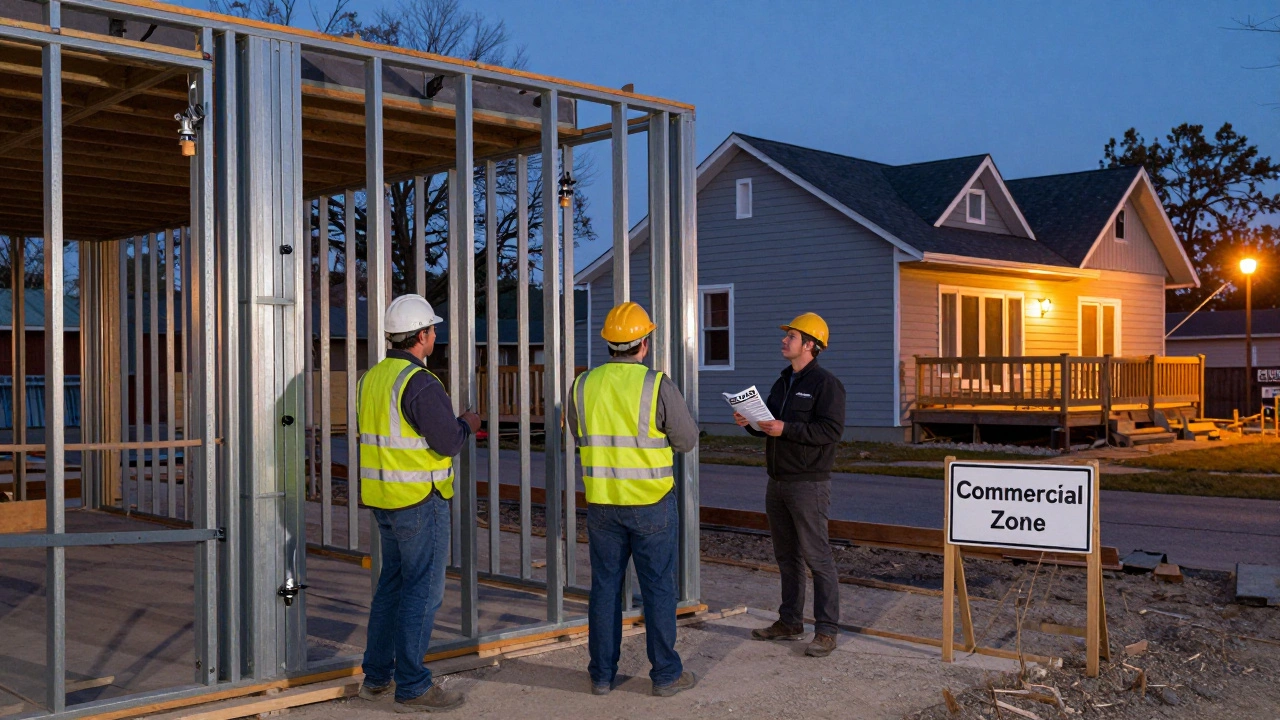
Getting a permit for a new home is straightforward: site plan, foundation drawings, electrical layout. Done. Commercial permits? They involve engineering stamps, environmental reviews, traffic studies, and sometimes even noise impact assessments. In Vancouver, a new restaurant application requires:
- Proof of commercial zoning
- Health department approval for grease traps and ventilation
- Fire marshal sign-off on sprinkler and exit routes
- Accessibility review by the city’s building inspector
- Signage permit for exterior branding
That’s five separate departments, each with their own timelines. Delays are common. One business owner in Surrey spent 11 months just getting permits for a fitness studio because the city required a traffic study due to the building’s proximity to a school zone. Residential projects rarely need that.
Financing and Insurance Are Not the Same
Home loans are based on personal credit, income, and down payment. Commercial loans? They’re based on the building’s projected income. Lenders look at tenant leases, occupancy rates, and cash flow. If you’re buying a retail center, they’ll want to see signed leases from at least 70% of the space before approving the loan.
Insurance is even more different. Homeowners insurance covers fire, theft, and liability. Commercial property insurance covers business interruption, equipment breakdown, and third-party liability from customers. A slip-and-fall in a restaurant can lead to a lawsuit that costs hundreds of thousands. That’s why commercial policies have higher limits and more exclusions.
It’s Not Just the Building-It’s the Context
What makes a building commercial isn’t just what’s inside. It’s what’s around it. A standalone building in a residential neighborhood might look like a home. But if it’s next to a highway, a rail line, or a major intersection-and zoned for business-it’s commercial. The land use determines the building’s legal identity.
Take a converted warehouse in East Vancouver. It has exposed brick, wooden beams, and large windows. It looks like a loft. But if it houses a tech startup, a printing company, and a delivery hub, it’s commercial. Even if it has a small kitchenette for employees, it doesn’t become residential. The business activity defines it.
What Happens When You Mix Them?
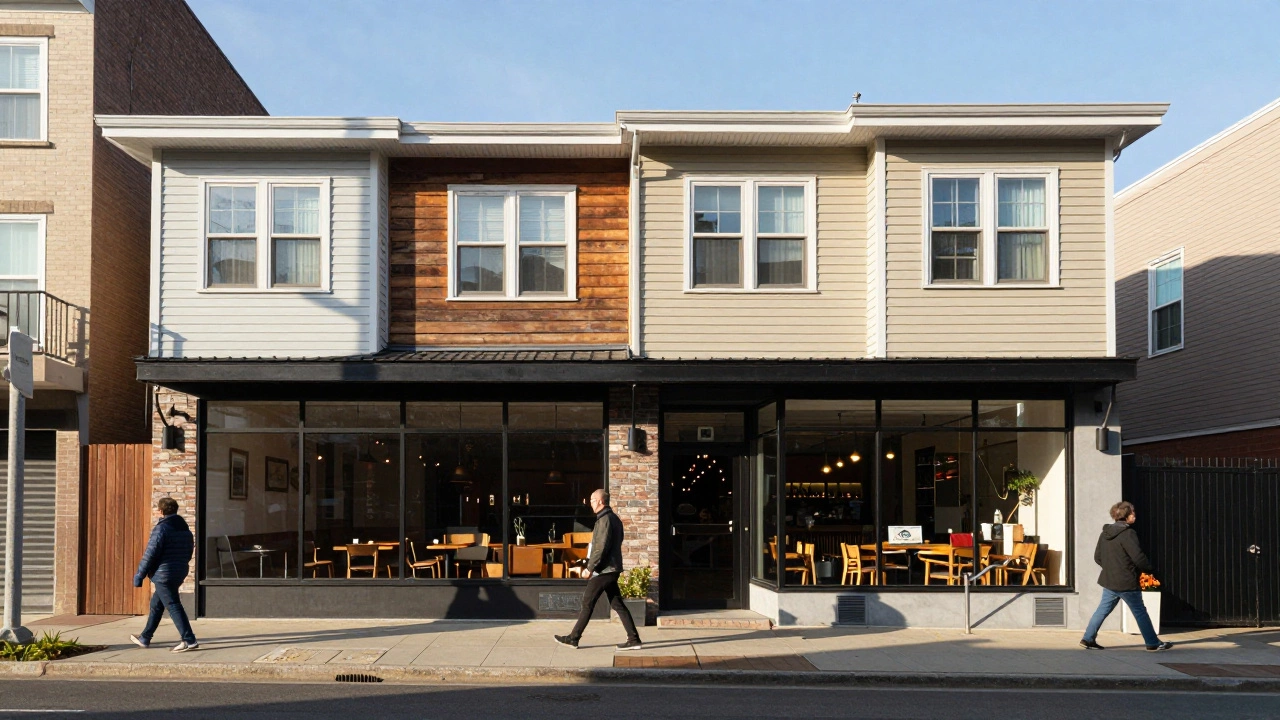
Mixed-use buildings-like a ground-floor café with apartments above-are becoming more common. But even here, the rules don’t blur. The café side follows commercial code. The apartments follow residential code. Two separate sets of inspections. Two different sets of permits. One building, two identities.
That’s why contractors need to know exactly what they’re building. You can’t use residential framing for a commercial tenant space. You can’t skip the fire separation between floors if one is commercial and the other is residential. The code treats them as distinct zones, even if they’re stacked.
Why This Matters to You
If you’re a business owner looking to open a shop, you need to understand this before you sign a lease. A landlord might say, "It’s just an old building," but if it wasn’t built to commercial standards, you could be looking at thousands in upgrades just to meet code.
If you’re a homeowner thinking of renting out a basement suite for a business, you could be violating zoning laws. In many areas, even a home-based daycare or a small online retail operation can trigger commercial classification if it brings in enough traffic, deliveries, or customers.
And if you’re a developer, ignoring these distinctions means delays, cost overruns, and legal trouble. One Vancouver firm learned this the hard way when they built a small retail unit using residential insulation. The fire code inspector shut them down. The fix? Replacing every wall with commercial-rated fireboard. Cost: $87,000.
Being commercial isn’t about looking fancy or being big. It’s about function, regulation, and accountability. It’s about the rules that keep people safe, businesses running, and cities functioning. If you’re working with a building that handles public traffic, sells goods, or provides paid services-you’re in commercial territory. And that changes every decision you make.
Can a residential building be converted into a commercial space?
Yes, but only if it meets commercial building codes and is rezoned by the city. This usually requires structural upgrades, fire safety improvements, accessible restrooms, and updated electrical and plumbing systems. You’ll also need approval from zoning authorities, which may require public hearings or impact studies. In Vancouver, converting a home to a commercial use often triggers a change in property taxes and insurance requirements.
Do all commercial buildings need sprinklers?
Not all, but most do. Under the International Building Code, sprinklers are required in commercial buildings over 5,000 square feet, or if they house more than 50 people. Some cities, including Vancouver, require them in smaller buildings if they’re used for high-hazard activities like kitchens or chemical storage. Insurance companies also often require sprinklers as a condition of coverage.
What’s the difference between commercial and industrial construction?
Commercial construction focuses on business services-retail, offices, hotels, clinics. Industrial construction is for manufacturing, warehousing, and heavy production. Industrial buildings need stronger floors (to handle heavy machinery), higher ceilings, specialized ventilation, and often hazardous material controls. The permits, materials, and safety protocols are more extreme in industrial projects.
Can a home-based business become commercial?
It depends. If your home business brings in regular customers, deliveries, or employees, and exceeds local limits on traffic or noise, it can be classified as commercial. Many cities have thresholds-for example, more than two non-resident employees or over 25% of the home used for business. Once crossed, you may need a home occupation permit or even a zoning change.
Why do commercial projects take longer than residential ones?
Because they involve more layers of review. Commercial projects require engineering reviews, environmental assessments, accessibility audits, and multiple inspections. Permits often need approval from fire, health, transportation, and planning departments. A residential build might take 4-6 months. A small commercial build can take 8-18 months, especially if there are public consultations or historical preservation rules.