Home Addition Cost Calculator
Calculate Your Addition Costs
Get personalized estimates based on your home's specifications and location
Building Up (Second Story)
Expanding Outward (Side/Back Addition)
When you outgrow your home, the big question isn’t just how to add space-it’s whether to build up or expand outward. Many homeowners assume adding a second story is cheaper because it uses less land. But that’s not always true. The real answer depends on your foundation, local codes, roof structure, and how much you’re willing to disrupt your life during construction.
Building Up: The Hidden Costs of Vertical Expansion
Adding a second story sounds clean-you’re not touching the yard, you’re not losing patio space, and you’re not messing with neighbors’ property lines. But the structural work behind it is where things get expensive.
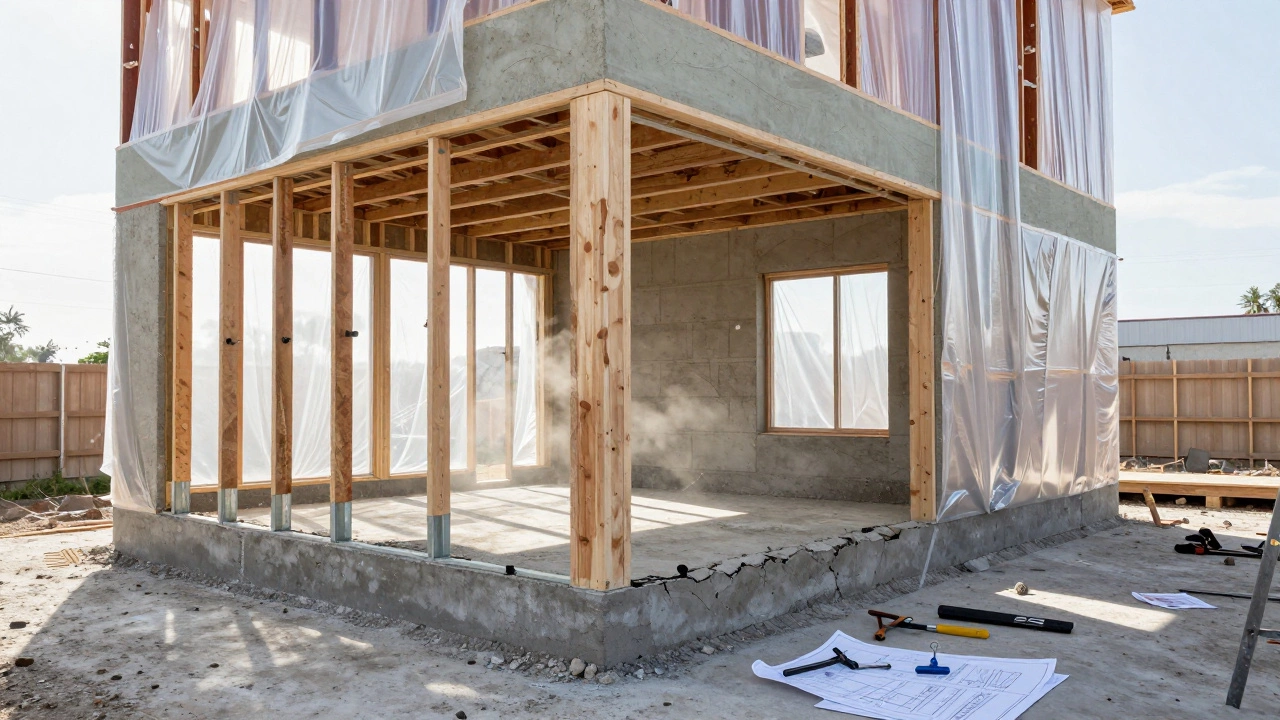
Your existing foundation was never designed to hold twice the weight. Most single-story homes in the U.S. have 6-inch-thick concrete slabs or shallow footings meant for one floor. To support a second story, you’ll need to reinforce or even rebuild the foundation. That alone can cost $15,000 to $40,000, depending on your home’s size and soil conditions.
Then there’s the roof. If your roof pitch is too shallow or the trusses aren’t engineered for extra load, you’ll need to tear off the entire roof, install new rafters, and rebuild the structure. A typical roof replacement for a 2,000-square-foot home runs $12,000-$20,000. Add in new floor joists, stairs, plumbing reroutes, and electrical upgrades, and you’re already looking at $100,000 before finishes.
Permits for vertical additions are also stricter. Many cities require seismic upgrades, fire-rated walls, and additional egress windows on the second floor-each adding thousands. In California, for example, a second-story addition often triggers mandatory earthquake retrofitting, which can add $20,000+ to the bill.
Expanding Outward: The Ground Game
Expanding outward-building a bump-out, adding a side extension, or extending the back of your house-sounds messy. You’re losing yard space. You’re dealing with landscaping. You’re potentially blocking sunlight to your neighbor’s windows.
But here’s the surprise: it’s often cheaper. Why? Because you’re not touching the foundation. You’re building on top of an existing, load-bearing slab. That cuts out the most expensive part of the project.
A 200-square-foot side addition on a solid foundation typically costs $50,000-$80,000. That includes new flooring, walls, windows, HVAC ducting, and finishes. No roof demolition. No structural reinforcement. No seismic upgrades. Just a clean, level build on the same ground your house already sits on.
Local zoning laws matter here. Some neighborhoods have setback rules that limit how close you can build to property lines. Others cap the total square footage you can add. But if your lot has room and your city allows it, expanding outward is the most straightforward way to gain space without breaking the bank.
What’s the Real Price Difference?
Let’s compare two real scenarios from 2025 data collected from homeowners in Texas, Ohio, and Oregon.
| Cost Factor | Building Up (Second Story) | Expanding Outward (Side/Back Addition) |
|---|---|---|
| Foundation Work | $15,000-$40,000 | $0-$5,000 (minor leveling) |
| Roof Replacement | $12,000-$20,000 | $0 |
| Structural Reinforcement | $10,000-$25,000 | $0 |
| Permits & Inspections | $5,000-$10,000 | $2,000-$5,000 |
| Materials & Labor (200 sq ft) | $40,000-$60,000 | $35,000-$50,000 |
| Contingency (10%) | $8,000-$15,000 | $6,000-$10,000 |
| Total Estimated Cost | $90,000-$170,000 | $55,000-$100,000 |
On average, expanding outward is 30% to 50% cheaper than building up. That’s not a small difference-it’s the gap between a manageable renovation and a major financial stretch.

When Building Up Makes Sense
It’s not all bad news for second stories. There are times when going vertical is the smarter move.
If you live in a dense urban area-think Portland, Boston, or Chicago-your lot is tiny. You might not have 15 feet of backyard to spare. Building up lets you keep your garden, driveway, and outdoor living space intact.
Second-story additions also add more perceived value. Buyers often see a full second floor as a “real” extra bedroom or master suite, not just an add-on. In competitive markets, that can mean a 10% to 15% higher resale value.
And if your roof is already due for replacement? Building up can be a two-for-one deal. Tear off the old roof, reinforce the structure, and install the new one-all in one project. That saves money on labor and scheduling.
When Expanding Outward Is the Only Smart Choice
Here’s when you should avoid building up:
- Your foundation is cracked, uneven, or built on clay soil that shifts with moisture.
- Your home has a low-pitched roof with no attic space-adding a second story means gutting everything.
- You’re on a tight budget and need to finish in under 6 months.
- Your city has strict height limits or view ordinances (common in historic districts).
- You have young kids or elderly family members who can’t manage stairs.
Expanding outward avoids all these issues. You can build a single-story addition with a wide, step-free entrance. You can install a bathroom on the same level as your bedroom. You can keep your existing stairs and avoid the risk of falls.
What You Might Not Think About
Most people focus on the numbers. But the hidden costs are often emotional and logistical.
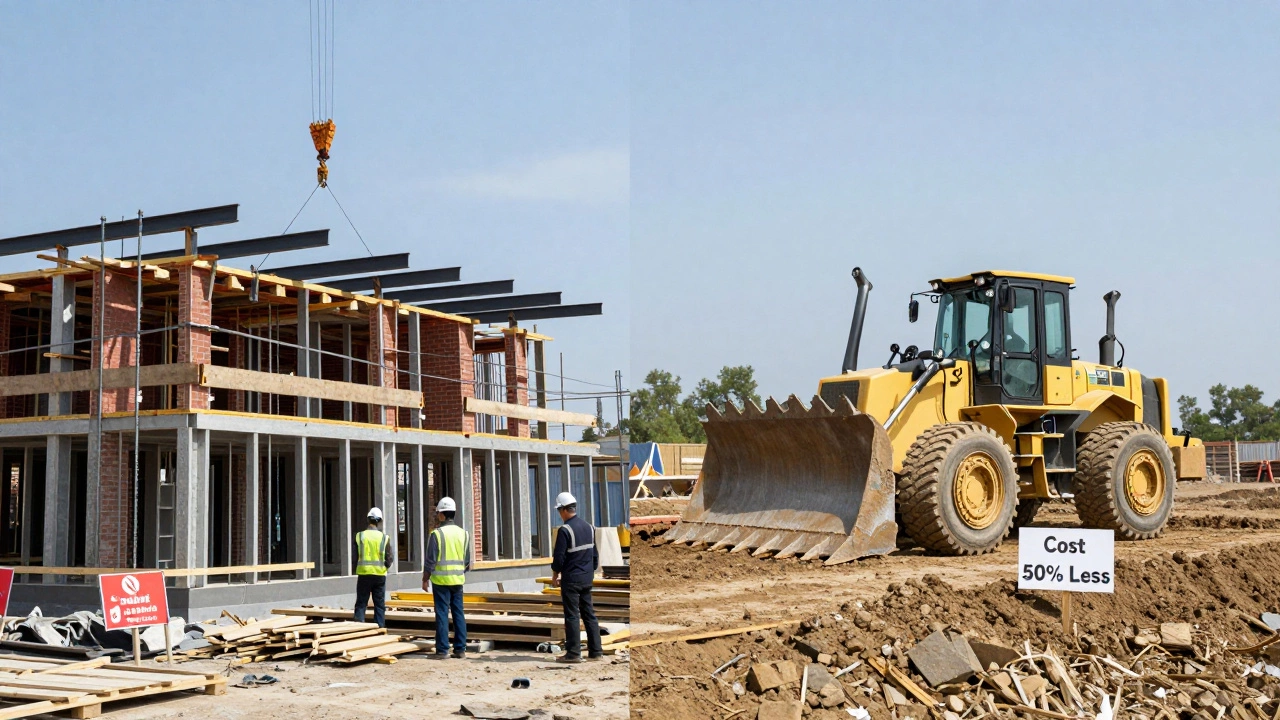
Building up means living in a construction zone for 4 to 6 months. Dust fills every room. The noise from jackhammers and crane lifts shakes your walls. You can’t use your upstairs bedrooms while they’re being reinforced. Many families end up renting a nearby apartment during the build.
Expanding outward is noisy too-but you can usually stay in your home. You might lose access to your backyard for a few weeks, but you’re not losing your upstairs bathroom or bedroom for months.
Also consider utilities. Adding a second story means rerouting plumbing lines through the ceiling of your first floor. That can mean tearing out your kitchen or living room ceiling to access pipes. With an outward expansion, you run new lines under the new floor-cleaner, quieter, and easier to fix later.
Final Advice: Do This Before You Decide
Before you pick a direction, do three things:
- Get a structural engineer to inspect your foundation. It’s $300-$500, but it tells you if your house can even handle a second story.
- Check your city’s zoning code for height limits, setback rules, and maximum lot coverage. Some towns cap additions at 40% of your lot size.
- Ask for two quotes: one for a second story, one for an outward addition. Don’t just go with the lowest bid-look at what’s included. Some contractors hide costs in “change orders” later.
There’s no universal answer. But for most homeowners in 2025, expanding outward is the smarter, safer, and more affordable path. It gives you space without the stress, the risk, or the massive price tag.
If your lot allows it and your goals are practical-more room, less debt, faster completion-go horizontal. Save the vertical move for when you’ve got the space, the budget, and the patience.
Is it cheaper to build up or expand a house?
Expanding outward is usually cheaper. Building a second story requires foundation reinforcement, roof replacement, and structural upgrades, pushing costs to $90,000-$170,000. A side or back addition typically costs $55,000-$100,000 because it uses your existing foundation and avoids major structural changes.
Can I add a second story without rebuilding the foundation?
Almost never. Most single-story homes have foundations designed for one floor’s weight. Adding a second story doubles the load, which can cause cracks, settling, or even structural failure. A structural engineer must assess your foundation and usually recommends underpinning or full reinforcement-costing $15,000 to $40,000.
How long does a home expansion take?
A side or back addition typically takes 3 to 5 months. A second story can take 5 to 8 months because of the extra steps: roof removal, structural framing, plumbing reroutes, and inspections. Delays from weather, permits, or material shortages can add more time.
Does adding a second story increase home value more than an extension?
In some markets, yes. A full second story with a master suite and bathroom is seen as a premium upgrade, especially in urban areas where land is scarce. But in suburban neighborhoods, a well-designed first-floor addition (like a family room or kitchen extension) often adds more usable, everyday value and appeals to a broader range of buyers.
What’s the biggest mistake people make when choosing between building up or out?
They focus only on square footage and ignore structural reality. Many homeowners assume building up is cheaper because it doesn’t use yard space-but they don’t realize the hidden costs of reinforcing the foundation, replacing the roof, and upgrading utilities. Always get a structural inspection before deciding.