Historical Storage Calculator
How Many Storage Solutions Would You Need?
Compare your modern storage needs to historical practices
Walk through a 19th-century home, and you’ll notice something strange: there are no closets. Not in the bedrooms, not in the hallways, not even tucked behind bathroom doors. Instead, you’ll find freestanding wardrobes, armoires, and chest drawers lined up against the walls. It’s not a design flaw - it’s a relic of how people actually lived. So why don’t old houses have closets? The answer isn’t about lack of space or poor planning. It’s about culture, cost, and changing ideas about privacy and possessions.
Closets Didn’t Exist Because They Weren’t Needed
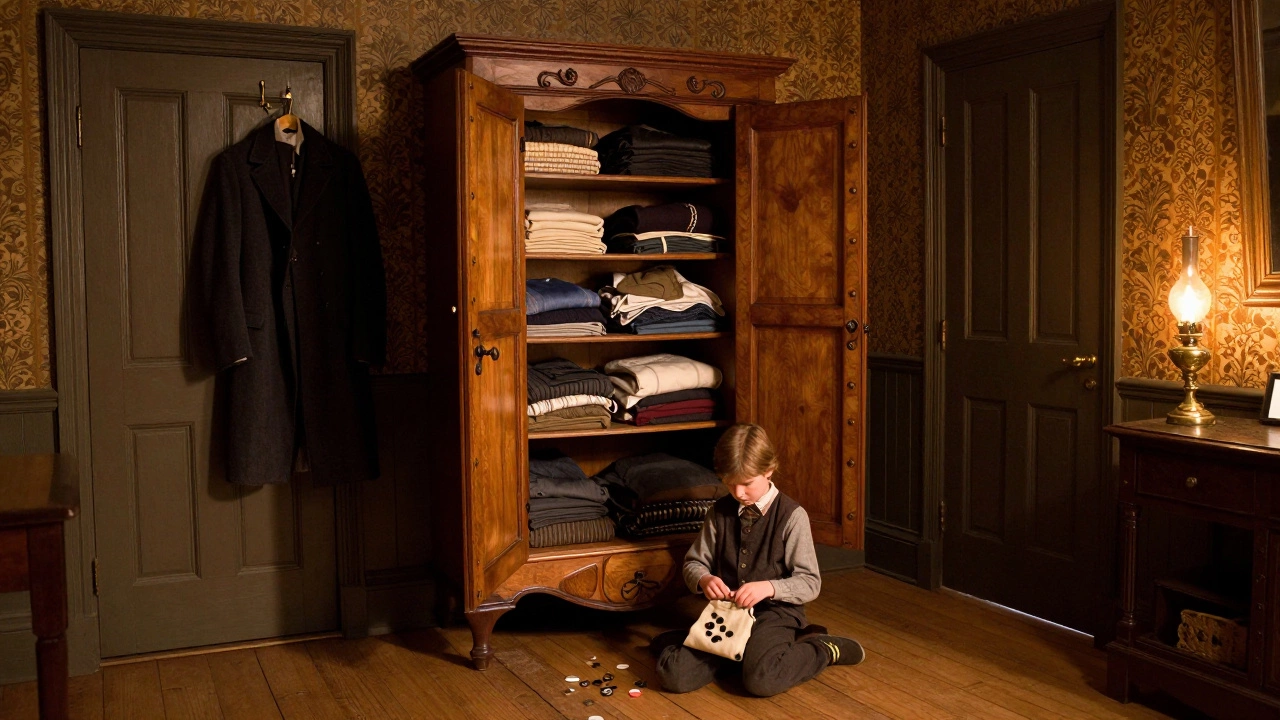
In the 1700s and early 1800s, most people didn’t own enough clothes to fill a closet. The average person had three to five outfits - one for daily wear, one for church, maybe a fancy one for special occasions. Clothing was expensive. A single coat could cost as much as a week’s wages. People didn’t buy clothes often. They repaired them. They passed them down. And they stored them in portable wooden chests or hanging wardrobes that could be moved, cleaned, or even sold with the rest of the household goods.
These wardrobes weren’t just storage - they were furniture. Made from oak or walnut, often hand-carved, they doubled as decorative pieces. A well-made armoire was a status symbol. Built-in closets? They were seen as utilitarian, even cheap. No one wanted their home to look like a storage shed.
Building Practices Made Closets Impractical
Old houses were built with thick stone or timber walls. Adding a recessed closet meant cutting into load-bearing structures. In a house built with balloon framing or post-and-beam construction, carving out a cavity for a closet could weaken the wall. Builders avoided it. Why risk structural failure for something that wasn’t essential?
Also, insulation wasn’t a thing. Walls were thin by today’s standards. A closet tucked into an exterior wall? That meant cold, damp clothes in winter. In humid climates, mold grew fast. People knew this. They kept clothes in dry, well-ventilated rooms - not hidden in dark corners.
Privacy Wasn’t What It Is Today
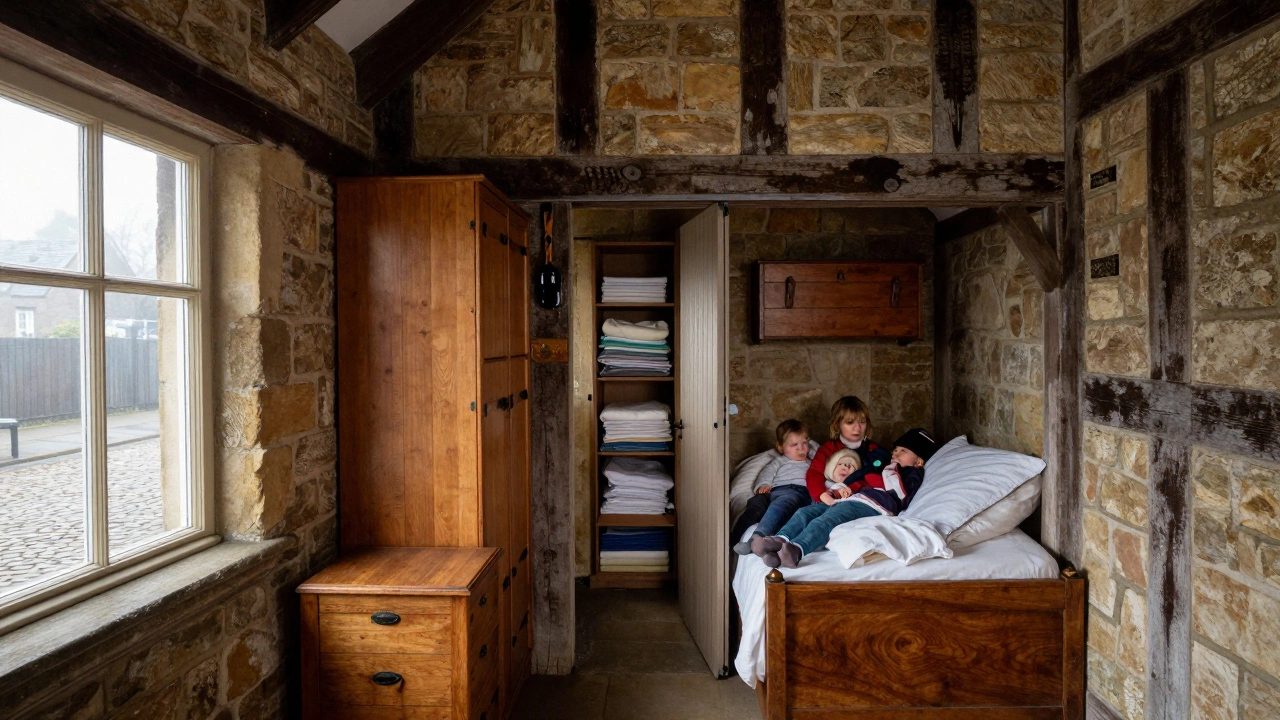
Modern bedrooms are private sanctuaries. In the 1800s, they were often shared. Families slept in one room. Children slept with parents. Servants slept in the same space. There was no expectation of personal space, let alone private storage.
Even in wealthier homes, bedrooms were used for more than sleeping. They were sitting rooms, dressing areas, and sometimes even offices. A closet would have been seen as a waste of usable floor space. Why lock away clothes when you could hang them on hooks, lay them on a bed, or drape them over a chair? Clothes were part of daily life - not hidden away.
The Rise of the Closet Was Driven by Mass Production
The closet didn’t become common until the 1920s - and even then, only in middle-class homes. What changed? Mass production. Factories started churning out cheap, standardized clothing. Suddenly, people owned more than five outfits. They owned dozens. And they needed somewhere to put them.
At the same time, plumbing and heating improved. Homes had better insulation. Interior walls could now safely hold recessed storage without freezing or rotting. Architects began designing homes with built-in storage as a selling point. Real estate developers noticed: houses with closets sold faster. By the 1940s, a bedroom without a closet was considered outdated.
Old Houses Still Have Storage - Just Not Where You Expect
If you’ve ever toured an old house, you’ve probably seen them: narrow, low-ceilinged rooms tucked behind staircases. Or deep recesses in the hallway wall. These aren’t mistakes. They’re the ancestors of closets.
Many homes had linen closets - not for clothes, but for sheets and towels. Others had pantries with sliding doors for dry goods. Some had hanging lockers in entryways for hats and coats. These were functional, centralized, and easy to maintain. They were designed for efficiency, not privacy.
Even today, you’ll find these in restored Victorian homes. A 1905 house in Boston might have a 3-foot-deep, 6-foot-tall recess in the hallway - not big enough for a modern wardrobe, but perfect for storing winter boots, umbrellas, and gloves. That’s the real legacy of pre-closet storage: smart, shared, and space-conscious.
What Happened to the Wardrobes?
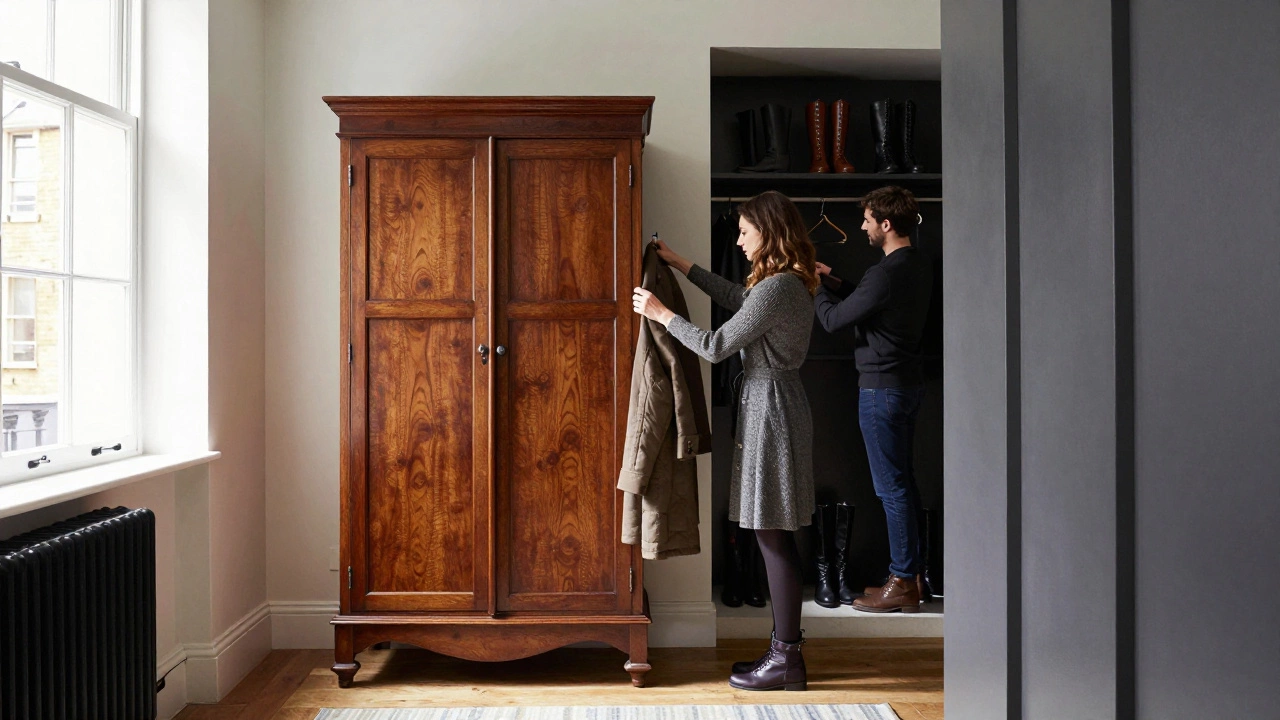
When closets became standard, wardrobes didn’t vanish - they got smaller. By the 1950s, many people kept one small dresser or wardrobe for jewelry, heirlooms, or seasonal items. The big armoires? They became antique furniture. Today, you’ll find them in museums, thrift stores, or living rooms where people want to add character.
Some modern homeowners are bringing them back. In Vancouver, a growing number of people are restoring old houses and installing vintage wardrobes alongside modern built-ins. Why? Because they’re beautiful. Because they’re durable. And because they remind people that storage doesn’t have to be invisible to be useful.
Modern Homes Are Overbuilt for Storage
Think about it: today’s homes have walk-in closets, linen closets, coat closets, pantry closets, utility closets, even closeted toilets. We have more storage space than ever. And yet, we’re still cluttered.
The problem isn’t lack of space - it’s lack of habits. We buy too much. We keep too much. We forget that clothes don’t need to be hidden. They need to be cared for. And sometimes, that means hanging them where you can see them - not stuffing them into a dark box.
Old houses didn’t have closets because they didn’t need them. Today, we have closets - but we still don’t always need them.