Screen Height: How It Shapes Comfort and Home Design
When thinking about screen height, the vertical measurement of any display, from computer monitors to wall‑mounted TVs, most people only picture the size of the screen. In reality, screen height is a key factor that drives ergonomics, the study of how people interact with their environment to stay comfortable and injury‑free. It also ties into TV mounting, the process of securely attaching a television to a wall at the right height and overall furniture design, the planning of furniture shapes, sizes and placement to fit a space. Understanding these links helps you set up any room that looks good and feels right.
First, consider the ergonomic impact. A screen placed too high forces you to tilt your head upward, straining neck muscles. A screen too low leads to slouching, which hurts the back. The sweet spot—often called optimal screen height—keeps the top edge of the display about eye level when seated. That simple rule covers office desks, gaming rigs and living‑room TV areas. When you follow it, you reduce fatigue, improve posture and enjoy longer viewing sessions without aches.
Practical Ways to Get the Height Right
Measuring for TV mounting is more than grabbing a tape measure. You need to factor in room layout, seating distance and eye‑level variations among family members. Start by sitting on your main couch and marking the spot where your eyes sit. Then, subtract about 10‑15 cm from that height to locate the ideal top edge of the screen. If you have a TV stand, adjust the stand height or add risers until the mark aligns. This approach respects the ergonomic principle while also keeping the visual balance of the room.
Desktop monitors bring another set of challenges. Most users work at a desk that’s 70‑75 cm tall. For a 24‑inch monitor, the top of the screen should be roughly 5‑10 cm above eye level. If you use a monitor arm, you can fine‑tune the height without swapping the whole screen. The arm itself becomes part of the furniture design, blending function with style. A well‑chosen arm can hide cables, free desk space and make the whole setup look sleek.
When you plan a room’s furniture, think about screen height alongside other dimensions like sofa depth and coffee‑table height. A low TV in a room with high back‑less sofas can feel lost, while a high‑mounted screen above a low‑profile sectional creates a cohesive vibe. Interior designers often use the “rule of thirds” to split wall space; placing the screen in the upper third keeps the eye naturally drawn upward without dominating the room.
Lighting also plays a role. Screens placed too high can catch glare from overhead lights, while low screens may suffer reflections from desks. Choosing bulbs with a colour temperature that mimics daylight (around 5,000–6,500 K) reduces eye strain. Pair that with adjustable shades or blinds, and you get a viewing environment that’s comfortable day and night.
Storage solutions can help you maintain the perfect height. Wall‑mounted shelves placed just below the screen keep remote controls and media accessories within reach without cluttering the floor. In a home office, a floating desk at the right height can double as a monitor stand, saving space and keeping the screen at the ideal level.
Finally, remember that screen height isn’t static. As families grow or work habits change, you might need to readjust. Modern mounting brackets often feature tilt and swivel, letting you fine‑tune the angle and height without a full reinstall. This flexibility ensures the setup stays ergonomic for years.
In the list below you’ll find articles that dive deeper into each of these areas—DIY wall‑mount guides, monitor‑arm buying tips, colour‑temperature lighting advice and more. Use them as a toolbox to fine‑tune your own space, whether you’re setting up a home cinema, a gaming station or a productive office.
TV Stand Setup: How Should a TV Sit on a TV Stand?
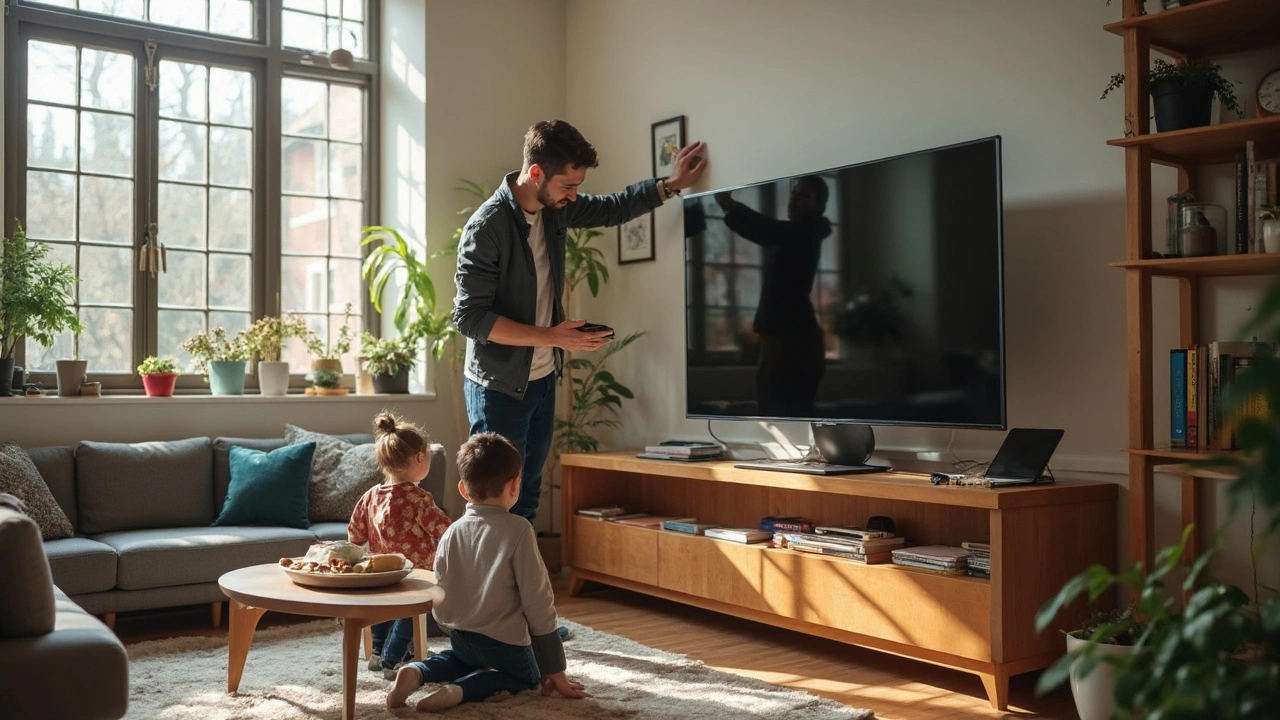
Ever wondered how to set your TV on a stand without messing up your room's vibe or risking a tip-over? This article digs into the best way to place your TV on a stand, what height actually works for real movie nights, and how to keep everything stable. You’ll find honest tips, smart space tricks, and a few facts you probably hadn’t considered. It’s not just about balancing your screen—it’s about making the whole setup work for your everyday life. Get ready to rethink your living room.
full article