Build vs. Buy Cost Calculator
Calculate Your Home Cost
Compare real costs of building vs buying a new home in Vancouver. See how your choices affect upfront costs and long-term savings.
Building
Upfront Cost
$0
Includes land, materials, labor
Buying New
Upfront Cost
$0
Includes developer markup
Long-Term Savings
Estimated energy savings: $0 over 10 years
Which is Cheaper?
When you’re thinking about a new home, the big question isn’t just build or buy-it’s which one actually saves you money. In Vancouver, where land prices hit record highs and labor costs keep climbing, the answer isn’t as simple as it seems. People assume buying a new build is the easier, more predictable route. But that’s not always true. Let’s break down what you’re really paying for in each scenario-and where the hidden costs hide.
What You Pay When You Buy a New Build
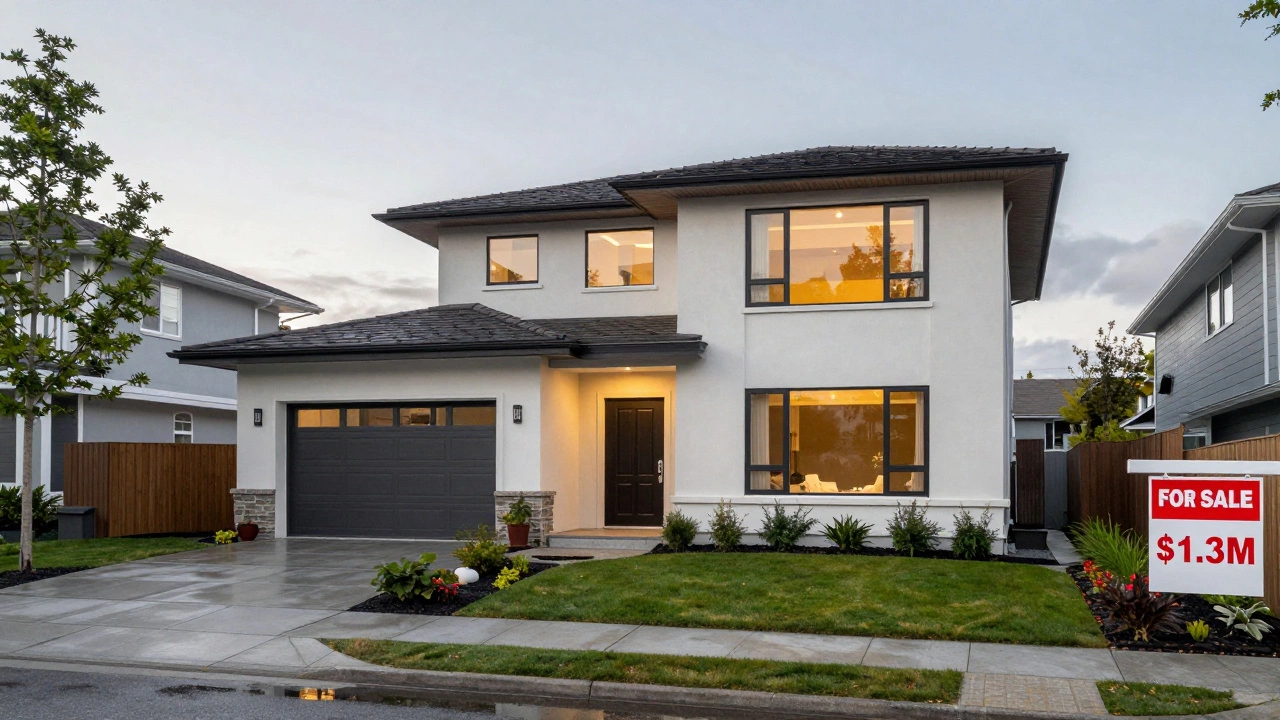
Buying a new home from a developer looks straightforward: pick a floor plan, sign a contract, and move in months later. But that price tag doesn’t tell the whole story. In 2026, the average cost of a new single-family home in Metro Vancouver is $1.3 million. That’s up 18% from 2024. Developers add in everything: permits, landscaping, appliances, even window coverings. Sounds good, right?
Here’s the catch: you’re paying for their profit margin. Developers need to make 15-25% on each sale to cover overhead, marketing, and financing. That’s $200,000+ right there on a $1.3M home. You’re also paying for standard finishes-cheap laminate countertops, builder-grade flooring, basic lighting. If you want upgrades, you pay extra. A quartz countertop upgrade? $4,000. Higher-end cabinets? $8,000. Smart home wiring? Another $5,000. Those add-ons can push your final cost to $1.6 million before you even think about furniture.
And then there’s the waiting game. If you buy off-plan, you could be waiting 12 to 18 months. During that time, interest rates might rise. Your budget might shrink. You’re locked into a contract with little room to change your mind. If you back out after deposit, you lose it. No refunds.
What You Pay When You Build from Scratch
Building your own home sounds like a dream-complete control, no compromises. But it’s not for everyone. The average cost to build a 2,500 sq ft home in Vancouver right now is $450-$550 per square foot. That puts you at $1.1M-$1.4M before land. Wait-you need land too. In areas like Burnaby or Coquitlam, a 6,000 sq ft lot costs $800,000-$1.2M. So your total budget? $1.9M-$2.6M.
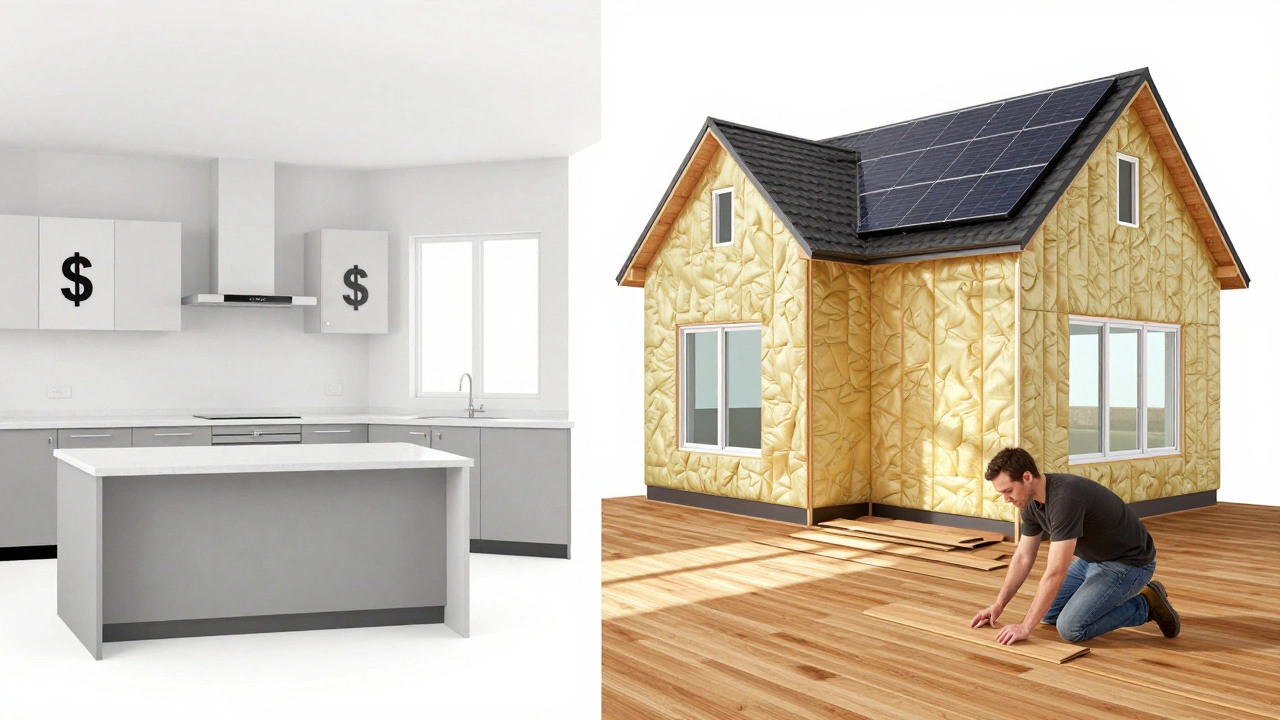
That sounds worse than buying, right? But here’s where it flips. When you build, you control every dollar. You can skip the fancy finishes you don’t care about and spend more on insulation, HVAC, or solar panels. You’re not paying for someone else’s marketing budget. You’re paying for materials and labor you choose. And if you’re smart, you can save big.
Take flooring, for example. A developer installs $12/sq ft laminate. You buy engineered hardwood for $8/sq ft and install it yourself over weekends. You save $10,000. You skip the $6,000 builder-grade lighting package and install LED recessed lights for $1,500. You get a real kitchen island instead of a fake one. You pick your own windows-triple-glazed, energy-efficient, with custom grids. That costs more upfront, but cuts your heating bill by 30% over five years.
And here’s something most people don’t realize: you can build in phases. Put the foundation and shell down this year. Wait a year to finish the interior. That spreads out your payments and lets you wait for better material prices or lower interest rates. Developers can’t do that. They’re on a tight schedule to sell and move on.
The Hidden Costs Nobody Talks About
Both paths have sneaky expenses. When you buy, you’re stuck with the developer’s choices-and their shortcuts. In 2025, a Vancouver home inspector found that 68% of new builds had issues with air sealing, window flashing, or drainage. These aren’t covered under warranty for long. Fixing a leaking basement after move-in? $15,000 minimum.
When you build, you’re responsible for every permit, every inspection, every delay. A snowstorm in January can push your timeline back by weeks. A shortage of electricians? You pay overtime. You’ll need a construction loan, not a mortgage. Those have higher rates and stricter requirements. You’ll also pay for architect fees ($15,000-$30,000), engineering reports ($5,000-$10,000), and a project manager if you’re not doing it yourself.
But here’s the real difference: when you build, you know exactly what’s inside the walls. You see the insulation thickness. You choose the type of framing. You pick the water heater brand. When you buy, you’re trusting a stranger’s checklist. You don’t know if the drywall is fire-rated, if the pipes are PEX or PVC, or if the roof has a proper underlayment.
Who Should Build? Who Should Buy?
If you want to move in next month, have a tight budget, and don’t want to deal with contractors, buying new is the way to go. It’s safer. Less stressful. You get a warranty. You know the neighbors. You get a finished product.
If you have time, patience, and a bit of DIY spirit, building gives you more value for your money. You get a home built to your needs-not a developer’s template. You get better materials. You get energy savings that add up over time. You get equity built into the structure, not just the sticker price.
Here’s a real example from a client in North Vancouver. They bought a lot for $950,000. They hired a local architect and built a 2,800 sq ft home with high-end finishes: triple-pane windows, geothermal heating, custom cabinetry, and a rooftop solar array. Total cost: $2.1M. They could’ve bought a similar-sized new build for $2.3M-with lower insulation, cheaper windows, and no solar. Two years later, their utility bills are $300/month less. Their home appraisal is $2.6M. They didn’t just save money-they built wealth.
What You Can’t Put a Price On
It’s not just about dollars. When you build, you design the layout around how you live. No more narrow hallways. No more wasted corner spaces. You put the laundry room next to the master bedroom. You build a mudroom with hooks, benches, and a dog wash station. You install a walk-in pantry with pull-out shelves. You make sure the kitchen island has room for three people to cook at once.
When you buy new, you get what’s standard. That’s it. You can’t move a load-bearing wall. You can’t change the window placement. You can’t add a second story later without a structural engineer and a new permit. Your home is locked in.
And there’s pride. You know every nail, every wire, every tile. You didn’t just buy a house-you created a place that fits your life. That’s not something you can calculate on a spreadsheet.

The Bottom Line
Is it cheaper to build or buy new? The answer isn’t one-size-fits-all. If your goal is speed and simplicity, buying wins. But if you’re thinking long-term-energy bills, resale value, comfort, customization-building gives you more control and more savings over time.
Most people think building is risky. It is-but so is buying a home with hidden flaws you can’t see until it’s too late. The difference? When you build, you’re the one making the choices. When you buy, you’re betting on someone else’s judgment.
Do your homework. Get quotes from two builders and three developers. Ask for itemized breakdowns. Look at real completed projects, not model homes. Talk to people who’ve done both. The cheapest option isn’t always the one with the lowest sticker price. It’s the one that lasts.
Is it really cheaper to build a house than to buy one in 2026?
It depends. On average, building costs more upfront-especially when you factor in land. But over five to ten years, building often saves money because you choose better materials, energy-efficient systems, and avoid developer markups. A custom-built home with solar panels and high insulation can cut utility bills by 30-50%, which adds up to tens of thousands in savings.
What are the biggest hidden costs when buying a new home?
The biggest hidden costs are upgrades you didn’t know you’d need: better flooring, higher-end appliances, smart home tech, and landscaping. Developers include basic finishes to keep the price low. Upgrading those can add $30,000-$70,000. You also risk paying for poor construction-like bad sealing or drainage-that shows up later and costs $10,000-$20,000 to fix.
Can I save money by building my own home?
Yes-if you’re willing to do some of the work yourself or manage the project closely. Skipping builder markups on materials, choosing cost-effective alternatives (like engineered wood instead of solid hardwood), and installing energy-efficient systems yourself can save 15-25% of total costs. Many people also save by building in phases, spreading payments over time.
How long does it take to build a house vs. buying a new one?
Buying a new home off-plan usually takes 12-18 months. Building from scratch can take 10-16 months if everything goes smoothly-but delays from weather, permits, or supply issues are common. The difference is control: when you build, you can pause or speed up phases. When you buy, you’re at the developer’s mercy.
Do new builds hold their value better than custom homes?
Custom homes often hold value better because they’re built with higher-quality materials and unique features that appeal to buyers. A new build with builder-grade finishes may appreciate, but it’s harder to stand out in a crowded market. A custom home with solar panels, smart systems, and thoughtful design often sells faster and for more-especially in places like Vancouver where buyers value efficiency and longevity.
Next Steps
If you’re leaning toward buying, get three quotes from different builders. Ask for a line-item breakdown of every finish and upgrade. Compare them side by side. Don’t just look at the total price-look at what’s included and what’s extra.
If you’re thinking about building, start with land. Find a lot you can afford. Then talk to a local architect who’s worked in your neighborhood. Get a rough estimate. Visit homes they’ve built. Talk to the owners. Ask what they’d do differently.
Don’t rush. The best decision isn’t the fastest one. It’s the one that gives you a home you love-for less money, over time.