Wall Art Placement Calculator
Create Your Perfect Wall Art Setup
Follow professional design principles to make your room look luxurious without expensive furniture. Calculate the ideal size, height, and spacing for your artwork.
You don’t need a million dollars to make your room look rich. What you need is the right mix of texture, lighting, and carefully chosen details-especially wall art. Most people think luxury means gold frames and crystal chandeliers, but real luxury is quiet. It’s about intention, not extravagance. A single well-placed piece of wall art can shift the whole vibe of a room from basic to boutique hotel.
Start with the walls-your biggest blank canvas
Walls are the foundation of how a room feels. A plain white wall feels empty. A wall with thoughtful art feels curated. You don’t need five paintings. One strong piece can do more than ten cheap ones.
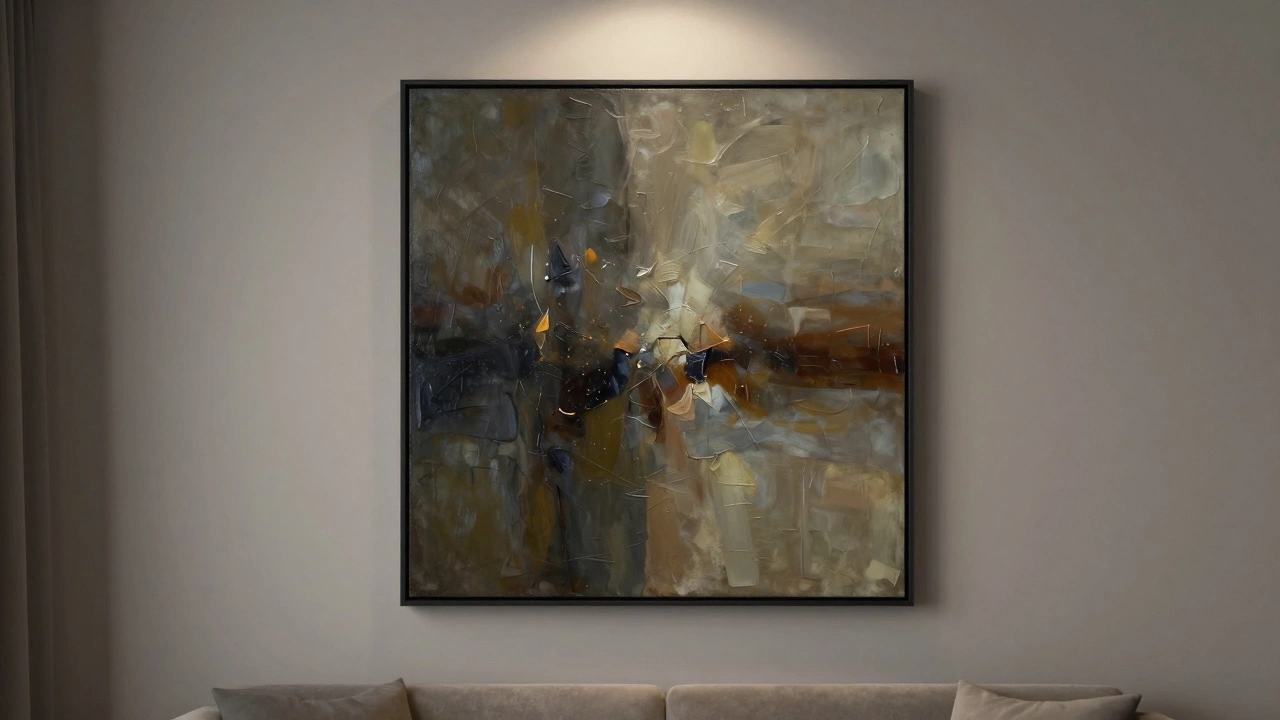
Look for art with depth. Not just colors-texture. A large abstract canvas with thick brushstrokes or a black-and-white photograph with strong contrast pulls the eye in. Avoid mass-produced prints from big-box stores. They look the same everywhere. Instead, hunt for original prints, limited editions, or even framed vintage posters from flea markets. A 1970s French travel poster, matted and framed in a simple black wood, costs less than $80 and looks like it belongs in a Parisian loft.
Size matters. A tiny piece on a big wall looks lost. Go big. If your wall is 8 feet wide, your art should be at least 5 feet wide. Hang it so the center is at eye level-about 57 inches from the floor. That’s the standard in galleries for a reason. It’s where people naturally look.
Frame it like a pro
The frame is half the art. A cheap, shiny gold frame screams "I tried." A matte black, raw wood, or thin metal frame says "I know what I’m doing."
For a rich look, avoid plastic frames. Even if the print is cheap, a solid wood frame makes it feel expensive. Look for frames with a slight bevel or shadow gap-those subtle details make a difference. If you’re on a budget, buy a plain frame from IKEA or a thrift store and paint it matte black with spray paint. Let it dry overnight. That’s it. Instant upgrade.
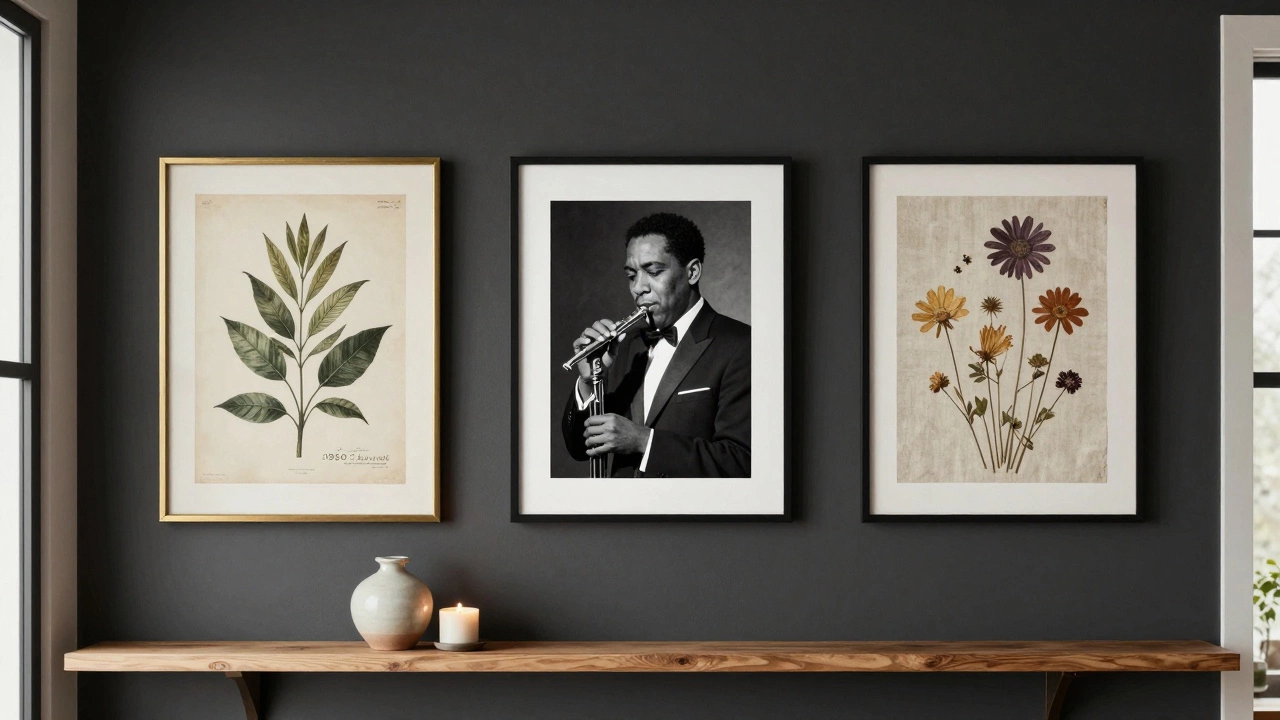
Try mixing frame styles. One large vertical piece with a thin black frame beside two smaller horizontal pieces in aged brass can feel intentional, not random. It’s called gallery wall styling, but it’s not about filling space. It’s about rhythm. Leave space between pieces. At least 2 to 3 inches. Crowded walls feel messy. Quiet walls feel expensive.
Use lighting to make art pop
Wall art without good lighting is like a diamond in a sock. You need to highlight it.
Install a small picture light above your main piece. They’re cheap-under $50-and easy to wire yourself. Or, point a narrow-beam LED floor lamp at the wall from across the room. Don’t use overhead lights to illuminate art. They wash it out. Directional light creates shadows, and shadows add depth. That’s what makes flat art feel three-dimensional.
If you’re renting and can’t drill holes, use adhesive LED strips along the top edge of the frame. They’re battery-powered, stick on without damage, and turn on with a remote. At night, your wall art becomes a glowing focal point.
Layer art with mirrors and shelves
Don’t stop at one piece. Layering is how designers create richness without spending much.
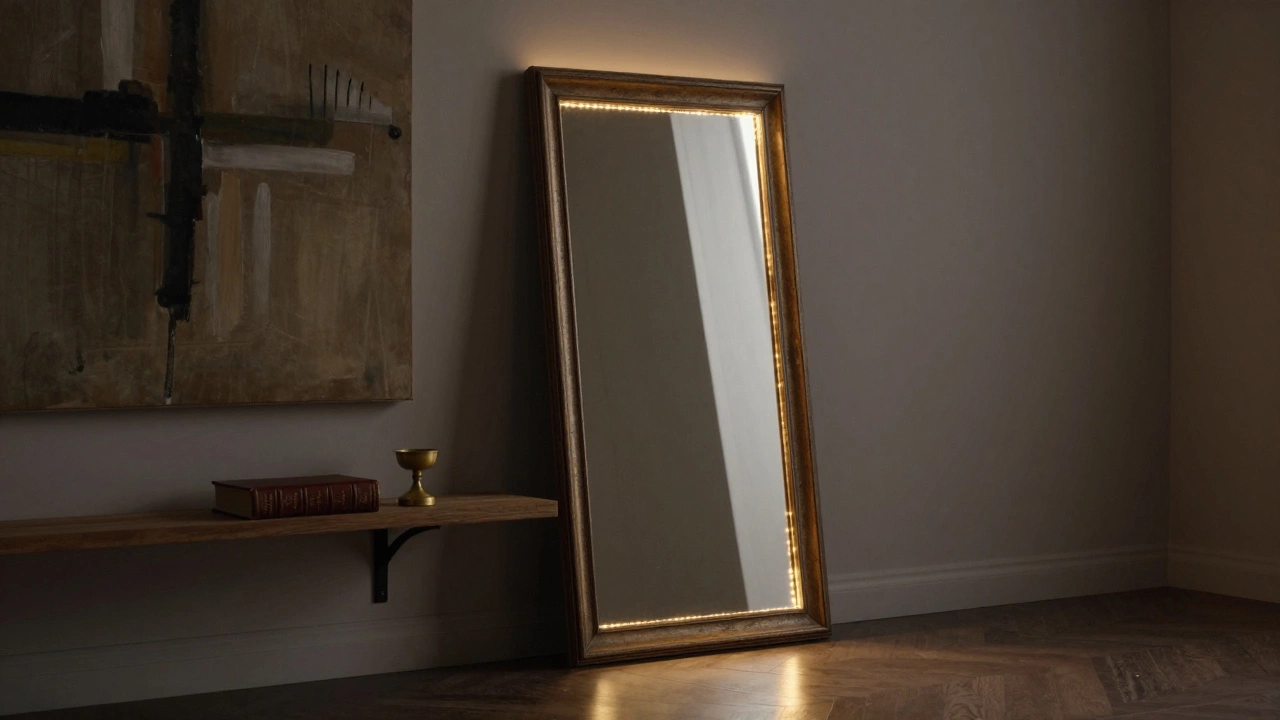
Hang a large mirror above a console table. A full-length antique mirror with a distressed frame reflects light and doubles the sense of space. It’s not just decoration-it’s functional luxury.
Place a narrow wooden shelf under your main art piece. Put a small ceramic vase, a single candle, or a leather-bound book on it. The shelf creates a visual bridge between the floor and the wall. It stops the art from feeling like it’s floating in space.
Try this combo: one large vertical painting, a mirror beside it, and a low shelf below both. The eye moves up and down, and the room feels balanced. It’s not about adding more stuff. It’s about adding more meaning.
Color is quiet power
Rich rooms don’t scream color. They whisper it.
Choose wall art with muted tones: deep olive, charcoal gray, burnt sienna, navy blue. Avoid neon or primary colors. They feel loud, not luxurious. A black-and-white photo of a forest at dusk? That’s rich. A rainbow abstract? That’s a college dorm.
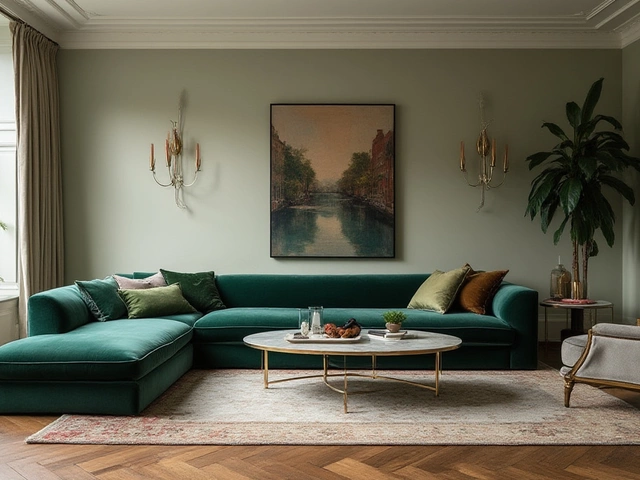
If your walls are white or light gray, let the art be the color. If your walls are already dark-like charcoal or deep green-go for lighter art. Contrast is key. A white canvas on a dark wall looks like a spotlight.
Pro tip: Use the color wheel. Find one dominant color in your room-maybe your rug or a pillow-and pick art that includes that color, even subtly. It ties everything together without you even noticing.
Real examples that cost under 0
Here’s what actually works:
- A 36x48 inch original watercolor landscape from Etsy ($120), framed in matte black ($30), hung above a simple sofa.
- A vintage 1950s botanical print from a thrift store ($15), matted in white, placed in a thin brass frame ($45).
- A set of three small black-and-white portraits of musicians (found on eBay), arranged in a triangle, each in identical 8x10 black frames ($70 total).
- A hand-pressed dried flower art piece from a local artist ($90), mounted on linen, no glass. Feels like a museum piece.
None of these are expensive. But all of them feel intentional. That’s the difference.
What never works
Don’t hang family photos unless they’re professionally shot and framed like art. A blurry birthday pic in a plastic frame kills the vibe.
Don’t buy wall decals. They look like stickers. Even the fancy ones.
Don’t cover every inch of wall. Empty space is part of luxury. It gives the eye room to rest.
Don’t use glitter, sequins, or anything that reflects light too much. It looks cheap, not glamorous.
Final rule: Less is louder
The richest rooms have fewer things. Not more. One perfect piece of art, perfectly lit, perfectly placed, makes your room feel like it belongs in a magazine. Ten mediocre ones make it feel like a garage sale.
Take one wall. Pick one piece. Frame it well. Light it right. Live with it for a week. If it still gives you that quiet feeling of calm and confidence? You’ve done it. You didn’t buy luxury. You created it.
Can I make my room look rich without buying new furniture?
Yes. Furniture matters, but wall art, lighting, and arrangement matter more. A simple sofa with a well-placed abstract painting and a single floor lamp can look more expensive than a full set of designer furniture with no art. Focus on the walls first. They’re the frame of your room.
What if I live in a rental and can’t drill holes?
Use adhesive hooks rated for heavy items-like 3M Command strips for art. They hold up to 16 pounds and come off cleanly. Pair them with lightweight frames or canvas art that doesn’t need glass. For mirrors, use a freestanding leaning mirror against the wall. It looks intentional, not like it’s about to fall.
Should I use black and white art or color?
Black and white art almost always reads as more sophisticated. It’s timeless. But if you want color, stick to muted, earthy tones-olive, rust, slate, deep blue. Avoid bright reds, yellows, or neon. They distract. Rich rooms feel calm, not energized.
How many pieces of art should I hang?
One strong piece is better than three average ones. If you’re doing multiple, keep it to three or fewer. Group them with space between-no more than 3 inches apart. Too many pieces turn into visual noise. Luxury is silence.
Where’s the best place to buy affordable wall art?
Etsy for original prints, eBay for vintage posters, local art fairs for one-of-a-kind pieces, and thrift stores for unexpected gems. Avoid Walmart, Target, and Amazon for anything labeled "luxury decor." They mass-produce the same designs. Look for artists, not brands.