Foundation Health Assessment
Assess Your Foundation Condition
This assessment helps identify potential foundation issues based on 10 common warning signs. Answer each question honestly to get your risk level.
Your house feels off. The doors stick. The floors slope. You see a crack in the wall that wasn’t there last month. You start wondering: foundation issues? Or just normal settling? It’s a common fear, especially in places like Vancouver where the ground stays wet for months and freezes in winter. The truth? Most homes develop minor cracks over time. But some signs mean trouble - and waiting too long can turn a $2,000 fix into a $50,000 rebuild.
Cracks in Walls or Ceilings That Keep Getting Bigger
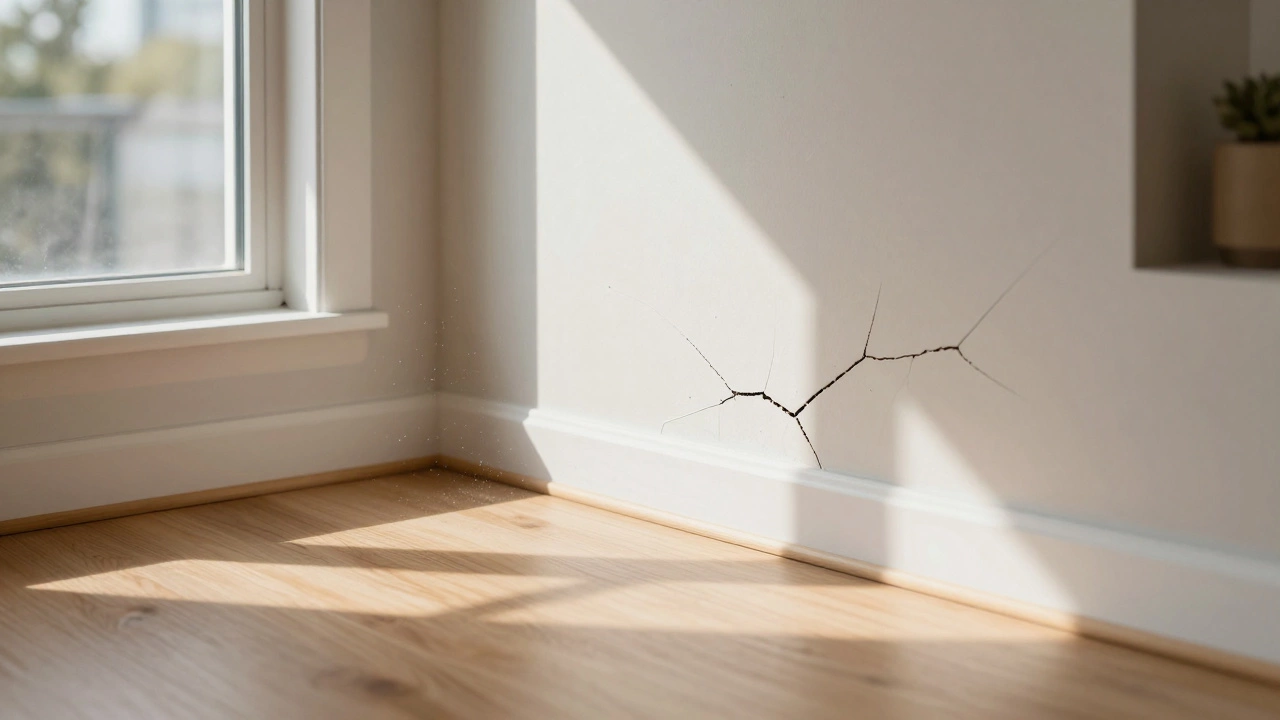
Not all cracks are bad. Hairline cracks in drywall? Normal. But if you see a crack wider than 1/8 inch - especially if it’s diagonal, stair-stepped along bricks, or runs from floor to ceiling - that’s a red flag. These often start near windows or door frames and grow over weeks or months. If you’ve taped over a crack and it reappears after a few months, your foundation is shifting. In older homes, stair-step cracks in brick or block walls are classic signs of uneven settling. In newer homes, long vertical cracks in poured concrete walls mean the soil under the footing is moving.
Doors and Windows That Stick or Won’t Close Properly
Have you ever pushed on a door that just won’t latch? Or a window that jams halfway up? It’s not just humidity. When your foundation shifts, the entire frame of your house twists slightly. That misalignment makes doors and windows bind. If multiple doors in different parts of the house suddenly stick - especially if they used to open smoothly - your foundation is likely sinking in one area. It’s not the weather. It’s not the paint. It’s the ground underneath.
Sloping or Uneven Floors
Roll a marble or a tennis ball across your floor. If it rolls toward the center of the room, or if you notice one side of the room feels noticeably lower, your foundation is sinking. This is especially common in homes with crawl spaces. You might not feel it walking around, but when you lay a long level on the floor, the difference becomes obvious. A slope of more than 1 inch over 20 feet is serious. In Vancouver, this often happens after years of wet soil softening under the footings - especially on hillsides.
Cracks in the Foundation Itself
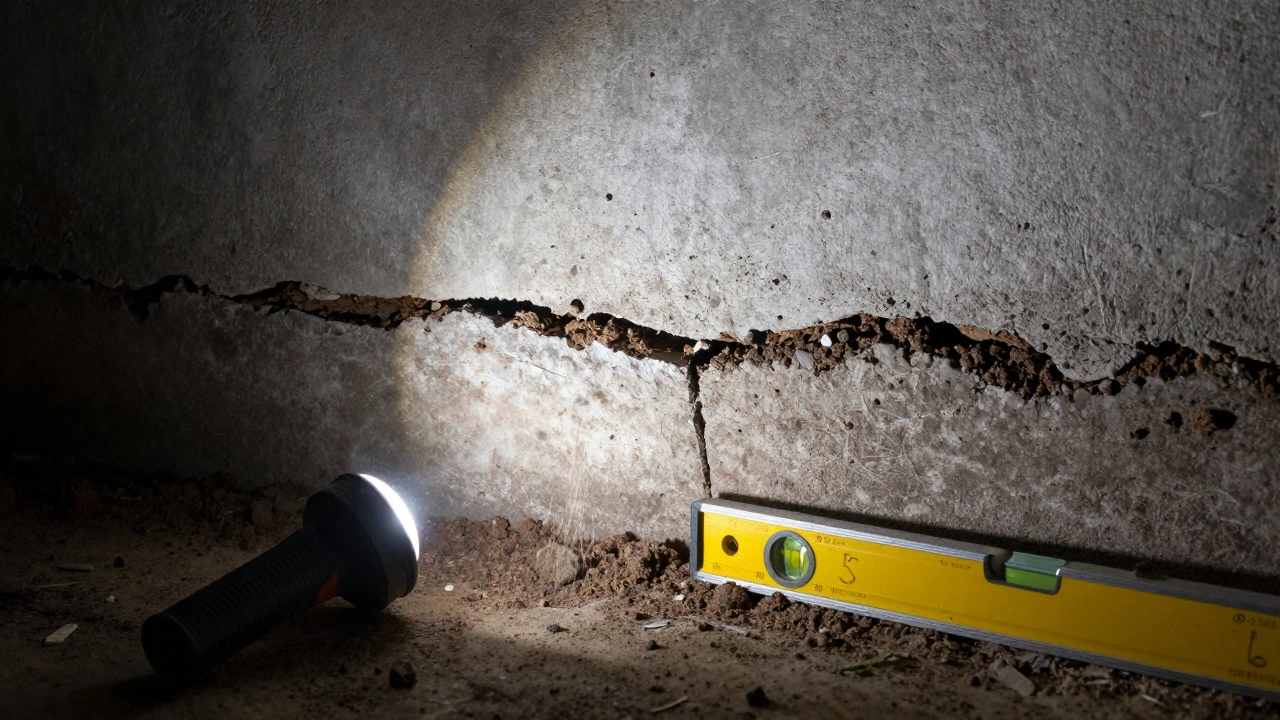
Get down on your knees and look at the foundation walls in your basement or crawl space. Look for horizontal cracks, especially if they’re wider than 1/4 inch. Horizontal cracks mean the wall is bowing inward from soil pressure - a major structural threat. Vertical cracks are less urgent but still need checking if they’re wider than a credit card. If you see gaps between the foundation and the floor, or if you can stick your finger into a crack, it’s time to call a pro. Concrete doesn’t just crack on its own. It cracks because the ground is pushing or pulling it.
Gap Between Walls and Floors or Ceilings
Stand in a corner of your room and look up. Is there a visible gap between the top of the wall and the ceiling? Or between the bottom of the wall and the floor? That’s called a separation. It happens when the structure moves independently from the foundation. If you see this in more than one room, it’s not a drywall issue. It’s the house pulling apart because the foundation is sinking or shifting. This is one of the clearest signs that your foundation is no longer supporting the house evenly.
Sticking or Jamming Cabinets
It’s easy to blame worn hinges or swollen wood. But if your kitchen or bathroom cabinets won’t close right - or if the doors are crooked and won’t latch - it’s often because the floor beneath them has tilted. Cabinets are heavy and rigid. If they’re suddenly misaligned, the structure holding them has moved. This usually happens after foundation movement has been going on for a while. It’s not a sign you need new cabinets. It’s a sign you need to check the foundation.
Water Pooling Near the House
After a heavy rain, does water sit right next to your foundation? That’s bad. Your foundation was designed to stay dry. When water pools around it for days, the soil turns to mud and loses its ability to support the weight of your home. This is especially common in Vancouver’s rainy winters. If your gutters drain too close to the house, or if your yard slopes toward the foundation instead of away from it, you’re slowly weakening the base of your home. Over time, this causes settling, cracking, and even flooding in basements.
Exterior Brick or Stone Pulling Away
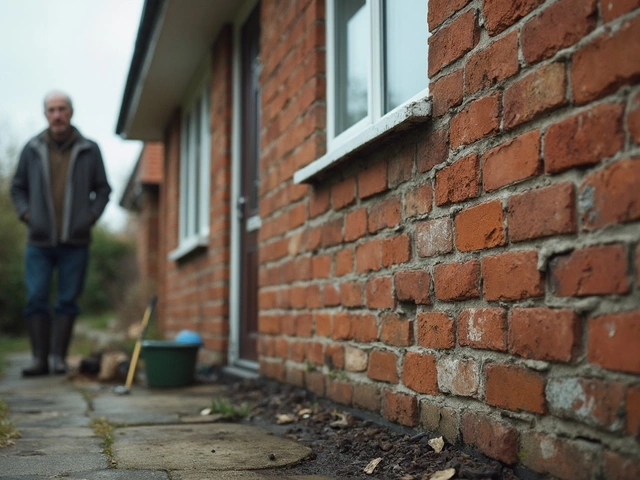
Walk around your house. Look at the brick, stone, or stucco siding. Are any sections bulging outward? Or pulling away from the wall? That’s a sign the foundation is pushing the wall out - usually from hydrostatic pressure or frost heave. In colder climates like Vancouver, frozen ground expands and lifts the foundation unevenly. When it thaws, it sinks back down - but not always in the same place. This repeated cycle causes walls to crack, bulge, or separate. If you can slide a credit card into the gap between the siding and the foundation, you’ve got a problem.
Chimney Pulling Away from the House
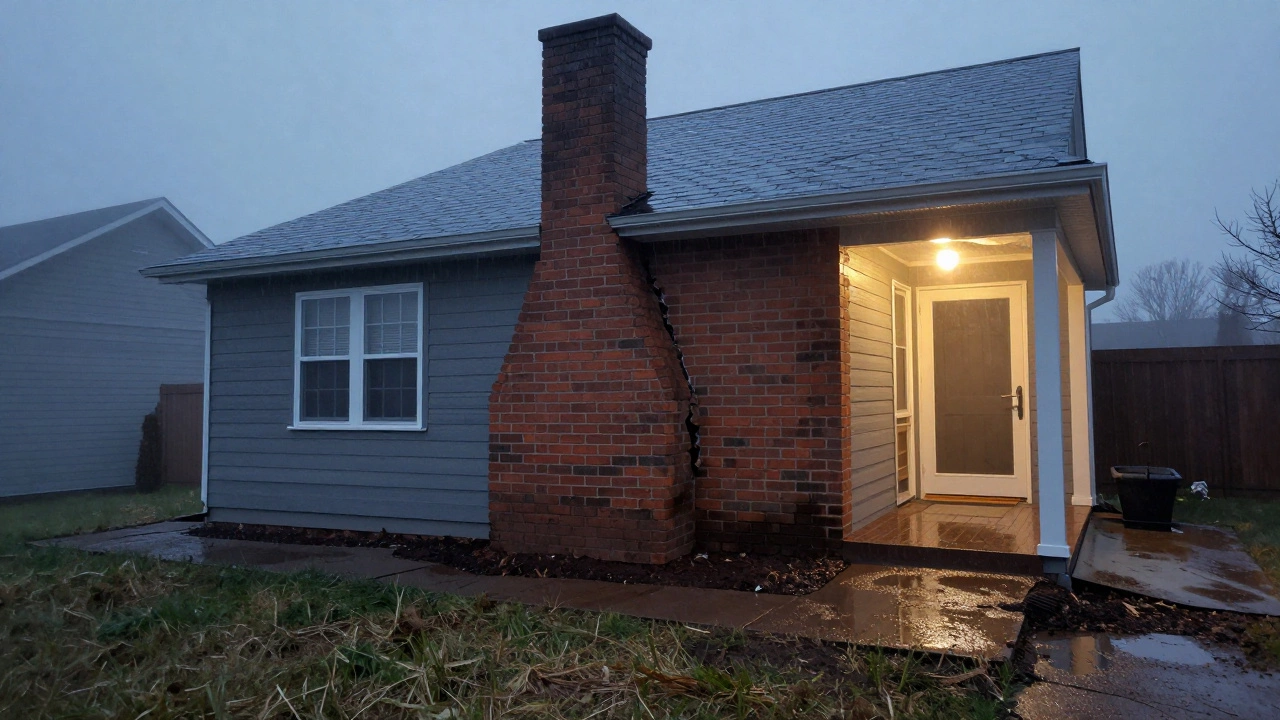
Chimneys are heavy and sit on their own footings. When the main foundation shifts, the chimney often stays put - or shifts differently. That’s why you see a gap between the chimney and the roofline. If the chimney is leaning or you see cracks running from the roof down to the base, your foundation is moving. This is a serious issue. A leaning chimney can collapse. It also creates a fire hazard by allowing gases to escape into your attic.
Strange Noises: Creaking, Popping, or Cracking Sounds
Is your house making new noises? Loud pops or creaks that weren’t there before? Especially at night or after a heavy rain? That’s not the pipes. That’s the house shifting. Wood framing, floor joists, and drywall are all under stress. When they adjust to uneven pressure from a sinking foundation, they make noise. If you hear these sounds regularly - not just in cold weather - it’s worth investigating. Silence doesn’t mean everything’s fine. Noise means something’s moving.
What to Do Next
If you see one or two of these signs, don’t panic. But don’t ignore them either. Take photos of all cracks, gaps, and problem areas. Note the date. Check them again in a month. If they’ve grown, it’s time to call a licensed foundation inspector. Avoid contractors who show up uninvited or offer free inspections - they’re often trying to upsell. Look for someone with a professional engineering background, not just a handyman with a jackhammer. Ask for references. Ask to see before-and-after photos of similar jobs. And always get a written report - not just a verbal estimate.
Foundation repairs aren’t cheap, but they’re cheaper than moving. And they’re way cheaper than waiting until your walls collapse. In Vancouver, most repairs range from $3,000 to $15,000, depending on the method - piering, slab jacking, or underpinning. The key is catching it early.
What Doesn’t Count as Foundation Damage
Not every crack means disaster. Minor drywall cracks from seasonal humidity? Normal. Small nail pops? Common in new homes. Slight settling in the first year? Expected. But if the problem is spreading, worsening, or affecting multiple areas - it’s not normal. Trust your gut. If something feels off, get it checked.
Can foundation issues fix themselves?
No. Foundation damage never repairs itself. Even if cracks seem to stop growing, the underlying cause - wet soil, poor drainage, or unstable ground - is still there. Without intervention, the damage will only get worse over time, often leading to more expensive repairs later.
How long does it take for foundation problems to become serious?
It depends on the cause. In areas with heavy rainfall like Vancouver, foundation damage can become noticeable in 3 to 7 years if drainage is poor. In older homes with weak footings, problems can appear in under a year after major weather events. The longer you wait, the more structural components - like floor joists, walls, and even roofs - start to suffer damage.
Is foundation repair covered by home insurance?
Almost never. Standard home insurance policies exclude damage from gradual settling, poor drainage, or earth movement. They only cover sudden events like a tree falling on your house or a burst pipe flooding your basement. If water damage from a pipe leads to foundation issues, you might get partial coverage - but not for the foundation repair itself. You need a separate policy or rider for that.
Can I check my foundation myself, or do I need a professional?
You can spot the warning signs yourself - cracks, sticking doors, sloping floors. But you can’t diagnose the cause or the extent of the damage without tools. A professional uses laser levels, moisture meters, and sometimes even ground-penetrating radar. They know how to tell if a crack is cosmetic or structural. Don’t rely on guesswork. A $300 inspection can save you $20,000 in future repairs.
What’s the most common cause of foundation problems in Vancouver?
Wet soil. Vancouver’s climate means heavy rain for months, followed by freezing temperatures. Water soaks into the ground, expands when frozen, then softens when it thaws. This cycle pushes against foundations, washes away support, and causes uneven settling. Homes on slopes or near trees (whose roots soak up water) are especially at risk.