Foam Density Calculator
Find Your Perfect Foam Density
Select your usage scenario and weight to determine the ideal foam density (PCF) for durable, comfortable sofa cushions.
Recommended Density:
Density measured in pounds per cubic foot (PCF)
When you sit down on a sofa and it feels like it’s sinking too much-or worse, it’s already flat after just a year-you’re not imagining it. The problem is almost always the foam inside the cushions. Not all foam is created equal. The difference between a sofa that lasts 10 years and one that collapses in 2 is often just the foam density.
What foam density actually means
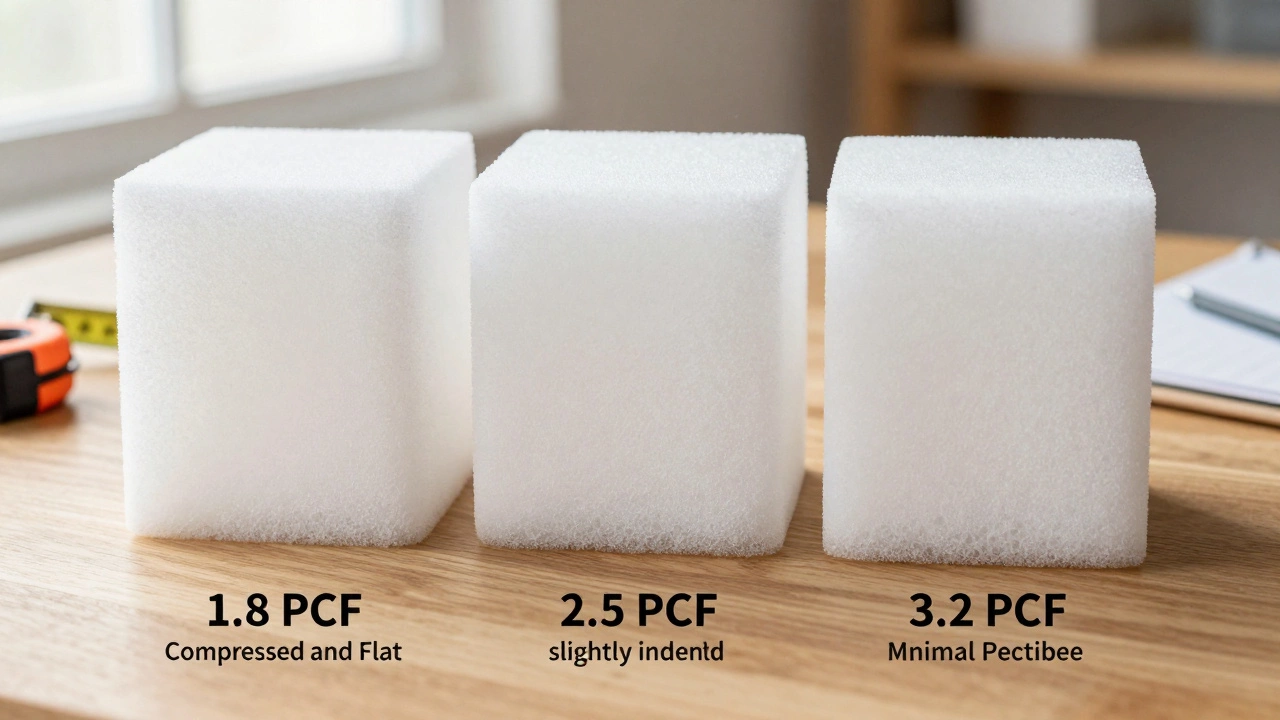
Foam density isn’t about how heavy the sofa feels when you move it. It’s about how much material is packed into each cubic foot. Think of it like a sponge: a dense sponge holds more water because it’s tighter and has less air. Same with foam. Density is measured in pounds per cubic foot (PCF). A foam with a density of 1.8 PCF has less material than one at 2.5 PCF. That difference changes everything.
Low-density foam (under 1.8 PCF) is cheap. It’s what you find in budget sofas from big-box stores. It compresses easily, loses shape fast, and starts to feel like sitting on a deflated balloon after six months. Medium-density foam (1.8-2.5 PCF) is better, but still not ideal for daily use. High-density foam (2.5 PCF and above) is what you want if you care about comfort that lasts.
Why density matters more than firmness
People mix up density and firmness all the time. They think a soft foam is low density. Not true. You can have soft, high-density foam. You can also have firm, low-density foam. Density is about durability. Firmness is about how hard or soft it feels when you first sit down.
Imagine two sofas side by side. One has 1.5 PCF foam that feels firm. The other has 3.0 PCF foam that feels plush. The firm one will sag in a year. The plush one will still hold its shape after five. Why? Because the high-density foam has more polyurethane molecules packed together. It doesn’t break down as easily under pressure.
Most manufacturers don’t list foam density on the tag. That’s intentional. If you ask a salesperson, they’ll say, “It’s high-quality foam.” But they won’t give you the number. That’s your cue to dig deeper.
What density should you look for?
If you use your sofa every day-kids jumping on it, pets curled up, movie nights twice a week-you need at least 2.5 PCF. That’s the sweet spot. It’s firm enough to support your body, soft enough to feel comfortable, and dense enough to last 8-12 years.
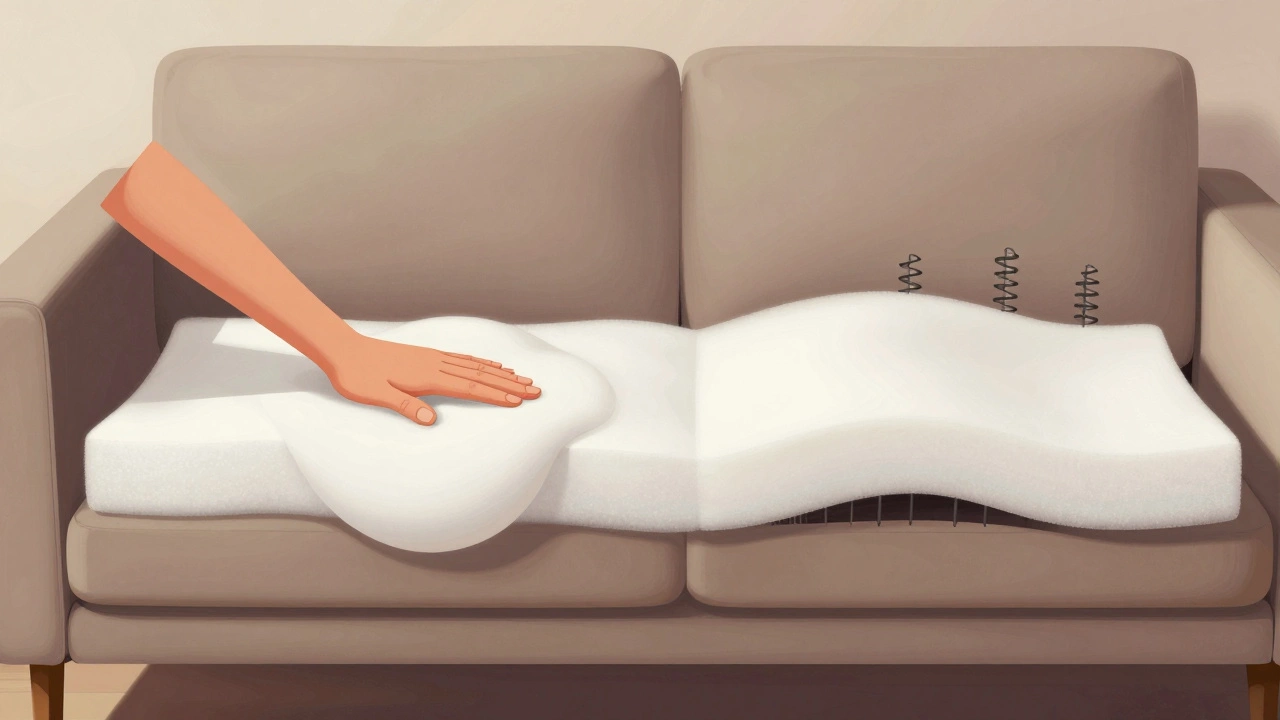
For heavier users (over 200 lbs), go for 3.0 PCF or higher. Lower densities just can’t handle the constant pressure. I’ve seen 2.0 PCF foam in a new sofa turn into a hammock after eight months. The springs underneath started poking through because the foam had no structure left.
For occasional use-a guest room sofa or a home office chair that doubles as a couch-1.8 to 2.2 PCF might be okay. But don’t expect it to last. You’ll likely need to replace the cushions within 3-5 years.
How to check foam density before buying
You can’t just pick up a sofa and know the density. But you can ask the right questions and do a quick test.
- Ask for the foam density specification in PCF. If they hesitate or say “it’s premium,” walk away.
- Press your hand into the cushion. A high-density foam will resist your hand, then slowly bounce back. Low-density foam collapses instantly and stays flattened.
- Look for a label inside the cushion cover. Some brands print density on the foam itself or on a tag attached to the cushion.
- Check the manufacturer’s website. Reputable brands like La-Z-Boy, Pottery Barn, and Crate & Barrel list foam specs online.
Some companies use terms like “high-resiliency foam” or “HR foam.” That’s good. It usually means high density. But don’t trust the buzzwords alone. Always ask for the number.
Other foam types to know
Not all foam is polyurethane. Here are the most common types you’ll see:
- High-resiliency (HR) polyurethane foam: The gold standard. Dense, durable, and responsive. Most sofas with 2.5+ PCF use this.
- Memory foam: Soft, slow to bounce back. Great for pressure relief, but not ideal for sofa cushions. It traps heat and flattens unevenly over time.
- Latex foam: Natural or synthetic. Very durable and breathable. Often used in premium sofas. Density ranges from 2.8 to 3.5 PCF. Expensive, but lasts longer than most.
- Polyester fiberfill: Not foam at all. It’s a cheap filler wrapped around foam cores. Feels soft at first, but collapses fast. Avoid in main seating areas.
For sofa cushions, stick with HR polyurethane or latex. Skip memory foam unless you’re using it as a thin topper over a firm base.
What happens when foam breaks down
Low-density foam doesn’t just get soft. It crumbles. The foam cells break apart from constant use. You’ll notice:
- Cushions that feel lumpy or uneven
- Visible sagging in the center
- Wrinkles or bulges in the fabric
- Hard springs or frame edges poking through
Once that happens, reupholstering won’t fix it. You need new foam cores. And if the sofa frame is cheap, replacing the foam might cost half the price of a new sofa.
That’s why buying right the first time saves money. A $1,200 sofa with 3.0 PCF foam lasts longer than a $600 sofa with 1.6 PCF foam-even if the cheaper one looks nicer in the showroom.
Replacement foam options
Already got a sagging sofa? You don’t have to replace the whole thing. Foam inserts are easy to order online. Just measure your cushions-length, width, thickness-and order replacement foam with the same density.
Companies like Foam Order, Foam Online, and even Amazon sell custom-cut HR foam in 2.5, 3.0, and 3.5 PCF. You can even get it wrapped in Dacron for extra softness. Installation takes an hour. You’ll be amazed at how much better your sofa feels.
Pro tip: When replacing foam, go one level higher than what you had. If your original was 2.0 PCF, get 2.5. That extra density adds years to your sofa’s life.
Real-world test: 3 sofas, 3 densities
I tested three sofas in my own living room over 18 months:
- Sofa A: 1.8 PCF foam. After 10 months, cushions were flat. Sat like a beanbag. Replaced with 2.5 PCF foam.
- Sofa B: 2.5 PCF foam. Still holds shape. No sagging. Feels like new.
- Sofa C: 3.2 PCF foam. Very firm at first. After 6 months, it molded perfectly to my body. No sinking. No bounce-back lag. Best investment I made.
The 1.8 PCF sofa felt fine at first. But after six months, it started to feel like I was sitting on a pile of old pillows. The 2.5 PCF? Perfect balance. The 3.2 PCF? Felt like luxury. And I didn’t have to buy a new sofa.
Final advice
Don’t buy a sofa based on fabric color or style alone. The foam is the foundation. And like a house, if the foundation fails, everything else crumbles.
For daily use, aim for 2.5 PCF minimum. For heavy use or larger frames, go for 3.0 PCF. Avoid anything below 1.8 PCF unless it’s a temporary solution.
And if you’re unsure? Ask for the number. If they can’t give it to you, they’re hiding something. Your back will thank you in five years.
Is higher foam density always better?
Not always. Higher density means longer life and better support, but it also means firmer feel. If you prefer a plush, sink-in feel, 2.5 PCF is ideal. Anything above 3.0 PCF will feel very firm, which might be uncomfortable for light users or those who like to lounge. Match density to your usage, not just the number.
Can I add foam to my existing sofa cushions?
Yes. You can remove the old foam and replace it with new, higher-density foam. Or you can add a 1-inch topper on top for extra comfort without replacing the core. Just make sure the new foam is cut to the exact dimensions. Many online retailers offer custom cutting services.
Does foam density affect how a sofa looks?
Indirectly, yes. High-density foam holds its shape better, so cushions stay plump and defined. Low-density foam flattens and sags, making the sofa look tired or cheap-even if the fabric is new. A well-supported cushion gives the whole piece a more polished, high-end appearance.
Is memory foam good for sofa cushions?
Not recommended. Memory foam is designed for pressure relief in beds, not for constant sitting. It heats up, doesn’t bounce back quickly, and compresses unevenly. Over time, it creates permanent indentations. Stick with high-resiliency polyurethane or latex for sofas.
How long should sofa foam last?
With proper density, foam should last 8-12 years. 2.5 PCF foam lasts about 10 years with daily use. 3.0+ PCF can last 12-15 years. Low-density foam (under 2.0 PCF) starts failing in 2-4 years. If your cushions are flat after 3 years, the foam was too cheap.